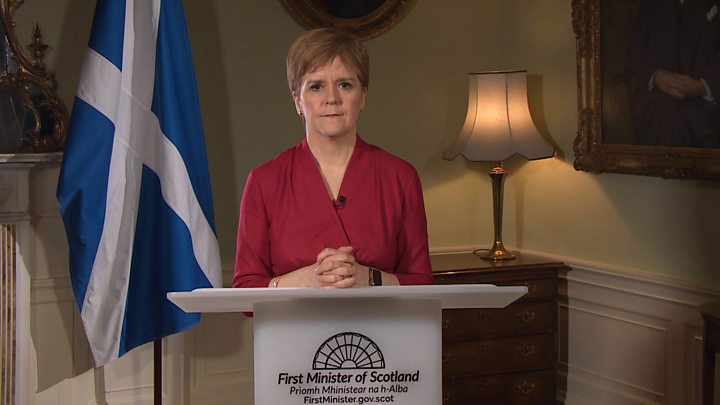
Life goes on as normal … or does it, indeed can it, should it ? The Scottish MP and First Minister of Scotland, Nicola Sturgeon, addressed the issue in a recent press conference. In her view, we all have to change our lifestyles and accept that there is a pandemic sweeping the globe.
The measures, including closing down restaurants and cinemas, are intended to stop the spread of Covid 19. The virus can easily spread in big cities such as New York, Tokyo and London.
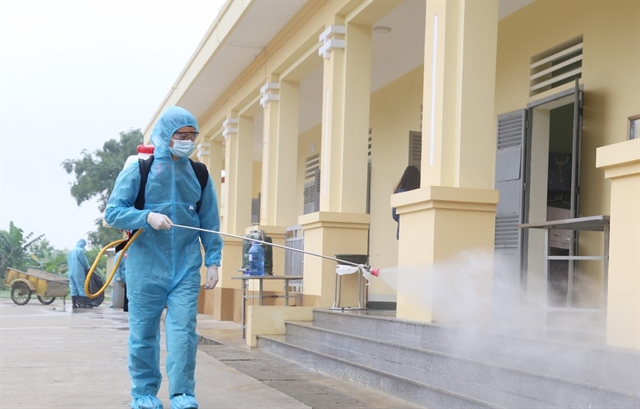
Different countries have imposed different restrictions, and I’d like to focus on Vietnam where, as of 14.00 today, the 25th March, there are 134 reported cases but no fatalities. We shall examine what steps the Vietnamese government has taken, after a quick revision.
Remember, IELTS students have to be able to use these low-frequency words in order to pass the exam.
isolate // implement // significant // rely //
precautions // quarantine // regulations
Students are given three minutes to write three sentences using three of these words.
Now, once these words roll off the tongues of the students, we can move on; actions taken by the Vietnamese authorities.
Latest Updates from the Vietnam- Briefing.com website
What do you think about these measures ?
To what extent do you agree with them and why ?
As a resident of Sai Gon, do these measures make you feel more secure, or more scared ?
As of March 25, Vietnam’s Ministry of Health confirmed a total of 134 cases of COVID-19. The latest cases were all linked to international flights. 19 cases were announced on March 22 itself – the biggest single day total.
Ho Chi Minh City authorities have ordered the closure of all restaurants (with a capacity of 30 people or more), gyms, beauty salons, barbershops from March 24 to March 31.
Vietnam has stopped exporting rice from March 24 to ensure national food security.
All international airlines have been asked to stop transporting overseas Vietnamese to Tan Son Nhat Airport in Ho Chi Minh City from March 25 to March 31 to prevent overcrowding at quarantine facilities.
Vietnam has suspended the entry of all foreigners from March 22 to limit the spread of COVID-19. The measure will not apply to diplomats and officials as per Prime Minister Nguyen Xuan Phuc. The Prime Minister also ordered the suspension of all international flights, though it’s unclear exactly when this will take effect.
The Health Ministry has advised all arrivals from March 1 to self-isolate at home if they have not been quarantined in a centralized zone in the past 14 days.
Vietnam and Cambodia have closed their borders from March 20 to further prevent the spread of the epidemic. The measures do not apply to official and diplomatic passports.
The Vietnamese government is expected to unveil a credit package of US$10.8 billion and a fiscal package of US$1.3 billion in March for businesses affected by the coronavirus outbreak.
Please Note: All photos are taken from Google Images or free photo sites, and are used for educational purposes only. No copyright infringement or offense is intended. If I have used your photo or image, and you wish me to remove it, just ask. This site is not monetized, I run it on my own dollar. Thank you.
As I constantly inform my students, IELTS is not a typical English class … it is IELTS English by which I mean, students have to demonstrate a command of the language that includes a wide range of vocabulary, the confidence to speak fluently, the correct stress and intonation to keep your listener engaged, the ability to form complex sentences and link them with appropriate discourse markers. Additionally, a knowledge of how English is REALLY spoken, to wit, sounding like the student has been interacting with real native-speakers, not merely repeating verbatim from a text book, is a must.
Piece of cake, no ? (an English idiom – you will need to learn some basic expressions, phrases and idioms to make your spoken language more natural and interesting).
OK, let’s break it down. IELTS requires a lot of work, study and practice. Students that come to my class expecting to kick back and be entertained are in for a shock, and then some. As such, I will not be defining the idioms I employ in this blog, e.g. Piece of cake – YOU will have to look them up yourself.
Don’t worry, young lady, I’m here to help you. Having said that, if you’ve been on a three-month course and you’ve left it to the last week to study … then you will probably fail, and deservedly so. Yes, life in the IELTS lane is tough, it’s dog eat dog (though ‘devour’ would be a more IELTS-friendly word than ‘eat’).
Where to start ?
OK, IELTS wants what they term ‘low-frequency’ words. Basically, look at your English; replace any basic adjective or verb or indeed noun, with a ‘better’ word, a word that would be used by the higher-educated native speaker. Your best tool here is a thesaurus of which there are many online, or downloadable for free.
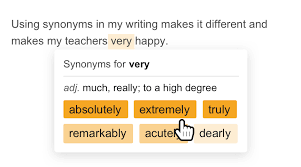
It works thus: Let’s start with a very basic adverb ‘very’. This is too simplistic for IELTS, so type in the word and click enter.
A number of words will appear. As above, the darker-shaded words are what the computer’s algorithm indicate would be more suitable, while giving additional options in lighter shades.
The proof of the pudding is in the eating – so let’s try it: rewrite these sentences using low-frequency words:
I think Bangkok a better destination than Chiang Mai
She bought a cheap bag
The film was good
Stage Two
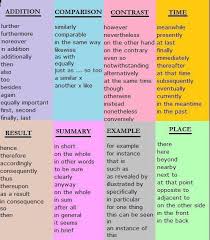
Linking ideas with discourse markers. I give all my students a print-out of common words and expressions that must be consulted and utilised. I hope that all my students take them home and study them religiously. Conversely they may use the paper to line the bottom of a bird cage. In all reality, the majority of students say, ‘Thank you,” have a glance, put said sheet in their bag and forget all about it. Consequently, several weeks later, the students are still resorting to ‘and’, ‘but’ with a possible ‘however’.
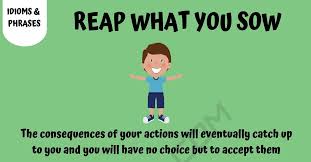
You can lead a horse to water but you can’t make the horse drink
Discourse Markers
I recommend my students learn at least two from each section.
Adverbs are incredibly powerful and so easily inserted into everyday text
I worked at another large and prestigious language centre, and had the pleasure of marking some essays by teenagers. From twelve pieces of ‘writing’, I found only ONE adverb.
Adverbs add information and interest to your language, but my students seem to avoid them like the plague. They may deign to insert a ‘very’ to please me … but it doesn’t ! I expect, nay, DEMAND more.
Without further ado
An example. IELTS will give students a very open-ended subject and then expect a well-constructed piece of writing, or fluent, coherent speech upon said subject, with no deviation, hesitation or repetition. It is a chance for the student to perform a solo, to demonstrate how much they have learnt and studied … or otherwise … generally it is ‘otherwise’.
Time for an anecdote. I was teaching one class, and endeavouring to give them ample opportunity to speak and practice English. Nobody spoke. If I selected some students, they would make an appalling act of not having heard the question, or to answer in a single word. Some students even began laughing that teacher was asking the class but nobody was responding. Hilarious … but he who laughs last, laughs longest. I decided this class was a waste of my time (because it WAS a waste of my time) and left them to their fate … CUT TO some weeks later, it’s the day of their speaking test … suddenly, they are running up to me for help, “What should I say ?”, “I don’t know what to do”, “I’m going to fail.” Temptation was to tellthem where to go ( that is an expression that does NOT imply direction !), but I gave them what help I could in the minute I could spare. Needless to say … most of the class were disappointed with their score, and no doubt, upon arrival at the family nest, were met were screams and derision. And no doubt they put the blame squarely where it belongs … on the foreign teacher !
The concluding line was an example of irony. I’m not going to tell you what irony is, look it up for yourself ! Do you want a fish or a fishing rod and knowledge of how to catch your own fish ?
So now, a fairly run-of-the mill IELTS question:
Tell me about your favourite gadget
This piece is, as one would expect, quite lengthy and jam-packed with information and detail. I don’t expect you to write or speak at this level … but I expect you to TRY.
As you read, look out for:
Low-frequency words
adverbs
adjectives
discourse markers
complex sentences (sentences which coney more than one piece of information)
expressions, phrases and idioms
THEN – practice reading aloud. Not just once and, “Teacher, finished,” but again … and again … and again. Yes, this is not entertainment but it WILL help you get the score you want from IELTS
My Kindle
One of my favourite electronic devices is my Kindle, an ebook reader, which is small and light. I always take it with me when I travel; I’d be lost without it.
The Kindle is primarily a way to buy, store and read books in electronic format. At first, I wasn’t convinced; I liked reading real books. However, books take up a lot of space and, at least in the UK, are rather expensive. When I saw what a Kindle can do, and that so many books are free, I was hooked ! I had to get one. I bought my device in 2014 and I’m still using it today.
As mentioned, I use my Kindle for reading. Literature, including poetry, is one of my passions. Instead of going to a shop, I just browse the online store, click and wait for it to download. With reasonable wifi, this can just take a minute or so … then I can start reading. It is no surprise that ebooks are ubiquitous in the UK.
Although I read a lot, the Kindle is more than just an ebook. It has wifi so I can access the internet, can play music, write notes and play games.
The wifi is vital, especially when I travel. I can maintain contact with friends and family, watch YouTube if the hotel TV is less than enthralling, or read travel guides such as Trip Advisor. Naturally, I can also book tickets or make reservations and therefore pay significantly less.
I recently travelled to Thailand to meet some friends. I didn’t want to buy a new SIM card, and my friend only had an old phone, so there was a dilemma; how to stay in touch ? Thanks to my Kindle, I had email access, so we could plan when and where to meet.
I can’t watch Vietnamese TV, due to the language barrier. Consequently, the Kindle plays an even bigger part of my life, as I need some way to relax after toiling away for hours at work.
The choice of books is amazing. In the stores, a single book can cost around £10, but recently I downloaded the entire output of the Russian write Tolstoy for less than £1.50 … incredible !
Kindles come in many shapes and sizes, so before you buy, you need to ascertain how you’ll be using it. For example, do you want a basic ebook reader, just for books, or the latest model with wifi ? This will, naturally, affect the cost. Then you have to decide upon the extras, for example how much storage space do you require, or a super-fast charger or protective case ? All of these bump the price up considerably.
If you’re interested in purchasing one, I have some information for you. I did a quick Google search and saw prices started at under 2 million VND, averaged around 5 million, but some were over 15 million. That, for me, is too extravagant.
In conclusion, my Kindle is very much a part of my life. It accompanies me everywhere. I simply don’t know what I would do without it.
Now … YOUR TURN
Write a piece about YOUR favourite gadget, using the above as a model
Best of British to you
Please Note: All photos are taken from Google Images or free photo sites, and are used for educational purposes only. No copyright infringement or offense is intended. If I have used your photo or image, and you wish me to remove it, just ask. This site is not monetized, I run it on my own dollar. Thank you.
10th September for 11th September 2019 pp. 22 – 23
Tonight’s lesson is quite full, focusing on speaking and pronunciation, with extra worksheets to encourage longer sentences and the use of IELTS-preferred language. Subsequently, there is no so much for a teacher to prepare. Having said that, the students generally respond well to more active exercises. As such, I’ve prepared a handful of said items.
Warm Up – students arrive on Viet time, so I always start with a minor exercise. Tonight, we will go over some new vocabulary and then apply in short sentences. Last week, we covered:
NOT ONE LESS, (YI GE DOU BU NENG SHAO), Wei Minzhi, 1999, (c) Sony Pictures Classics
This short trailer is also great for listening as well as learning new vocabulary.
We have a lot to get through tonight, so time to hit the books, and cover the extra speaking activities.
Movin’ on: Speaking practice
I have list of general, small talk questions. The task is to respond in such a way as to impress an IELTS teacher. As always, best to start with an example, so a simple, very open question:
What kind of music do you like ?
One could just list some genres, but that wouldn’t cut it for IELTS. So, to increase sentence length, start with a short introduction, for example:
Music is very important in my life; I listen to some form of music every day. I really couldn’t imagine life without songs.
Then go on to explain in detail. People rarely only like one type of music, so that opens up the scope of the response:
When I was younger, of course I liked pop music such as (list two or three examples), but nowadays, I find myself listening more to (name some different genres).
Then how do you listen to music ? Computer, You Tube, Spotify, MP3 player, on your phone ? Do you buy, stream or download. Do you buy CDs ?
Can you play an instrument ? If so, which one(s). If not, you can still talk about it:
Although I love music, I don’t actually play any instruments, though I have always wanted to learn (the piano, guitar, oboe etc), and, who knows … maybe in the future I will.
Then turn the conversation; is there any music you don’t like ? This will enable the speaker to use an appropriate discourse marker:
Be that as it may // That notwithstanding // Having said that, I absolutely detest (give an example or examples – are there occasions when you are forced to listen to music ?) karaoke, which is so prevalent in Viet Nam, not to mention drunken wedding party ‘singing’.
I have a list of several questions. Students can work in small groups or pairs and choose one question about which they feel most confident. After a short preparation time, they must speak without repetition, hesitation or deviation – their partners can check this.
Finally, as an endgame, I can play some music and the students have to identify the genre from the above list.
2nd September for Wednesday 4th September. Listening pp. 20 – 21
Tonight’s focus is on listening, which is perhaps the hardest part of learning English. I often mention the disparity between reading a text and actually hearing said text spoken, with contractions, glottal stops, chunking not to mention accents and accelerated articulation.
Last week, the class were surprisingly lively, and seemed to enjoy some role-playing activities, to practise speaking. I warned them that a listening lesson was coming up, and they were stoical about it, one student even saying that they understand, and it’s not my fault. I have to follow the syllabus, my hands are tied … but that doesn’t mean we can’t have fun !
Warm Up: As students are arriving, I’ll start by relating a simple anecdote. The students then have to repeat the important information. The second time, I’ll include more information, and more the third time … and so on. For example:
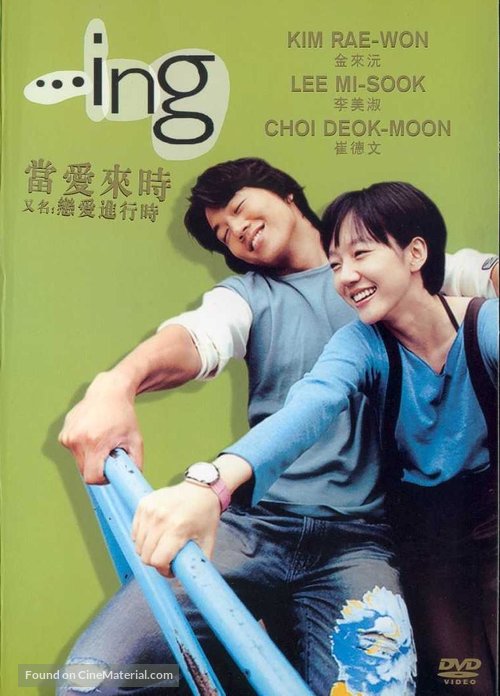
On Monday, I watched a Korean film called ‘… ing’, which was made in 2003. It’s a romantic drama and is a real tearjerker.
Yesterday, I woke up at 5.50, drank two cups of damn fine coffee, and checked my emails, posted a blog and caught up with friends on Facebook.
Speaking of Facebook, one of my favourite films is ‘The Social Network’ about how the company was founded. It was made in 2010 and based on a book that was published in 2009. I really love this scene in the film which features a song called ‘Dreadlock Holiday’ by the band 10cc (can watch up to 0:45).
BONUS POINTS … at the beginning of the scene, some young Jewish men are speaking about why Jewish guys like Asian girls … what, according to the character Eduardo, is the reason (This is one of my favourite all-time cinema quotes) ?
As with all tonight’s real-life clips, we’ll see if any of the students can repeat the quote, aiming for pronunciation, chunking and a natural rhythm.
Speaking of, apropos of ‘Dreadlock Holiday’, can the students understand the first verse and chorus ? This link has the lyrics, so I can turn off the projector and just have them listen, then listen again with the words.
Next up, a version of Chinese Whispers (which is probably a politically incorrect name now). Be that as it may, (and no offence whatsoever to our northern neighbours) the game works like this (assuming that most of the students have arrived, the Vietnamese not being the most punctual of people, and that’s not racist, it’s a fact – they even have a name for it, which translates as ‘rubber-band time’):
Class in two teams. I take the first person of each team outside and give them a separate sentence. They must go back to the class, tell their neighbour and see if the final person is able to repeat the line. Can be repeated depending on class reaction.
A good activity to encourage inter-student communication is to put the class into two or three groups. Each group is handed a paper with some information. One person has to read aloud without showing the paper, and the others have to see how much they can understand. The speaker may be asked to repeat, so it’s also a good way to introduce phrases. A typical card may be:
I’m looking to speak with Ms Nguyen // I’m in the office from 11.00 – 15.00 // I want to discuss the new school building // I work for Vietnam News // Call me on 032 734 9201.
Useful Expressions:
Could you repeat that, please ?
I’m sorry, I didn’t catch your number.
Would you be so kind as to leave your name ?
Let me make a note. Hold the line.
Is there a message I can take ?
[With a small group, this could be done one student at a time, but may be intimidating for some students.]
And then, it’s time to hit the books – it’s high time we hit the books.
End game: To continue the listening, but bringing it alive, I’ll show a couple of evergreen clips. One is from ‘Twin Peaks’, a cult TV show from the 1990s. The main character, like the writer of this blog, loves coffee. The students have to copy the body language and say:
“Wait a minute, wait a minute …. this is, excuse me, a damn fine cup of coffee.”
Finally, the late, great, Peter O’Toole on the David Letterman chat show. The host is a fast-talking American, the actor, an Irish-born, incredibly charismatic, flamboyant old-time movie star. He is asked to tell an anecdote, and rather than a pedestrian, “Let me see,” he delivers, with perfect timing:
Songs are a great way to introduce new vocabulary and expressions, as well as how native speaking pronounce and link words together. Early in the song, we have words such as ‘precious‘ and expressions like ‘we have grown‘ and ‘time flies so quickly.’
Warm up: Mind map – Travel
I start by writing the word ‘travel’ on the board, and see how many avenues spread out from it. Start with the grammar; what type of word is it (noun) but it can be made into a verb (to travel, travelling) and the students should remember how to apply it to a person (traveller).
Then we have expressions such as ‘travel broadens the mind.’
We have this quote which introduces metaphor – the world as a book:
Then more pedestrian aspects of travel; how do we travel (transportation), preparation (booking tickets, hotels, visas etc), what do we bring with us (different clothes, sun cream, currency, sun glasses etc). How about culture shock ?
Next, what are the positive aspects of travelling (new cultures, fun, adventure, relaxation) and conversely, the negatives (delays, waiting in soulless airports, getting ripped off, tourist traps, bad hotels etc)
Pair work: students have to write a short passage using ‘although‘ and ‘despite‘ to encapsulate their travel experiences or wishes.
EXAMPLES: Although I absolutely love travelling, there are many drawbacks. Firstly, there is the cost; it can be incredibly expensive what with plane tickets and hotels not to mention having to eat out in restaurants. Despite these issues, travelling can be so relaxing or exciting, seeing new places and doing new things or simply as a break from our normal lives.
Vietnam has many beautiful towns and places of interest although I have only been to a few of them despite travel being relatively cheap in this country. We can fly everywhere within one or two hours, at very reasonable prices although some cheap airlines, such as Vietjet, are notorious for delays.
I have always wanted to visit Beijing in China which is not excessively far from Sai Gon. Despite that, I haven’t been because I am not sure about the visa and how expensive it would be to visit. Additionally, I hear some negative things such as terrible pollution and many tourist scams. Despite the drawbacks, I really want to see the Great Wall, the Forbidden Palace and all the temples. Although Vietnam and China have a complicated relationship, most Vietnamese would agree that Chinese food is delicious.
These exercises help to increase vocabulary and confidence. Furthermore, the repetition helps to make the target language part of the students’ lexical resources.
As a break from the book work, I’ll show the class a vlog from YouTube, two tourists who come to Sai Gon and what they think of the city. https://www.youtube.com/watch?v=2iw_K-1AmVk
How do the tourists feel about the city ? As residents, do they agree with the review ?
Students can discuss the video using the following language:
I agree totally // I agree to an extent // I disagree // I’m not entirely sure // No way ! They don’t know what they are talking about !
Group work: Prepare a guide to Sai Gon for tourists.
Allow students access to the class computer for Google images if required.
Include
What to see and do // where and what to eat // what to buy //
What they can do for entertainment
Travel tips
Safety and scams
Cultural differences – what should people do or NOT do in Vietnam ?
Use of interesting adjectives to describe the city centre.
Groups can then present to the class, with all students taking turns speaking. I shall be listening for relevance, pronunciation and use of expressions and discourse markers. Furthermore, I may learn some interesting tips.
Here’s a chance to explain what you’re doing now, then to say what you want to do in the future:
NOW // DISCOURSE MARKER // FUTURE
Currently // however // I plan to
At the moment // although // I would love to
Right now // though // I have my heart set on
EXAMPLE:
Currently I am studying however I plan to work in business.
Now that was a very basic response, no way adequate for an IELTS class, so how to extend it, using L-FWs and idioms.
REMEMBER: always be thinking of a suitable idiom. The subject is study, so we have:
burning the candle at both ends // put my nose to the grindstone // pass with flying colours
So, let’s rock ‘n’ roll !
Currently I am studying at ABC University, which is in District 7, putting my nose to the grindstone in order to pass with flying colours. However I plan to find a job in the business field such as banking or investment in order to buy a modern house as well as supporting my family, who have supported me through my studies.
NOW … YOUR TURN
Make IELTS sentences from these details:
studying English
saving up money
working with a charity
Choose the one you that appeals most to you.
To assist : At the moment, I am working for an animal charity because I detest the horrific treatment of animals althoughI would love other people to share my views
Explaining your answers – give examples and reasons
Some people are cruel to animals: explain – give an example (s) and then your reasons. You will have to use Part III styles introductions because the subject is so broad and general.
Complex sentences, which you will need to get a respectable IELTS score, are actually quite simple to form as they merely require two or more pieces of information in one sentence.
Ms Jane is from Seattle which is the biggest city in Washington state, USA.
We know where Jane is from as well as something about the city of Seattle. Now, we can add more information by saying something about Jane, such as her profession.
Ms Jane, who is a medical students, is from Seattle which is the biggest city in Washington state, USA.
Do you know this actor ?
Mr Bean, who is played by the actor Rowan Atkinson, is extremely popular and tremendously successful, being shown all over the world, not forgetting his appearance at the London Olympics in 2012.
This example has been extended by adding more adverbs and adjectives. We know the actor’s name, how popular he is, as well as learning that he was part of the UK Olympics and when that was.
DON’Tanswer immediately but introduce the answer by repeating or rephrasing the question:
That’s a very interesting question
Well, there is so much to say about that subject, where shall I start ?
It’s funny you put that question to me because earlier today I was just thinking about …
One of my students mentioned that she was saving up for a pair of Converse trainers:
It’s funny you put that question to me because earlier today I was just thinking about what I would buy if I had the money.
I have my heart set on buying a pair of Converse, which is an American company with a star logo, who make very fashionable footwear.
To make the sentence more interesting, as well as complex, I simply stated the country, the logo and what they produce … piece of cake, hey ?
OK, your turn … write a complex sentence about these products. Additionally, practice writing different types of introductions:
LG phone from South Korea
Rolex watch from Switzerland
Playstation 5Honda Airblade, a Japanese company
22nd July 2019
Here are some tips to help you expand your sentences, as well as incorporating language use that IELTS examiners will expect. Also bear in mind that the way you speak, the para-linguistics, is equally important.
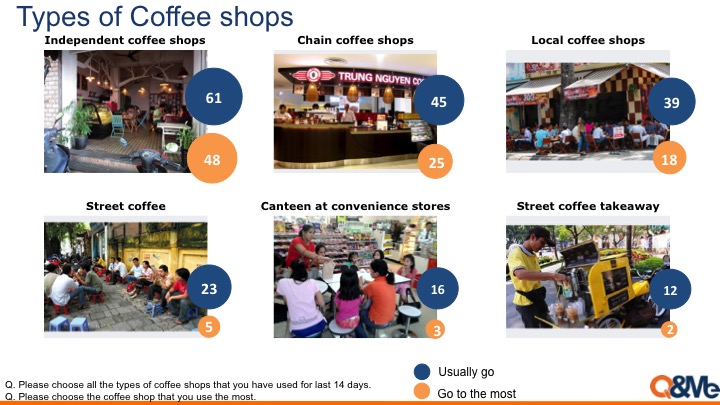
I enjoy coffee (a little / incredibly) because it helps bring people together as well as making our minds become quite active and somewhat excited. Coffee, from my point of view, is essentially useful if we use it in moderation. On the other hand, coffee can be a dreadful waste of money not to mention having a detrimental effect on our health such as insomnia. Despite the negative aspects, coffee makes me feel over the moon!
EXERCISE: Where do you drink coffee ?
Plan –
Introduction: one complex sentence.
Where do you go ? Do you go to many different types ? What do you usually order ?
Why do you go there ? What are the good points ? How often do you visit ? With whom do you go ? How long do you spend there ?
Compare the store with another (price, choice, comfort, amenities).
Are there any negative aspects ? Price, location, crowds, parking etc.
Conclusion: one sentence summary of what you have said.
IF you don’t drink coffee, then you can explain why not, and where you like to go to hang out with friends. Even if you never go out, you can talk about that as it will afford you the opportunity to give reasons and build more complex sentences.
Highlands Coffee, a popular chain in Vietnam.
Practice adjectives by describing this photo.
Increase your word power
Match the basic words with others of similar meaning
For example boring = tedious
interesting attain on time fascinating
forgetful miserable live (I live in) jovial
smart (clever) exhausted
unhappy punctual
happy feasible
possible reside
tired intelligent
get (a qualification) environment
place absent-minded
Interviews
What is your favourite beer ?
Well, I like many beers but my favourite is Czech beer. For example, Pilsner, Budweiser or Staropramen. I think the taste is very good as well as being excellent quality.
Along with Czech beer, I also really like Mexican beer such as Corona or Desperado.
Having said that, these beers can be expensive so sometimes I just drink Vietnamese beer, maybe Saigon Red or 333 because they are much cheaper.
1 Answer the question in a proper sentence
2 Give examples
3 Give reasons
4 What else ?
5 An opposite conjunction (but, however, having said that, on the other hand)
6 What instead ?
Remember to use adverbs and adjectives to make your speech more interesting
Well, I like many beers but my favourite is Czech beer.
For example, Pilsner, Budweiser or Staropramen.
I think the taste is very good as well as being excellent quality.
Along with Czech beer, I also really like Mexican beer such as Corona or Desperado.
Having said that, these beers can be expensive
so sometimes I just drink Vietnamese beer, maybe Saigon Red or 333 because they are much cheaper.
Ask each other some of the following questions:
The interviewer must keep asking questions until the speaker has nothing more to say.
Interviewer can ask, ‘Why do you say that?’, ‘What other reasons?’ ‘Why else ?’
Do you think sports are good ?
What do you like about working for your company ? / Attending your school ?
Do you spend, save or invest your money ?
What films do you like best ? Do you go to the cinema or watch at home ?
Tomorrow night I’m substituting a new IELTS class which is going to be very heavy on reading. In order to offset this passive activity, I want to promote and encourage as much speaking as possible AND to make the students take notes of any new words or phrases. Apparently, note-taking is not big in Vietnam; for a teacher, it can seem that the students are expecting to be entertained. It’s quite amazing the amount of students who attend class without notebooks, writing implements or the motivation to open their mouths and practice the language they are paying to learn.
Therefore, I have to make it clear at the outset what I expect them to do if THEY expect to get a good grade. Taking a photo of the board is not good enough, they need to physically write and practice the new vocabulary. Wether I am successful is another matter (for another blog).
And so, without further ado, tomorrow’s plan.
The theme is about changing lives, making decisions, trying something new. Consequently, I’ll play three songs which feature a change of one description or other. Let’s start with the song alluded to in the title, ‘Changes’ by the British legend David Bowie:
Finally the use of change in a more abstract way, a mental activity. If someone makes a decision then has a different view, we say they ‘change their mind’. That is the subject of our last song, ‘Baby, Don’t Change your Mind’ by Gladys Knight & the Pips: https://www.youtube.com/watch?v=6IjDftWaXpA
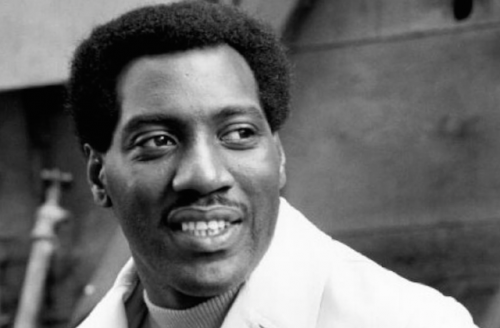
Gladys Knight
The first task is to identify the type of change mentioned in the song then subsequently moving on to a second task; what do they think of the music ?
This will involve forming opinions, and using special vocabulary pertaining to music. To begin with, the students have been given several opportunities to practise these:
In my opinion
For me
I feel that
From my point of view
Then some new phrases to express like or dislike:
I really love it / I quite like it / I’m crazy about it
I can take it or leave it / I don’t mind it
I’m quite keen on it / I’m not so keen on it
I’m into it / I’m not really into it / I’m not into it at all !
I can’t stand it / It’s excruciating / I can’t bear it
It’s not my cup of tea / It’s right up my street
Now vocabulary pertaining to the actual music:
melodic / tuneless
catchy / boring
repetitive / interesting
rhythmic / great beat /
uplifting / depressing / melancholic
The students will have to move around the room (always a challenge as most students are glued to their seats for the whole three-hours and simply will not move) and interview each other. It’s my job to get them to elucidate and expand their answers, to illustrate that a basic, ‘I like it’, isn’t what is expected from an IELTS student … and isn’t going to be accepted by THIS teacher.
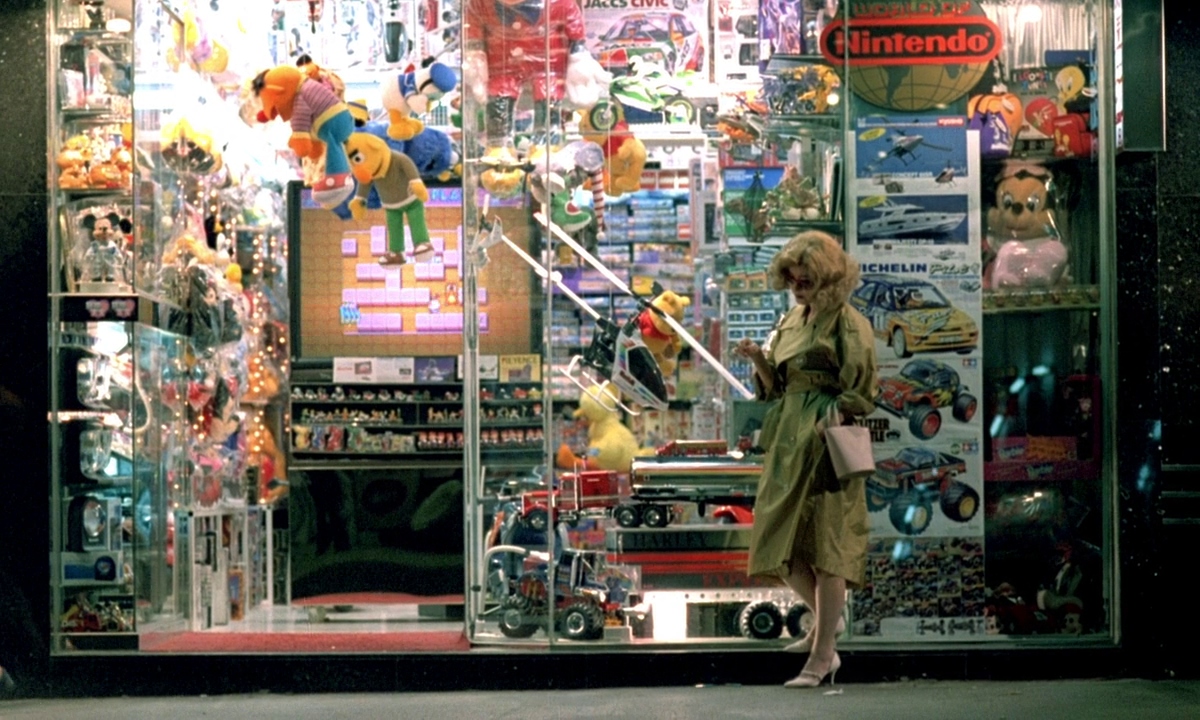
Thereafter, I want to move from music to cinema. I’m going to show some stills of Asian films and let the students work together to create possible scenarios. As always, I’ll model one example. This is from one of my favourite directors, Hong Kong’s Wong Kar-wai, and the film in 1994s ‘Chungking Express’.
Brigitte Lin
This still doesn’t give much information … but it has some. The figure wears a long trench-coat as worn by detectives or private eyes in US crime films). Her blonde hair is a wig and she wears sunglasses … at night. What does that suggest ?
Furthermore, the scene is well-lit by the store; what area of Asia could this be, where there is so much light, neon, brightness and excitement ?
In answer, the film is set in Hong Kong. The lady is organising some smuggling. If it works, she will make a lot of money. If it fails, her life is certainly in severe danger. Whatever happens, this night will change her life.
Now, the students have to look at these stills:
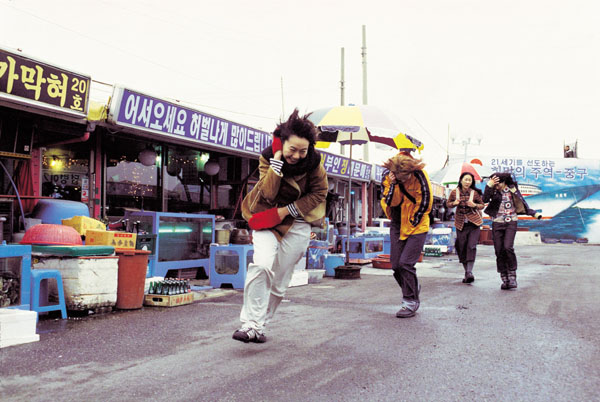
Where is this film set ? What could be the life-changing situation ? For a clue, consider the ages of two of the characters. On the other hand:
Take Care of my Cat
Where is this set ? (the signs give a clue). This is a film about five young ladies who have just left school. What changes are they facing ? Finally, a film closer to home:
The Owl and the Sparrow
The students will probably recognise the setting and the situation. How do they read the body language of the actors ? What could change ? How are the girls in this situation in the first place ?
After this, it’s time to hit the books.
To make reading more of an active activity, the students can work in pairs. One will read one paragraph, then relate the information to their partner. This is then repeated with the second partner reading then relating. Thus they practice reading, speaking and listening.
Furthermore, they can try to rephrase some lines, a useful ability to have in an IELTS test.
To end, we could show some clips of films, then pause and ask the students what they think will happen next, and to describe what they see in the shot. This helps develop the use of adjectives and discourse markers. And who knows … maybe they will change their habits and actually get up from their chairs.
I’m now taking my second IELTS class, and the great thing is that I’ve already made lesson plans. Additionally, my class is much smaller – seven students as opposed to 17 – and they seem slightly more motivated and animated.
But there is still room for improvement … and I’m referring here to myself, as a teacher. My centre tries to promote as much student talking-time as possible, ideally aiming for as high as 80% student conversation … ideally. In reality, the teacher has to face a number of obstacles. I’ll save those for another, more general blog, as I want to dedicate this post to extra work, and tips to get the students talking.
First up, I need to make the students take notes (Vietnamese are not in the habit of doing this, as my centre manager explained). Instead, they will often just take a photo of the board. Secondly, once the student has sat down, they generally will not move until it is time to leave … three hours later.
I will now insist that they take out and use notebooks, the rationale being that the active process of writing will help them remember the words or phrases much better than taking a photo (which they may never look at) or relying on their memory.
Likewise, I will strongly recommend that instead of sitting and talking with the same person all class, they get up and move around, practice with different people (“But teacher, I am tired, I am lazy,” – I have actually heard these from people half my age ).
Now, without further ado, some extra work.
In Lesson Two, I started off with some compound nouns, based upon shopping. This was a way to introduce new vocabulary as well as filling time while late students arrive.
My manager suggested that this could be developed into a speaking exercise. For example, using the compound nouns ‘bulk shopping’, ‘window shopping’, ‘binge shopping’, ‘impulse shopping’ and ‘dumpster diving’, make a presentation with questions:
Have you ever made an impulse purchase ?
How often do you go window shopping ?
Do you ever buy in bulk ?
Is dumpster diving popular in Viet Nam ?
Then, what are the pros and cons of:
Typical street market … but is the fruit safe ?District 7 shopping mall: food courts, cinema, shops and stalls.Souvenir store in District 1. Are the prices fixed or does it depend on how rich the buyer looks ?
Basically, get the students speaking as much as possible. To help them develop longer, more complex sentences, I’ve given them sheets of discourse markers, and each week we focus on one type and select three words. For example, last week was ‘addition’; instead of saying ‘and’, they could use ‘additionally’, ‘furthermore’, or ‘moreover.’
This gets practiced when they have to link two basic sentences:
I like coffee. I like tea.
They could be linked by a simple ‘and’, but try using new discourse markers.
Sentences can be built up by using adjectives, adverbs, discourse markers, and by the use of clauses. This will entail relative pronouns … but that is for another lesson. The students have two months and hopefully they will see improvements after every lesson.
Before the final speaking test, I’ve prepared a list of some useful vocabulary and expressions that will come in very useful. Furthermore, in response to one of my students, I’ve included an exercise on relative pronouns.
Additionally / as well as / furthermore / moreover
Therefore / consequently
On the other hand / having said that / although / despite
Expressions / chunking phrases
At the end of the day / Am I pronouncing that correctly ?
Turn a blind ear / it fell on deaf ears
Friends and family / According to …
Same thing, day in, day out / You get what you pay for / a waste of money
Like / Dislike
Like: I absolutely love … / I’m crazy about … / I (really) like / I’m into / I’m a big fan of …/ I’m quite keen on / I haven’t heard (seen/read) this before, but I think it’s great
No strong opinion: I don’t mind / I have mixed feelings about … / It’s OK I don’t really have any strong views (feelings) either way
Dislike: I hate / I detest / I can’t stand / I don’t really like / I think it’s awful / I’m not a big fan of … / I’m not that keen on …
To buy time
That’s a good / an interesting question
Let me think …
Well, I would say …
How can I put it … ?
Sentence building
Use adjectives to describe nouns
adverbs to describe adjectives and verbs – give more information
opinion phrases: In my opinion / it seems to me / I feel
linking words to connect positive to positive or positive to negative
reasons why an action is being done
I like coffee
I like coffee so much because it tastes great and makes me wake up although too much will stop me from sleeping at night but, in my opinion, the benefits far out weigh the disadvantages.
Using Relative Clauses
who For people: This is the man whosold me the fake Rolex !
which For things: We tried fish and chips which is delicious.
where For places: Let’s go to the shop where we saw the great bargains.
Whose Possessive: That’s the singer whose record we heard last night.
The car, whose driver was young, won the race.
Exercises
We arrived at a nice beach ______ we could swim and lie in the sun.
A man ______ mobile phone was ringing did not know what to do.
The patient, ______ had a serious disease, was taken to hospital immediately.
Smithsfield is a small village ______ people live a quiet life.
A boy ____ sister is in my class was in the bank at that time.
I know a person ____ can speak seven languages.
We visited the church _____ is in the middle of the square.
It is a protected area of land _____ you can see a lot of interesting wildlife.
This dress is made of silk, _____ is a very expensive and delicate material.
A police officer _____ car was parked at the next corner stopped and arrested them.
Listening Websites: A list with links can be found on this page:
Tonight is my final class before the speaking test, and it’s jammed-packed with language skills such as listening, pronunciation and, not forgetting, speaking.
The words in bold indicate the way native-speakers sometimes link words together, to form one linguistic unit, a process referred to as ‘chunking’ in the IELTS book (though I had not previously come across this term).
This is defined on the Cambridge English Dictionary website as:
In terms of the Speaking Test, it will help students sound more natural, more fluid, so is very beneficial, along with learning fixed expressions and an idiom or two. But first, as the students will be arriving in dribs and drabs, we’ll need a warm-up before the lesson can start in earnest. Let’s use some examples from the film alluded to in the heading, Wong Kar-Wai’s ‘Chungking Express’ (1994).
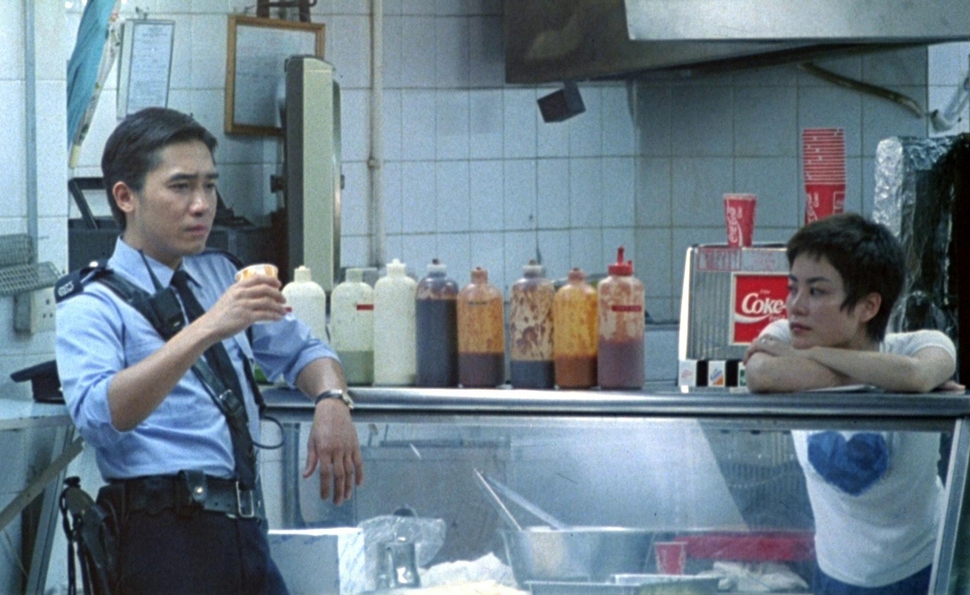
I will show three still of character inter-action. The students have to give me as much information as they can (description) and tell me, in their opinion, what is happening. The stills:
To help the students, I will guide them: where are the characters, how are they dressed, what is their body language ? We can then move on to ‘reading’ a picture. Look at the colours – which are warm, which are cold ? How close are the characters ? The woman in the first picture is wearing sunglasses inside and an obvious wig and heavy coat – why ? What is the relationship between the policeman and fast-food worker in the second ? Follow the eye-lines, look at the space between them look at how the bottles on the counter go from blues (cold) to red (hot, passion, love) as they move from cop to the girl. As a final clue, what symbol is on her T-shirt ? Finally, how would they characterise the meeting in the last photo ? Do they appear friendly ? Is there a social-economic or class issue ?
This is one of my favourite films, the acting is great and the cinematography is breathe-taking. The American director Quentin Tarantino is also a big fan of the film, so here’s a link into a listening exercise. Tarantino is from the US, so let’s see how much the students can understand from a ‘real-life’ video (from 0:00 – 0:45):
What expressions does Tarantino use to indicate a long time ?
We then move to a controlled practice session. Over the past weeks, the students have learnt new vocabulary and expressions but, unless they are used, they will be forgotten … and we can’t have that. So, time for some small group work:
I’m planning a trip to Nha Trang (a beach town in South Vietnam, about an hour’s flight from Ho Chi Minh City). I have two hotels in mind, but I need advise from some Vietnamese. They also have to use as many of these words as possible:
visually stunning / mouth-watering / you get what you pay for / spectacular / a waste of money / significantly / somewhat / according to / how can I put it ?
Students must tell me about the hotels, the area, the food and which one they would choose for me:
Victory Hotel 2* Rooms not very clean, no view. No complimentary breakfast.
Sandy Bay Hotel 4* Much more expensive, although it has breakfast buffet, and room has a balcony with view of the sea.
Trip Advisor recommends Sandy Bay, but they said Victory was dirty and very over-priced.
Local food is great
WILF (What I’m looking for): can the students describe the scenery and food ? Can they compare the price and quality difference ? Can they use expressions appropriately ?
With the adjectives, I’ll be listening out for intonation – ‘spectacular !’
To quote another source of information, ‘according to’ and for the prices, the 4* is ‘significantly more’ expensive than … Then, in conclusion, can they make a judgement – ‘a waste of money’ or accepting that high quality means high prices, ‘you get what you pay for.’
By now it’s time for the book work, and we have a lot to get through tonight.
The speaking practice involves a two-minute talk about an electronic device. The books offers some ‘stepping stones’, guides about what to say. To help the class, I’ll model an answer showing discourse markers, adjectives and adverbs, as well as some ‘low-frequency’ vocabulary (or ‘better words,’ if you will). My topic will be my Kindle.
A Kindle ebook
There should be a short introduction (one or two sentences), then each point arranged in different paragraphs, then ending with a short conclusion. The book suggests saying:
How long you have had it ?
How often you use it ?
What you use it for and
Why you use it so often.
They don’t all have to be answered, and other points can be made, but the speaker should be aiming for two minutes without repetition, hesitation or deviation.
My Kindle
One of my favourite electronic devices is my Kindle, an ebook reader, which is small and light. I always take it with me when I travel; I’d be lost without it.
The Kindle is primarily a way to buy, store and read books in electronic format. At first, I wasn’t convinced, I liked reading real books. However, books take up a lot of space and, at least in the UK, are rather expensive. When I saw what a Kindle can do, and that so many books are free, I was hooked ! I had to get one. I bought my device in 2014 and I’m still using it today.
As mentioned, I use my Kindle for reading. Literature and poetry is one of my passions. Instead of going to a shop, I just browse the online store, click and wait for it to download. With reasonable wifi, this can just take a minute or so … then I can start reading. It is no surprise that ebooks are ubiquitous in the UK.
Although I read a lot, the Kindle is more than just an ebook. It has wifi so I can access the internet, can play music, write notes and play games.
The wifi is vital, especially when I travel. I can maintain contact with friends and family, watch YouTube if the hotel TV is less than enthralling, or read travel guides such as Trip Advisor. Naturally, I can also book tickets or make reservations and therefore pay significantly less.
I recently travelled to Thailand to meet some friends. I didn’t want to buy a new SIM card, and my friend only had an old phone, so there was a dilemma; how to stay in touch ? Thanks to my Kindle, I had email access, so we could plan when and where to meet.
I can’t watch Vietnamese TV, due to the language barrier. Consequently, the Kindle plays an even bigger part of my life, as I need some way to relax after toiling away for hours at work.
The choice of books is amazing. In the stores, a single book can cost around £10, but recently I downloaded the entire output of the Russian writer Tolstoy for less than £1.50 … incredible !
Kindles come in many shapes and sizes, so before you buy, you need to ascertain how you’ll be using it. For example, do you want a basic ebook reader, just for books, or the latest model with wifi ? This will, naturally, affect the cost. Then you have to decide upon the extras, for example how much storage space do you require, or a super-fast charger or protective case ? All of these bump the price up considerably.
If you’re interested in purchasing one, I have some information for you. I did a quick Google search and saw prices started at under 2 million VND, averaged around 5 million, but some were over 15 million. That, for me, is too extravagant.
In conclusion, my Kindle is very much a part of my life. It accompanies me everywhere. I simply don’t know what I would do without it.
Speaking for two minutes can be quite daunting and challenging, even for a native speaker. I will try to encourage the class to expand on their work as much as possible. They can do this by giving examples or lists, using personal experiences or giving full reasons for their choices.
This exercise will probably be the centre-piece of the lesson, as they’ll need time to prepare and perform. I won’t embarrass anyone by making them read aloud, but instead, I’ll circulate and offer help and tips where necessary.
As it’s the last lesson, the later part of the class can be for fun activities, maybe some general knowledge questions, or sentence building exercises, where we start with a basic sentence and see how far we can develop the story.













![Fostering Rescue Dogs at R House in Saigon, Vietnam w/ Geneva, Alex, Thien [EN VERSION] | TÂM SHOW - YouTube](https://thaypaulsnotes.com/wp-content/uploads/2020/12/image.jpeg?w=300)

















 Thay Paul's Notes