Kindergarten, Level 1: ‘t’ time.

3rd May for 5th May 2019 Safari 1

I want to do a general review of vocabulary and basic sentences that the students have been exposed to and practised over the course. They include:

Nouns – animals, clothes, food, classroom accessories

Verbs – walk, run, fly, swim, stomp, hiss, roar, jump

Prepositions – on, in, under

Colours

Numbers – 1 to 5

My name is …. // I’m …..

Do you like … (rice, cake ?)

I have / you have

Today’s letter is ‘t’, and to end the class, the students have a project; colouring and cutting out rockets.

I don’t want to introduce any new games or activities, but to encourage as much inter-student talking as possible. It’s great to see some of the quieter students opening up and joining in more of the lesson, and starting to gain confidence in speaking English. And so, without further ado, the lesson plan:

Warm Up: I say a verb and the students must pretend to be that creature.

Hiss / stomp / walk / jump / swim / fly / roar

Put the ….. This tests knowledge of nouns, colours and prepositions.

I arrange two chairs, one green, the other yellow, at the front of the room, with a red bag in between. Around the room I will have real items that the students know (pen, book, ball, monkey) and, one by one, tell the students to put an item on/in/under a certain chair or bag. For example, put the red pen on the yellow chair.

The more advanced students can then act as ‘thay’ and instruct other students.

What’s your name ? Here, the students make a circle and one starts by saying, “My name is …. What’s your name ?” The person to the left answers … and so on. To make it fun, we can try to speak as quickly as possible, or to shout (this sometimes helps the shier students).

Focus on ‘t’

I start with this great video:

https://www.youtube.com/watch?v=HHEqOLZ0hr4

After, we drill the ‘t’ sound both at the beginning and end of the word.

Board Slap: I’ve made a basic slide with five ‘t’ words. Class can be put into two teams. One team shouts out a word, and one member of the other side has to slap the appropriate picture.
This is following by a drilling of the ‘t’ sound again and a test; can the students identify it in a word ? I shall say a simple word and ask the student if it has a ‘t’. They can run to one wall (with a ‘t’ flashcard) or to another, blank wall). The words:

cat / cap / hat / ham / pet / pen / one / two

Do you like … ? To review food nouns and to get the students forming basic questions, they can ask each other if they like … cake, rice, salad and pasta.

It’s always best to model speaking exercises. First I will ask one of my TAs, then two top students can demonstrate. The students sit at small tables, four or five at each, so one student could ask the others. The answer must be in a sentence: “Yes, I do,” or, “No, I don’t.”

Next up, time for some fun and movement: Musical Chairs. Today, a fun song, ‘Yummy, Yummy, Yummy’:

https://www.youtube.com/watch?v=-4aQiFaCod8

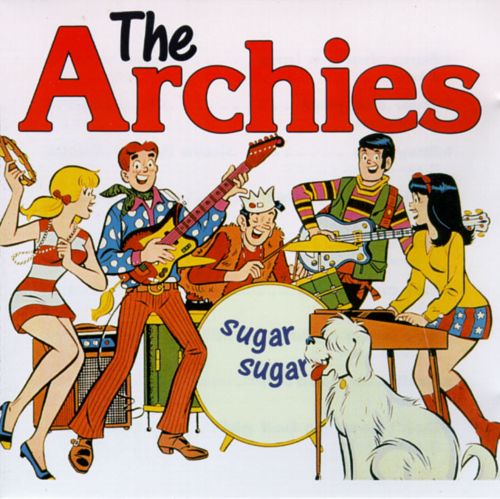
When the music stops, the students who haven’t found a seat have to answer a question, then we continue. If we need an extra, food-related song, we can use ‘Sugar, Sugar’:

https://www.youtube.com/watch?v=h9nE2spOw_o
Lastly, I would like to review some basic grammar we touched upon last week; first and second-person use of the verb ‘to have’.

I model with a TA (we both hold an item or flash card). I say, “I have a pen, you have a book.” The TA then replies, “I have a book, you have a pen.” Some of the top students can model, then we can line the students up in two rows, giving each student an item. They face each other and say, “I have a …. , you have a …..”. This can be done all together, so the class become confident speaking, then we can listen to pairs speaking one at a time.

This is probably too much for one class, but it is always a good idea to have a lot of activities planned. Anything that isn’t used can be in subsequent lessons, thus cutting down on lesson planning.

Next week is our final class, so more of a party atmosphere, culminating in the presentation of certificates, and the taking of class photos. Maybe I will continue with the class at Level 2, maybe an entirely new class … we shall see.

Please Note: All photos are taken from Google Images or free photo sites, and are used for educational purposes only. No copyright infringement or offense is intended. If I have used your photo or image, and you wish me to remove it, just ask. This site is not monetized, I run it on my own dollar. Thank you.


Young Learners, Level 4: Be creative !

1st May 2019

Everybody Up 4, Unit 6, Lesson 1

By this stage, the students are able to form basic sentences, though they need constant encouragement to develop speaking skills, as well as being told to write down new words and expressions … and then USE them.

The lesson should involve all skills, and allow the students some active sections, to break the monotony of sitting for two hours. New vocabulary should be introduced and recent lessons should be revisited and revised. Today’s theme is ‘be creative’ so we’ll start with:

Warm up: Word Bomb (mind map)

Board ‘Free Time’ and ask the students what they do for fun, making them speak in sentences, not just shouting out single words. We can develop this by asking secondary questions for example, ‘I play football,’ ‘Where do you play ? With whom do you play ? Are you in a team, or play with friends ?’

Pre-teaching: New vocabulary

Today we have six flash cards, all in the present simple (e.g. sing songs, write stories). The class repeat the text and I check for pronunciation and meaning.

Activity: What do my friends do ?

Around the room, I stick six sheets of paper, each with a single word:

Fashion / Art / Music / Cinema / Models / writing

I then show a single Powerpoint Slide with six of my ‘friends’ and ask the students to match the friend to the activity. I will board the six names on two sides of the whiteboard and the students, divided into two teams, have to match them. My ‘friends’:

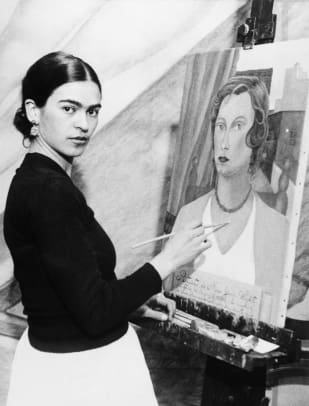
My friends are: Nicky, Ian, Stella, Bill, John & Frida.

After the students have guessed, I’ll show the following pictures:

Nicky likes music. He sings songs
Ian likes model trains. He makes models.
Stella likes fashion. She designs clothes
Bill likes writing. He writes stories.
John loves cinema. He makes movies.
Frida enjoys art. She paints pictures.

Next, a chance for the students to get up and mingle, so I’ve prepared a questionnaire, utilising a lot of past tense verbs:

Student Questionnaire 

NAME:

What did you do on December 31st ?


What was the last film you saw ? Was it good ? Did you enjoy it ?


Do you like painting or drawing ? Do you go to museums ?


Have you ever lost anything ? What was it ?


We can listen to some answers, and the class can correct any errors in grammar. This will also help the students speak to each other in English, so that not all communication goes through the teacher.

Next up: Student description

In a previous lesson, the class learnt about basic adjectives to describe appearance. I will therefore choose a student and describe the physical characteristics, e.g. this student has long straight hair, is not very tall, and wears black glasses. I will choose some students and give them a student to describe, while promoting the value ‘be polite‘.

Video time: listening & new vocabulary

In our first class, we watched a kids’ guide to London and I boarded the following:

I reckon / huge / a little bit / brilliant

The students were told to ALWAYS have a notebook and pen handy, and to write down new words. However, this is not a common practice in Vietnam, so they have to be told … and retold.

Today’s video will be a short clip from a kids’ parade in the USA: https://www.youtube.com/watch?v=llEAqex8qM4

We only need show the first minute, but the students can be asked to identify various creative activities that they see. Then it’s time for some action !

Board Slap

I’ll stick three of today’s six flash cards on the cards and select three students. They’ll be given a swat, and they have to run to the board and swat or slap the card they like best, saying, “I like … movies, painting etc.” This leads into:

Thay Student.

One of the top students plays the role of teacher. They come to the front and ask students, “Do you like …. songs, models etc ?” Students must answer in a sentence: “Yes, I do,” or “No, I don’t.” Thay Student will follow-up by asking why or why not …”Because it’s ….”

Here we need some good adjectives. To give them a good pool of words, we can have a quick hangman game first, so we have adjectives such as:

boring / exciting / interesting / fun / educational / creative / difficult /

Finally, I like to play a song for the students to listen to and pick out key phrases. Today’s singer is actually Swedish, but she sings in English. https://www.youtube.com/watch?v=upnTg2GPgTM

This is Lykke Li, and we can start the video around the 1-minute mark. The title, and the key phrase is something the class should, by now, be familiar with; ‘a little bit’. It’s also a good lesson in how Standard written English differs from spoken English, as we often swallow the ‘t’ sounds. Have a listen … you don’t need to play the whole song if it’s not your cup of tea … just a little bit.

Young Learners, level 2: Hello Dolly, this is Louis …

26th April 2019

A lesson plan for a very active, very loud young learners’ class. They are certainly a handful, but they are good at English; there is simply no way to control them for two hours. Just have to use their energy and make very kinetic lesson plans to keep the class occupied.

After break, we focus on book work and workbooks (though some students complete these at home, and I’m faced with ‘Teacher, finished !’). I insist on fast – finishers to say ‘Dear Teacher, I believe I have finished,’ while having a stack of worksheets at hand so they have something fun but educational to do while I check individual work.

This is for tomorrow afternoon:

Warm-up: Magic Bag. I’ll pretend to have various items of clothing in my bag. I’ll mime putting them on and the students have to shout out the answer. This reviews vocabulary from a previous unit.

Yes / No game. Can be very fun – I just ask the students questions and they have to answer within five seconds BUT are not allowed to say ‘yes’, ‘no’, shake or nod their heads and make any other yes/no word (yeah, naw etc).

Hello Dolly. For fun, and to expose them to some REAL music, they can listen to Louis Armstrong and try to imitate his unique voice. Points for the best version (s):

https://www.youtube.com/watch?v=l7N2wssse14

Run ‘n’ Write. The last weeks have focused on rooms in the house. I will ask in what room do we …

sleep

cook

watch TV

wash

Then, with the class in two or three teams, one member must run to the board and write the correct room. It can be made lively by assigned a colour marker to each team and hiding them around the room, or even outside the classroom (though security probably won’t care much for that).

Who has what ? Here I choose six students and give each a flash card which they show quickly to the class, then hide behind their backs. The class must answer but using the correct form of ‘to have’, i.e. He has a sofa, she has a computer. This is a fun memory game but also drills the third-person verb form.

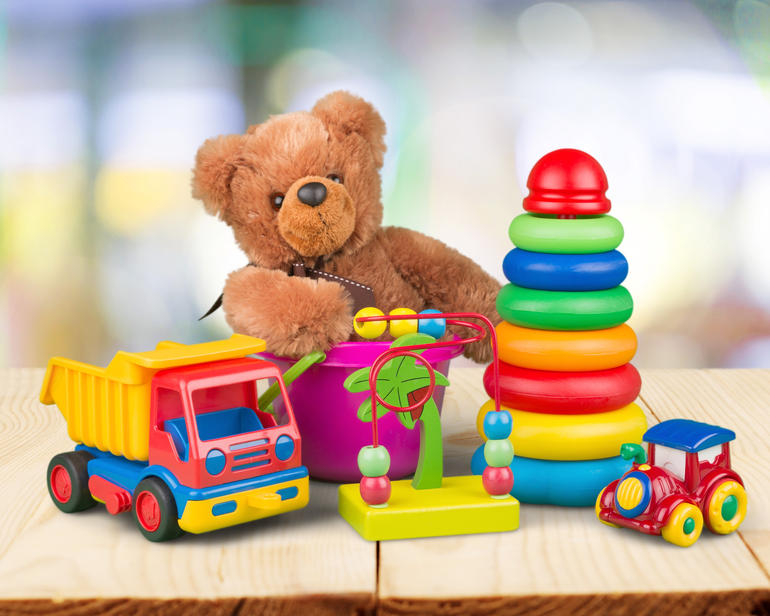
Picture Description. I’ll show a picture and ask the class to tell me what they see, especially asking about relative positions, looking for ‘next to’, ‘behind’ and ‘in front of’. This is from the famous toy shop, Hamleys, in London.

Vocabulary boost. A quick game to review some recent words and their antonyms. I’ll board these words, the students have to write the opposite. For this, I’ll hand out small writing boards and they can work in small teams.

clean

quiet

polite

friendly

The class probably won’t know the last two, so it’s a chance to show how we form opposite words. I can follow this up by asking the opposite of happy, well, tidy etc.

Student Survey. These are a great way to get the students talking to each other. I prepare a short questionnaire, and they have to ask three other students the questions. These are based on today’s lesson of counting, and recycled vocabulary.

How many …. do you have ?

pens / books / brothers / sisters / pets / computers

After that, it’ll be break time, then book work … and then my day will be over !

New Teen Class: Once bitten … twice bitten ?

Saturday 12th January

I vowed NEVER to teach teens again after my last experience(s) at this centre: I covered one class at a different centre and, apart from two or three students, it was a total nightmare, while my own class was a wonderful teen-spirit bitches brew of arrogance, attitude confrontation and contempt.

However, in the spirit of ‘Keep calm and carry on’ or getting back on the horse that has just thrown (and kicked) you, I agreed to a new teenage class. I have already met this class; I substituted one night for them and I was dreading it. However, they were delightful, only one ‘difficult’ student and that person piped down after the first period. One of the students even came up to me afterwards and apologised for her class’s behaviour and disrespect … so sweet.

With the ‘Friends’ exercise (pictures of five men and students have to guess their personality and occupation), the subtext is ‘don’t judge a book by its cover.’ This could be adapted or paraphrased as ‘don’t judge a class by its (text) book.’ At my old centre, I reviewed a book before my first lesson with a small class. The subject was 3-D printing, quite complicated … and then I met the class. Of the seven ‘students’, one was special needs (and that student was a darling, a pleasure to meet), two were quiet, one almost to the point of a personality disorder, and the remainder simply tried to out-do each other in stupidity and disruption to the class. I used to start each lesson with the imputation that having pen and paper to hand could be beneficial. They would learn new words and would remember them much easier if they wrote them down. At the end of one lesson, I checked. One student had produced this after two hours:

Notes … or note … taken by a former student from a two-hour lesson. One word: ‘hut.’

I desperately hope this class is better. There are eighteen students, ranging from twelve years old to fifteen years old. That three-year gap can be a chasm at this age.

Their book is quite high level and features many TED talks, which can be difficult to follow for English-learners due to the speed of delivery and range of vocabulary.

These classes are three-hour long, so I need to find many games, activities and opportunities for inter-action, as a balance to the book work which may be rather dry for some students.

I have two young classes in the morning, then this evening class. It makes the day very long, but at least I only have one class Sunday morning, and Tet Holiday is coming soon. On the way home, I may well stop off the Grabbike to pick up some beer. Will it be to celebrate a great lesson or to drown my sorrows ? Either way … beer will be consumed (and Manchester United take on Tottenham, their first real challenge under the new manager).

The lesson plan with activities will follow.