4th December for 7th December 2019 E Up 4 pp. 80 – 81
This is my final lesson with this relatively ‘easy’ class. There are only 13 students, and the class is well-behaved compared to many others. Today, there is a final checkup and a creative project. To keep the festivities going, I’m going to prepare an activity list, covering various subject. These can be done in small teams, maybe pairs or threes.
Name three things we can have for lunch
2. What did this man eat and drink ?
I need the whole sentence using the past tense for ‘eat’ & ‘drink’ and a linking word.
3. Make a sentence: Jane – models 😡 cloths 😀
Jane likes to design clothes but she doesn’t like to make models
Peter – songs 😡 movies 😀 // Tina – pictures 😡 stories 😀
4. Draw a picture of Dali !
5. Tell me four types of art.
6. What are you going to do this afternoon ?
7. Tell me three things we can make.
8. What does Teacher Paul like ? Two thing …
9. Someone who plays guitar is a … // someone who tells the news is a …
10. This is my friend Mark:
He works in films and in plays. What is his job ?
11. Where does he live ?
12. How does Mark go home ?
13. If I go to Nha Trang, what do I need to take with me ? Three things …
14. Space – What is the biggest planet ? // What is the sun ? // Can we hear in space ?
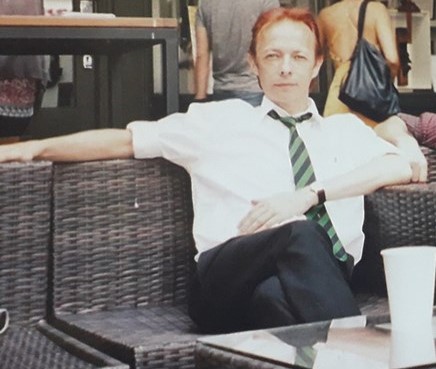
15. Watch Mr Mark. What did he eat for breakfast ? What words did Mr Mark use ? Can you smile like him ?
3rd December for 4th December 2019 AEF 7B pp. 70 – 71
Tonight we focus on a reading, extrapolating information from a chunk of text, and listening. Additionally, there is a test which may occupy thirty minutes so we’ll need to hit the ground running (not so easy when students arrive at various times but it’s Viet Nam … what ya gonna do ?) … so let’s test their knowledge of Mother Russia:
Word Bomb: Russia – Famous people / cities / famous for / history / food / language / artists /
2nd December for 3rd December 2019 AEF Listening p. 72 & Review p. 103
This block of lessons is something of a mixed bag; there’s a long listening piece, a review with a chunk of text, and a printed scenario for speaking practice. Listening is perhaps the hardest. Consequently, the students can be less than engaged with the lesson, faces fall and participation plummets. Although my hands are tied – I have to teach this assigned lesson – I can endeavour to bring it alive, take it off the page and into context.
To kick off – let’s go over the highlighted text and focus on ‘less than’.
In plain English, I would say, “The students will be bored.” This is rather hard and sets a negative tone so, using British politeness, I soften the language. We practised a similar technique in a previous lesson. To recap, how would you describe this gentleman:
We can all see that the gentleman could benefit from going to the gym and maybe reducing his intake of unhealthy food, but we want to be polite and not blunt (or indeed, rude). Consequently, we would say:
“He’s not the thinnest man in the world.”
Here’s how it works – we take the negative adjective (here, and excuse the impolite word, it would be ‘fat’, maybe even ‘obese‘), then apply the opposite (‘thin’) and use it in the superlative form (thin, thinner, thinnest). We simply form the sentence by saying that the subject IS NOT the opposite superlative form – he IS NOT the thinnest man … Try these two for practice – there may be more than one negative adjective you could use:
Now, today’s expression (and expressions are vital for boosting students’ English up to the next level) – ‘less than’ – what sentences could you make here ? The subject could be the man, the film or, more generally, cinema today.
Examples: The man is less than excited by the film // The man is less than engrossed with the movie // The film is less than thrilling // Films today are less than intelligent.
This item comes from China:
Products from China are less than perfect // less than top quality // less than well-made. Finally:
Movin’ on; Tonight’s listening is about a ‘boys’ night out’. What do you think that means ? If they had a friend visit Sai Gon and he asks for a ‘boys’ night out’, where would they take him ?
Shopping in a supermarket ?Bui Vien backpacker street ?Sai Gon Opera House ?Visting elderly people in hospital ?Going to a club and meeting new people ?Late night at the library ?
How do you think this man spent his boys’ night out ?
And now for something completely different; what do you think of this man ?
What’s My Line. I will pretend to be this man answering questions truthfully, and the class have to guess what this man does.
Firstly, are the following true or false ?
This man is said to be worth $180 million.
He is married to the Queen’s grand-daughter
He was arrested in 2009 because the police thought he was a homeless person.
He travels a lot for work, around the world.
In 2016, he tried to become President of the USA
He has a Noble Prize for Literature in 2017 although he has only published two books.
Class must now ask open questions and from my responses, have to guess why I am famous.
He is, of course, a singer-songwriter, an icon of the 1960s, and still releasing music to this day.
Now the students chance. In small groups, they can select a famous person and the other team(s) have to guess who they are. We can limit the guessing to a certain number of questions, or fix a time limit.
A variation on this game is to have a student sit in front of the board and write a name behind them. The student has to ask question and the rest of the class can only answer ‘Yes,’ or ‘No.’ For example, I could write HARI WON and the student could ask:
Am I a man ? // Am I alive // Am I famous ? // Am I old ? // Am I on TV ? // Do I play sports professionally ? // Do I act ? // Am I in the news a lot ? // etc









/ho_chi_minh_stilt_house-5832e2b43df78c6f6a4578a5.jpg)














 Thay Paul's Notes