General Notes about my English lessons and life in Viet Nam.
Author: Thay Paul's notes
London-born English teacher, now living and working in Sai Gon, Viet Nam.
I want to use this site to post lesson notes, extra work, helpful links as well as general notes about my time in SE Asia and Viet Nam. I also want to give real classroom experiences and how to deal with real classes of noisy, unmotivated and resistant students. Additionally, I'll be posting links to films, publishing plays and stories, and introducing friends who work in the arts.
these are a great way to build up your English skills; not only will you learn new phrases, but you will also develop linking skills in speech and thereby acquire a more natural speech pattern.
Yes, I know it takes time and a lot of practice … but it’ll be worth it.
The previous post focused on the verb ‘make’. Today, we’ll turn our attention to the verb:
Take
Do you know these collocations ?
turns speaking // it up with the manager // up my trousers a little //
a good look at yourself // a hike ! // medicine // a deep breathe
Which would you use for:
1 You have a complaint at work.
2 You buy some clothes but they are too big.
3 You want to tell someone to go away !
4 try to be calm and relax.
Moving on, some everyday collocations
What do these collocations suggest ?
Widely available // routine check-up
disperse the crowd // boost employment
catch up with the news // catch up with friends
Which would you use for:
1 We hope the new factory will …
2 Police were called to … because there were too many people.
3. I’m going to my old university and …
4. Let me watch BBC and CNN, I need to …
fresh fruit and vegetables are widely available in Sai Gon and Vietnam
Find longer definitions for these collocations.
Adequate supplies to meet demand
Revised edition
Cause insurmountable difficulties
Major turning point
Set realistic aims
1) Enough things so that everyone that wants one can have one
2) Know what you want to do but it must not be too much for you to be able to do it.
3) Make problems which people will not be able to solve or cause problems that people are not able to work properly.
4) A very important moment when things changed completely
5) A new book, similar to the old one but with more up-to-date information, or mistakes have been corrected.
New iPhone on sale at the Apple Store … but will there will adequate supplies ?
This film, finished in 2014, was shot in 2008 while I was living in Berlin and I attempted to give it a 1920s feel. It’s based on the famous novel by Hermann Hesse:
The novel, which was published in 1927, is a book within a book … a young man finds a diary written by an older man and it is this diary which forms the bulk of the story. As readers, we are free to choose how much to believe of the ‘diary’; is it all true, all fiction, a combination of truth, half-truths and wishes ?
The book certainly has a surreal quality to it, moving from realistic descriptions to a final sequence which seems to resemble a dream or fantasy.
The main character, Harry Haller, refers to himself as a steppenwolf, that is someone who craves human companionship yet is painfully introverted and uncomfortable around people. This dichotomy is central to the book.
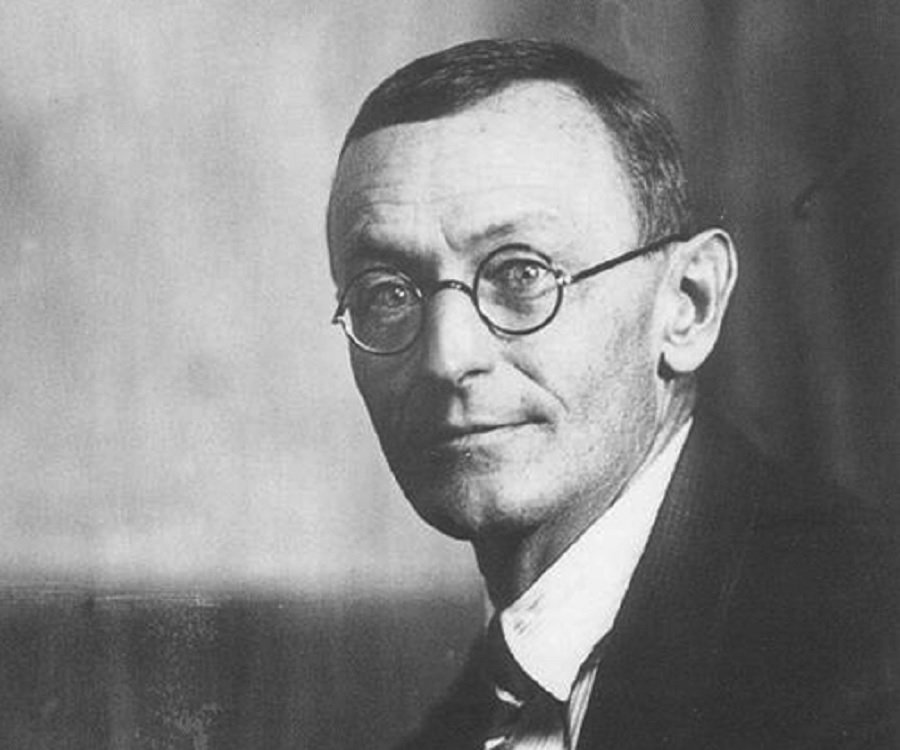
A paperback edition of the novel
For the film, I choose areas of Berlin that were more historic and evocative of the 1920s, as well as selecting some ‘modern’ classical composers who were contemporaneous (Martinu from Czech Republic, Hindemith from Germany), along with W.F. Bach (who is mentioned in the book). The film plays out with a melancholy solo guitar piece by the incredible gypsy-guitarist Django Rheinhardt.
I also used colour filters towards the end of the film, as in some silent classics, indicating that the sequences may or may not be ‘real’ … it is up to the viewer to decide.
The film style was heavily influenced by German expressionist cinema of the inter-war years, directors such as Fritz Lang, G.W. Pabst and mostly F.W. Murnau.
Mr Molnar Levente, a Hungarian actor, was in the highly successful ‘Son of Saul’ film, while Mr Martin O’Shea has appeared with Kenneth Branagh and Bill Nighy in the Tom Cruise film ‘Valkarie’.
Ms Willow de la Roche gave, I feel, an amazing performance. I’m so sorry it took so long for the film to finally be cut.
Technical details: I shot the film entirely on Super 8, then had to transfer onto a compatible disk for cutting on a Windows-based laptop. At the time I was moving between Berlin, London and Sweden and furthermore, I had to learn computer editing from scratch.
Sometimes the best way to learn is just to see mistakes … and correct them. Look at this letter:
Check for:
spelling
grammar – simple or continuous form ?
tenses – are verbs in the right tense ?
Right phrases or idioms
new vocabulary
Every days I wokes up at between 6.00 am and 6.15 am. I always usually do the same thing namely get up, brush my tooth, put the kettle in and make coffee. Nowever, on last yesterday I getted up at 5.00 because I must to go to the airport to meeting my friend.
I had a hard time get a taxi because it was cats and dogs raining. On the airport there was so much people, all looking exhausted and depressed by the weather bad. I have never come on a plane without one time when I flyed to Ha Noi.
I seemed to wait forever for my friend. Maybe she had a problem immigration. But no I seed her and she looked very cute but also exhausted and also a little smelly.
Instead of wenting to home, we came to a nice coffee shop with great coffees and good music and also so many people so we having to waited for a sit. The coffee made us to wake up so then we came to home but first she wants to doing some shop.
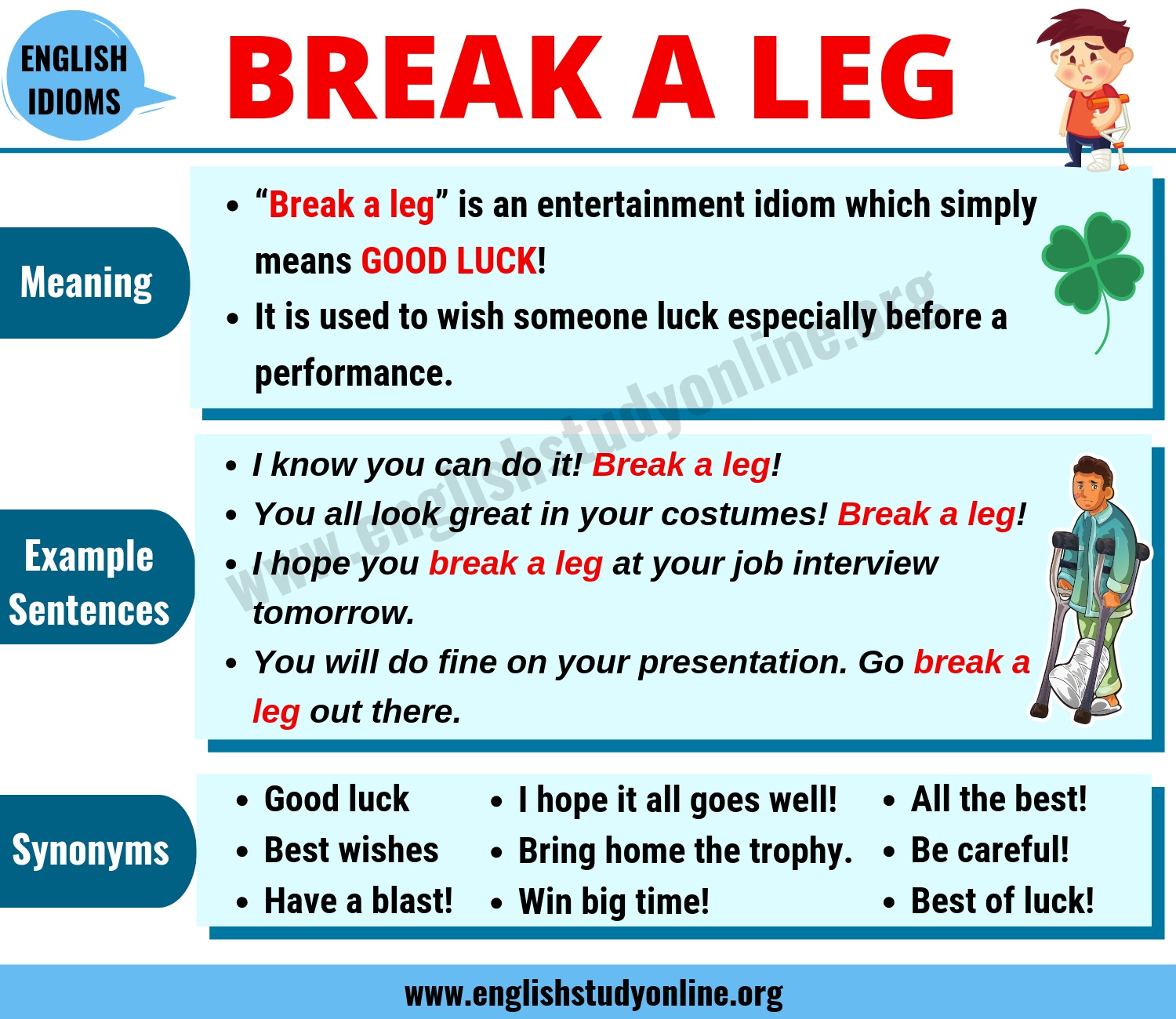
I taked her to Diamond plaza and we saw many shops, a whole multitude of things to see and do. We saw beatiful dress from silk made but it was too very expensive; it cost a leg and an arm. So instead we did window shopper which is more cheaper.
Class activity. Assign each student, or group, a paragraph and see who can correct the mistakes first. Other teams listen to make sure the answers are correct.
Email correction
Hi Thay Paul
I want to talk about our next class schedule. Handy for the rest of you on Sunday. I think we can study on Saturday night. I finish work at 5pm and go back home. Therefore, we can start studying English at 7pm.
How do you think about that schedule? May you think and get back to me anytime?
Thank you and hope you have a great day!
This is a real email I received.
Can you write a better version ?
Plan
“I want” = can be too strong … “I would like” sounds better, more polite
“Handy for the rest of you on Sunday.” What does this mean ?
Ask a question rather than tell the time.
Reply to me but don’t write “anytime” – give me a time (“before tonight.”)
OK … you try:
Hi Paul
I would like to ask about our lesson time tonight.
Today, I finish work around 5 so would it be possible to have our lesson at 7 ?
I hope this is more convenient for you so you can rest on Sunday.
Could you get back to me before tonight?
See you later
Ms Na xo
(xo in the west is a friendly way to end a letter between close friends; it means kiss and hug)
The American singer-songwriter Elliott Smith wrote a song called ‘XO’.
Text correction
Correct this text: a young lady is talking about her likes and her best friend.
For higher level students, try to rearrange making complex sentences, using clauses, relative pronouns and discourse markers.
I very like pineapple and all fruits. Because it are healthy. Today was wet very, it rained cat and dog. Sometime I read book and watches movie. My work is very boring, same thing, day out, day in. I wants to play badmington with my friend. She am very good, she play for the school team. Together, we is the bestest. She is more tall as me but I am pretty more. We likes to see movie Korean on cinema.
Upper – Intermediate Level
A teacher writes to his HR manager recommending a new teacher.
Activity 1:
How would you reply ?
What do you think of the email ?
Could you improve it ?
Dear HR, this is John Smith. I wanna let you know of a super cool friend of mine who would be a brilliant teacher here She’s 24 full of energy and enthusiasm. I know she will be well good. Her names Agnieshzska … Agneeszka … or something like that and she’s from Poland, but her english ain’t bad. She went to high sChool and got sum exams in geography and cooking. I hope you take her on the students will love her like, yer know, lots. See ya
Johnny
Activity 2: you don’t feel the candidate is suitable. Write an email back to Johnny
CORRECT THE MISTAKES IN THIS EMAIL:
[A sample answer follows the photo.]
Dear Johnny,
Thank you for your introduction.
Unfortunately, We need experience teaching teacher, over 2 years. Beside, they must have degree, Tesol,… Especially, native speakers.
It’s so sorry. Ms Agnieshzska is not suitable for this position.
If you have any friends, who satisfy necessary conditions as above, please introduce to us.
Have a nice day!
Penny Lane English School
Dear Mr John (Johnny could be a little too informal)
Thank you for your introduction.
Unfortunately, we only employ teachers who have at least two year’s experience. In addition, they have to hold a degree and a recognised teaching certificate. Finally, we only hire native speakers.
As such, your friend would not be suitable for this position.
If you have any friends who satisfy the necessary conditions, please feel free to introduce them to us.
Have a nice day!
Penny Lane English Centre
NOTES: see ‘year’s experience’ – possessive
I didn’t use the friend’s name because John couldn’t write it properly !
As usual, I use bold font to highlight words, expressions and idioms that students can learn and then use in their everyday speech. Remember, some expressions are only used in some situations, but an IELTS instructor will always notice an attempt to use a wider variety of English.
Next week, one of my IELTS classes has their speaking test therefore this blog will help, I sincerely hope, to prepare them, and enable them to achieve a commendable result.
With that in mind, tonight’s class will just be practice, practice and … more practice.
I try to relax my students by telling them that passing IELTS is easy (that normally gets their attention). I have to elaborate; IELTS is easy because they
TELL YOU WHAT THEY WANT TO HEAR
Namely, vocabulary, grammar, pronunciation and para linguistics (body language, eye contact, stress, intonation, rhythm) and fluency (the ability to speak without overlong pauses) as well as answering the question relevantly.
Let’s break that down:
Vocabulary: low-frequency words // idioms // expressions //
Structure: complex sentences employing discourse markers and clauses
Let’s kick off with complex sentences. Here’s a link to a previous blog regarding just that subject; there are a number of exercises for students to practise:
The above blog gives an example of answering a question about laptops, then allows students to compose their own response on subjects of their choice.
Finally, here are some expressions that can be used to ‘spice up’ a student’s talk as they are all everyday phrases though some will be UK-specific as they are part of the common culture:
Not my cup of tea = a polite way of saying you don’t like something.
I can take it or leave it = have no strong feelings about something.
I’m really into it = like or love something very much.
It doeswhat it says on the tin = something that does the job, no more, no less (this is from a UK TV commercial).
Vocabulary game:
To pracise using low-frequency words, put students in teams, giving each team a set of IELTS words (or phrases, idioms). They have a set time, maybe a minute, to use as many as they can, speaking about any subject they choose.
Some students may prefer to be given a set topic, so choose typical general subjects such as shopping, food, their city or country, free time etc.
Words and expressions are:
ubiquitous // somewhat // not my cup of tea // significant or significantly // I can take it or leave it // exhausting // challenging // miserable // having said that // I’m keen on // all in all // consequently // allow me to explain // eventually // thrilling // put up with
Today is an extended listening piece from the British Council website, then some suggestions for talking subjects in which you can practice using any new vocabulary.
Listen first and see how much you understand. You will probably need to replay the recording several times.
Finally, listen along with the text, repeating any expressions and copying intonation and stress.
Charlie: Mum! That’s my computer! Mum: I know, I know. Don’t worry, I’m changing your privacy settings. Charlie: Privacy settings? Mum: Yes. There are privacy settings on your social networking sites. Your account is totally public at the moment, and you’re logged in! Charlie: Oh. What are the privacy settings for? Mum: To make you safe online. You want to be safe, don’t you? And for the right people to see your information, not EVERYONE. Charlie: Everyone? Mum: Yes. If you don’t change your privacy settings, when you upload a photo, anyone can see it. It’s important to change them so only your friends can see them. You don’t want everyone to see everything, do you? Charlie: No! But I can delete things, can’t I? Mum: Well, you can, but it’s very difficult. Some things stay there forever. Charlie: That’s really scary, Mum. Mum: Don’t worry, but you must learn how to stay safe. You mustn’t tell anyone your password! Charlie: I won’t! Mum: Crazy Charlie one two one, isn’t it? Charlie: Mum! Yes, it is. How … Mum: It’s on your notebook. Right there. On your desk. It isn’t a very secret place, is it? Charlie: No, it isn’t. Charlie: Mum! That’s my computer! Mum: I know, I know. Don’t worry, I’m changing your privacy settings. Charlie: Privacy settings? Mum: Yes. There are privacy settings on your social networking sites. Your account is totally public at the moment, and you’re logged in! Charlie: Oh. What are the privacy settings for? Mum: To make you safe online. You want to be safe, don’t you? And for the right people to see your information, not EVERYONE. Charlie: Everyone? Mum: Yes. If you don’t change your privacy settings, when you upload a photo, anyone can see it. It’s important to change them so only your friends can see them. You don’t want everyone to see everything, do you? Charlie: No! But I can delete things, can’t I? Mum: Well, you can, but it’s very difficult. Some things stay there forever. Charlie: That’s really scary, Mum. Mum: Don’t worry, but you must learn how to stay safe. You mustn’t tell anyone your password! Charlie: I won’t! Mum: Crazy Charlie one two one, isn’t it? Charlie: Mum! Yes, it is. How … Mum: It’s on your notebook. Right there. On your desk. It isn’t a very secret place, is it? Charlie: No, it isn’t.
Talking subjects
Do you have passwords ? Do you have DIFFERENT passwords for different websites ?
Is your password complicated and contain a mix of letters, numbers and symbols ( jT4u#p2W%) or easy to guess (john2020).
What should you be careful of when opening emails ?
Have you ever been a victim of an online crime ?
Do you know of any scams in your country ?
Thai police arresting two online scammers
A scam is a trick to cheat people into paying for something they either don’t need or will never receive for example, pretending to be from Microsoft and saying that the user’s computer is infected BUT it can be fixed IF the user sends money.
Rewrite the following texts using new vocabulary, phrasal verbs or idioms, where appropriate. Feel free to change verbs into continuous. Correct the mistakes and use better syntax (sentence structure).
Tips:
Use clauses to combine sentences about the same subject.
Use ‘however’, ‘having said that’ etc in place of ‘but’.
Incorporate any new language style you have learnt on the course e.g. negotiation language, polite language, and see if you can use alliteration (words beginning with the same letter).
Warm up: Here’s a short exercise. Try to rewrite using as few sentences as possible, which will entail employing complex sentences, linked by discourse markers. An example answer follows.
My friend will come to visit me. In HCM. I will show him city. In my city is many things to show him. Him like market. I show him market. And restaurants. And museums. Many museum in HCM. I hope he will likes.
My friend will soon pay me a visit here in Ho Chi Minh City and there is such an abundance of things to see and do, for example my friends enjoys markets therefore I shall take him to several, followed by some great local food in one of the countless restaurants. Additionally, he adores museums and we are spoilt for choice here with many fascinating exhibitions.
Now … your turn.
Firstly, this is one large chunk of text, no paragraph breaks, so organise the writing.
Avoid repeating the same word or words. Use a thesaurus to search for synonyms.
I’ve started you off with two example sentences however, the rest is up to you.
My name is Tony. I am 23 years old. I am a accountant. I very much don’t like my job. It is not exciting. Because I do the same thing every day. All day. I like travel. I like Thailand. I very want to go there. At there I can eat food spicy. I like football. I don’t like baseball. Sometimes I watch on TV football. I like very much listen music. I play piano. I play recorder. My friend asked me to be in his band but his music I don’t like. He is my friend. His music is horrible. He is very bad guitar man. I live in HCM. I don’t like sometime. Now it rain every day, very heavy. We have to live with bad rain. Every day. The traffic is bad. Much motorbikes. Air very not good. I like to shopping. I buy shirt. I have many shirt but I buy more shirt because I like shirt, I have red blue green yellow shirt and black. Today I gets email. Email is from friend. I have not see friend for long time. I was surprise.
My name is Tony and I am 23 years old. By profession, I’m a accountant. However,I don’t like my job very much . I do the same thing everyday so It is not that exciting.
I like travelling and I really want to visit Thailand where I can eat spicy food as well as seeing golden temples.
Who knows … maybe if you keep writing, you will become a Noble laureate like our writers
Today’s theme is the use … the correct use … of discourse markers.
Furthermore, speakers MUST NOT say ‘like’ or ‘kinda’.
It is a pet peeve of mine to hear people interrupt the flow of a conversation with the unnecessary and incredibly irritating application of the word ‘like’ as a … totally incorrect … discourse marker [or discourse particle]. To illustrate, at a previous centre, a centre with a very prestigious reputation, I heard some US teachers say the following:
“I went out last night and had, like, two beers.”
“Are you looking for, like, an apartment
This filters down to the students, some of whom deliberately say ‘like’, because they think it makes them sound American and cool. I correct that misconception; it makes them sound that they are unable to complete a simple sentence. When I notice this as a problem, I tell the student to listen to themselves and count how many times they use ‘like’ erroneously.
And so, to work …
Practice how to speak fluently and with the correct use of linking words. For example:
however // having said that // although
firstly // following that // after that // and then finally
Just a minute
Students must speak for a minute with no deviation, hesitation or repetition.
Students can select a subject and then ask another student or team to speak for a minutes. Otherwise, choices could be:
books // local food // foreign food // clothes shopping // music // siblings //
Speaking Test
You meet a fellow traveller at the airport when your flight is delayed. Make small talk conversation including idioms and expressions.
To make this more of a competition, award two points for every idiom, one for every expression, and additional points for discourse markers.
Topics can be:
Talk about the flight. How bad the airline is, frequently late. Do they fly often ?
Introduce yourself. Why are they flying ? Business or pleasure ?
Ask about work – do they like it ? Where do they work ?
Ask about family … but not too personal
Ask about where they live
REMEMBER to react, and to use stress and intonation.
Oh, really // how interesting // tell me more // where is that exactly ? // Oh, right // Me too ! // I had a similar experience //
Conversation practice
You have plans to go to a new restaurant but one of you can’t make it because something turned up. Apologise and give the reason why you must change the plan. Offer alternative suggestions.
Example:
Hello, Sharma ? I’m so sorry, I can’t make it tonight.
Sharma will ask why. Give your reason
Have to work late // family member is ill // have an exam tomorrow // missed bus // not feeling well // have to attend a family event //
Activity 2
In the UK we try to hide our emotions, keep a stiff upper lip, but sometimes people can get angry. Repeat the exercise, but this time, the person waiting is in a bad mood.
Now the person waiting does not accept your excuse.
This the the third time you’ve cancelled ! // I’ve already been waiting 30 minutes // You only tell me NOW ! // I don’t care, get here now or never call me again ! //
How could you apologise and offer to make it up to her ?
A chance to practise IELTS-standard speech, answering questions on everyday subjects.
Speaking topics
laptops // holidays // engineering // work // travelling // study
motorbikes // family // living in your town or city //
laptops
Introduction
1stpoint
2ndpoint
anecdote (personal story)
conclusion
This first example is a warm up; you will need to speak a little longer, but this introduces the main points to include.
Laptops are an incredibly useful piece of technology. They can be used for work, hobbies, music and to stay in touch with friends.
I use my laptop every day. I plan lessons and use the internet to search for lesson plans, English language games and interesting video clips to show my students.
Because I live so far from my home country, I find the internet essential. I can maintain contact with friends and family by using: Skype, Facebook, Viber, Instagram … well, there are so many social media sites.
I like Apple; I know there are very expensive, but they seem to work so well. I rarely have a problem with my computer which is great because I know nothing about IT !
There was one issue I had in Vietnam. My plug snapped and I had to buy a new cable. I eventually found a store in District 3. I had to wait 30 minutes but finally a man came with an ‘Apple’ plug … and it was less than half the UK price.
To conclude, laptops are part of my life. I use them every day for work, relaxing and chatting with friends.
Check how many adjectives and adverbs are used. Are you utilising such word types ? If not – do so !
Useful expressions
A strong introduction:
That’s a very interesting question
Well, there is so much to say about that subject, where shall I start ?
It’s funny you put that question to me because earlier today I was just thinking about …
To buy time, or to show the examiner that you have a wide vocabulary but need to check the correct word:
Let me think (about it)
How can I put it … ?
What’s the word … ?
To conclude:
At the end of the day
All in all
To wrap up
Now … your turn. Either in pairs, or at home by yourself, prepare an IELTS standard presentation, using the formula above. Choose from:
Job – // What do you do ? // What line are you in ? // where they work
where they live
how long they have lived there (present perfect)
are they married ? If so, do they have children ? How old are they ?
the weather- // Do you think it will rain later ?
NOT about money, religion, why NOT married, or don’t have children.
To answer:
Oh, really // You don’t say right ! // That sounds interesting // Tell me more
Wow, fascinating // Do you like your job ? // How long have you been married ?
How old are your children ? Do you have a photo ? // What are you studying ?
Practice:
In a new class, ask each other some general questions. This is best done in pairs, so students don’t feel embarrassed speaking in front of the class. See how long you can keep the conversation going.
Fell free to add new questions.
Clothes
Which clothes do you like ?
Express what you feel about these clothes, whether or not you would buy them, or do you know someone who would like them ?
Vocabulary:
I choose the because it’s …
stylish // cool // beautiful // colourful // great quality // chic // really suits me
fashionable // trendy // so modern // really with it // I feel a million dollars //
however, you may feel it is …
expensive // ugly // gaudy // bad taste // not my style // old-fashioned // hideous //