This was a one – to – one lesson for a lady about to retire and move from Vietnam to Boston, USA. The assigned book work was about a young man climbing mountains and hang-gliding; I felt this was more appropriate to my student’s needs.
Deciding what to buy
You are on a shopping trip to the USA
Which of these items would you buy ? Which appeal to you ? Which hold no interest ?
Vocabulary
That looks wonderful // I need to try it (them) on first // That’s good quality
No, that’s a rip off (too expensive) // That’s not my style // That really suits me
You must be joking ! // Brilliant ! // Wrap it up ! // Do you take credit cards ?
Today’s blog, or activity sheet, is about persuasion; the ability to change someone’s opinion or make them do what YOU want THEM to do. This is known as having ‘the gift of the gab.’
This skill is mostly associated with salesmen who, without cheating or lying, make their product sound so wonderful that you simply HAVE TO buy it … and then you get home and realise you have parted with your hard-earned money for something you don’t want, don’t need and will never use.
Before we kick off, let’s roll out some new expressions:
One born every minute = negative, means that the person is an idiot, who bought something useless.
He/She saw you coming = negative, means the seller thought you would buy the poor quality item or pay too much for it.
Paid over the odds = negative, means paying too much for something.
Could sell sand to an Arab = positive, means the seller is so persuasive, he could sell anything to anyone (here, people who live in the desert do NOT need to buy sand).
Unique = positive, only one or something totally different and special.
Examples:
You paid £50 for that shirt ? He must have seen you coming !
The hotel was $75, I think I paid over the odds.
She’s such a great seller, she could sell sand to an Arab.
I can’t believe he though it was a real Rolex watch … for €30. Oh well, there’s one born every minute !
Activity
Welcome to
Mr Paul’s Wonderfully useful store
Here, you can find all sorts of incredibly useful and wonderful items.
The students have to practise their selling and persuasive skills, in order to sell these … ‘wonderful’ … items. As always, an example:
One grey sock
A truly wonderful sock (one), almost nearly perfect
Ladies and gentlemen, step right up, I have an absolute unique items for you. As you see, I have, just today ONLY, one beautiful delightful almost never-used silver-coloured sock, perfect for men, women or even children, yes, they can grow into it !
This amazing item, one of a kind, can be used for so many things, for example … have crying children ? Simply put the sock on your hand and … a PUPPET ! Guaranteed to stop all tears. Been shopping and have so many dirty, heavy coins ? No problem, simply put the coins in the sock. Having a party ? What would look better than this magnificent sock hanging proudly above the door ? Can use it for Christmas, Thanksgiving, Tet Holiday, Easter, Passover, Ramadan, Birthdays, Weddings … you name it … You CANNOT live without it …
You can have this priceless item for just £100 … OK, to you, today only … £75
Now … your turn
Write a ‘sales pitch’ for one of these items, think of some uses for it, then set a price. Try to convince your classmates to buy your unique item.
Some ideas for uses are at the end of the blog
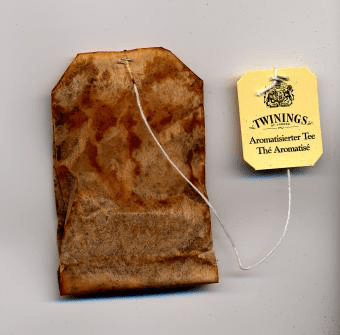
One old Tea-bagOld wine bottle corkOld banana skinBroken old umbrellaLovely old T-shirtA flea market where people can sell … anything. One person’s junk is another person’d treasure
Tips and ideas:
teabag – mint tea – gets rid of spiders & mice : put on eyes to reduce puffiness
A lesson designed to encourage speaking and student interaction, especially useful for upper-intermediates or IELTS students, who are expected to be able to speak for two minutes fluently, with a good range of vocabulary, a knowledge of phrases and expressions, not to mention said speech to be delivered with pacing, rhythm and intonation. Furthermore, as previously demonstrated, long, complex sentences with ideas linked together with discourse markers.
Without further ado … let’s take in a movie
(to take in a movie = to go and see a movie, as opposed to watching a DVD, streaming etc)
Vocabulary
I prefer / choice / my taste / not my taste / trailer / concession stand
all-star cast / director / film studio / controversial/ family film / book online
What’s on at the cinema ? What’s playing this week ? Not my cup of tea.
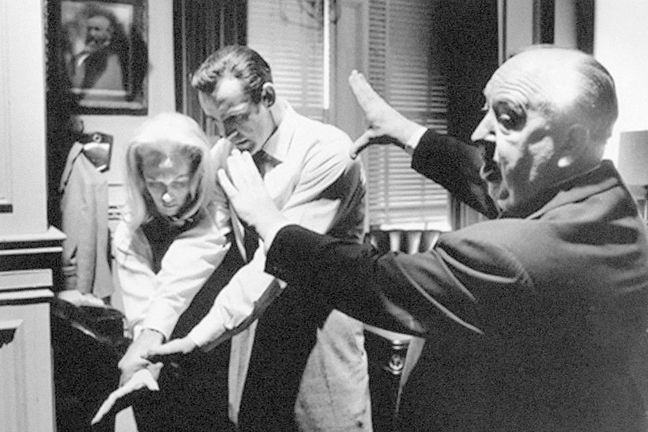
ACTIVITY 1: Use some of the words or expressions to talk about these photos:
Example
Alfred Hitchcock, a famous director from London, is demonstrating to the cameraman what shot he wants. Hitchcock was born near my house in east London and went on to work in Hollywood with all-star casts. However, I prefer his early films made in the UK although the famous or infamous film ‘Psycho’ is one of my favourites despite being extremely controversial.
Now … your turn
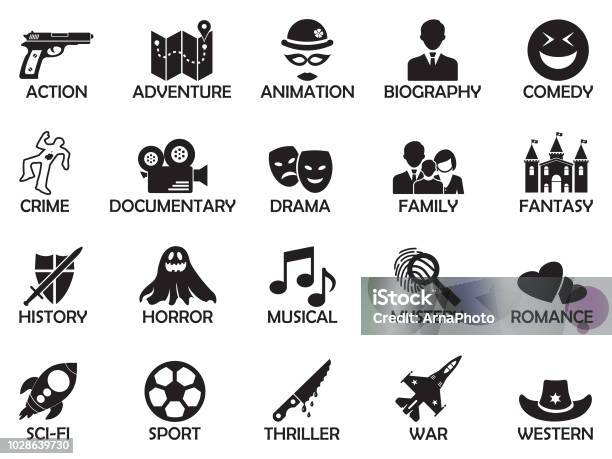
Activity 2:What types of film can you name ?
Horror // Action Stories // Sci-fi // Drama // Thriller // Romance // Biopic // Comedy // Western // Animation (Anime) // Musical // Documentary // War //
Stories about people’s lives and emotions // Space films, or films set in the future // Films about fighting and soldiers // Stories about real famous people // Loud, exciting films with explosions and fast cars // A cartoon, illustrated film // True stories with real people, not actors // Stories about police or spies or crime // Scary films about ghosts or monsters // A film about cowboys, set in USA // Love stories // Funny films // with singing and dancing
Which genres are these ?
Which do you prefer ?
Prefer– to like one thing more than something else
I prefer drinking coffee to tea
He prefers living in Sai Gon rather than Hanoi
The students prefer the small room
Activity 3:
Look at an up-to-date cinema listing. Discuss what is on this week. Which films (if any) appeal to you ?
Which do you prefer ?
Going to the cinema, watching a DVD or streaming a film online ?
What are the advantages or disadvantages to each one ?
Must or have to ? Revision
The new Spider Man film may be sold out. We ______ buy tickets NOW !
I hate comedies ! Do I _____ to go ?
You _______ eat too much popcorn; it’s bad for you.
You ________to be over 18 to see this film
You don’t ____ to bring your passport to get intoa cinema in Viet Nam.
The final activity sheet is devised for a totally different type of client. This firm uses urban, street lingo (language), trying to attract a young, modern and dynamic workforce. They attempt to stand out from other companies by their use of non-standard vernacular and images.
There are some notes at the end of the blog to help explain some of the vocabulary.
TEACHERS’ NOTE: When I make physical copies, I use an appropriate font, looking like a hand-written flyer, so play around with the style and alignment.
GOTAJOB INNIT
Fun work for fun peeps
Here at Gotajob Innit, we try to sort you out with cool work, so you can get some cash to party and buy some wicked stuff. Work don’t have to bring you down, man 🙂 it can be a laugh …… INNIT !!!
Why do this ?
When you could do this ?
Fun work for fun peeps
Yo – check out these little beauties
1 Junior web designer. Travel company
Young, energetic company seek candidate to join their lively and fast-moving team. Some experience preferable. Basic programming skills essential. Qualifications not necessary, talent and potential more important.
Candidate must be fun, energetic and able to work to a deadline. Candidate will be required to submit an example of own work.
Salary starts at £17K per annum plus bonus.
2 PR – party planner
We love this job – we wanna do it. Young and amazing person needed to promote events and organise parties. Take something boring and make it F U N
Got to be able to work and drink, and organise and drink, and shout at people.
No experience, no qualifications … can you drink ? This could be your perfect job. Salary – lots of fun and drink and also some money.
3 Lotteria shift manager
Join this fun, lively, bright red hangout and get experience in the food and retail industry. We know you ain’t going to stay long, but tell your friends and give them a discount ! You’ll be in charge of a small team so you can be boss, a little, and tell people to clean the floor hahaha ! The money is rubbish, but you can eat all the junk your stomach can digest. Great way to meet other cool cats. You can wear the cool uniform and the uber-cool hat – WOW !
Good luck, peeps !
Notes:
Wicked means very bad or evil in standard English, but in urban talk, it means very good, amazing and fantastic.
Gotajob (got a job ?) is taken from a British TV show from the 1980s, when unemployment was high. One of the characters walks from job site to job site, asking, aggressively, “Gotajob ?”
Innit is urban vernacular for the tag question ‘isn’t it ?’ as in, “Hot today, isn’t it ?” or “Hot today, innit ?”
Peeps is taken from a British TV comedian, and is short for ‘people’, but was later used to mean someone’s close friends, ‘my peeps.’
Rubbish is what the British use for the US English trash or garbage. Also used to express contempt for something that is not good e.g. “The film was rubbish !”
Lotteria is a Japanese fast-food chain popular throughout east Asia. You could substitute it for a similar franchise in your country.
A second job market or careers fair activity, following on from the previous blog.
The idea is for some students to work for a recruitment agency, while other students search for an appropriate career. The recruiter will interview the candidate then suggest possible jobs.
Students will develop speaking skills in both asking and answering questions, as well as having an opportunity to practise using new vocabulary, phrases and terminology.
This time the focus is on office work, future executives, movers and shakers, and is aimed at business graduates and professionals.
Again, the name of the company is important. They use a London icon, symbol of reliability and stability to attract clients.
Big Ben Consulting
The biggest name in the City since 2009. Specialists in white collar recruitment.
World-wide reputation for matching the best people to the best jobs.
Start your countdown to a new career NOW with Big Ben
Number One: Trainee Marketing manager. Pharmaceutical company
International company wishing to increase it’s presence in Vietnam requires young person to set out on a career in Marketing.
No experience required but must be presentable and willing to work hard.
A degree in Marketing or business studies is preferred.
Candidate must be enthusiastic, reliable, honest, trustworthy, able to work as a team as well as on own initiative.
General computer skills required. English essential. Clean police record.
Salary entry band £11K – £12.45K, rising annually.
Number Two: Junior Sales. Import / export
Learn the art of selling with this Singapore-based company. New office in central business district require a young person. No experience required, full training given. Deal with customers by phone, email and face-to-face. Candidate must be highly presentable, highly motivated and want to make a high income. Must own new business suit. Must be confident, sincere, persuasive and articulate. English at IELTS 7.5 or above a must.
Salary basic (to be negotiated at interview) plus commission.
Number Three: Junior accountant. International logistics company.
Position opened up for accounting junior. Entry level position with guaranteed job after period of probation. Degree preferred but not essential. Work to a routine. Would suit quiet, dependable, hard working, serious-minded person.
Be part of a small team. Benefits include free membership of company chess team and a safe and secure future.
For more details, contact us online or drop in to one of our shops.
Here are some sheets, which can be adapted and printed out, for students to practice job searching. There are three in total, the remainder will be blogged over the next few days.
Students would need to be at intermediate level, motivated and willing to move around the room, be active and creative. Students that just want to sit in their chair and NOT move for three hours (oh, boy, there ARE students like that), will not respond to such a kinetic activity.
Normally, depending on class size, I will have three employment agencies situated around the room. One or two students will pretend to work for one of the agencies, and they will greet prospective employees, and discuss their job prospects, training, experience etc.
Best way is to show an example.
The first company, very British, is called ‘Bacon ‘n’ Eggs’
This refers to a typical British breakfast, so the agency will be concentrating on the hotel and catering industry. Students can invent a character and a work background. Remember, the agency wants to find people for the job, so they will have to be very persuasive and optimistic, to really ‘sell’ the job (even if it isn’t very good).
Bacon ‘n’ eggs
Employment Agency
The number ONE choice for employers and job-seekers.
Set out on your career here – jobs at ALL levels in the service industry, from hotel management to domestic staff, permanent or temporary.
Pop by today for a chat … and start work tomorrow !
Qualifications: Degree or current student, preferably in Hotel Management or related course.
Experience: Not necessary but work in service industry or food retail an asset.
Personality: Out-going and confident, able to speak to staff and guests. Must be flexible and focused.
Skills: English imperative. Japanese or Russian an asset. Spreadsheets and Powerpoint.
Salary: to be negotiated
2…Sous Chef
Qualifications: Catering certificate. Health certificate. First aid.
Experience: 3 years in a 3* or above establishment.
Personality: Strong-willed, reliable and determined. Able to cope under pressure.
Skills: Communication skills. English a bonus but not essential.
Salary: £18 – 21 per hour depending on experience.
3…Domestic engineer (hotel cleaner)
Qualifications: Not necessary
Experience: Previous domestic engineering work would be an asset.
Personality: Hard-working, cheerful, dependable, able to work on own initiative.
Skills: Good at cleaning.
Salary: £4.75 rising to £4.99 per hour.
Again, this is an opportunity for the class to be inter-active, to mingle, to try out their English skills, and mostly, to break away form the stolid teacher-student dynamic.
Walking along the iconic bookstalls of Paris, by the historic Seine, I found a copy of this book:
The philosophy by Jean-Paul Sartre was the inspiration behind my 2005 film, ‘Bad Faith’.
To encapsulate a weighty, heavy-going and often impenetrable book (at least to me) in a succinct sentence or two, Sartre discusses the concept of bad faith (mauvaise foi) whereby people adopt a false persona or identity, become affected, fake, inauthentic and, as a consequence, loose their freedom.
Freedom was a major issue in the writings of Sartre, so please use the internet to discover more if this interests you.
The story of ‘Bad Faith’ takes place over one single day, in Berlin. An English man, Alan Francis (Russell Shaw) has arrived early in the morning, planning to pay a surprise visit to an old friend, an actress named Julie Retore (Natasha Kepsi). They haven’t met for a long time, but Alan has an offer for her … he is about to make a film and wants Julie to play the female lead.
They meet and discuss old times, and how their lives have changed. However, when Alan offers her the film, Natasha senses their may be more to his offer than would appear on the surface.
The film contains a number of French references, the work of author Marcel Proust, the films of Jean-Luc Godard and the soundtrack features Francis Poulenc. Julie is seen drinking in a French-style cafe, while we hear actress Julie Delpy singing (in French) in the background. Julie also speaks a few words of French to a young student who has forgotten his book (the French poet Rimbaud). The area where the two protagonists meets features a large French church, and Julie’s surname comes from a character in the French-language film ‘Messidor’ (1979).
The issue of Bad Faith is exemplified by the contradictory characters. Alan appears confident, indeed, over-confident, optimist, yet admits to being terrified (in a moment of relatable honesty). Julie, by contrast, appears natural and content as she deals with the minor annoyances of her daily life. Her modest demeanor serves to highlight the affected manner of Alan’s ‘performance’. As Julie points out, it’s “Not enough for you to be a director, you have to look like one, too,” to which Alan admits is “Just an image.” We, like Julie, question this … is it a just image ?
What is apparent is that Alan and Julie had some kind of relationship in the past, when they worked together in tiny theatres, performing for tiny audiences. I deliberately left the extent of the relationship open … I want the audience to decide (just friends, boyfriend & girlfriend, one-night stand, one in love, the other wanting a platonic relationship, etc).
During the script readings, I allowed the actors to invent their own back story and NOT to tell me … so even I don’t know their history.
As the day comes to an end, Alan has to be honest about what he wants, and the scene becomes somewhat embarrassing to watch. We see that Julie is open and honest, she doesn’t want to pretend or hide behind personas anymore. Tellingly, Alan doesn’t seem to understand … or want to understand.
A final ‘clue’ is when Julie returns to her work (and eagle-eyes viewers may spot a tiny photo of Julie Delpy at the front of the desk). We see a copy of Alan’s script upon which Julie places a copy of Proust, a book whose title has been approximately translated as ‘Remembrance of Things Past’.
So which one is really free ? We hear that Alan has to work under producers and acquiesce to their decisions. Julie is alone, but she seems to have choice over what work she does or doesn’t do. Is she happy ? Does she regret her choice ? Will Alan’s film be a success ? All of these are left unanswered. The crux of the film is the interaction of the two leads. If Alan had been less over-bearing and demonstrated humility, would the outcome have been different ? I will let you decide.
CREDITS
Natascha Kepsi
Russell Shaw
David Graber
Steffi Muller
Bjorn Langhans // Christine Muller and Philipp Pressmann
Harri Ansorge, Russell Shaw & Paul Pacifico
Cameras and Edit: Harri Ansorge
Foley Artist: Max Bauer
A film by Paul Pacifico
Seahorse Productions & IRRAH
BERLIN 2005
Buying lunch at a Kina Imbiss (small Chinese restaurant) Alexamderplatz Station, Berlin. Photo by Russell Shaw
Enron used loopholes and poor financial accounting to hide billions of dollars of debt. The company’s stock which rose to over $90 a share in mid 2000, fell to less than $1 by November 2001.
Accountancy words / expressions
annual accounts // I am working on our annual accounts
asset // Make a list of all our assets
budget // We need to increase our budget
business expenses // We must reduce our business expenses
cash flow // Keep an eye on the cash flow
New idioms / collocations
Change of plan = to stop what you are doing and start something new
to handle something = to take care of something
to get hold of someone to speak to or meet someone
Hell breaks loose = will be a lot of trouble
to be into something = to like something very much
more or less = not 100% but almost.
I beg to differ = polite way to disagree
Dialogue Practice:
Two friends are chatting about their work day:
KIM: Hello, how’s your day been ?
Tina: Oh, so-so. And you ? Did you finish off the reports ?
KIM: Yes, more or less.
Tina: You better make sure they’re finished. You know what the Director’s like.
KIM: I know. If things aren’t done, all hell breaks loose !
Tina: Better keep on his good side. What else do you need to do ?
KIM: File some invoices, send off some emails and I need to get hold of Anna in HR.
Tina: I think she’s off sick today.
KIM: That’s a pity. Did you finish the wages ?
Tina: Yes, piece of cake ! Now I’m going through all the bank statements for the last quarter.
KIM: Not cooking the books I hope. Are we still going out tonight ?
Tina: Oh, sorry, I can’t know. Something’s come up.
KIM: What ? I thought you wanted to see the film. Johnny Depp’s in it.
Tina: I know, but I have to work late. Why don’t you ask the Director ? He’s really into cinema.
KIM: I don’t think so !
Tina: Why not ? He’s such a charming man.
KIM: Well, I beg to differ. He’s an old windbag and he drinks like a fish !
New expressions:
off sick = not at work because of illness
old windbag = someone who speaks and speaks and speaks !
drinks like a fish = drinks a LOT of alcohol
cooking the books = making false entries in the accounting
Job interviews, and vocabulary for business meetings
Writing exercise
A candidate is writing to inquire about a vacancy at your factory:
Dear Owner,
Please allow me to introduce myself. My name is Nguyen Trung Hieu and I am 22 with a business degree from TDT University in HCM City.
I wish to start my business career and your company has a very good reputation.
Do you have a position for me within your organisation ?
I have worked as bookkeeper for my uncle’s business in Nha Trang Province and also I worked at Coffee House when I was a student in order to make some extra money.

Please write back if you can help me
Yours respectfully
Nguyen Trang Hieu
How would you reply to this request ?
What were the positive and negative attributes of this letter ?
Now … your turn. You want to apply for the job with Air Asia in India (don’t forget, flight attendants can be both men and women, although the advert doesn’t emphasis this fact).
How would you write the letter ?
What facts are important ? What skills do you think you need ? What type of personality is best suited to this service-orientated job ?
Meeting language
Here is a transcript of a short business meeting. Look at all the non-standard English, the phrasal verbs, idioms and expressions that make up so much of natural English.
Read the text and role play, focusing on intonation and stress.
Right … I think we should start now. Thanks.
OK, so, is everybody here? Who are we waiting for? Hmmm … well, I think we’ll have to make a start without them. We’ve got a lot to get through this afternoon.
Right, well, as you know, the purpose of today’s meeting is to see where we are with the marketing plan, and to work out what we still need to do before the launch, which is now just six weeks away.

By the end of the meeting, we need to have a list of firm action points for the next month. Hopefully we’ll then need only one more meeting next month to tie up any remaining loose ends.
Did everyone get a copy of the agenda I sent round? OK, good.
As I say, we’ve got a lot to get through, so please let’s stick to the agenda. I’ve set aside two hours for this meeting, and we really can’t afford to run over. Ideally, we can cover everything in an hour and a half. Does that sound reasonable?
Ah, Helena, come and take a seat. We started without you.
So perhaps we can get the ball rolling by going through the list of action points from the last meeting.
Bill, you were going to look into the costs of the various options that came up last time. Could you tell us what you found out?
Now match the nine steps in the meeting introduction (1–9) to the descriptions.
Stating the desired outcome.
Introducing the first point on the agenda.
Getting people’s attention, interrupting small talk
Handing over to the first speaker.
Dealing with non-attendees.
Dealing with a late arrival.
Explaining time limits and procedures.
Stating the purpose
Checking people have seen the agenda.
Answers at end of blog
A successful conclusion to a meeting
Answers:
Right … I think we should start now. Thanks. = 3) Getting people’s attention
This blog will help intermediate students develop sentence-building skills, based around the theme of travel and how to relate your experiences or wishes.
To warm up … use the new vocabulary to express your feelings about the following photos:
Make complex sentences using these words or phrases
Example: I recently stayed in a world class, seven-star hotel which was an unforgettable experience for example; the chef created such spectacular food.
Now … your turn
Tower Bridge, LondonMicchu Picchu, PeruDesigner labels and luxury goodsCute Maid Cafe, JapanView from the Willis (Sears) Tower, Chicago, USATrying some of the local food in ThailandThe British magician Dynamo tries a new way to ride a bus.