4th September for 7th September 2019. E Up 3 pp. 40 – 41 Final Lesson 1 – 4 review.
Today is the last lesson, so a lot more writing and work books for the students. There’s also a special Autumn Festival event at the end of the class, so my planning can be quite short. I’d like to make the first part active and interesting, but also reinforcing language and grammar from the recent lessons.
Warm Up: Small groups with boards and markers. Write four things people use for eating (fork, knife, spoon, chopsticks).
Pass around four flashcards (fork, knife, spoon & cup). Student has to say:
“This fork is mine.”
Then pass it on … meanwhile, give the first student a second card:
“This knife is mine.”
Suddenly I say STOP !
I say ‘me’.
The class has to say “This is my spoon – it is mine.”
I will need my TA to explain this procedure . I will board: me – mine / you – yours etc.
I repeat with ‘you’, ‘his’, ‘her’.
Run ‘n’ write: where can I buy a shirt ? Eat soup and salad ? Watch a movie ? Play football ? Students, in pairs, must run to the board and write the word.
Mime: I take a student aside and show a card of an illness. Student then mimes the condition (headache, stomachache, fever, cold). Answer must be in the form of a sentence: “He has a headache“, etc.
Next, to review four countries about which they read last lesson. Mix up the countries:
yektyru // anapj // sirusa // omixce
Bring a globe to the class. Two students must find the four countries. Next, tell me about Vietnam:
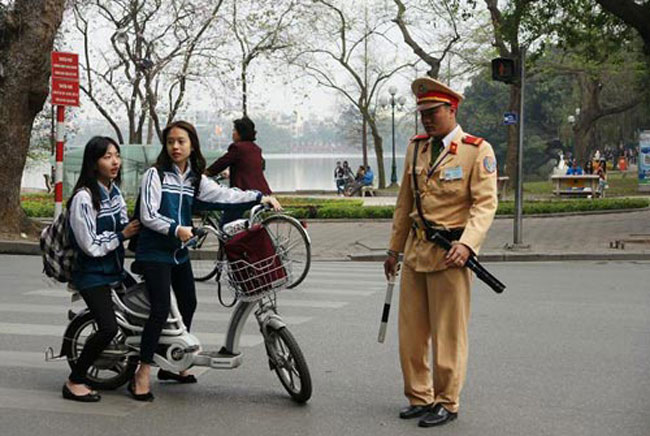
(Stock photo from Google. NOT my students.)
Follow the pattern in the book and tell me about Vietnam
[We’re from Mexico. This is our flag. It’s ours. It’s green, white and red.]
Now … tell me about Teacher Paul
He’s from … // This is …… // It’s ….. (possessive) // It’s ….. (colours) .
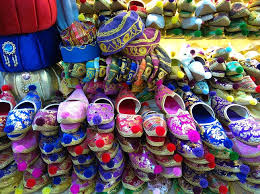
Finally, role-playing, asking prices and identifying cultural items. Students can decide their own prices. They can work in small groups or in pairs, to make sure everyone has a chance to speak.
Excuse me, how much is this, please ?
Oh, no … that is too much // OK, I’ll take it.
Then they must conclude by saying, “It’s a present for my ….” and I quickly show a family card (grandparents / parents / aunt / uncle / cousin or cousins).
To end on a bum note (or notes) … let’s hear the Russian National Anthem … and then played by an Egyptian orchestra.
And then, time to hit the books. The workbook extends over three pages, so we’ll do a little, then check as a class. A fond farewell to a lovely class. Cam on 🙂
2nd September for Wednesday 4th September. Listening pp. 20 – 21
Tonight’s focus is on listening, which is perhaps the hardest part of learning English. I often mention the disparity between reading a text and actually hearing said text spoken, with contractions, glottal stops, chunking not to mention accents and accelerated articulation.
Last week, the class were surprisingly lively, and seemed to enjoy some role-playing activities, to practise speaking. I warned them that a listening lesson was coming up, and they were stoical about it, one student even saying that they understand, and it’s not my fault. I have to follow the syllabus, my hands are tied … but that doesn’t mean we can’t have fun !
Warm Up: As students are arriving, I’ll start by relating a simple anecdote. The students then have to repeat the important information. The second time, I’ll include more information, and more the third time … and so on. For example:
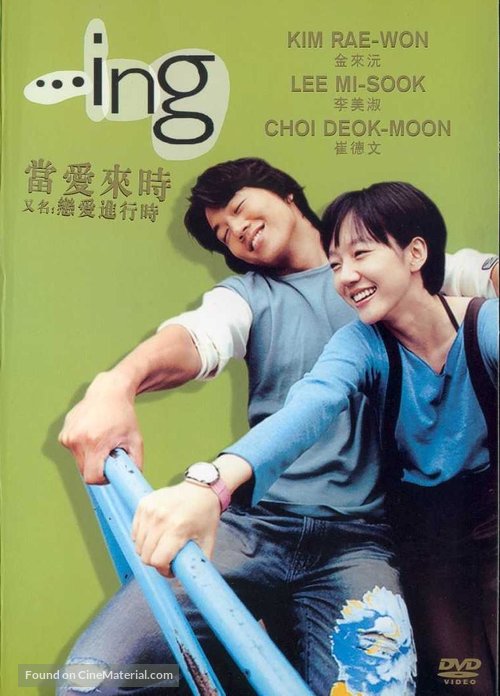
On Monday, I watched a Korean film called ‘… ing’, which was made in 2003. It’s a romantic drama and is a real tearjerker.
Yesterday, I woke up at 5.50, drank two cups of damn fine coffee, and checked my emails, posted a blog and caught up with friends on Facebook.
Speaking of Facebook, one of my favourite films is ‘The Social Network’ about how the company was founded. It was made in 2010 and based on a book that was published in 2009. I really love this scene in the film which features a song called ‘Dreadlock Holiday’ by the band 10cc (can watch up to 0:45).
BONUS POINTS … at the beginning of the scene, some young Jewish men are speaking about why Jewish guys like Asian girls … what, according to the character Eduardo, is the reason (This is one of my favourite all-time cinema quotes) ?
As with all tonight’s real-life clips, we’ll see if any of the students can repeat the quote, aiming for pronunciation, chunking and a natural rhythm.
Speaking of, apropos of ‘Dreadlock Holiday’, can the students understand the first verse and chorus ? This link has the lyrics, so I can turn off the projector and just have them listen, then listen again with the words.
Next up, a version of Chinese Whispers (which is probably a politically incorrect name now). Be that as it may, (and no offence whatsoever to our northern neighbours) the game works like this (assuming that most of the students have arrived, the Vietnamese not being the most punctual of people, and that’s not racist, it’s a fact – they even have a name for it, which translates as ‘rubber-band time’):
Class in two teams. I take the first person of each team outside and give them a separate sentence. They must go back to the class, tell their neighbour and see if the final person is able to repeat the line. Can be repeated depending on class reaction.
A good activity to encourage inter-student communication is to put the class into two or three groups. Each group is handed a paper with some information. One person has to read aloud without showing the paper, and the others have to see how much they can understand. The speaker may be asked to repeat, so it’s also a good way to introduce phrases. A typical card may be:
I’m looking to speak with Ms Nguyen // I’m in the office from 11.00 – 15.00 // I want to discuss the new school building // I work for Vietnam News // Call me on 032 734 9201.
Useful Expressions:
Could you repeat that, please ?
I’m sorry, I didn’t catch your number.
Would you be so kind as to leave your name ?
Let me make a note. Hold the line.
Is there a message I can take ?
[With a small group, this could be done one student at a time, but may be intimidating for some students.]
And then, it’s time to hit the books – it’s high time we hit the books.
End game: To continue the listening, but bringing it alive, I’ll show a couple of evergreen clips. One is from ‘Twin Peaks’, a cult TV show from the 1990s. The main character, like the writer of this blog, loves coffee. The students have to copy the body language and say:
“Wait a minute, wait a minute …. this is, excuse me, a damn fine cup of coffee.”
Finally, the late, great, Peter O’Toole on the David Letterman chat show. The host is a fast-talking American, the actor, an Irish-born, incredibly charismatic, flamboyant old-time movie star. He is asked to tell an anecdote, and rather than a pedestrian, “Let me see,” he delivers, with perfect timing:
Today is a speaking lesson, so hopefully that will be more active and interesting for the students. However, a three-hour lesson means the teacher has to prepare a ‘montage of attractions’ (a connected collection of various activities) to maintain energy and enthusiasm and … most importantly … to help the students acquire and practice the new vocabulary, expressions and pronunciations.
Warm up: As mentioned in just about every blog, students arrive willy-nilly and, for sure, they are coming from work, from school, stuck in traffic but it does interrupt the flow. therefore we need a quick warm up game into which people can jump.
Call My bluff:
Class in two teams (or sub-divided for larger classes). One team has a list of low-frequency words, followed by three definitions and word class. The object is for them to read out (and hopefully elaborate) the definitions, give examples and trick the opposition into giving a wrong answer. For example, the word ‘obnoxious‘:
Adjective – an unpleasant, horrible person
Noun – science, a gas that becomes a liquid at 50 degrees centigrade
Noun – a small village, usually in north Europe, that doesn’t have a church.
Depending on the English ability (and let’s be honest – the motivation) of the students, this could be an interesting game, as well as increasing their vocabulary. New words can be recycled throughout the lesson. Other words are ‘demeanour’, ‘broadsheet’, ‘mindset’, ‘surreal’, ‘vainglory’, ‘troglodyte’ (believe me, this word perfectly describes a lot of people in my neighbourhood) & ‘excruciating’.
After this, I want to get all the book work under our belts then move on to speaking activities.
Small Talk and keeping conversations going.
This could introduce cultural topics; what is acceptable in one culture is a big ‘no-no’ in another, for example, you can ask a westerner if they are married, but if they say “No,” it is not acceptable to ask WHY (implication – what is WRONG with you ?). For a western, used to ‘Rockin’ in the Free World,’ all politics is off limits … If people want to proclaim, “Communism forever !”, while using the latest iPhone X and getting rides home from their parents in luxury cars, let it go … likewise, hearing that Chairman Mao is a hero … oh well, whatever, never mind. At least in Viet Nam people has access to the internet, so maybe a little Google search with ‘Mao’ & ‘famine’ could be enlightening. So, you see, this digression was to show just precarious small talk can be.
NOT that I’m saying the west is a Utopia of free speech … political correctness, non-disclosure agreements, hate speech, misinformation and downright lies … but that is ANOTHER story. Back to our activity:
There will be a list of ten innocuous questions. The idea is to use back channelling, follow-up questions, tag questions and encouraging elaboration, to make a long discussion. EXAMPLE:
What do you do ? // I’m a student. / Really, where (and what) do you study ?How do you like the classes ? / Have you given any thought to what you want to do after you graduate ?
Other questions are:
Where do you live ? // What are you going to do this weekend ? // Have you ever been abroad ? // Where do you come from ? // How do you like studying English ? //
This activity can also be timed … can they speak for one or two minutes without a break ?
Buying and selling role play
Variaties of English used in purchasing and bargaining. This may seem unnecessarily complicated, but code-switching (changing from language to language or from formal to informal) is a part of (I’m sure) most if not all languages (I haven’t studied enough world languages to state this as a concrete fact – if anyone knows, please correct me, with citations – thanks).
SO .. half my class are sellers, working in either a top department store, a High-Street shop having a sale, or a good old-fashioned street marker.
This is a salesperson in a high-end department store.
The language here would be RP, standard English, no glottal stops or slang, although some common expression may creep into the dialogue.
Here, we can elicit the type of conversation one would expect, e.g. “Yes, Madam, how may I be of assistance ?”
A cashier in a High-Street clothes store.
Language would be friendly and probably more informal, though still polite, “Hi, how are you today ? Oh, that really suits you !”
And now, a market trader. This has subtitles, so it a great way to follow the man’s London accent
You may hear questions such as, “Yes, mate, what can I do for you ? What do you fancy ? How about (‘owwbout’) a nice box of (boxa) strawberries ?”
I will give the students some photos of various items (shirts of differing quality, shoes, watches etc). The idea is to buy four items but spend under a certain amount.
As a fun ending, and depending on the energy of students, some could try to imitate the sound of the market trader … not just the vocabulary, but the tones and stresses, the ups and down of the cadences … in a word … the music of everyday speech.
If time allows, we always need some quick games up our sleeves.
One is guess the idiom – I say an idiom and the students have three option from which to choose.
There is also two lies, one truth; I say three facts about me, but only one is true. By asking questions, the students have to deduce the correct one. Then they can repeat in small groups (or sleep or just talk Vietnamese, let’s be realistic here … Vietnamese are not the best students in Asia … but that is another story, for another blog).
I actually prepared this for my top students in a Young Learners’ Level 3 (ages from 9 – 11) class; university-level semiotics. While most of the class just do the assigned work – no more, no less – others make no effort at all and are unable or unwilling to answer a question to which I have just given the answer. Then we have the top cats … I’m lucky to have two exceptional students in my class as well as two others who, with some effort, could also reach those Olympian heights.
The following is a very simplified, breakdown of everyday signs, symbols and the modern use of the word ‘icon’ as related to technology. The original categorisation into ‘icon, index & symbol’ was devised by Charles Sanders Peirce, and more information can be found on this Wikipedia page: https://en.wikipedia.org/wiki/Semiotic_theory_of_Charles_Sanders_Peirce#II._Icon,_index,_symbol
The following I have printed out as a three-page activity worksheet for my top cats (who generally finish bookwork before others have even started).
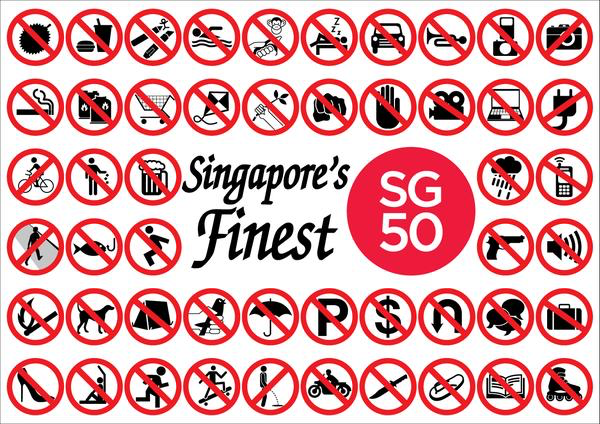
A sign uses pictures to give information or to tell people what they can or can not do:
What do these signs mean ? /// The first sign means no smoking.
The second sign means … /// The third sign means …
A symbol is a picture or things that represents a place, city or country.
The ao dai and non la are symbols that represent Viet Nam
What do these symbols represent ?
Icons are used on computers and smartphones. For example, this icon:
represents a dictionary. How about these ?
Draw two more icons from a computer or smartphone.
A new class (for me) which I hope to be substituting, not taking full-time (this is an afternoon class and I already work all morning with young learners, and THAT is enough in spades). I will need to assess the levels of ability and motivation, as well as spot the trouble-makers, the big mouths and those who are committed to disrupting the lesson (believe me, there’s always at least one).
Last week they learnt some past tense, mostly irregular verbs. As our text books are published by the USA office of Oxford University, they favour American spelling i.e. learned as opposed to the more commonly used learnt in British English (both are correct). Furthermore, the books are printed in China, making this a real global enterprise, so that will form part of our activities.
Warm Up: A kinetic run ‘n’ write exercise. I will say a simple sentence in the present tense; students have to write the past tense. Class can be split into two or three, depending on size, each with a different colour marker.
You act in a play / I ride an elephant / She win a competition / He read a big book / We learn English / … and what happened here :
Information gathering:
Last week, the students were introduced to the continents. Now I will develop that further by focusing on four different countries: Brazil, Canada, Egypt and South Korea. To give an example, I will use Vietnam:
Ha Long Bay, Viet Nam
95.54 million people live in Viet Nam. The population is 95.54 million.
The government of Viet Nam is in Ha Noi. The capital city is Ha Noi.
People speak Vietnamese. The language of Vietnam is Vietnamese.
Vietnam is very hot but also has a rainy season. The weather is very hot then very wet.
Ladies in Vietnam wear ao dai and non la. Ho Chi Minh is the most famous Vietnamese person.
Vietnam is famous for beautiful ladies in the traditional dress, the ao dai.
First, elicit comments about the four countries; where are they, in which continents ?
CanadaEgyptSouth Korea
The class will be split into four groups, each representing one country.
One member can draw the county’s flag, the others have to gather information. Around the room I will stick information sheets. One member has to run to the sheet, then tell his team the information. This practises reading, talking and writing skills and most importantly, allows the students to communicate with each other in English.
The drawing is also useful, as the students are still children, attending classes on weekend, so they need some diversion from book work.
As such, and as a way of introducing new vocabulary and expressions, I will show a children’s guide to London, my hometown and the UK’s capital city.
Duck Tours, London … a bus that turns into a boat – it’s brilliant.
I will play the video once, writing down new words. I will then make the students write them down and then, when I replay the video, they can shout out when they hear the new vocabulary spoken. These will include:
loads and loads / I reckon / really / very / amazing
And so .. to book work. The theme is ‘feelings’ and then using them in basic sentences.
With six flash cards, I will drill the pronunciation and meaning. One game is to pass the first card to a top student and let the student say the word out loud before passing on to the next student; when the third student has said the word, I pass the first student the second card and so on …
Additionally, there is (for Johnny Cash fans) ‘Walk the line’: I spread the six cards out on the floor, in a line. Two students, one at each end has to say the word then move on to the next. First to finish is the winner – or even have the whole class line up, in two teams, so everyone gets to join in.
Finally, once students are confident (one of the feelings) of meaning, we can have a game where I tell a student a feeling and said student must mime or act out for the class.
At this level, I’m hoping for good speaking abilities and students able to form basic sentences and read short passages.
As usual, I’ll be supplied with some additional worksheets about feelings for those who finish the workbook section quickly. These can easily be found online – the British Council have a great supply on their website: https://learnenglishkids.britishcouncil.org/worksheets
Please Note: All photos are taken from Google Images or free photo sites, and are used for educational purposes only. No copyright infringement or offense is intended. If I have used your photo or image, and you wish me to remove it, just ask. This site is not monetized, I run it on my own dollar. Thank you.
Wednesday 14th for Thursday 15th August 2019. AEF 10B pp. 98 – 99
Vocabulary: Crime and investigation
Grammar: Tag questions
Review: icons and symbols, relative clauses
Warm Up: Asian icons
Last week, the book focused on American icons, so let’s bring it closer to home. First activity, students in small groups have to suggest some Asian icons or iconic images. I want to know their ideas on actors, buildings, products or companies, cultural images or even street scenes.
For example:
Next, relative clauses and sentence building. Here’s an example:
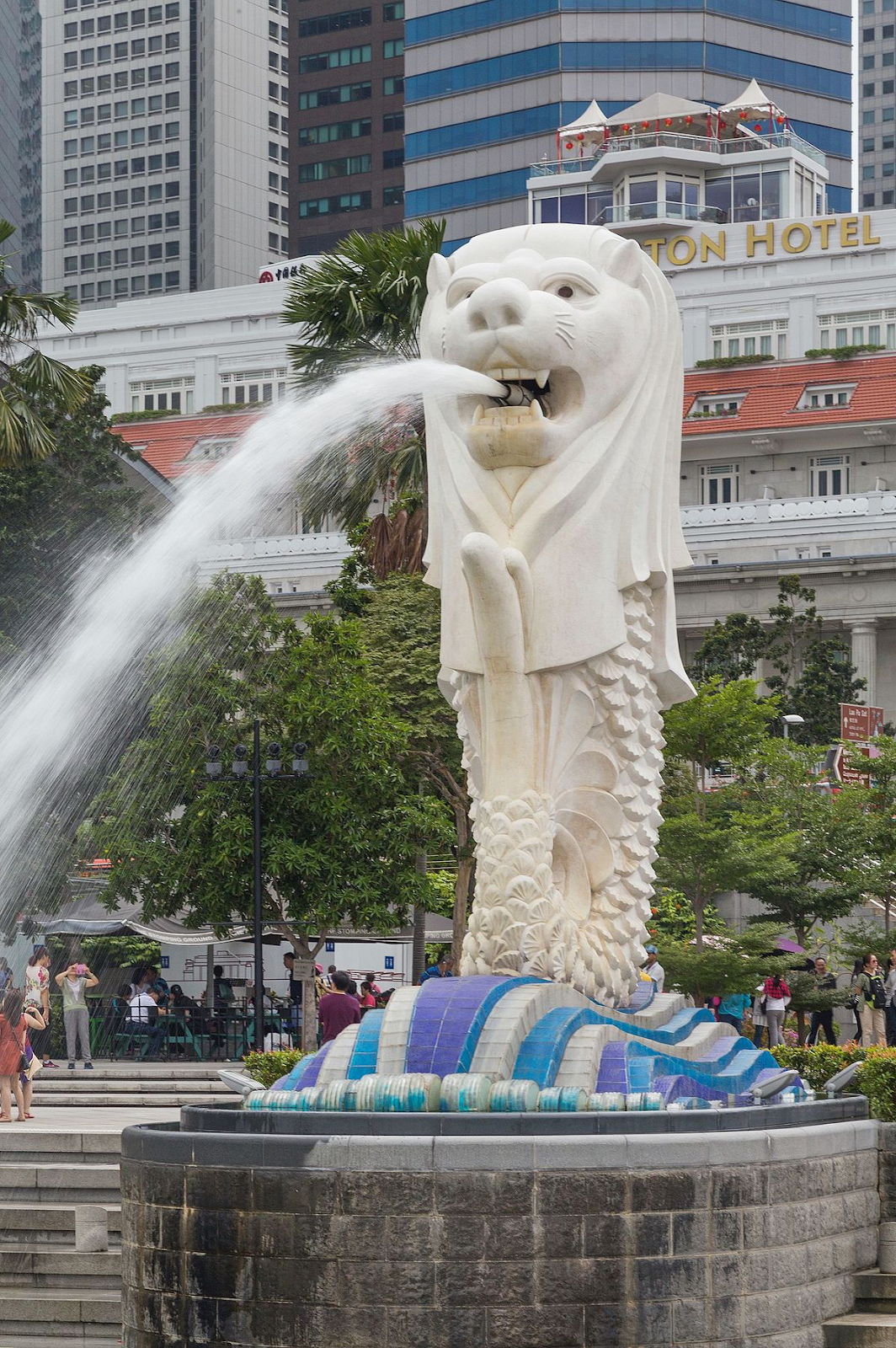
The Merlion, which is a symbol of Singapore, is a mythical creature that is half lion, half fish although no lions have ever lived in the city state.
The above sentence has three points of interest. Firstly, there is the relative clause used to add more information. Here the subject is the Merlion, a thing, so the relative pronoun is ‘which‘. Secondly, I use a discourse marker to connect ideas together in one sentence, namely ‘although‘, linking two opposites (a positive to a negative and vice versa). Lastly, I used the term ‘city state’ to prevent me from using the name ‘Singapore’ twice in the same sentence.
Try these … I’m looking for the correct relative pronoun and then the most detailed sentences or short passages.
Angkor Wat in Cambodia.
Vietnamese Pho (noodle soup with beef or chicken)
Chinese philosopher Master Kong (Confucius in English) 551 BC – 479 BC
Finally – write a sentence about YOUR hometown. If it’s not Sai Gon, explain where it is, how to get there, what it’s famous for (or if it’s not particularly famous for anything). As a link to tonight’s theme, here’s an icon from MY hometown:
Sherlock Holmes, who was a fictional detective created by Sir Arthur Conan Doyle, lived at 221B Baker Street which in is central London. Today it is a museum, admission £15 for adults, attracting tourists from all over the world.
Then it’s time to get to tonight’s topic – murder, unsolved crimes and mystery. The lesson focuses on the mysterious death of the actress Natalie Wood. To introduce her, I’ll show a short clip of her acting, then the actual news report on TV on her death:
Are you from Korea ? (a normal question, where we don’t know the answer)
You’re (you are) from Korea, aren’t you ? (using the tag ‘aren’t you’ to confirm what we think or know)
Take the pronoun (here it is ‘you’) and then the verb (‘are’). Reverse the verb, that is, make it negative then add the pronoun. Hence ‘are’ becomes ‘are not’ = aren’t.
Try these:
Bangkok is the capital of Thailand, ……….. ?
Natalie Wood was American, …………….. ?
We still don’t know who killed her, ………….. ? (here the verb is negative, so make it positive)
He’s a brilliant actor, ………….. ?
End activities: depending on time, students, in groups, can organise an itinerary for two of my friends who will be visiting Sai Gon soon. They want to see all the iconic sights and partake of typical Vietnamese activities. Having said that, their interests differ widely.
Simon loves culture, history and museums as well as being into sports and physical activities. Therefore he wants to see and try as much as possible. He has heard about snake wine and is very curious.
Jenny finds museums unbearably boring. She is a shopaholic, can shop till she drops. Furthermore she can’t take the heat and is also vegetarian.
Clearly, they will need to compromise … what do you suggest ? Be creative – think outside the box.
This can be used to give some energy to the class (it starts at 7.40 am) as well as demonstrating how simple sentences are linked together. Students can practice:
“who doyou see ?” as opposed to the general robotic, mono-toned, “Who do you see ?”
Five jobs were mentioned – which ones ? (students will be in small groups and given a writing board and marker). Then they will have to write where those people work – on the board I will write ‘airport’, ‘ship’, ‘school’, ‘fire station’ & ‘hospital’. Two people will run to the board and write where a pilot, a doctor etc works.
SHOP WORK – role play
In this activity, half the students are shoppers, the other are shop-keepers.
The shoppers will need to buy some three items: They can go to as many of the ‘sellers’ as they wish and ask for the food (this will be food from Unit 1, as well as stables such as rice, bread, cheese, eggs and milk.) If the seller doesn’t have the item they ask for, they have to move on to another ‘store’. The winner is the first team to complete their list. No doubt, the students will want to change roles.
In terms of language being produced, the students have to ask, “Do you have some or any …?” or “I would like (two) eggs, please.”
The sellers must answer, “Yes, we do, how much or many would you like ?” or “Sorry, we have sold out.”
REVIEW
How do I make soup ? First, I go to the shops and buy ingredients, next go home and clean them, then cook them and finally eat !
I want to study Vietnamese; what should I do ? First …
The man selling eggs is a little big. He needs to loose weight. What should he do ?
EXTRA VOCABULARY
Before the bookwork, pre-teach some adjectives that one would associate with various professions, such as:
busy
patient
intelligent
strong
hard-working
Five adjectives should be enough, and then repeated all lesson and over the coming lessons in order to help the students develop more colourful and interesting language (as opposed to an IELTS speaking test I recently monitored, where the only adjectives were ‘big’ and ‘nice’ despite the question asking the students to describe … but that is for another blog !)
And then we let the assigned book work take over, work book correction and handouts for fast finishers.
Please Note: All photos are taken from Google Images or free photo sites, and are used for educational purposes only. No copyright infringement or offense is intended. If I have used your photo or image, and you wish me to remove it, just ask. This site is not monetized, I run it on my own dollar. Thank you.
Tonight is a new class, a block of four lessons, and phrasal verbs dominate the session – they almost take over. These, like idioms, can be very confusing for a learner, yet are an integral part of everyday English. Don’t give up, keep on trying and you’ll pick it upin next to no time.
First, as a warm up, we’ll go over some recent lessons and see how much of the lingo (slang for language), the students have picked up. They recently had a lesson about choice, confusion and making decisions … or not making decisions. Being unable to act, or to decide is known as procrastination … and is a flaw in one of Literature’s most famous characters, the prince of Denmark; I’m referring to none other than Shakespeare’s Hamlet. This quote may be familiar …
Shakespeare is a world-famous writer, and a great example of British culture … but what about Vietnam ? If I wanted to read some classic Vietnamese texts, what would the students suggest ?
The task is for the students, in small groups, to decide upon one suggestion for each of the following.
To begin with, the Great British seaside. the sun rarely peeks out so when it does, we rush off to the seaside. What can you see here:
Blackpool, a famous seaside town in north England.
The seaside is associated with building sandcastles, donkey rides, deck chairs, paddling, pier, sun cream and ice cream. I want to visit a typical Vietnamese beach town. Where is the best … and why ?
Now, seasides and travelling help us build up an appetite … so what to eat ? What do the students think of a traditional British breakfast (not that I’ve ever eaten one ! It’s not exactly vegetarian-friendly) ?
Again, I want to try a traditional Vietnamese breakfast. What should I eat, where should I go, what should I drink ?
Now, being British, and a teacher to boot (as well), I enjoy a beer (or two …). Here’s a typical British pub:
I’m not sure such places exist in Vietnam, but what do I know ? Maybe the students can help me ? Where could I go to drink beer and which is the best Vietnam brand ?
This is just a quick game to occupy the first part of the lesson (while students are still arriving). Let’s keep the theme of being decisive, tied in with phrasal verbs. We’ve had Shakespeare and ‘high’ culture; now it’s time to be more ‘popular’. British people over a certain age and yes, that includes me, will recognise this number (slang for a song): The music doesn’t start until around the 0:30 mark.
cigarettes / blankets / barrel of water / flare gun / torch
magnifying glass / Beatles CD / make up set / dried food
grammar study book / Angry Birds game / air rifle / sun block
Negotiation language
I see your point but … that’s interesting, however …
I’m not sure about that I can’t go along with that
I don’t feel that is entirely right / I fail to see the merits
I respectfully disagree / I find your contention somewhat flawed
The students, first in small groups, then as a class, have to decide upon five items to help them survive in the desert. Some items are multi-purpose, for example, a CD is useless in terms of listening to music, but the reverse could be used as a mirror, to reflect the sun, while the sides are sharp and could be used for cutting. Cigarettes are loathsome and not usually associated with long life … however … in the desert, they could save your life. Snakes hate cigarette ash so, at night, light the tobacco and sprinkle the ash in a large circle, then you can safely sleep inside.
And then time to hit the books.
The early bird catches the worm … do the students understand this saying ? What do they think it means ?
To end the lesson, we could try a Family Fortunes game … in small groups, I ask questions and require four answers. They will usually be about me, for example, what four instruments can I play, what four sports do I do ? which four places have I been to in Vietnam, what do I like most about Vietnam, etc ….
And … not forgetting … what quote from Shakespeare do they know ? And they’re not going home until they say it.
This is the lesson plan for the Sunday morning class, 10th March.
Lesson seek to teach new vocabulary and pronunciation, while also revising and practising various words from previous classes. Today’s focus is on basic sentence construction, asking and answering: ‘What is it ?’ It’s a ….’
What is it? Cái gì đó? It’s a đó là ….
Last week, the students learnt some new animals, and that lesson can be found here:
We want to get the students speaking as much as possible, and to each other, not just the teacher – student dynamic. So, to kick off, the students will greet each other, saying, “Hello, I’m …. ” I shall first model this with my TAs, so the students can hear and then copy.
Then, to reinforce last week’s drill, we have an ABC song:
This is a different version to last week, and can be used to drill both the alphabet and different colours.
Then we have a ‘Teacher says’ game, which helps the students with listening skills, and being able to respond to instructions. The commands are based on previously-learnt directions such as ‘sit down’, ‘stand up’, ‘clap’, then I will introduce ‘click your fingers.’ I can demonstrate how, and introduce the word ‘thumb.’ Then we can imitate various animals. After this active game, we move into the target language.
I’ll put some picture cards on the board, basic objects that the children already know (book, ball, car, doll, chair) and ask ‘What is it ?’ Here, I will just get a single word answer (the noun), but I want the answer in the form of a question. Therefore, I will drill ‘It’s a ..’ This takes time, weeks, not minutes, but eventually it becomes natural. Parents can really help the students at home by copying this exercise and insisting on the answer being framed ‘It’s a …’ (of course, some nouns require ‘an’ not ‘a’ but Rome wasn’t built in a day !)
Then, to make it a game, two students have to run to the board and hit the appropriate card. After, they take the card and become ‘thay’ (teacher). They hold the card in front of them and ask the class, ‘What is it ?’ Now, many students at this age are very shy speaking English, so they get a lot of encouragement and praise.
Apart from the new vocabulary learnt from the books, students absorb so much from what the teachers say. Using this I, along with my magnificent TAs, repeat words and expressions designed to increase their vocabulary; excellent, well done, good job, the basic adverb ‘very.’ To get the students used to taking turns, I will point to a pair and say, ‘First John and Anna, then Bella and Tommy.’
Moving on, I want to get the class comfortable with the alphabet, letter order, pronunciation and an introduction to writing. Today I’ll highlight the letter ‘B’. They already know bag, ball, book and the colour blue. The students can share a mini writing board and practice writing the words. Next up, we need a more kinetic activity.
I teach basic prepositions (on, in, under) by a chant with actions and an easy clap pattern. We shall chant and then practice. I’ll put two chairs and a basket in front and ask the students, in pairs, to put a ball either on, in or under one of the aforementioned objects. The chairs will be of different colours, so it’s great to see how they are able to differentiate between them. All the time, I make the students says what is happening. When they are comfortable with the game, the students themselves can take turns giving instructions.
Today’s new vocabulary is related to the main topic of animals and pets. The four new verbs will be jump, walk, fly, swim. To change the pace of the lesson, I’ll show a quick video:
This video is aimed at older children as the vocabulary is quite sophisticated, but I will be able to use the word ‘high’ and start to use superlatives (highest).
We can mime this actions, and match them to animals, until the students are comfortable with them. Later in the lesson, we shall revisit them to help the students retain the verbs.
And so, to the books, a mixture of listening, following instructions, colouring and pointing to the correct noun.
We will be near the end of the lesson so we want to finish with some fun activities. In a circle, the students will be grouped into rabbits, cats, birds or fish. When I say rabbits, the students in that group must stand up and jump; with birds fly, and so on.
To really drill ‘What is it ?’ the final game will be a student holding a picture card or flash card and asking the name. The answer must be in the form of ‘It’s a ….’
Finally, we say goodbye, see you next week. High fives and goodbyes.
Tomorrow night is the last of the four-week series of lessons with one of my favourite classes. Next week they have a test, so a lot of the lesson will be taken up with review work, some reading and grammar. Very important, but can be a tad dry. I want to get the students speaking English as much as possible yet this, I regret to say, can sometimes be a challenge.
I’ll write another blog specifically about the issues I’ve faced trying to motivate my Vietnamese students but, for now, the lesson plan.
The main theme is the actor Sir Ian McKellen. Immediately, we have two interesting points about his name, namely, what does ‘Sir’ mean and why is his name spelt ‘McK …’ ?
‘Sir’ (‘Dame’ for a lady) is an award given by the Monarch (king or queen) for services to the country. It replaces ‘Mr’ so instead of Mr McKellen, he is now called Sir Ian. The ceremony can be viewed here (Ringo Starr of The Beatles is being knighted by Prince William):
As for the ‘McK’, Mc is Gaelic (Irish & Scottish) for Mac or son of. Therefore McKellen means ‘son of Kellen’.
Sir Ian has had a long and distinguished career, in both theatre and film. I was lucky enough to see him on stage in London in a play by the Irish playwright Samuel Beckett, ‘Waiting for Godot’, but he is surely more famous, worldwide, for being in some Hollywood blockbusters.
Sir Ian Mckellen, with Sir Patrick Stewart, in ‘Waiting For Godot’.
So first, to warm up, a word bomb game. I’ll board the word ‘cinema’ and see how many words, phrases and names can be elicited from the class.
Then we’ll move into a quick Present Perfect review. I’ll write:
I have see many films.
What is the error here ? What would be the contraction of ‘I have’ ? How would the negative be formed ? How could this be turned into a question ?
The present perfect is formed by subject + have or has + past participle (verb 3). Thus, I have seen, not ‘see’. The contraction is ‘I’ve’, the negative becomes ‘I haven’t seen ‘ while the question form is ‘Have you seen ?’ After this modelling, A few exercises for the students.
I have (meet) Sir Ian
You have (read) ‘Lord of the Rings.’
We have (study) a lot of expressions
She has (go) to the cinema many times.
The students have to give the three forms of these short sentences. Now we’ll turn to Sir Ian. Some students may recognise his face, but I’m sure all of them will know him from at least one of these films: This clip is nearly ten-minutes long, so I’ll just show the top two films, the ‘X-Men’ and ‘The Lord of the Rings’ (7:19 – end).
I like using ‘real-life’ videos, as they are great for hearing English being used naturally. The problems in listening can be offset by the benefits in learning new expressions, and many videos actually have subtitles. I often play a short excerpt from a video several times, breaking it down so the students start to recognise the patterns, then practice among themselves.
In the whole clip, I would highlight the following expressions:
We’re counting down
There’s a lot to choose from
Divide(s) opinion
A great opportunity
Stole the film
Then, to practise, match them with these sentences:
Some people love Justin Bieber, some people hate him. He ……..
What food shall we order, ……………
The test is in five days, ……..
Brad Pitt was so good he …………
Going to Australia will be a ……………. to learn more English.
At this point, the book work can commence. They’ll learn about Sir Ian, and read a short interview with him. Questions fall into six categories and he gives succinct answers to each. So now it’s the turn of the students to get up from their chairs (they always need motivating to do that despite my continual promulgations that moving around will create energy and lessen the boredom of a three-hour lesson), speak with different people and practice English. It generally falls on deaf ears. A teacher needs to be patient; it’s part of the job.
The questions will be based on but amended from the interview they have just read:
What Kind of music do you like ?
Can you name any plays by Shakespeare ?
What time do you usually get up ?
How do you relax ?
Can you play a musical instrument ?
What skill(s) would you like to acquire ?
What is the best thing about HCM City ?
What is the best book you’ve read OR the best film you’ve seen ?
One of my favourite films: ‘Chungking Express’, a Hong Kong movie from 1994.
There is a lot of book work tonight, so it’s good to break it up with some games or a complete change of pace. I used this still last night in my IELTS class, where it met with a pretty luke-warm reception. I showed them how to ‘read’ a picture. First, ask what the students think is happening in this shot. What do the characters feel about about each other ? I mentioned the emotions evoked by the use of colour; here dull – blue and grey, but as we get closer to the lady (Faye Wong), the colours turn red – the sauce bottles, the Coke machine. Then look at the symbol of her T-shirt, look where her eyes are staring ….
We could then move onto film genres – make a class survey by dividing the teams in two and assigning one captain to each. They have to collate information such as favourite type of film, Vietnamese or American, how often do they go to the cinema, do they ever stream films at home and with whom do they go to the cinema ?
To end, the Family Fortune game seems very popular, where the students are put into small groups, given a board and marker, and have to come up with four answers to various questions.
Additionally, I could use some photos from an internet search, about Vietnam, and ask the teams to tell me an interesting story. I will encourage them to expand their sentences by employing adjectives, adverbs, idioms and expressions.
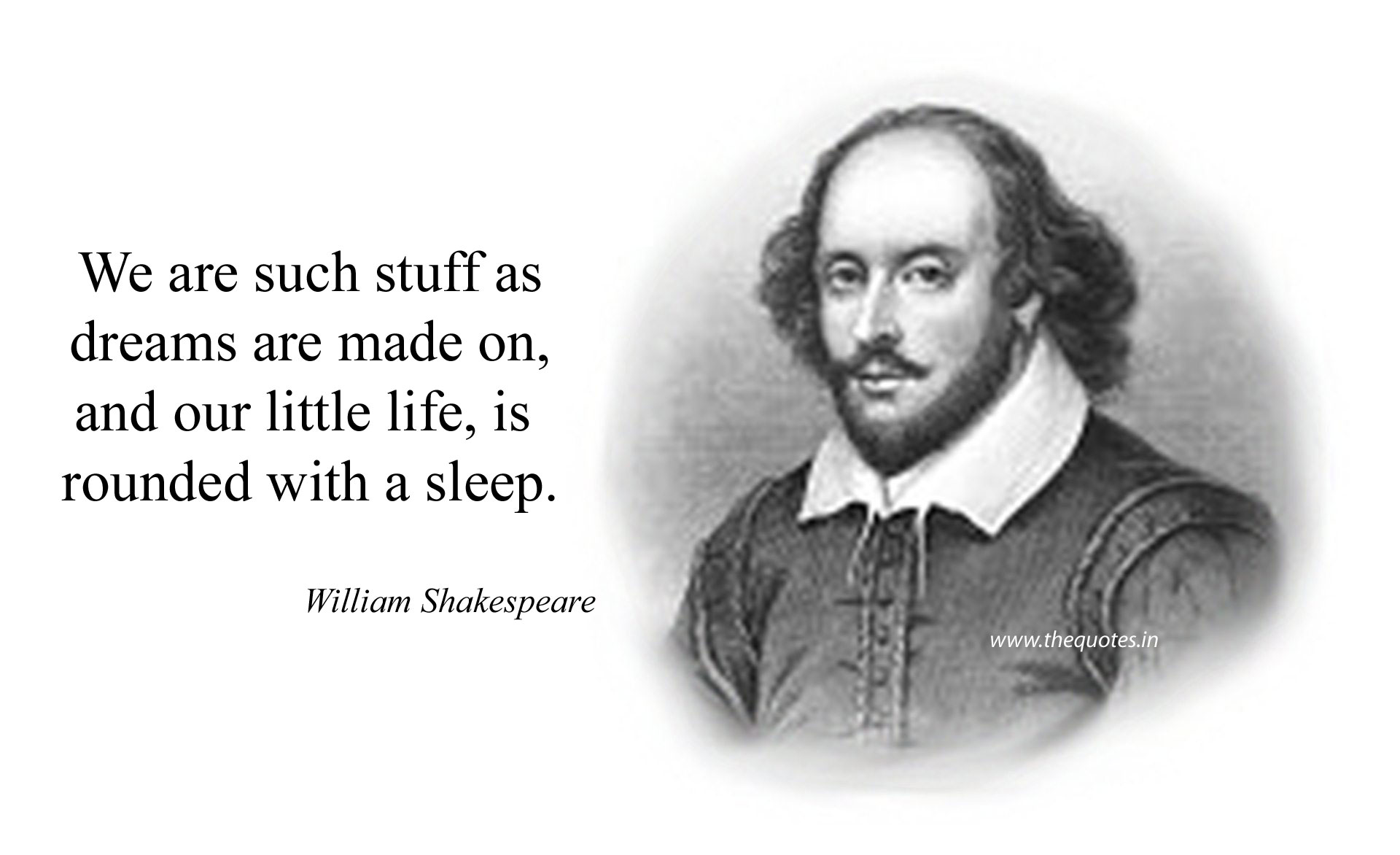
Then, to quote Prospero in Shakespeare’s ‘Tempest’



















































 Thay Paul's Notes