Vietnamese coffee kept warm in a three lions bowls, the lions being a symbol of England. If you love coffee, you’ve come to the right place; coffee shops are _________________ in Sai Gon, and throughout Viet Nam.
Lady Thu stated that she would (try) ___________ to learn more vocabulary.
I expected the students to pass with flying colours, but instead I was very _______________________ by their low scores.
Mr Sang knew every answer, he was really _________________________ last night.
Passing a driving test in Vietnam is easy. _______________________________ .
Those Armani T-shirts are absolutely fake ! At that price, no way are they ____________ .
Street food stalls are ubiquitous in my neighborhood; the food is (tasty) ______________________ and the prices are quite ___________________ .
Mr Lee (adverb) _____________ promised me he would be on time for the meeting.
We also covered some basic introduction phrases which you categorically have to memorise:
Some standard opening lines:
That’s a very interesting question
Well, that’s a great question
Well, there is so much to say about that subject, where shall I start ?
It’s funny you put that question to me because earlier today I was just thinking about …
As a young Vietnamese (add your own nationality), I …
And now, a typical IELTS question: What do you do in your free time ?
Remember the first rule of introductions: never answer the question immediately. Remember the second rule of introductions: never answer the question immediately.
So, how to pass with flying colours ? Ah, c’mon, Man, you should know by now ! OK, breaks down like this. Give me:
A great introduction
An organised speech, point by point (use ‘signpost’ language).
At least one idiom
Several L-FWs
Ideas linked by discourse markers
Appropriate intonation, stress & body language
Thay Paul, can you give us an example, please ?
Sure thing
Well, that’s quite an interesting question because, as a young Vietnamese student, I don’t really have much free time. I have to study all day, then do homework in the evening; I’m really burning the candle at both ends. However, when I have time to myself, I like to hang out with my friends and forget about school.
Firstly we meet in coffee shops, which are ubiquitous in Sai Gon, and talk and laugh. Highlands in my favourite because it has free WiFi as well as being very comfortable although some of the coffee prices are sky-high.
Additionally, I love swimming which, in my opinion, is incredibly healthy, and it doesn’t require much equipment. Subsequently, it doesn’t cost an arm and a leg.
However, my absolute favorite past time is to sing karaoke, which I believe comes from Japan, in a private, sound-proof room. For me, it’s a perfect way to relax and forget all my stress about work, life and my parents !
Piece of cake, right ? 23 / 9 Park, District 1, Sai Gon
After three or four lessons, I expect my students to know several common idioms (their meaning and how to use them appropriately), a number of low-frequency words (L-FWs), how to introduce an answer, how to form a complex sentence and to demonstrate varieties of intonation and stress.
Without these features, you ain’t gonna get above a ‘5’, no way. Therefore, time for a quick review, see how you’re measuring up to the standard, whether you need to turn over a new leaf and put your nose to the grindstone.
Therefore, let’s recap
Idioms:
it’s raining cats and dogs
it costs an arm and a leg
piece of cake
I’m burning the candle at both ends
once in a blue moon
pass with flying colours
turn over a new leaf
put your nose to the grindstone
Students putting their noses to the grindstone
Part 1: What do the aforementioned idioms mean ?
Part 2: Give each student an idiom. They have to use it, correctly, in a sentence.
absent-minded // sky-high, astronomical // an entrepreneur //
hawkersor peddlers // a mover and a shaker // consider //
Part 3: Students have to describe their neighbourhood, using as many L-FWs, and idioms, as they are able.
Students burning the candle at both ends
Introductions:
That’s a very interesting question
Well, that’s a great question
Well, there is so much to say about that subject, where shall I start ?
It’s funny you put that question to me because earlier today I was just thinking about …
As a young Vietnamese (add your own nationality), I …
Part 4: Students have to demonstrate they know how to introduce their answer.
What do you want to do in the future ?
Give them one minute to prepare a very short reply.
It’s funny you asked me that question because recently, I have been considering moving to Australia …
Complex Sentences:
Part 5: Moving on, students have to form complex sentences out of the following information, using intonation to reflect excitement or a positive point and, conversely, a negative factor. Discourse markers to be employed in order to link ideas, naturally. Furthermore, I shall be listening for adverbs and adjectives.
First, choose the correct relative pronoun (who, which, whose or where)
London //
capital of UK // many shops and museums // expensive and cold
Teacher John //
from New Zealand // smiles and plays guitar // talks too fast
Ironman //
real name Tony Starke // very rich and intelligent // is fictional
Thailand //
90 minutes flight from HCMC // friendly people, great food // many western tourists and crowded
ABC English Centre //
located in city centre, District 1 // use laptops and tablets in classes // lessons are four hours long, with extra homework.
Team work
Part 6: Class split into two teams. They have to plan a day in their city (here, of course, it’s Sai Gon) for my friend Ethan.
once in a lifetime experience / never to be forgotten / unbeatable prices / book now to avoid disappointment / best decision you’ll ever make
holidays to suit all budgets , from 7* luxury to backpacking
Structure:
To begin with / furthermore … additionally / the fact is … / therefore
Demonstration with an advert for London:
Now is the perfect time to visit London, England’s glorious capital.
To begin with, the weather is perfect for walking, so you can enjoy the lush parks, world-famous museums and incredible, unbelievable shops such as Harrods, Selfridges and so many more.
Furthermore, there is something for everyone … and more ! Like sports ? Go to one of the many Premier League football games. Love shopping ?
The fact is, everything is here – shop till you drop !
Additionally, if you adore culture – soak up hundreds of years of history.
Flights from TSN airport daily. Seven-day all-inclusive package tour starting from only 50m VND ! All transfers and transport included. Air-conditioned mini bus with Vietnamese-speaking guide.
Therefore, don’t delay … book TODAY !
Sell a holiday
Advertising vocabulary and intonation
Prepare a presentation to market / sell a holiday.
Review: New vocabulary
sensational / once in a lifetime / luxury / all-inclusive / unforgettable experience / mysterious / majestic / breathtaking / visually-stunning
book now to avoid disappointment / exhilarating / world-famous
local food / new cultures / visit our website / worth every penny
fun for all the family/ the perfect getaway /
Plan a tour of your city for my friend
My friend Ethan is coming to visit your hometown
It is his first time in your hometown. He likes history, traditional food, and he wants to buy souvenirs.
Think about:
What time to start
What to do first
Logistics – how Ethan can get around the city (subway, bus, taxi, Grab or Uber)
Food – where to eat and what to choose. Remember, he only speaks English
Where to go (remember the heat OR the rain could be an issue / a problem).
I start by writing the word ‘travel’ on the board, and see how many avenues spread out from it. Start with the grammar; what type of word is it (noun) but it can be made into a verb (to travel, travelling) and the students should remember how to apply it to a person (traveller).
Then we have expressions such as ‘travel broadens the mind.’
We have this quote which introduces metaphor – the world as a book:
Then more pedestrian aspects of travel; how do we travel (transportation), preparation (booking tickets, hotels, visas etc), what do we bring with us (different clothes, sun cream, currency, sun glasses etc). How about culture shock ?
Next, what are the positive aspects of travelling (new cultures, fun, adventure, relaxation) and conversely, the negatives (delays, waiting in soulless airports, getting ripped off, tourist traps, bad hotels etc)
Pair work: students have to write a short passage using ‘although‘ and ‘despite‘ to encapsulate their travel experiences or wishes.
EXAMPLES: Although I absolutely love travelling, there are many drawbacks. Firstly, there is the cost; it can be incredibly expensive what with plane tickets and hotels not to mention having to eat out in restaurants. Despite these issues, travelling can be so relaxing or exciting, seeing new places and doing new things or simply as a break from our normal lives.
Vietnam has many beautiful towns and places of interest although I have only been to a few of them despite travel being relatively cheap in this country. We can fly everywhere within one or two hours, at very reasonable prices although some cheap airlines, such as Vietjet, are notorious for delays.
I have always wanted to visit Beijing in China which is not excessively far from Sai Gon. Despite that, I haven’t been because I am not sure about the visa and how expensive it would be to visit. Additionally, I hear some negative things such as terrible pollution and many tourist scams. Despite the drawbacks, I really want to see the Great Wall, the Forbidden Palace and all the temples. Although Vietnam and China have a complicated relationship, most Vietnamese would agree that Chinese food is delicious.
These exercises help to increase vocabulary and confidence. Furthermore, the repetition helps to make the target language part of the students’ lexical resources.
As a break from the book work, I’ll show the class a vlog from YouTube, two tourists who come to Sai Gon and what they think of the city: https://www.youtube.com/watch?v=2iw_K-1AmVk
How do the tourists feel about the city ? As residents, do you agree with the review ?
Students can discuss the video using the following language:
I agree totally // I agree to an extent // I disagree // I’m not entirely sure // No way ! They don’t know what they are talking about !
Group work: Prepare a guide to Sai Gon for tourists.
Allow students access to the class computer for Google images if required.
Include
What to see and do // where and what to eat // what to buy //
What they can do for entertainment
Travel tips
Safety and scams
Cultural differences – what should people do or NOT do in Vietnam ?
Use of interesting adjectives to describe the city centre.
Groups can then present to the class, with all students taking turns speaking. I shall be listening for relevance, pronunciation and use of expressions and discourse markers. Furthermore, I may learn some interesting tips.
My friend Andy is coming to Sai Gon
Using ‘should’ to give advice or information, make suggestions for Andy.
He loves history … what should he visit or see ?
He loves traditional food … what should he eat ?
He can’t ride a motorbike … how should he travel ?
He likes a beer a night (!) … where should he go ?
My Thai friend is coming to Vietnam:
Ms Namsum is young and energetic. She’s into (really enjoy) clubs, sightseeing and shopping.
I suggest she starts the day with a traditional bowl of pho then goes to Sai Gon centre. She can walk there from her hotel in District 1 or take a taxi (Vinasun or Malin ONLY). She will be out of the heat and has a lot of shopping choices and places to eat or grab a coffee. She could rest at her hotel in the afternoon, then go to Nguyen Hue walking street when it gets cooler in the evening. She has many restaurants in this area. Furthermore, there are many English-language menus. Finally, she can go to Bui Vien street where there are many clubs and bars, as well as many tourists speaking English.
What do they students think ? Is that a good plan ? Have I missed something important ?
Language to use:
I see your point
That’s a good idea but …
If I may make a suggestion …
I’m not sure that’s such a good idea.
For example – That’s a good idea but you haven’t thought about sightseeing.
Or
Bui Vien can be very noisy so I’m not sure that’s such a good idea for a young lady on her own.
Two of my friends, Tom and David who are both actors, are coming to Sai Gon. The students, in groups, have to arrange a fun day including sightseeing, shopping, eating and transportation. Then they have to compare their itineraries and exchange views and opinions. The students learn how to politely disagree with each and put forward their ideas and support their choices.
Tom and David
PLAN A DAY FOR TOM & DAVID
Where can they eat ?
What could they see or visit ?
How can they travel around ?
What can they buy as souvenirs ?
Where could they go at night ?
What safety advice would you give ?
What you need to know:
Both are 45-years old. They have good jobs and a good income. They like history and culture. They really enjoy good food and wine. Neither speaks any Vietnamese. They are too old for very loud clubs but they don’t mind having a few beers and maybe seeing some live music.
The students can make a presentation, and use the computer for images or maps to illustrate their plan. Then the other team can explain what they have organised, and the reasons why. I will decide which team has made the best choice.
Activity: Plan a day out for my friends.
Thay Paul with Tina and Michael.
I have two friends arriving in Sai Gon (or your city). They want a typical, authentic experience. Plan a day for them. It must include:
Breakfast
A museum
Somewhere for a snack
An interesting building or location
Lunch
Souvenir shopping
Something to do in the evening
Give tips and advice.
How do they travel around ?
What are their options and estimate the prices.
Try to use as much new vocabulary as possible, words and expressions.
Directions to Pham Ngo Lao Street District 1 // Directions to a city centre street.
Ask for help. Other must offer as much help – how to get there, the best way, the price, the dangers. Body language – distance, expression, intonation, eye contact etc
Is Sai Gon safe ?
Can you understand Vietnamese people speaking English ?
Do you agree with their points ?
Are there any words you didn’t understand ?
Do you have any bad experiences ? Tell the class your anecdote.
Word bomb– what do you think of when I say ‘hotel’ ?
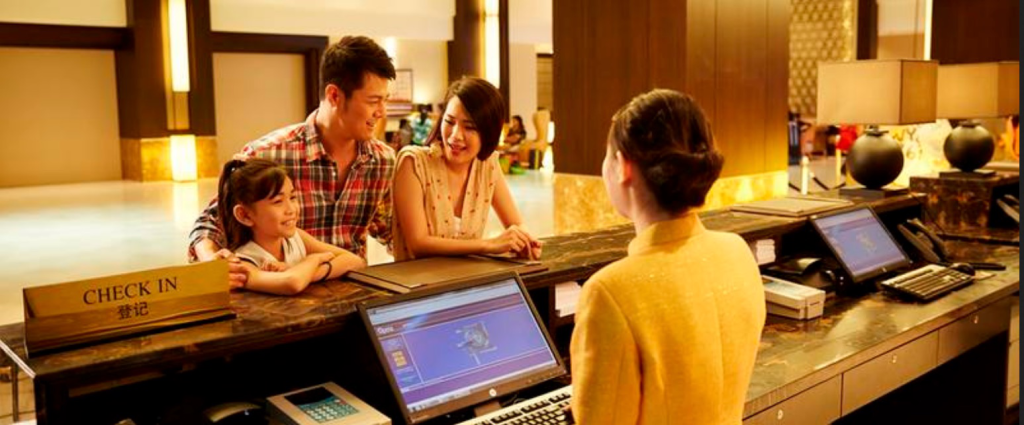
Checking in to a hotel
Vocabulary:
reception / lift or elevator / single or double room / king size bed or twins /
first floor / complimentary breakfast / key deposit / luggage storage / safe / mini bar
What would the conversation be ?
Reception: How may I help you / May I ask your name ? / Can I see your reservation code ? / That’s fine. You stay for three nights ? / May I have your passport, please ? / You’re in room 237. That’s on the second floor / Thank you. Sign here, please / Yes, the lift is just over there. / Naturally, as well as a hair dryer, coffee machine and mini bar. / Enjoy your stay.
Guest: Hello, we have a reservation / We booked a room online / My name’s ….. / Certainly, it’s on my phone. / Yes, that’s right. / Absolutely. / Correct. / Just a second; here you are./ Is there a lift ? / The second floor ? / Is there a safe in the room ? / Perfect. Thanks very much
Make a conversation. One student will be the reception, the other(s) a guest or guests.
Write your own conversation
You are in a hotel bar and you meet another guest. Start a polite conversation, but you have to use your English.
Greet each other
Why are you in this city ? (holiday or on business)
Offer to buy a drink (accept or decline – maybe you don’t drink alcohol)
How long are they staying ? What do they think of the hotel ? What can they do in the area around the hotel ?
Small group work
You are two married couples who meet on a tour and are staying at the same hotel OR you are on a business trip and meet some other business people.
Use the following sentences, as well as your own, to make a conversation. try to keep speaking for as long as possible by using small talk techniques (oh, really / that’s interesting / tell me more / what do you do exactly ? / where is that ? / Sounds interesting)
My wife and I are delighted to meet you
Shall we go to the bar or cafe ?
Can offer name first (I’m Simon, what’s your name ?)
Would you fancy a drink … ?
Is there anywhere special to do here ?
Sorry, I have to get my head down, it’s been a long flight (I need to sleep).
My colleague and I were going out to eat.
I fancy a beer or something alcoholic
Oh, I’m sorry, I didn’t ask where you are from.
Reasonable (cheaper)
Would you like to join us ?
Peckish (little hungry)
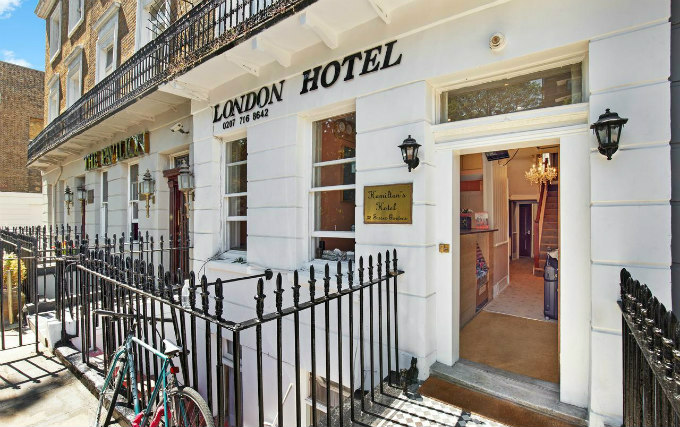
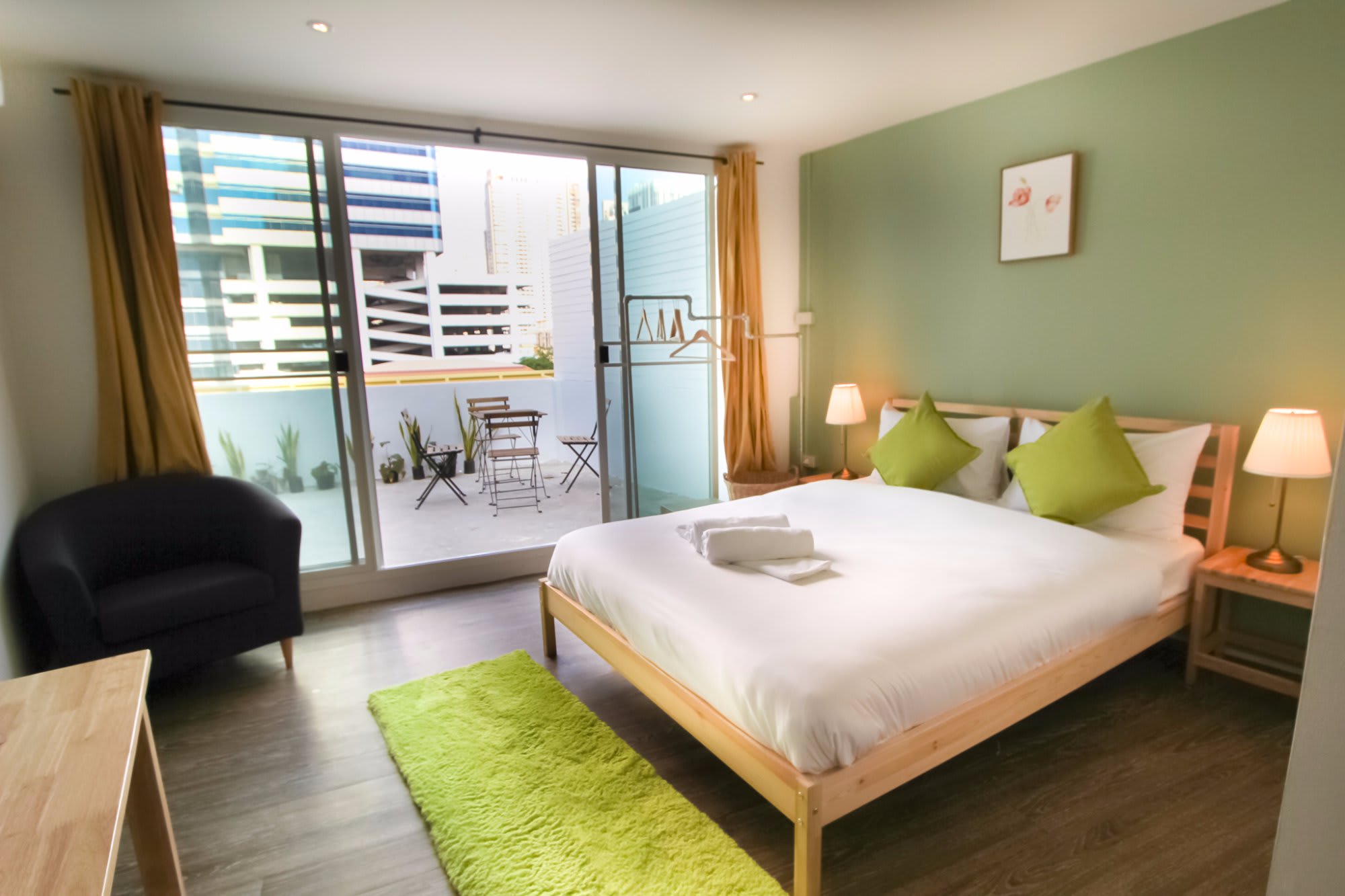
What do you think of these hotel rooms ?
What do you think of the design ?
Would you like to stay in any of these ? Why, or why not ?
Read this excerpt from a travel blog. How many adjectives can you see ?
This is my first visit to Turkey. It’s a wonderful place ! The people are friendly and the meals are delicious. Farmers here grow many different crops including many kinds of fruit. They also grow a lot of wheat, and the bread in Turkey is really good. Of course, the geography and climate in different parts of Turkey affect the kind of food farmers can produce in each region. In central Anatolia, the land is almost flat, and the weather is usually warm and dry. It’s a good place to grow crops and to raise animals such as cattle and sheep. High up in the mountains of eastern Turkey, farmers also keep animals as they can’t grow crops. Today, I’m visiting the coast of the Mediterranean Sea in southern Turkey. The weather here is hot and humid, but the fish and seafood are excellent.
features of a place, such as mountains, rivers, forest, desert
air with a lot of water in it
normal weather in a certain area
Turkish food
Welcome to Turkey
Grammar practice: past tense
Tell about your favourite, or more memorable holiday (UK English). You will have to use the past tense. Try to use adverbs and adjectives to describe the vacation (US English).
Activity:
Present a holiday using a mixture of advertising slogans and practical information. Remember:
It’s not what you say, it’s how you say it
Make your voice sound excited, as if this were the best holiday ever !
once in a lifetime experience / never to be forgotten / unbeatable prices
book now to avoid disappointment / best decision you’ll ever make
holidays to suit all budgets , from 7* luxury to backpacking
Structure:
To begin with / furthermore … additionally / the fact is … / therefore
Demonstration with an advert for London:
Now is the perfect time to visit London, England’s glorious capital.
To begin with, the weather is perfect for walking, so you can enjoy the lush parks, world-famous museums and incredible, unbelievable shops.
Furthermore, there is something for everyone … and more ! Like sports ? Go to one of the many Premier League football games. Love shopping ?
The fact is, everything is here – shop till you drop !
Additionally, if you adore culture – soak up hundreds of years of history.
Flights from TSN airport daily. Seven-day all-inclusive package tour starting from only 50m VND ! All transfers and transport included. Air-conditioned mini bus with Vietnamese-speaking guide.
Therefore, don’t delay … book TODAY !
Sell a holiday
Advertising vocabulary and intonation
Prepare a presentation to market / sell a holiday.
New vocabulary:
sensational / once in a lifetime / luxury / all-inclusive / unforgettable experience / mysterious / majestic / breathtaking
book now to avoid disappointment / exhilarating / world-famous
local food / new cultures / visit our website / worth every penny
fun for all the family/ the perfect getaway /
Plan a tour of your city for my friend
My friend Ethan is coming to visit your hometown
It is his first time in your hometown. He likes history, traditional food, and he wants to buy souvenirs.
Think about:
What time to start
What to do first
Where to go (remember the heat OR the rain could be an issue / a problem).
6th November for 7th November 2019 AEF 1B pp. 8 – 10
Tonight is a new class, assigned to level 3. However in the past my centre has been somewhat optimistic in their placements; teachers, expecting the students to be able to engage in conversation are confronted with students who can’t string four words together (and three of those words are undoubtedly wrong).
Subsequently, I now play down my expectations. The first lesson is just to assess the ability … and the behaviour and motivation of the students.
So, to warm up, a little game. I want the students to interview each other and then tell the class about their partner. Just basic facts such as age, if they work or are at university, what is their job or where and what subject do they study … additionally, what do they like to do in their free time. Finally, one thing they hate !
We can later use some of these ideas as a basis for sentence building:
Mr Thi likes football as well as K-pop however he dislikes romantic films and maths.
Next, I’ll show some pictures and the students in pairs and discuss them. I want them to be able to describe what they see, so I’ll be looking for adjectives, and what the subjects are doing. Additionally, I want to see if they are able to form their ideas into basic sentences.
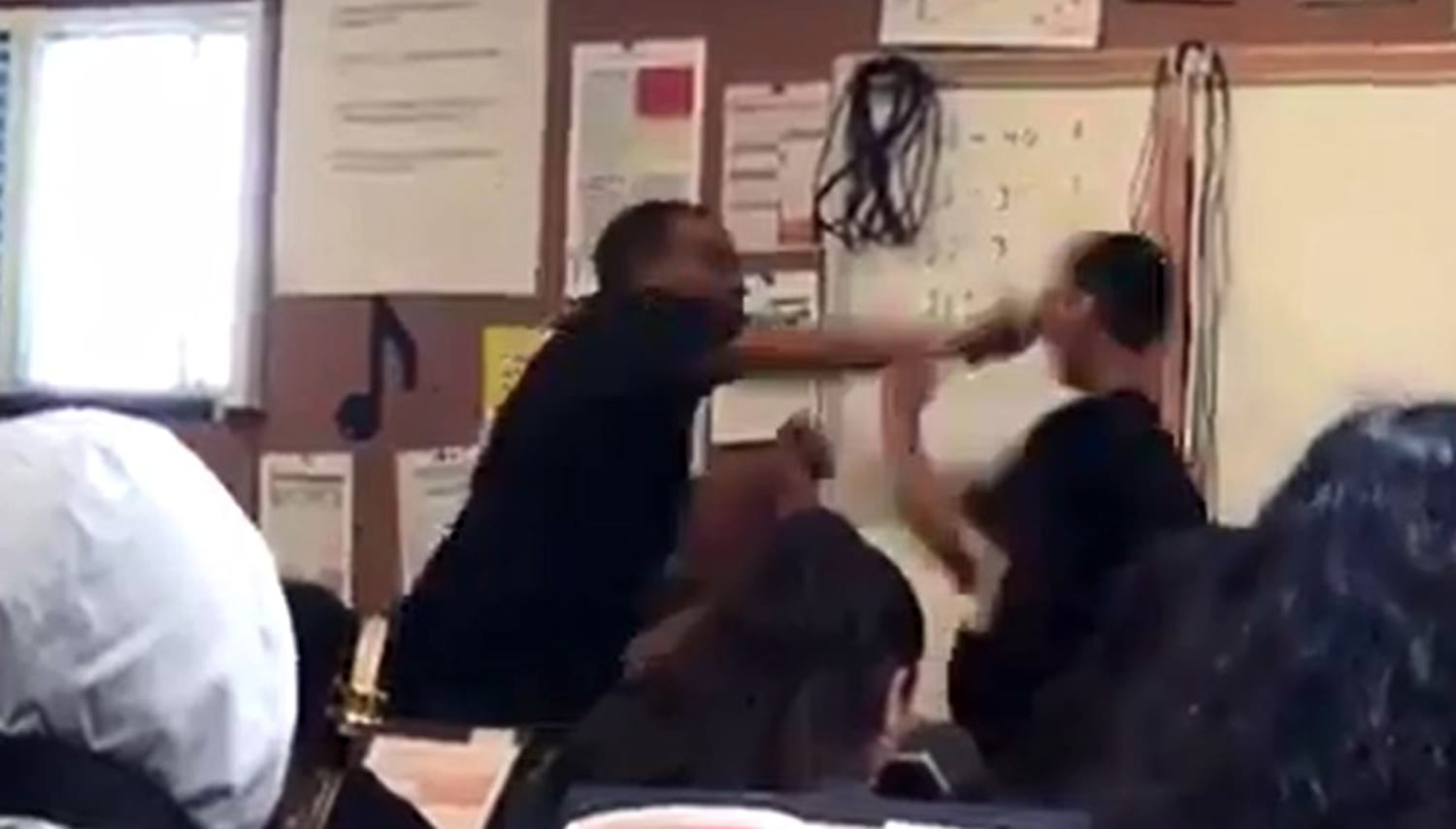
Look at the last picture … a young girl arguing (shouting, fighting) with her mother; is this something people would do in Viet Nam or is the culture very different ?
Sometimes people get angry (even teachers !) – some advice is to count to ten, and calm down.
In English, we use the word ‘should‘ to give advice or helpful information.
EXAMPLE: A student is naughty in class. A teacher should:
Help the studentCount to ten and be calm … OR …
Hit the student // punch the student // knock the student out.
Something less painful. My friend Andy is coming to Sai Gon.
Using ‘should’ to give advice or information, make suggestions for Andy.
He loves history … what should he visit or see ?
He loves traditional food … what should he eat ?
He can’t ride a motorbike … how should he travel ?
He likes a beer a night (!) … where should he go ?
NOW – onto the book. It’s a bit heavy tonight, so I’ll try to lighten it with fun activities in between.
Activity break: Family Fortunes
I put class into small teams and ask them questions to which I want four answers. These are very basic things such as four places I’ve visited in Viet Nam (so they hear my appalling pronunciation) // my four favourite Viet food // four things I love about HCMC and, conversely, four things I hate // four instruments I can play (I’m generous with the truth here) // four languages I can speak … Vietnamese is clearly NOT one of them.
GRAMMAR: FUTURE TENSE
We use either I will or I am going to …
I will (I’ll) is for quick ideas or suggestions.
I’ll do my bookwork, then I’ll go for a coffee.
I’ll help you with your English
I am going to (I’m going to) is more for plans
Next year, I’m going to Thailand
I’m going to pass my IELTS then study in Australia.
Predictions (thinking what will happen in the future) use both.
I think Vietnam will win the football World Cup by 2050.
I believe Vietnam is going to be the richest country in Asia soon
Negative:
You’re not going to like Thay Paul’s music !
We will not (won’t) learn English unless we study.
Communication activity – describing a friend, co-worker or family member.
Here is my friend Pete:
He was born in Ireland but now lives in Liverpool with his wife and son.
He is an accountant and works for a large bank. His job is safe but boring. He is going to look for a new job.
He is bald and wears glasses. He always smiles so he looks warm and friendly.
Because UK is cold, especially now in November, Pete has to wear jumpers or sweaters, even inside. He loves jeans and cowboy boots.
As you can see, he loves music and playing the bass and piano. He also likes drinking strong beer. However, he hates people who are bad to animals.
He is very calm and helpful however, he works a lot so he is not always reliable.
His favourite sport is football and he enjoys swimming.
He listens to Jazz music, David Bowie and Irish folk music.
He speaks Gaelic (Ireland) and a little French.
We never see each other because we live so far apart.
When we meet, we drink, talk and laugh together. Sometimes we write songs together.
Hopefully, I will see Pete in 2020 because I am going back to London.
I will be friends with Pete all my life … I hope 🙂
NOW … students’ turn – with a partner, talk about someone close to you.
Here, I will just walk around and listen, giving help where needed. I may board some incorrect phrasing so at the end of class, we can go over it together and all learn.


























 Thay Paul's Notes