An exercise for students to use critical thinking, and to practise speaking.
First we shall let the students work in pairs, discussing today’s question:
What’s the problem with your city … and what’s the solution ?
Let’s kick off with some useful vocabulary
pollution
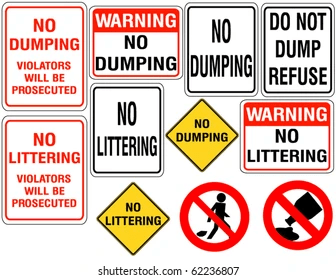
litter
noise
traffic congestion
You may start like this:
I live in Sai Gon (Ho Chi Minh City). The city is very large and busy, and has many great places. However, it also has many problems.
Then talk about pollution (air and water),
litter (paper, plastic, food, bottles, cans etc)
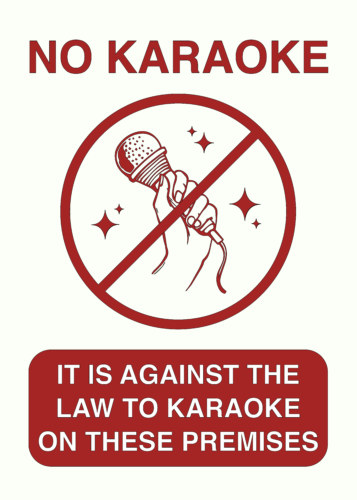
noise (karaoke, motorbikes, street vendors, building work)
traffic (is it fun or safe to drive ?)
Remember to use amazing adjective as well as linking words to give longer, better answers.
Now for some solutions
How can we make rivers cleaner ?
How can we make the roads less congested ?
How can we stop people littering ?
How can we reduce noise pollution ?
Please Note: All photos are taken from Google Images or free photo sites, and are used for educational purposes only. No copyright infringement or offense is intended. If I have used your photo or image, and you wish me to remove it, just ask. This site is not monetized, I run it on my own dollar. Thank you.
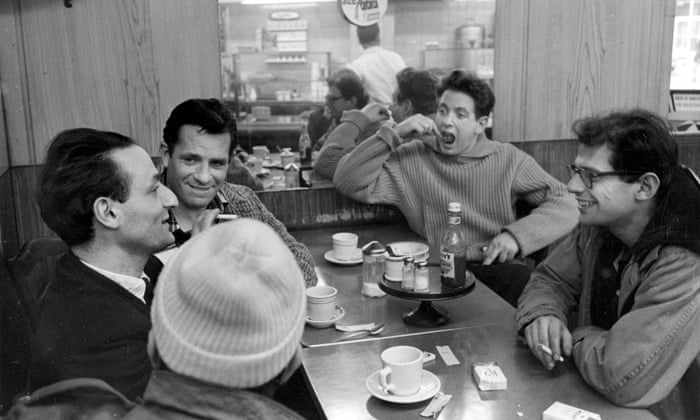
Members of the ‘Beat Generation’ hanging out & chewing the fat in New York, 1950s. Allen Ginsberg, whose poem ‘Howl’ ends this blog, is on the right, smoking a cigarette.
A major issue I encounter with ESL students is pronunciation and associated features such as intonation, stress, rhythm and pacing. Therefore, I decided to select some English-language poems for practice in class, while online students can find a multitude of YouTube videos of poems being recited by professional actors. I shall add some links at the end of the blog.
Now, without further ado, poetry.
Poetry can take many forms, not just writing; poetry in cinema, in dance, in speech … in life.
Let’s take a look at the first poem, ‘Dreams’ from 1922.
Recite the poem slowly and clearly. In the first line, stress ‘fast‘ and ‘dreams‘.
Secondly, listen for the rhyming pattern in lines 2 & 4: ‘die’ rhymes with ‘fly’, while verse 2 rhymes ‘go’ with ‘snow.’
Regarding ‘colour’, which tone of voice to use, decide if this is a positive or negative poem. Discuss in class what you think and give reasons.
Remember, art (painting, cinema, literature etc) is subjective; each person is allowed to have their own opinion. Develop speaking skills to enable you to support your views (give reasons).
Stop all the clocks, cut off the telephone, Prevent the dog from barking with a juicy bone, Silence the pianos and with muffled drum Bring out the coffin, let the mourners come.
Let aeroplanes circle moaning overhead Scribbling on the sky the message ‘He is Dead’. Put crepe bows round the white necks of the public doves, Let the traffic policemen wear black cotton gloves.
He was my North, my South, my East and West, My working week and my Sunday rest, My noon, my midnight, my talk, my song; I thought that love would last forever: I was wrong.
The stars are not wanted now; put out every one, Pack up the moon and dismantle the sun, Pour away the ocean and sweep up the wood; For nothing now can ever come to any good.
A highly emotional rendition, one person expressing their feelings over a loved-one’s death.
Let’s continue with a nonsense poem by Edward Lear from 1876:
Who, or why, or which, or what, Is the Akond of SWAT?
Is he tall or short, or dark or fair? Does he sit on a stool or a sofa or a chair, or SQUAT, The Akond of Swat?
Is he wise or foolish, young or old? Does he drink his soup and his coffee cold, or HOT, The Akond of Swat?
Does he sing or whistle, jabber or talk, And when riding abroad does he gallop or walk or TROT, The Akond of Swat?
Does he wear a turban, a fez, or a hat? Does he sleep on a mattress, a bed, or a mat, or COT, The Akond of Swat?
A great poem to demonstrate rhythm as well as ‘floating opposites’ e.g. young & old, hot & cold, not forgetting synonyms such as talk & jabber. Now, for really advanced beatniks, try the beginning of the famous, indeed infamous, poem ‘Howl’
I saw the best minds of my generation destroyed by madness, starving hysterical naked, dragging themselves through the negro streets at dawn looking for an angry fix, angelheaded hipsters burning for the ancient heavenly connection to the starry dynamo in the machinery of night, who poverty and tatters and hollow-eyed and high sat up smoking in the supernatural darkness of cold-water flats floating across the tops of cities contemplating jazz, …
The poem, along with a recitation by the poet, may be accessed here:
One of the biggest stumbling blocks for my Asian students is copying the speech patterns of English, how our voices rise and fall, how we pause for effect then stress key words, augmented by body language and facial expressions.
Best way to improve is to copy so, without further ado, some classic film lines.
Let’s dive in !
First up, ‘The Italian Job’, a British film from 1969 starring Michael Caine, who is still working today, an actor from south London: https://www.youtube.com/watch?v=8g_GeQR8fJo
“You’re only supposed to blow the bloody doors off !”
Now, let’s cross the pond (the Atlantic Ocean) and go Stateside, with Tom Cruise being yelled at (shouted at) by Jack Nicholson who you may remember from a previous video. The clip is from ‘A Few Good Men,’ a 1992 drama: https://www.youtube.com/watch?v=5j2F4VcBmeo
This can be for two students or teams: Start at 0:13 – 0:19
“Oh my gosh, I think I’ve just come up with the best theory … teenage life sucks !”
Now for a personal favourite, the inimitable Peter O’Toole an actor I had the pleasure of seeing, and briefly meeting, back in my London days. Here, Peter is on a talk show, explaining about a long, arduous flight from Japan to the USA: https://www.youtube.com/watch?v=JuhHThAaymQ
I heartily recommend watching the whole clip, however our section starts at 2:21
“Coming from Japan, one indeed stops at lots of places … Hawaii and all over … and it coincided, our stopping, with the cocktail hour … everywhere we went, it was cocktail hour … and one doesn’t want to be discourteous …”
Finally, my favourite TV chef (after Keith Floyd, obviously) is the beautiful Ching-He Huang
The whole clip is under two minutes. Here are some selections, in order of appearance.
“From street food to fine dining, Hong Kong is the place that has some of the best food on the planet. Every time I come my absolute favourite thing to do is eat.”
“So this is the pineapple bun, this is the moment I’ve been waiting for, it’s flakey and it’s sweet … it’s really good.”
“It’s small and punchy … just like you !”
“The sweetness of the prawns … eeerrrrrrrr !”
“This is some serious woking !”
The last phrase shows how we can play with English; a wok is a traditional Chinese frying pan. Here, Ching uses the noun (wok) to form a verb (woking), which is non-standard, in fact, it isn’t in any of the online dictionaries I searched. Having said that, most native-English speakers watching the show will know what she means.
If you are unsure, Ching is saying that the restaurant is extremely busy, there is a lot of high-energy cooking going on (woks are associated with high-temperature, very quick dishes).
A varied lesson plan. Firstly, we’ll (we will) start with a talk about married life. After, we’ll focus on phrasal verbs and finally we’ll conclude with some new expressions.
Naturally there will be many opportunities for you to practise, and I’ll (I will) include the answers at the end of the blog.
Married life
Conversation Practice
What advise would you give to someone getting married ?
How does life change after marriage ?
What is the normal marriage age in your country ?
Are married people expected to have children ?
How many children are expected ?
Is there pressure from family to have children ?
Is marriage ‘give and take’ ? Is it a continual compromise ?
How important are families in your country ?
Do you live in a nuclear or extended family ?
(nuclear = parents & children / extended= parents, children & grandparents, maybe aunts, uncles, nieces etc)
Phrasal verbs: coming out // look after // hang up // turn down // give up // hang out // look up to // take after // turn up
What phrasal verb means:
take care of // spend time with friends // to be like someone // stop doing something // make music louder // make music softer (quieter) // to respect someone // turn off a phone conversation // plan to go outside
Hang out with friends
Look after your young sister (Treeless Mountain, South Korea, 2008)
Now … your turn
Which phrasal verb would you use?
Many people 1) ………. Nelson Mandela.
In ‘Treeless Mountain’, a young girl has to 2) ……… of her young sister.
She looks just like her mother, she really 3) ………. her.
Learning Mandarin is too hard, I 4) ………..
Are you 5) …… tomorrow night ?
New expressions / vocabulary
unique = one of a kind, there is only one of them, very special
numerous = many
typical = normal, usual
straightaway = immediately, right now
clue = evidence (the police look for a clue.)
I haven’t got a clue = I’ve no idea !
First impressions count = the first thing you see is very important
blows your (my) mind = something so amazing, you almost can’t believe it.
Can’t judge a book by its cover = you can not tell what something or someone is like just by how it or they look.
Making a very good first impression
Now … your turn
What words or expressions would you use ?
1. Can you please send me that email …….. (now).
2. He looks so quiet and nice, but he plays very loud guitar. That proves you …………………………………….
He looks a very nice, quiet young man, but …
3. Don’t worry, there are ……. coffee shops on the main road.
4. Wow ! He knows so much, it totally ……………. (really surprises me)
5. You can’t replace that broken vase, it was …….. (only one of a kind).
6. What is 1 693 093 divided by 37 ? I …………………………. (no idea at all)
Answers:
take care of // look after
spend time with friends // hang out
to be like someone // take after
stop doing something // give up
make music louder // turn up
make music softer (quieter) //turn down
to respect someone // look up to
turn off a phone conversation // hang up
plan to go outside // coming out
look up to 2. take care of 3. takes after 4. give up 5. coming out
New expressions
1. straightaway or immediately 2. can’t judge a book by its cover 3. numerous 4. blows my mind 5. unique 6. haven’t got a clue !
A variety of speaking exercises and pair work to help you on your travels.
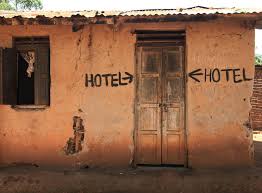
Booking a hotel room
Vocabulary:
adjoining rooms– rooms next to each other
amenities– services, shops, transport
bed and breakfast – small hotel or a room in someone’s house.
complimentary breakfast– free, included in the price.
Deposit – money paid in advance
High season / low season– popular times
housekeeping– cleaning staff
late charge– extra fee for not checking out on time.
Rate– the fee per room per night, per person.
vending machine – machine that sells snacks, drinks.
You are going to Bangkok and need to book a hotel. What questions would you have ?
How much is the rate for 4 people ? What time is check-in / out ?
Could I book adjoining rooms ? What is in the area ?
Where exactly is the hotel ?
How do we get to the hotel from the airport ?
Approximately how much is the taxi ?
Make a list.
Take turns being a tourist and working on front desk / booking.
Language to use:
Receptionist: Greet the guest / Ask for ID (passport, ID card). Check how many nights the guest(s) are staying / Ask to see booking confirmation /
What else could you ask ?
Guest: Explain you have a reservation / Present ID and booking confirmation. Ask about amenities in the hotel and what to see in the local area.
You could check if the hotel has a laundry service // can they book a taxi ? / do they organise tours ? Are there vegetarian restaurants in the area, or banks, money exchange, hairdressers ? What else could you need ?
Now … your experiences:
What was your favourite hotel room and why ?
Conversely, what was your worst room ?
What was bad about it ? In what way were you disappointed ?
How did the service excel ? Was it good value for money ?
Would you strongly recommend it ?
How did you find the staff ? Was it easy to get to ?
We’ve had two previous posts chockablock with idioms. Now, when push comes to shove, can you use them in your everyday English. Remember, those studying for IELTS will get extra points by demonstrating a knowledge of idiomatic language … so pull your finger out and put your nose to the grindstone.
This is an extended dialogue sequence. Practice the idioms and intonation and stress. You may wish to try short sections first, before attempting the whole exercise.
Hello, how’s your day been ?
Oh, so-so. And you ? Did you finish off the reports ?
Yes, more or less.
You better make sure they’re finished. You know what the Director’s like.
I know. If things aren’t done, all hell breaks loose !
Better keep on his good side. What else do you need to do ?
File some invoices, send off some emails and I need to get hold of Anna in HR.
I think she’s off sick today.
That’s a pity. Did you finish the wages ?
Yes, piece of cake ! Now I’m going through all the bank statements for the last quarter.
Not cooking the books I hope. Are we still going out tonight ?
Oh, sorry, I can’t know. Something’s come up.
What ? I thought you wanted to see the film. Johnny Depp’s in it.
I know, but I have to work late. Why don’t you ask the Director ? He’s really into cinema.
I don’t think so !
Why not ? He’s such a charming man.
Well, I beg to differ. He’s an old windbag and he drinks like a fish !
Mr Johnny Depp
My manager drinks like a fish
A charming manWriting false numbers – cooking the booksTalk, talk, talk … what an old windbag !

























 Thay Paul's Notes