Tonight’s class will focus on the town of Green Bank, Virginia (which is a southern state in the USA). Green Bank is a very small town. The population in 2019, according to Wikipedia, was 182 yet it has become famous as the town without Wi-Fi. Wireless internet is banned and mobile phones (cell phones USA) are unable to make or receive calls, nor can they send texts. The reason …
the world’s largest fully steerable radio telescope
Telescopes can be used for light or for sound. The above picture shows the radio telescope, which is 485ft tall, at Green Bank. It listens out for sounds from space. You may hear electromagnetic radiation in the class video.
Light and sound travel in waves. A star will emit light waves but electromagnetic radiation can also travel by radio waves. Giant telescopes are situated in areas with low light pollution while radio telescopes need to be in areas without Wi-Fi or mobile telephone, which can cause interference. You may have experienced this on an airplane when you are told to switch off phones during take-off and landing.
And so to work … as a warm up, get a partner or a small group and ask each other the following questions. Remember to encourage each other to speak in longer sentences and give reasons.
Could you live in a town with no Wi-Fi ?
What would you miss most if you had no phone or Wi-Fi ?
How important is your mobile phone to you … why ?
How often do you use Facebook ? Is it essential or fun ?
Do you think you spend too much time on social media ?
If you are with friends and your phone rings, or you get an alert, do you ignore it or stop talking to your friends ?
How to build sentences: explain your answers … ‘because‘ // such as … //
Tell me your experience: ‘For me, mobiles phones are …’ // ‘I couldn’t live without Wi-Fi because …’ // ‘I rely on …’
New vocabulary: essential // imperative // convenient //
It would be like losing an arm // a vital part of my life // I control my Wi-Fi use, it doesn’t control me // prohibitively expensive // I would lose my mind !
Serendipity – I only recently became aware of the Portuguese writer Fernando Pessoa (1888 – 1935) while watching a YouTube video on modernity in literature. The video mentioned some of my favourite writers of the early C20th namely Camus and Kafka, as well as Pessoa.
Despite a lifetime of reading; pulp, poetry, popular, philosophy (OK, enough alliteration) literature and drama, I’m overwhelmed by the amount of authors I haven’t read, authors of whom I’m not even aware. Therefore, when Pessoa was grouped with other authors I’ve read and love, I had to investigate … and what a story. In fact, before one reads Pessoa, one needs to read about him, his lifestyle and writing habits.
Firstly, Pessoa adopted different personalities under which to write. Instead of simply using a pseudonym, Pessoa became these ‘writers’, each one having individual characteristics, and he coined the term heteronym to explain his system. Pessoa wrote poetry under different heteronyms however, his most famous work is ‘The Book of Disquiet’, unpublished for 47 years after the author’s death. This book is credited to the heteronym Bernardo Soares.
The Penguin Classics edition
Not unlike his Czech contemporary Dr Franz Kafka, Pessoa spent his working life in an office, burdened by the drudgery of routine, dreaming of writing yet seeing very little success in his lifetime. More information can be found on these Wikipedia sites:
So, the plot … there isn’t one. The book, nearly 800 pages on my online version, is comprised of various musings, ramblings, sketches, observations, poetry in prose, diary-like entries and endless pathetic fallacy; it seems to be always about to rain, to be raining or has just stopped raining.
The style of the book means that one can just open at random, read in reverse order or return to it after reading other books. Personally, I find that I read maybe ten – fifteen pages at a time, although some pages may just contain a single sentence. It’s like poetry, each section is densely packed with meaning and significance; to race through it would be to miss the view and it’s the journey that has the meaning … not simply reaching the destination.
I just wish to add a couple of extracts that appealed to me.
Entry 84 (p. 148 online version), Pessoa quotes the Holy Roman Emperor, Sigismund (1368 – 1437):
“It is told of Sigismund, King of Rome, that when someone pointed out a grammatical mistake he had made in a speech, he answered, ‘I am King of Rome and above all grammar.’ … Every man who knows how to say what he has to say is, in his own way, King of Rome.”
Entry 269 (p. 387), Pessoa, another vociferous reader, refers to Charles Dickens:
“One of my life’s greatest tragedies is to have already read The Pickwick Papers. (I can’t go back and read them for the first time.)
Coincidentally, I am also working my work through the complete Christmas Stories by Dickens, an author I consider one of life’s greatest pleasures.
Meanwhile, while devoting time to focus on Iranian cinema, I watched the 1990 film ‘Close-Up’ by one of the most famous Iranian directors (possibly the most famous outside of Iran), Abbas Kiarostami (1940 – 2016), a filmmaker who uses Persian poetry in his films, and whose styles employs allegory and symbolism.
‘Close-Up’, often appearing in Best Film polls, notable the Sight & Sound Top 50 films poll of 2012
As with Pessoa, we have a film that doesn’t fit into a neat genre (fiction, documentary, re-enactment). Allow me to explain, and at least with the film, we have a story, if not a plot.
Hossain Sabzian is struggling to make his way, and escapes into cinema, identifying with downtrodden protagonists such as the eponymous ‘Cyclist‘ (1987) by Iranian director Mohsen Makhmalbaf.
On a bus ride, a fellow passenger notices that Sabzian is reading ‘The Cyclist’ screenplay, and asks where she can buy a copy. Sabzian gives the book to her, claiming to be the writer and director Makhmalbaf. From here, Sabzian gets to meet her family, and is invited to their home which he says could be used in a future film.
The pretend director begins examining the house and garden, as if setting up shots. He is almost caught out when he is informed that one of his films has just won a prestigious prize abroad, of which he is ignorant. However Sabzian, thinking very quickly, says that the prize was for the music score, and not down to him. Finally, a reporter friend shows the family a photograph of the real director; the police are called and the imposter is arrested.
This is not fiction; it all really happened.
At this stage, Kiarostami became involved, interviewing Sabzian in prison.
Then, in documentary style, or news reportage, we see the director asking permission for the trial to be filmed, permission which is granted. What differentiates this film is that Kiarostami then got the real-life protagonists to re-enact the situation, from the meeting on the bus to the arrest.
The real Ahankhah family in their home
So, it’s not a documentary per se, as the characters are recreating scenes, knowing how they will play out (of course, there are famous examples of documentaries using recreation or the staging of ‘real’ scenes), it’s not fiction or, as is so often seen, ‘based on a true story’ … it is a true story.
To go back to my earlier point, we have story but no plot that is, no psychological motivation for Sabzian’s deception.
One of the sons claims that the fraud was perpetrated in order to ‘stake out’ the house, see what was worth stealing and how to gain entry. Sabzian strenuously denies this. Conversely, there are no doctors to give an evaluation on Sabzian’s mental health. Is he a criminal, acting delusional, or a person in need of help, caught in a delusion that escaped his control ? The audience, like the judge, can only rely on the facts, what happened, not what could have happened.
Thus, although guilty of deception, Sabzian appears contrite and, having no previous record, is pardoned by the Ahankhah family providing he use this opportunity to change his life and become a productive member of society. The film ends with the real Mohsen Makhmalbaf driving Sabzian back to the house to greet the family and apologise.
I hope you can pardon this heavily condensed synopsis of a very nuanced and rewarding film. ‘Close-Up’ is an absolute ‘must see’ film for cineastes and, like all works of art, requires repeat viewing(s).
If I have inspired anyone to look for Pessoa’s work, or to watch the Kiarostami movie, then I can consider this blog a success.
Thank you all for reading – please stay safe and well
A belated tribute to this English guitar legend whose passing I only recently read. Music fans will know Eric Clapton, Jimmy Page and Jeff Beck, by name if nothing else, but not so many will be aware of Peter Green.
There are many video bios on YouTube and this is a good, short introduction:
In 1966, Eric Clapton was THE guitar hero; graffiti around London proclaimed, ‘Clapton is God.’ When Eric left John Mayall’s Bluesbreakers, the new guitarist would have a near impossible task. Yet Peter Green, Clapton’s replacement, achieved it, with many fans regarding his guitar work, and the subsequent LP, just as good as the iconic predecessor. Some would say better.
1966
1967
During this time, Peter met drummer Mick Fleetwood and bassist John McVie, and when he decided to form his own band, he named it Fleetwood Mac. The group started out as Blues band, but as Peter’s songwriting developed, other musical styles evolved, even English Classical Music ( Vaughan Williams was said to have inspired ‘Oh Well Part 2’).
Peter with B.B. King
However, after such hits as ‘Albatross’, ‘Man of the World,’ and the aforementioned ‘Oh Well’ Peter became increasingly unhappy with the music business, the fame, the money (all of this is covered in the Fleetwood Mac biographies). The situation was compounded with drug use, culminating in the notorious Munich party (not Berlin as mentioned in the otherwise excellent Guitar Historian YouTube video) after which, according to his friends and bandmates, he was never the same.
Peter left the band (which by 1969 was selling more than The Beatles & The Rolling Stones combined) and released a solo LP in 1970, ‘End of the Game.’
The record is a massive departure, being a series of edited jam sessions (the cuts are quite evident in places), and is not recommended as an introduction to his work.
Following the release Peter suffered mental illness, being diagnosed schizophrenic, became a recluse and grew his nails making guitar playing impossible. Finally, he entered a psychiatric hospital and had electroconvulsive therapy the merits of which are still debated.
In the late 1990s, Peter began playing again, and was encouraged to form the Peter Green Splinter Band.
I saw this band in KBs Malmö, Sweden, a venue with a capacity of 750. The club was barely half full. Eric Clapton used to play up to ten nights at London’s Royal Albert Hall, with a capacity of 5,200.
Although it was amazing to see a rock legend, I felt quite depressed, comparing how Peter used to look, how he used to play, how his life could have been very different. As far as I remember, he didn’t even speak during the show, and even stood towards the back of the stage, as if he were the backing guitarist.
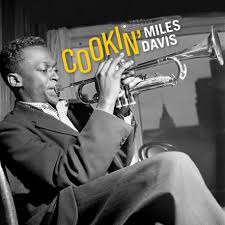
Be that as it may, we still have the music from John Mayall and the early Fleetwood Mac years. For an introduction, try this LP.
Some individual songs, on YouTube (at least in my region):
I have conducted a number of speaking tests recently and noticed some areas where students can, with very little effort, boost their scores.
Remember, IELTS requires you to demonstrate that you will be able to live and study in an English-speaking country.
Firstly, there is fluency: are you able to speak without hesitation ?
Secondly, is your vocabulary broad enough ? You will be studying at university level (1) therefore you should be acquainted with low-frequency words (L-FWs), while living in an English-speaking country will necessitate you being familiar with phrasal verbs, idioms and expressions that comprise the bulk of everyday language.
Obviously, grammar is imperative, especially the ability to form complex sentences. You will need to combine several pieces of information in one sentences, using clauses and discourse markers.
Finally, pronunciation; this is not merely the clarity and accuracy of your speech, but features such as intonation, stress, pacing, body language, rhythm, chunking … features which are best learnt by listening to native-speakers and imitating what you hear (2).
To sum up, if you have been disappointed by your score, listen to the feedback your instructor gave you, and work on those areas.
(1) Even if you study in your home country, many textbooks are only printed in English. I’ve known friends from Greece, Sweden and Germany who had to use English language books
(2) There will be an incredible variety of accents, dialects and linguistic features within one large city, but for the purposes of teaching, I’m referring to features that may be particular to English, namely adding the letter ‘s’ to form plurals, how words ‘run into’ one another and how less important words are swallowed, while key words are stressed.
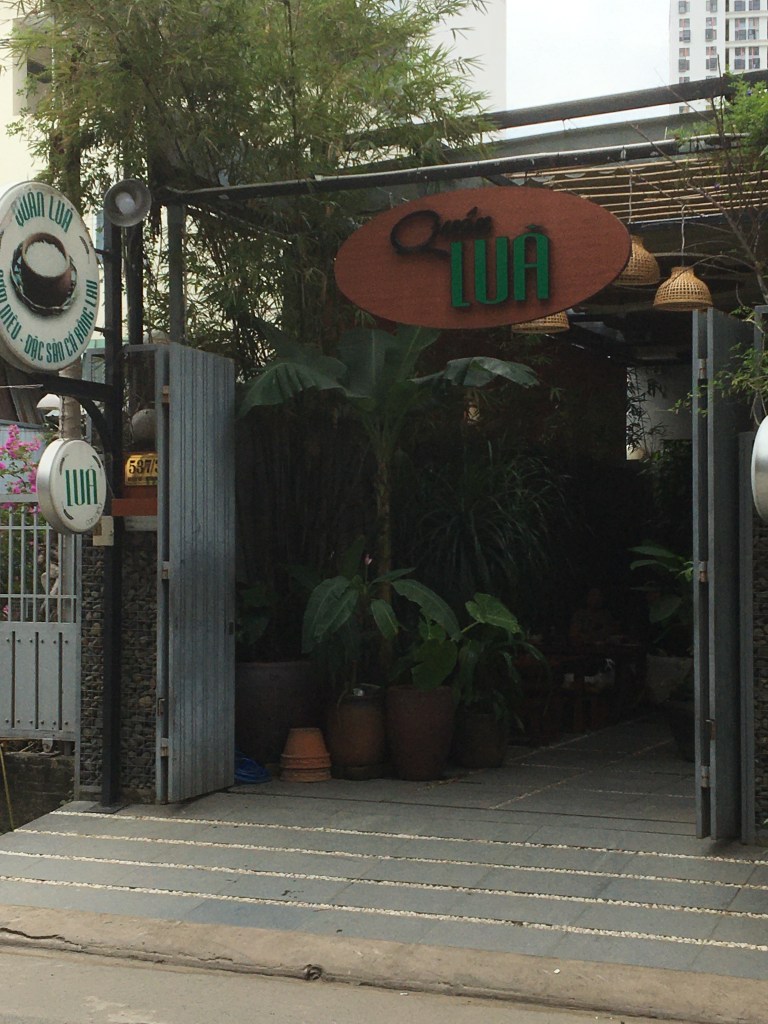
Quán Lúa: Address: 537/3 Đường Nguyễn Duy Trinh, Phường Bình Trưng Tây, Quận 2, Thành phố Hồ Chí Minh
I visited this restaurant back in December just before Christmas and, along with my trusty sidekick, sampled some of the fish dishes:
Prawns with onions and peanuts; the best dish.
Canh Chua Cá (Sour Fish Soup). I’m not such a fan of this Viet dish. It was average, nothing special.
Baked fish with sticky rice.
Gettin’ ready to tuck in …
The service was very friendly and, as you see, they didn’t object to my sidekick in the outside area. Cost was reasonable while I would rank the food thus: the prawns were delicious, the baked fish satisfactory and the rice well-flavoured. The soup looks colourful, it’s just not my cup of tea. To be fair, as I went early some of my first choices were not available. I really went as a break from home-cooking, and to support a local restaurant. I’ll leave the last word to my trusty sidekick:
Due to the return of COVID to Sai Gon, schools and language centres have been closed down, and online classes have restarted.
A big shout out to the staff at my centre. Instead of taking things easy in the build up to Tet, and enjoying time with their family, they had to work all hours to prepare for the change to distance learning.
To make these lessons work, we need students, and their parents, to follow these simple rules:
Respect your teacher and your teacher will respect you
tôn trọng giáo viên của bạn
You HAVE TO turn on your camera. If your camera is not working, you HAVE TO inform the centre.
Answer your teacher when you are asked a question.
Please control your background noise. No music, computer games or talking. Try to find somewhere quiet for the class.
Let’s work together and make the best of this situation and hopefully, we can all meet at the school in the near future.
The time is the early Sixties; the place, a room in a research centre. We can imagine the entire back wall covered by metallic, grey-blue, wardrobe-like cabinets, housing large, state-of-the-art computers, their spools turning through Perspex windows, emitting a constant hum that is deafening to new arrivals, but now inaudible to the scientists that work there, a security blanket, an audio barrier against extraneous interference.
Now we have The Scientist. Doubtless he is wearing a spotless lab coat, pure white, or, perhaps, as The States were emerging from their Eisenhower conservatism and The Sixties still a swing away, the coat is a dull, conformist grey. Pens neatly arranged in breast pocket.
The Scientist is concerned with the weather. Forecasting it, trying to comprehend its peculiar patterns, its apparent aberrations, its random rumblings.
By analysing data, maybe it could be understood and, if not controlled, at least scientists would know exactly what to expect and when.
That’s where the computers came in. The calculations were so intricate, the figures so exhaustive, that only these cumbersome machines could handle them. What an exciting time; technology now existed that could process the mind-blowing streams of numbers. The scientists just had to sit back and wait for the results.
So our Scientist, while inputting data, and rather desirous of a caffeine fix, decided to take an insignificant short cut.
Wanting to check some previous work, but not wishing to start the calculations at the beginning, he took a reading at mid point, and started the simulation on computer from there.
Instead of feeding in a figure with several decimal points, he decided to round it up to just three, thus 0.506127 etc became 0.506.
This minute alteration should have no discernible effect, would probably have no effect at all, so, safe in that assumption, The Scientist left his room and went to the cafeteria, where he could chinwag with the other boffins about suspected cold fronts, joke about predicating football scores and cast sideways glances at the cute girl behind the counter.
Back to work. The Scientist picked up the reams of paper and looked for the result. He found it, but immediately thought it must be wrong, so he checked. He double checked.
He had been expecting an answer within certain parameters.
The figure before him was far outside his prediction, and he was driving himself crazy by constantly going over the calculation. No, all the figures, the work, was correct, so why the discrepancy ?
Surely it couldn’t be because he had made a tiny adjustment ?
So he re-ran numbers, checking the altered sum from the original figure.
Thus, the first point about Chaos Theory: Tiny, insignificant changes at a starting point, can lead to massive, significant changes at a distant point.
It was therefore an act of Chaos that led to Chaos Theory.
Then came the second point about Chaos Theory : All complex systems are constantly changing and feeding back on themselves.
The Scientist took some data at 9:00 AM and, feeding this into the computer, tried to forecast the weather for the following afternoon.
Three hours later, he fed in new data, how the weather was at 12:00. This he repeated, at intervals.
All the results were different.
The weather was constantly changing, and even minor fluctuations would cause different patterns, which may lead to other alterations which would lead to other situations, which would … and so on.
By rounding up the figure to just three decimal points, The Scientist would popularize theories that had long been in existence, bringing them out of academia and into the modern world where they could be applied by anyone wanting to know the weather, or predict the economic peaks and troughs, or regulate traffic flow, or apply it to an understanding of history or politics.
Or, maybe, just maybe, someone may come up with an theory about trying to understand that most chaotic of human relations: love.
As a guest in Vietnam, I am not sure of Vietnamese culture and customs. Work in teams and make a presentation to the class, explaining Tet holiday in terms of food, how it’s prepared, and who is invited to eat. Are there any strange or unusual traditions associated with Tet ?
Standard English:
Watch this video // Have a look at this short clip
UK London slang:
Have a butcher’s at this clip (butcher’s hook = look)
Please allow me to introduce Mick Jagger of the Rolling Stones
You never get a second chance to make a first impression
A killer, jaw-droppingly brilliant introduction will really impress your examiner as well as boosting your confidence during what, to be honest, is a nerve-racking experience, namely, the IELTS speaking test.
With that in mind, here’s some tips, advise, guidance, what you will, on how to set up your response.
Let’s take a real-life example. Last week I asked my class a simple question:
I am exhausted and need a holiday. Where should I go to in Vietnam ?
Most answers were pretty run of the mill albeit with the occasional L-FW and an idiom relating to cost (it does or doesn’t cost an arm and a leg). However, I had a former student sitting in, my Princess (you may read about her here, if you so wish: https://thaypaulsnotes.com/2020/09/04/6420/
My Princess began her recommendation thus:
Mr Paul is looking quite exhausted because he has been working extremely hard, burning the candle at both ends, so he really needs a holiday to relax. Vietnam has visually-stunning scenery and beautiful beaches. Allow me to tell you about some of these places …
The class responded thus:
Their jaws all dropped ! However, take heart, a great introduction is, with a little practice, a piece of cake. What follows is a compendium of opening lines, introductions, and templates for you to use and adapt as you see fit.
As with all skills, start slowly then you can build up to more elaborate introductions.
Introductions:
That’s a very interesting question
Allow me to tell you about …
Well, that’s a great question
Well, there is so much to say about that subject, where shall I start ?
It’s funny you put that question to me because earlier today I was just thinking about …
As a young Vietnamese (add your own nationality), I …
Well, that question is a bit of a sore point with me because …
More Advanced introductions, especially for Part 3:
Well, that’s a very complicated question …
Well, that’s a very complicated question but I will endeavor to answer
What a hard question, I may have to think about this …
I’m not sure I know how to answer that because I don’t have enough information, however …
I’m not sure I know how to answer that because I don’t have enough information, however I can think of one example …
in my experience
allow me to tell you what I do
I can’t speak about other people, but I …
Family
Allow me to introduce my family to you. Firstly there is …
Food
I like many drinks however coffee is my favourite because …
Sai Gon has so many coffee shops, some are cheap while others can be quite expensive although they have a wide range of delicious coffee. Personally, I like going to …
As you may know, I’m a vegetarian. However, all my friends love fast food especially burgers and fries.
Well living in a big city, I have a wide choice of food, including American and European cuisine. Fast food restaurants are ubiquitous so I have eaten, for example, burgers, KFC and pizza, which is my favourite.
Well, that’s a great question as I detest cooking. Having said that, I’m extremely lucky because in my neighbourhood, restaurants are ubiquitous, from expensive sea food to affordable street food.
Thank you for the question, because I can introduce you to some mouth-watering dishes from Vietnam. Allow me to mention just two which, in my opinion, are the most popular.
Free time / hobbies / shopping
Well, I’m a student at university, so I don’t really have much free time. However, when I’m not studying I like to …
After a hard day of (working, studying, shopping) there’s nothing I like better than watching a great movie and I tend to enjoy action, horror and Marvel films the most.
Watching films and going to the cinema is one of my passions, so choosing just one film is going to be terribly difficult, not to say impossible. However, if I have to select one film, it would be ‘Lost in Translation’, with Scarlett Johannsson.
I have to confess that one of my passions is shopping, be it at a mall, a street market or online. As a young person, I adore buying clothes, though I have to restrain myself as many items cost an arm and a leg.
Well, That’s an interesting question because I actually spend most of my time at school or studying. Most days I’m burning the candle at both ends. Having said that, when I do get free time, which is once in a blue moon, I love to just hang out with my friends, maybe go to coffee shops which are ubiquitous in my city. Although I enjoy movies, I rarely go nowadays.
Future plans
I’m not absolutely sure yet, but I plan to meet up with some friends and just hang out. We have all been so busy, we haven’t seen each other for ages. (for a long time).
Well, that’s a very pertinent question because recently, I have been thinking about where I would like to study, and the UK is certainly top of my list. I am sure there would be some culture shock, especially when it comes to the food.
Well, I’m currently in my last year of high school, so this is a very pertinent question for me. Naturally, I can’t foresee the future however, I could offer some predictions though, of course, this is just my opinion.
It’s funny you put that question to me because just today I was thinking about where I want to study. I have my heart set on studying in the USA as I have some family in Seattle, which is a large city in Washington state. However, to follow my dream, I need a high score in IELTS, so I need to put my nose to the grindstone.
Hometown
Thank you for letting me introduce to you my hometown which is Da Nang, one of the biggest cities in Vietnam, although it is much smaller than Ha Noi or Sai Gon.
Travel
Vietnam has many beautiful places but my choice would be Hoi An.
Ah, that’s an interesting question because I really need a holiday. However travelling now is not a good idea because of the COVID 19 which is an extremely serious pandemic. So, I have to think about after, when it is safe to go on holiday.
No preamble, let’s just dive in; how to boost your lexical resources.
Firstly, replace all your basic verbs with ‘better’ ones, L-FWs as IELTS refer to them. Thus, fifteen of the most common English verbs:
be
have
do
say
get
make
go
know
take
see
come
think
look
want
give
Activity 1: Assign three verbs to students (individually or in small groups). They must write a sentence (the more complex the better) utilising the substituted verb. Students can use a thesaurus for assistance.
Example: ‘give‘
I always donate my old clothes to charity.
Activity 2: Convert a simple sentence into a jaw-droppingly magnificent IELTS sentence, employing the whole spectrum of resources, by which I mean phrasal verbs, adverbs, LFWs, idioms etc.
Example:
I always donate my old clothes to charity.
I have to confess that one of my passions is shopping, be it at a mall, a street market or online. As a young person, I adore buying clothes, though I have to restrain myself as many items cost an arm and a leg. Naturally, I accrue a vast wardrobe. From time to time I have a good sort out, sometimes being quite brutal. If I haven’t worn something for, say, two years, then I get rid of it. However, instead of simply throwing them away, or giving to siblings or cousins, I choose to donate to various charities such as UNICEF, Save The Children or Cancer Research. That way, I can contribute to improving the world.
Study the above example. Can you pick out the elements that differentiate this from a basic English class response ?
Write down new vocabulary and make a point of using new words.
Observe how points are introduced, and answers expanded.
How many phrasal verbs are you familiar with ? How about fixed expressions (here I added ‘From time to time‘) which brings us nicely to our next section …
Fixed expressions
As far as I’m concerned // I can’t wait to … //
If there’s one thing that I (love, hate, detest) it’s … // I’m looking forward to … //
It may surprise you to learn that I … // It’s no surprise that … //
The first thing I’d going to do when I … // There’s nothing I like better than … //
Activity 3: Practice using these expressions
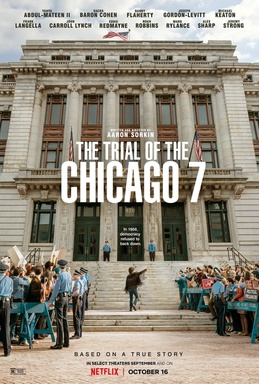
Example: After a hard day of teaching, there’s nothing I like better than watching a great movie. Only last night, I saw a fantastic film, ‘The Trial of the Chicago 7’ by Aaron Sorkin who is a highly respected American writer.



















 Thay Paul's Notes