This is polite conversation, to pass the time, or to get to know some basic information about people. Do not ask anything too personal; this will differ from culture to culture, but in the UK and the west in general:
DO NOT
Ask why someone is not married or has no children.
Ask how much money they earn, get from their job.
Ask how much something cost. “I like your shirt. How much was it ?”
Talk about politics. “You’re from China ? Chairman Mao was a disaster !”
PLAY IT SAFE – talk about music, football, food or … in the UK … the weather.
Very warm for this time of year.
Did you see …….. last night ? (the football game, the news etc)
How long have you worked here ?
The traffic was so bad this morning.
What team do you support ?
Echo questions
John: I can speak German. Peter: Can you ?
Bella: Ms Nguyen went to Thailand. Carole: Did she ?
Bill: He likes K-pop. Harry: ______________ ?
We are going to the pagoda later. ______________ ?
Ms Thinh has a new job.______________ ?
Conversation Practice
Talk about:
house prices in your city / why you have or don’t have a pet
an interesting program you saw recently
What you want to do in the future. / Somewhere you would love to visit.
Keep conversations going:
I see / Do you really think so ? /
That’s good point / I hadn’t thought of that
Oh, that’s interesting/ Yeah, right ! / Sure / OK May I just add something ? /
Oh, where is that exactly ?
Speaking Practice – use discourse markers to extend your speaking and to link ideas.
Describe something you own which is very important to you.
You should say:
where you got it from how long you have had it what you use it for and explain why it is important to you.
You will have to talk about the topic for 1 to 2 minutes.
You have one minute to think about what you’re going to say.
You can make some notes to help you if you wish.
Rounding off questions
Is it valuable in terms of money?
Would it be easy to replace?
This could be a physical object, a memento with sentimental value, or an abstract noun such as health, happiness etc
For my Vietnamese students:
How different is Vietnam from other Southeast Asian countries?
What do you think Vietnam will be like 50 years from now?
What do you think Vietnam’s neighbours think of you ?
We can only (guess) on what will happen in the future
The student did no work __________ he failed the exam.
It rained several days. That fact ____________ (despite), we still had a good holiday.
If you visit Canada in winter, _________ (of course) you will need jumpers, coats and gloves.
Expressions:
cultural differences / one can only imagine / putting myself in their shoes
There are many _____________________ for Asian students who go to study in the USA.
It can be hard learning English. Many students have to work all day. I try ___________________ and seeing what I can do to make the lessons more interesting.
Being a celebratory isn’t always fun; always having your photo taken. ___________________ what it must be like.
Try using these expressions:
There is so much work, I just can’t take it anymore !
A plague on both your houses ! (from ‘Romeo & Juliet’, Shakespeare)
Are you serious ? What possessed you to come up with such a stupid idea ?
I’m speechless … the film was just so moving and emotional; I’m almost in tears.
He’s speechless !
Discourse markers: Try to learn new words / expressions here to help you link idea.
Use these words: First, find the meaning for yourself, then use them in a sentence. After, try to use them in your everyday English.
Practice, practice, practice …
For instance / conversely / above all / alternatively / similarly / therefore as revealed by
There are many things I enjoy about writing this blog, for instance receiving notes and likes from people all over the world.
For a case in point, I see I have some readers in Nepal, so, just for them:
24th January for 30th January 2020. IELTS Bands 4 – 5.5 Unit 7
Firstly, a big hello to all my readers and followers in India. Yesterday I had over fifty visits from students from the sub-continent and I want you all to know how much I appreciate you taking the time to check out my blog. Thank you so much.
My Indian friends – what is the standard of behaviour in your classrooms ? In my centre, in Sai Gon, Vietnam, we have to employ classroom management (normally reserved for ‘young learners’) to adults. Namely, we have to continually tell the class:
No mobile / cell-phones in the classroom UNLESS it has been sanctioned by the teacher for educational purposes.
No eating, chewing gum, slurping drinks
NO CHATTING WHILE THE TEACHER IS TALKING. THE TEACHER IS HERE TO HELP YOU. FURTHERMORE, IN MOST CULTURES, THIS IS UNBELIEVABLY RUDE AND UNACCEPTABLE.
Take notes, write down new words, practice using them
The teacher is here to help YOU learn. We are not here to entertain you.
These are not MY rules – they are the rules of the centre. If you cannot abide by them, then stop coming to class, stop wasting everyone’s time and money.
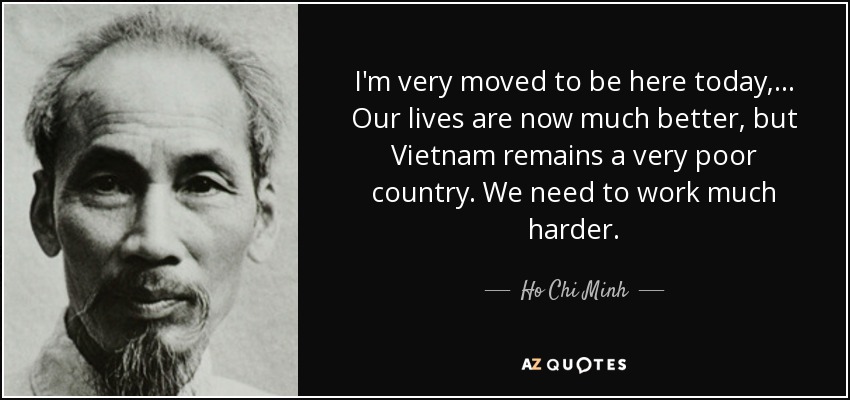
Let’s leave the last word to Uncle Ho, bác hồ:
Understand, my Vietnamese classes ? Even Uncle Ho says you,
“need to work much harder.”
And now, without further ado, a warm up exercise to see how much the class has remembered from the last lesson … if anything.
Firstly, complete these phrases and then use them in sentences:
over the ______ // under the ________ // under ________ // more or ________
I’m over the …… because I passed my IELTS test.
Ms Linh is not here, she’s feeling under ………..
The class understood the video, more ……..
So many tests at school, the pupils were under ………
Secondly, what do these words mean, the make a short sentence using them:
I shall try to incorporate some teaching points about India in this blog which, although written before the Lunar New Year (Tet Holiday), is for next week.
The above sentence is an example of the type of English that is expected in order to pass the IELTS exam. As you can plainly see, it isn’t too difficult; I inserted a low-frequency word (‘incorporate‘), used a relative pronoun (‘which‘) in order to make the sentence longer and more fluent, then employed a discourse marker (‘although‘) to link contrasting ideas together in a coherent sentence.
To recap, what you will need to use in both writing and speaking are:
adjectives (but not just the most basic, common ones)
adverbs
low-frequency vocabulary
complex sentences (introduce extra information in supporting clauses)
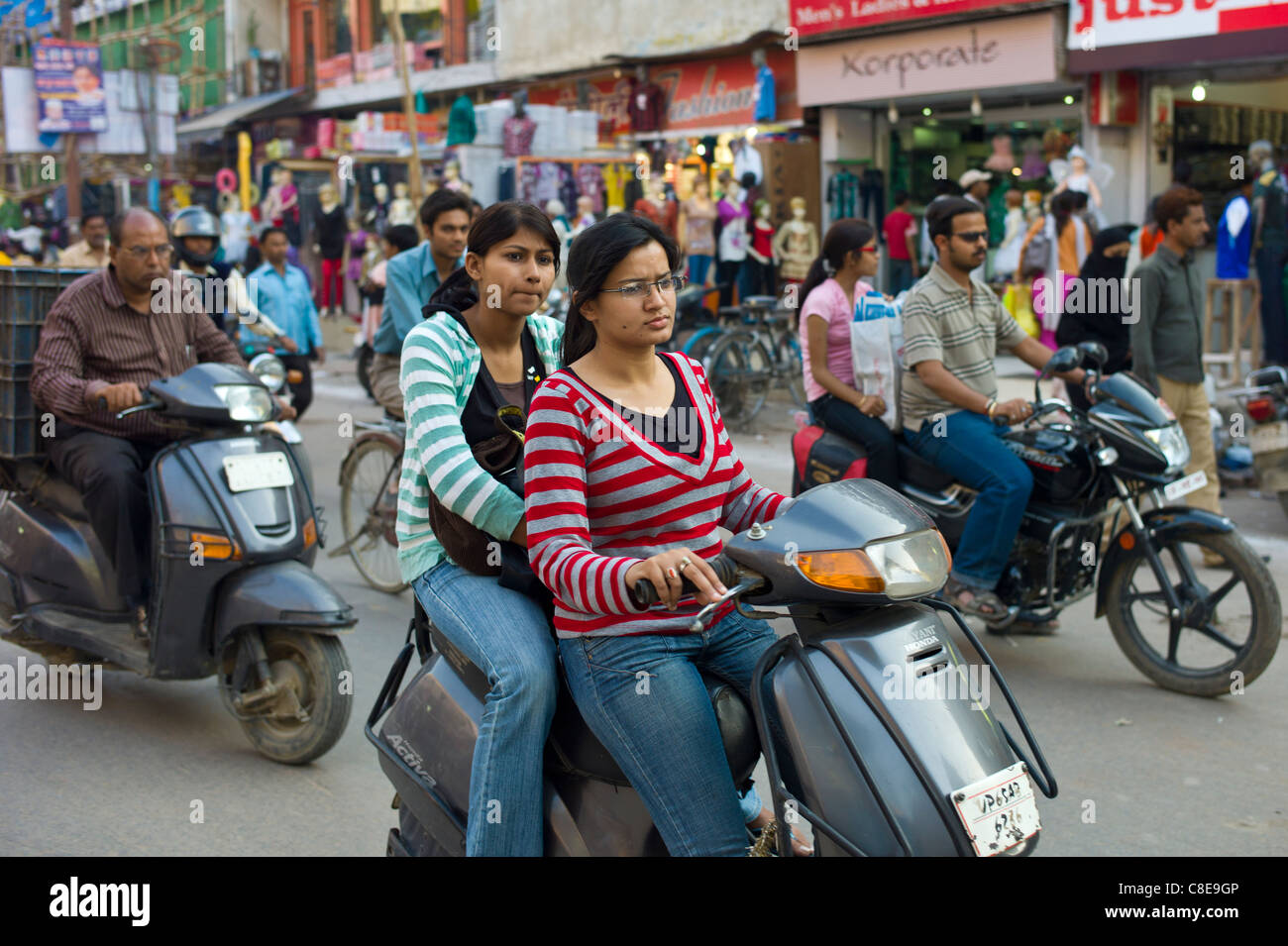
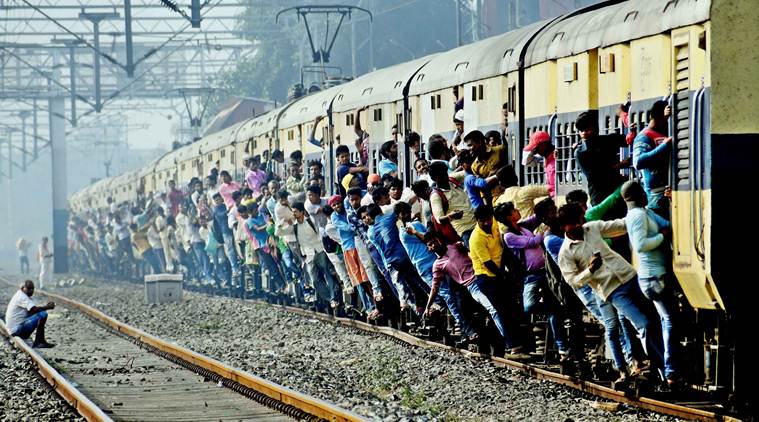
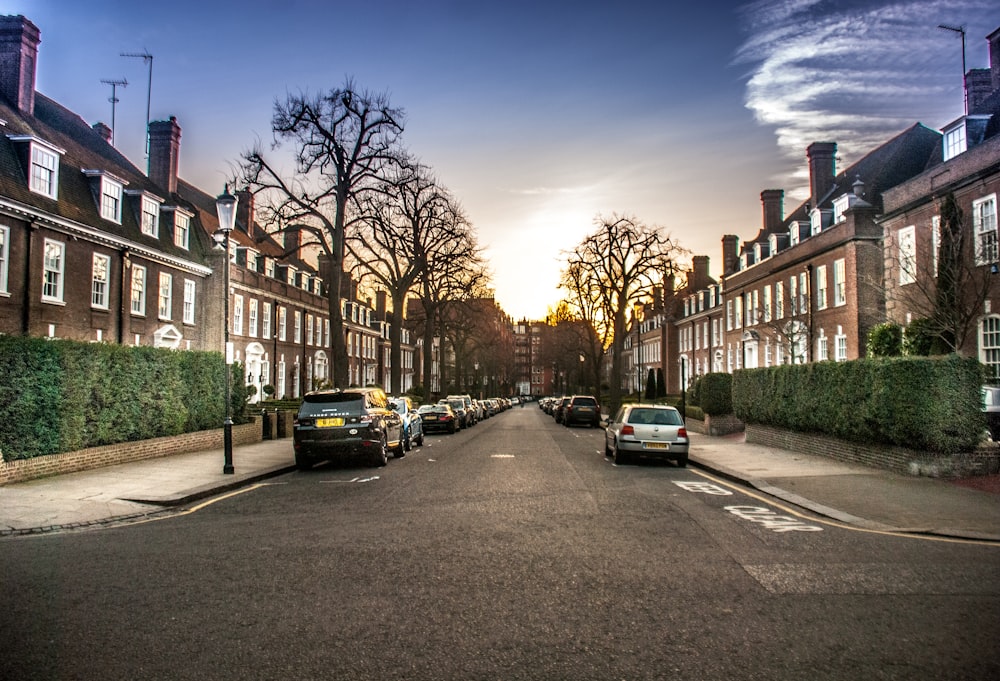
Does this look like YOUR city ? What is similar, what is noticeably different ?
A typical commute to work ?
Vocabulary building and listening
In the real world, most students will not be communicating with English-language teachers, but probably with other non-native speakers, so learning to appreciate and understand English spoken with a ‘new’ accent is an extremely useful skill. Here’s a great video which features a charming young Indian lady teaching new vocabulary: https://www.youtube.com/watch?v=PKUxuD0m5A8
New Vocabulary:
Instead of using ‘very’ + adjective (I am very tired), use a single word:
Try to use ‘sagacious’, ‘exquisite’, ‘colossal’ and ‘spacious’
The classrooms in Block D are ……….. (big)
The furnishings are perfect, they are ……….
Building an underground train network is a ………… undertaking
The old man was ………. People came to him for advise.
This is also a listening skills exercise.
Do you have any problems understanding her ? Why ?
Listen for at least five words you didn’t previously know. In small groups ask each other:
What impressed you ? What disturbed you ? Would you like to go there ? If so, why, if not, why not ?
Here is a chance to practice adjectives, linking words and using the word ‘because’ – giving reasons, supporting your comments.
Famous Indians
In small groups, you have to make a short presentation about one of these famous Indians:
Mahatma GandhiSiddharta – the Buddha
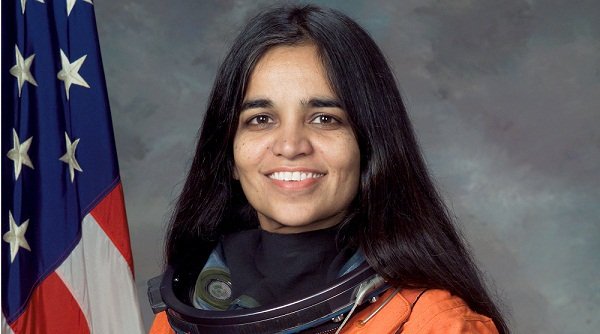
Kalpana Chawla
The class have five to ten minutes to research information, speed read and extract relevant facts with which to enlighten the class. Simply reading straight from Wikipedia is not permitted.
And now, goodbye from this mysterious, exotic land. Hope to meet you very soon …
If (he/they) had known it was so (expensive, noisy, boring …)
Emma, 19 Backpacker. Likes shopping, dancing, eating street food. She didn’t book ahead and was too tired and hot to walk around looking for a cheap hotel so she had to stay in a four-star hotel and spend nearly all of her money.
Japanese family. Like family activities, souvenirs and quiet nights. They stayed in the noisy backpacker area, with shouting and screaming and drunken karaoke all night.
Young men wanting a ‘Stag Night’ party, here to have a last hurrah ! They chose a quiet town in the Mekong Delta, but there was only one bar and it closed at 8.00 pm.
(a stag night is a wild party for a man before he gets married. There is normally a lot of drinking … and other activities)
Jewish students. They do not eat pork, or shell-fish. Want to see history and temples. Their guide keeps taking them to eat sea-food and pork restaurants because the guide only speaks Vietnamese and Chinese and the students only speak Hebrew and English.
If these visitors came to your city or town, could you recommend places for them to visit ?
What are your suggestions?
They ALL want a typical local experience, so obviously, they should … ?
Remember, Emma wants somewhere fun but cheap, the family want someone quiet but close to family attractions, the young men want lots of bars and clubs, while the students have strict dietary laws.
Irregular verbs are all different. A lot of common verbs are irregular:
have /had // do / did // say / said // be / was/were// go / went // get / got // make / made // take / took
Here are 7 verbs in the PRESENT.
Choose the correct verb AND use it in the correct tense.
teach / live / go / see / drink / am / have
Ms Ha (1) …….. drinking tea yesterday
when she (2) ……. an idea.
I haven’t (3) …….. my neighbours how to drink tea. I am sure they will be happy.
They have not (4) …… to the UK yet.
I have (5) …. in many cities in England.
Now I am in Viet Nam. I have (6) …. many wonderful sights,
but I have never (7) …… a cup of good, English tea.
Grammar – verb practice
Here’s the 15 most common:
infinite / present / past /past participle (verb 3)
1 to be / / am // was /been
you are / / were / been
2 to have / / have / had / had
3 to do // do / did /done
4 to say // say / said / said
5 to go //go / went / gone
6 to get // get / got / gotten
7 to make //make / made / made
8 to know // know / knew /known
9 to think // think / thought / thought
10 to take // take / took / taken
11 to see // see / saw / seen
12 to come // come / came / come
13 to want // want / wanted /wanted
14 to use // use / used / used
15 to find // find / found / found
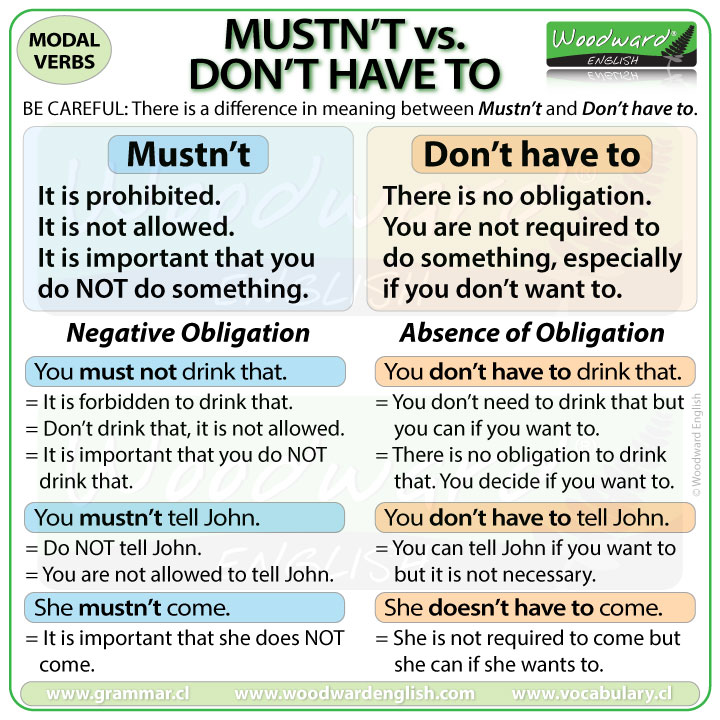
Grammar: must or have to ? mustn’t or don’t have to
must or have to ? don’t have to or mustn’t
have to = other people tell you // must = your decision
don’t have to = not necessary // mustn’t = is forbidden
You have to have a degree in order to be an engineer
I must stop eating at Lotteria (an Asian fast-food chain like McDonalds) !
You don’t have to bring any beer to the party.
You mustn’t run a red light or use your mobile phone on your motorbike.
The new James Bond film may be sold out.We ______ buy tickets NOW !
I hate parties ! Do I _____ go ?
You _______ eat too much popcorn; it’s bad for you.
You ________ be over 18 to see this film
You don’t ____ bring your passport to get intoa cinema in Viet Nam.
Answers: must / have to / mustn’t / have to / have to
Grammar: Phrasal verbs
Phrasal Verbsand collocations
Put
up with / the fire out / up / on a happy face
it in your own words / up or shut up !/ it away / it another way
Get
well soon / over it ! / on with it / away with murder / on the bus
back to work ! / with the program (US) / some fresh air
Complete the sentences:
She looks so sweet but she never does her job ! She gets …….. at work,
Come on, cheer up ! Put ……. and smile.
If you are so good, you do it ! Put ………..
We are all going to work on the new project together, so get …….. or get a new job !
She is not the thinnest lady in the world. OK, let me put ………. she’s fat !
Stop playing and do your homework. Get ……….
His Thai girlfriend left him. He needs to get ……….
Answers:
she gets away with murder (is allowed to do bad things) // put on a happy face // put up or shut up (don’t just talk about it – do it OR stop talking) // get with the program (do what everyone wants to do) // put it another way (to say something differently) // get back to work // get over it (stop being sad, and forget the past).
Sentence building
Linking words: and / as well as / and also / along with
These link positives sentences:
I like tea as well as coffee He plays football and also badminton.
How are they dressed ? How do they look (emotions) ?
Example
Tesco Lotus is quite cheap and also has a great choice.
but / however / having said that / on the other hand
These link positives to negatives / negatives to positives:
Jet Mart is convenient. Having said that, it is (it’s) extremely expensive.
Czech beer is fantastic quality, however it’s not easy to find in Sai Gon.
‘therefore’ is a conclusion word:
The Spanish supplier is reasonable (so-so) quality, but more expensive. Therefore, we will use the German supplier in future.
Photo descriptions
These can be a great way to encourage students to speak and build longer sentences and therefore become more confident in speaking and using English.
Describe what you see in this photo. Use as many adjectives as you can.
Subject first – Do not use a pronoun (he / she / they) Say what you see.
Where are they ? What are they doing ? What do they look like ?
How are they dressed ? How do they look (emotions) ?
What do you think they are talking about ?
Example
I see two young ladies … now try to add more adjectives:
I see two beautiful young Asian ladies. One has very long, straight brown hair. Her friend has medium brown hair, a little wavy.
The lady on the left has a white dress with flowers. The lady on the right wears a blue cotton dress.
Now what are they doing – use continuous verbs – verb + ing
They are talking, laughing and drinking coffee. They are in a nice coffee shop. I see some bags, one yellow, one orange, so I think they like shopping.
Now – your turn. Describe these photos:
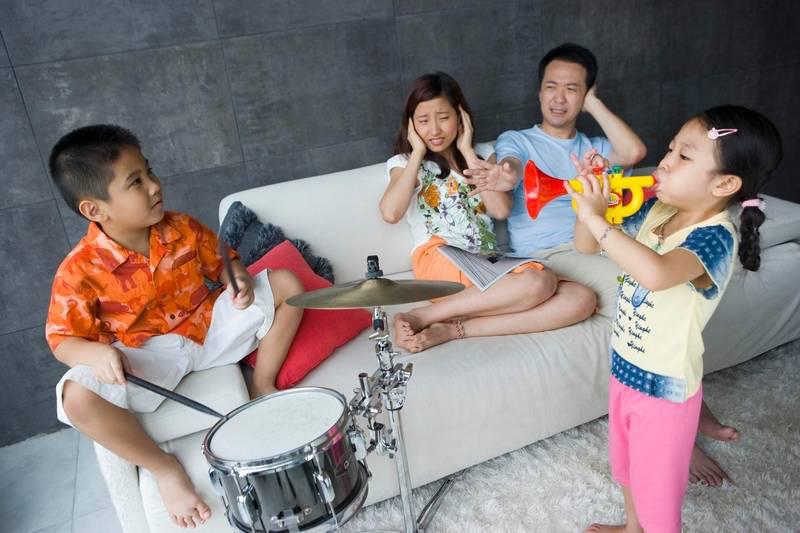
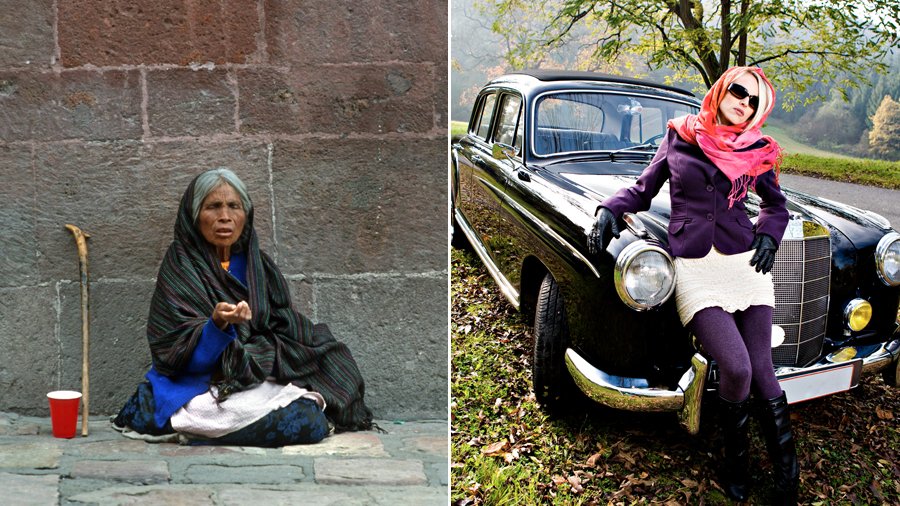
I see a very angry lady. She is …The lady likes to talk. She is …I see two young girls … maybe they are sisters …What do you see ? What are they doing ? Are they both happy ?What do you think about this ? How does it look ?
Listening:
I would normally read this aloud and then ask the students the questions. You can alter the speed, the natural chunking sounds, etc, to suit the ability of your class.
I usually go shopping once a week. I sometimes go to Big C but I like shopping at Mega Market. CitiMart is good but it’s a long way from my house. Mega Market is quite near my house so it’s easy to get there. It’s a big supermarket and it has everything I need, which is great. The best thing is that it’s not expensive so I can save money.
How often do I go shopping ? Where do I like shopping ? Why ?
What is the best thing about Mega Market ? Why don’t I go to Citimart ?
Vocabulary
Come/Go
Come is where you are NOW: Come here ! Go is for somewhere else: Go away !
I am in Vietnam so – I will goto Thailand, then comeback to Sai Gon.
Always ‘go to’ EXCEPT go home / go shopping / go swimming / go fishing
Kitchen items: What is it for ?
Look how native-speakers link words together:
What is a knife for ? What’s aknife for ? / Sounds like, ‘Whatsa kinffor ?’
A knife is for cutting meat and fish and also vegetables as well as fruit and, not forgetting, bread.
What is a spoon for ? Whatsa spoon for ?
A spoon’s for eating as well as stirring drinks and not forgetting cooking.
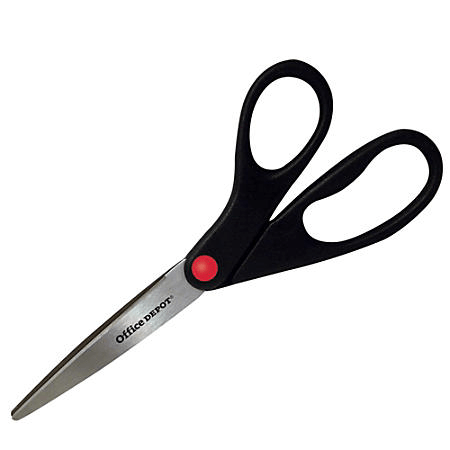
What are they for ? They are / they’re scissors (sis zerss) a pair of scissors
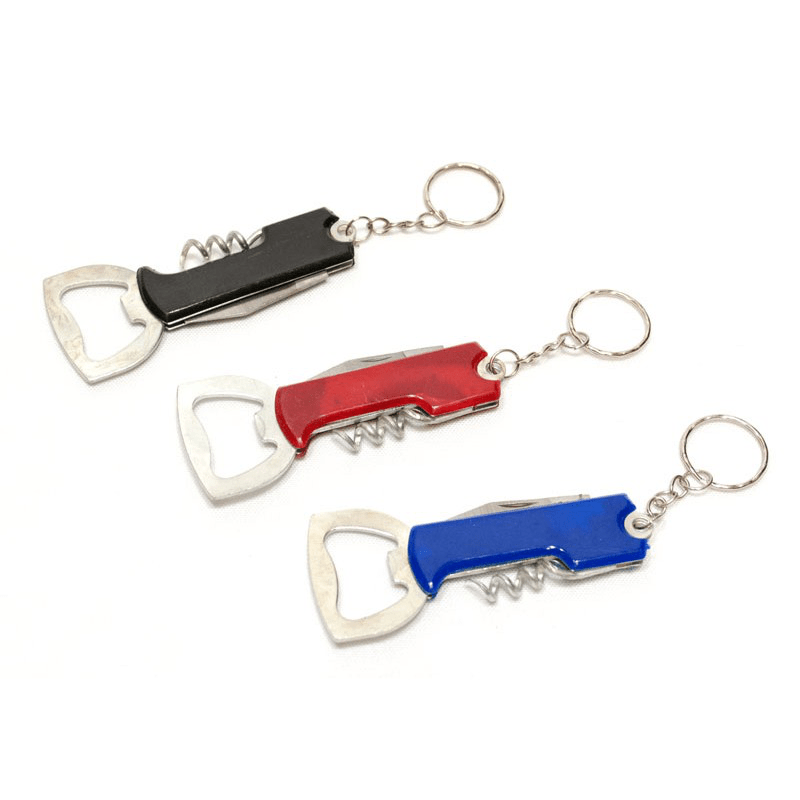
multi = many / multi-purpose = many uses
corkscrew / bottle opener / sharp / blunt
scissorsBottle openers, corkscrews and key-chains Potato peeler
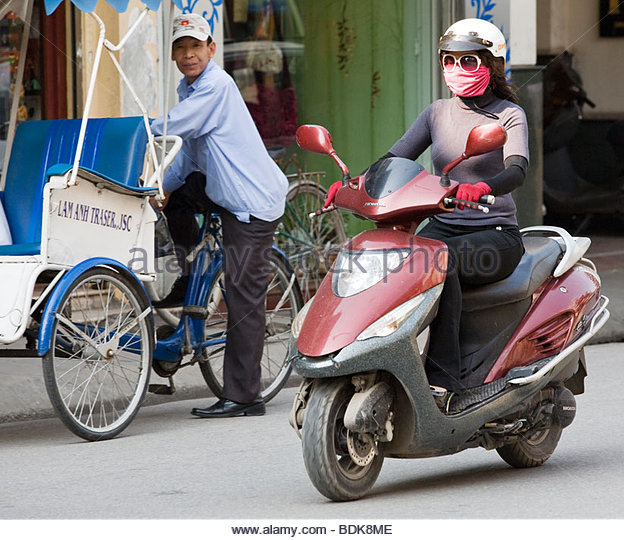
motorbike. It’s quite / rather far and extremely stressful.
using Grabbike. It’s very convenient albeit rather expensive.
bus. Although it’s incredibly cheap, it’s not very pleasant.
Idioms and expressions
At work I / I’m …
find myself doing the same thing day in day out. It’s tedious.
up to eyes ! I’m always busy, attending meetings or writing reports.
have a variety of different jobs, I’m a jack of all trades; I don’t have time to get bored !
Notice the collocations
In my free time I …
enjoy watching films and playing sports. I am competitive !
adore hanging out with my friends and family.
love shopping. I can spot a bargain and I hate being ripped off !
Learning English
is, for me, easy, a piece of cake. It’s very important and fun at the same time.
in my opinion, is vital for the future. It’s imperative we learn.
is a necessary task. It’s awkward and frustrating, but I need it.
is highly enjoyable and relaxing. I love to improve my mind.
Idioms
Match the idiom with the meaning:
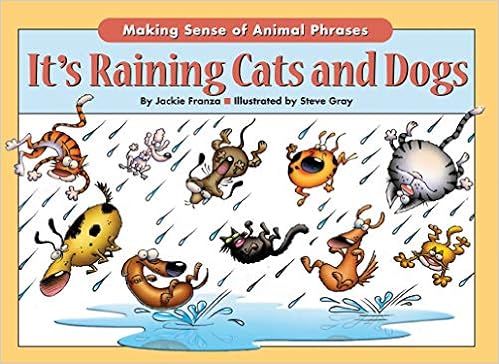
It’s raining cats and dogs // working very hard
Kick the bucket // no problem, very easy
working like a dog // to die
It costs an arm and a leg // very heavy rain
piece of cake // very expensive
FREE SPEAKING EXERCISE
ENGLISH – Why are you learning English ?
Do you enjoy learning – if so, why / if not, why not ?
What are the benefits ? Give examples.
Do you have problems with learning a language ?
Is it fair that you have to learn a second language in your own country ?
Does this open up career opportunities for you or your children ?
What, in your opinion, is the best way to learn a language ?
Interaction, free speech and a sharing of ideas
Useful expressions:
I’d like to share with you my passion which is / One of my major interests is
As you know, we (students / engineers) don’t have much free time, so when I have time to myself there’s nothing I like more than …
I have many hobbies such as … and … but tonight, I’d like to talk about …
Responses
Could you explain in more detail …. When did you start this hobby ?
How did you get into … ? Ah, that sounds interesting.
What does your girlfriend think about this ? Oh, you have no girlfriend.
Hhmmm, it’s not really my cup of tea, but I can see why you like it.
Does it take up much of your time ? Are you part of a club ?
I’m not sure I follow … (I don’t understand)
Dos and Don’ts
We have ‘free speech’ but this is tempered by social rules of politeness:
DO – appear interested and respond positively.
appropriate body language.
encourage the speaker to elucidate and expand.
ask question at a ‘turn-taking’ moment.
DON’T – say ‘I am bored because this isn’t interesting,’ or ‘I don’t care.’
start talking to your neighbour when someone else is speaking
sleep or yawn loudly
click your pen, kick your chair, make noises.
EXAMPLE:JAZZ MUSIC
I love all types of music, but one of my favourites is Jazz. It can be exciting, or slow, but it’s always different.
Unlike other types of music, Jazz is spontaneous. This means that you never hear the same song the same way; each performance is different.
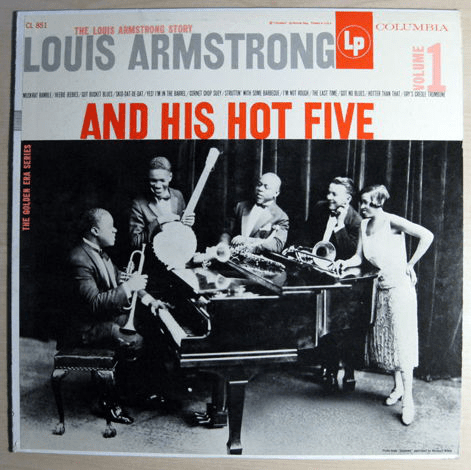
Jazz started in New Orleans but moved up to Chicago, New York and even west to California. The first records were made in 1917 and the first true Jazz genius was Louis Armstrong. If you want to hear jazz, you should listen to his records from the 1920s.
You may know some famous Jazz artists such as Miles Davis, John Coltrane or Charlie Parker. I can recommend these musicians to you as first-rate examples of Jazz.
I hope this has made you curious about Jazz, and that you go online to listen for yourself. Who knows, maybe you too will learn to love Jazz.
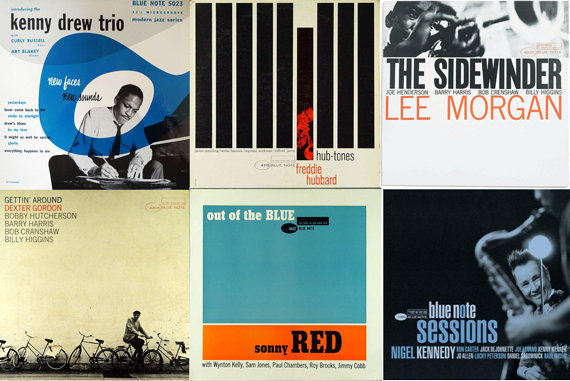
Some great Jazz record covers
One student spoke about his mother’s home-cooking:
My mother has a secret recipe; firstly, she boils the beef in water and then slices it finely. Along with this, she cooks vegetables and the aromais simply wonderful, after which she mixes them together. It is mouth-watering. The rice has to be pan-fried, that is to say, no oil, just dry. The next stage is to pound the rice and finally, she puts the rice on a dish and … bon apetite ! (French for good appetite, eat well)
Extra expressions: one student told us about breaking up with his girlfriend. Initially, he said that he dumped her, but the truth was she gave him the elbow !
Vocabulary:
Try to use these regularly:
obviously, typically, on the other hand, initially, that is to say
There are so many choices in Sai Gon. Tran Nguyen has the best quality but is very expensive. On the other hand, Milano is very cheap and very convenient however, many people smoke there. Highlands is really popular. Having said that, it is not cheap. Street coffee is extremely cheap but terrible quality ! Maybe fake coffee, just chemicals.
What are your favourite coffee shops ? Why ? What factors are important ?
Theme: photographs
Asking questions
what / who / where / when / why
1 _When/Where_ was it taken?
2 _____________ are they?
3 _____________ took the picture?
4 _____________ do you keep the photo?
5____________ kind of camera have you got?
6 _____________ are they doing?
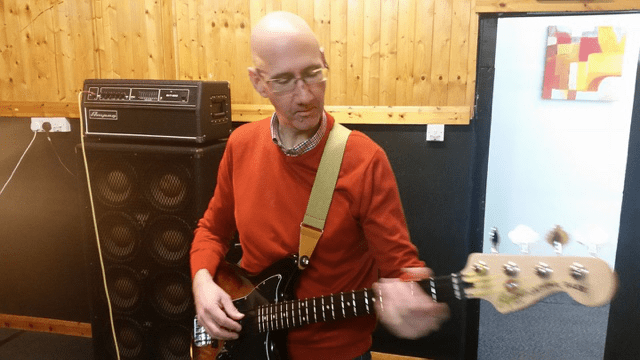
My friend Pete
One of my favourite photos is of my friend Pete, who lives in Birmingham, England.
His wife took the photo last March. Pete is playing bass guitar in a studio. It looks like he is having fun. He plays in a band called ‘The Deep Six’.
I keep this photo on my computer in a file called ‘Music in Birmingham’.
What is the name of my friend ?
Where does he live ?
What guitar does he play ?
What is the name of his band ?
Where do I keep this photo ?
Vocabulary:
This is a photograph of my friend Pete. This photo is of my friend Pete.
I think he is (he’s) having fun. It looks like he’s having fun.
He takes a photo (present tense). He took a photo (past tense).
He is (he’s) in a band. He plays in a band.
Dialogue
To practise question words and the past tense.
what / where / why / when / who / which / how
Jan & Tina are catching up
Jan What did you do last night ? Who did you meet ?
Tina I went out with friends. We saw a movie, then drank some coffee. How about you ?
Jan I just stayed at home and played computer games. Which cinema did you go to ?
Tina At Diamond Plaza. We bought popcorn which we ate before the film began.
Jan You were very hungry ! Was the film good ?
Tina Yeah, really exciting. The tickets were incredibly cheap too.
Jan How much were they ?
Tina Only 333 000 VND (three hundred and thirty-three thousand Dong).
Speaking practice:afternoon plans
Sid What are your plans for this afternoon ?
Viv Well, I need to buy some coffee as well as some bread and milk. How about you ?
Sid Oh, I’ve got to have a meeting with the new director. He seems very strict.
Viv Yeah, I get the impression that he is very serious. However, he is professional.
Sid Right, he doesn’t appear to be a barrel of laughs. Having said that, he’s honest.
Viv Honest and fair along with being very neat and tidy. Always a plain white shirt.
Sid Remember the old boss ? Such gaudy ties ! For me, that was unprofessional.
Viv Anyway, where can I get my groceries ? Is there a convenience store nearby ?
Sid Naturally. Take the second left, go as far as the bank, then cross over. Can’t miss it.
New vocabulary: accurate/ correction / administration
Money
Verbs for things you can do with money:
spend / lose / waste / save / make / invest / forge / donate / pay / worship
I go to work to …….. money.
She always ………… money to charity.
He …………. money buying property
The police caught the man who was ……….. money.
Some people think the iPhone X is a ………. of money.
King James Bible “For the love of money is the root of all evil.”
Many people over the years have tried to buy the Mask of Tutankhamen from the Egyptian Museum, but unsurprisingly the authorities here believe it is priceless so they won’t sell it
Ebenezer Scrooge was such a stingy man, so much so that in English, we sometimes use the word Scrooge to describe people with this characteristic (who are like this). A miser is someone who hates spending any money.
He spent a lot of money on what he thought was a gold watch but when he had it valued, it turned out to be worthless.
I sometimes disagree with stall holders, so I haggle which sometimes gets the price down
Big companies like Pepsi make a killing. They should put their prices down. I sometimes like to splash out on new clothes, but not very often
When I was a student I didn’t have enough money to live on so I took out an overdraft at the bank. I paid it all off in the end (finally)
The men were sent to prison for forgery, that is, making counterfeit money
Speaking practice:
This dialogue has a lot of expressions and phrases.
Joe Hi Bill. Why so glum ? You look down in the dumps.
Bill Oh, just worrying about money. The cost of living keeps going up …
Joe And our wages stay the same. Tell me about it. I’ve had to economise.
Bill Same here; no more beer or Highlands coffee. I feel so stingy !
Joe I always haggle at the market now, try to get the price down. I hate being ripped off.
Bill I’m worried about paying off my overdraft. The interest alone is crippling me.
Joe We should invest in land. My friend sold some land recently and made a killing.
Bill But we’ll need money to invest in the first place. Then there’s always bills.
Joe Yes, my bike’s in the shop, so I’m having to use Grabbike and that ain’t cheap !
2. This is to practice wedding and money phrases.
Tom Congratulations ! You’re finally tying the knot and getting spliced.
Bob Yeah, it’s time to settle down. I’ve taken out a mortage and a loan for the wedding.
Tom It must be costing you an arm and a leg: catering, hall, flowers, photos, invitations.
Bob Absolutely, I’ve withdrawn all my saving and gone into the red. I hate being overdrawn; the interest is sky-high. And, not forgetting, the honeymoon.
Tom You can put down a deposit and pay later. Cheer up ! Don’t be a Scrooge
Bob That’s easy for you to say. I’m gonna be broke and in debt … until I retire !
Sentence building
Use more interesting adverbs and linking words e.g.
although / as well as / somewhat / therefore
Rearrange these basic sentences to make more interesting ones (we use ‘one’ as a pronoun for the noun instead of repeating ourselves)
Examples:
I went to the market today. I bought fish and chicken and vegetables.
Today I bought fish, chicken as well as vegetables in the market.
Last night I stayed at home because it was raining.
It was raining last night therefore I stayed at home.
Your turn:
I saw the new action film. It was a little boring.
Peter was tired but he met his friends for a drink.
Sophie studied very hard. She passed her test.
For western people, Thailand is cheap. Vietnam is cheaper.
Speaking skills
To help you improve your speaking skills, here is a small project:
Write a short piece about something you love or adore.
Start with an introduction
Say why you like it
Maybe tell some history or an anecdote (a short, personal story)
Give some examples
End with a short conclusion
EXAMPLE:
JAZZ MUSIC
I love all types of music, but one of my favourites is Jazz. It can be exciting, or slow, but it’s always different.
Unlike other types of music, Jazz is spontaneous. This means that you never hear the same song the same way; each performance is different.
Jazz started in New Orleans but moved up to Chicago, New York and even west to California. The first records were made in 1917 and the first true Jazz genius was Louis Armstrong. If you want to hear jazz, you should listen to his records from the 1920s.
You may know some famous Jazz artists such as Miles Davis, John Coltrane or Charlie Parker. I can recommend these musicians to you as first-rate examples of Jazz.
I hope this has made you curious about Jazz, and that you go online to listen for yourself. Who knows, maybe you too will learn to love Jazz.
Please Note: All photos are taken from Google Images or free photo sites, and are used for educational purposes only. No copyright infringement or offense is intended. If I have used your photo or image, and you wish me to remove it, just ask. This site is not monetized, I run it on my own dollar. Thank you.
good as gold / butter wouldn’t melt in his\her mouth / a little rascal / a handful
well-behaved / a little madam / a young gentleman / full of him\herself
What are the pros and cons (The benefits and drawbacks ) ofhaving children ?
Pros: makes us responsible / patient / sometimes they can be funny
they can enrich our lives
Cons: sometimes they misbehave ( are naughty) / no free time / they need a lot of energy / need a lot of money for toys, sweets, uniform, books, equipment.
Is there pressure from family to have children in your culture ?
Niece (girl) and nephew (boy) = children of my brother/sister
How would you describe these children ?
She has an angelic smile.
Remember – for sentence building, use adjectives and discourse markers (linking words or phrases). Never start with a pronoun (she, it, he, they) but say what the subject is – in this example, the subject is a girl. Now we can keep building up more information:
The girl has an angelic smile.
The young girl has blonde hair and an angelic smile.
The young girl, who has long straight blonde hair, has lovely big green-grey eyes, and is smiling angelically. She wears a multi-coloured T-shirt as well as some flowers around the neckline.
Now – your turn:
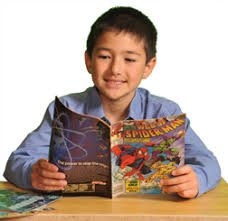
Here, you can also add some verbs and background information. Where do you think he is ? How is he feeling ? Who taught him this behaviour ? Do you think his mother is with him ?
These young gentleman attend a very expensive, possibly elitist, private school. Such schools are named ‘public schools’ in the UK. they include Eton, Harrow and Gordonstoun.
A miscellany of lesson notes aimed specifically at basic-level English
Contents :
Introductions
Daily routines
Describing clothes
Discourse markers
Driving expressions
Grammar – adjectives // helping verbs // comparatives & superlatives // I used to // modal verbs // much or many ? // past tense exercises // possessives // relative pronouns // should or shouldn’t // some or any // I need // verbs – most common verbs present, past and past participle.
Listening comprehension
Vocabulary – new words and expressions
Vocabulary – film
Vocabulary – Kitchen
Vocabulary – what do you need ?
Sentence building
Speaking practice – introductions // repairs // future tense
Travel language
Warm-up activities
Introducing yourself:
If you meet a new friend or business acquaintance
Hello, how are you ? Very well, thank you, and yourself ? / I’m great
Are you a family man ? Yes, I have a wife and two kids
You married ? No, my job leaves me no time for romance !
Do you have kids ? Ha, I’m married to my job
Where did you train ? I got my degree from …….. University
I majored in business admin.
I studied at ……..
How do you relax ? I enjoy sports and meeting up with friends
How do you unwind ? I just crash on the sofa and watch movies
What do you do in your spare time ? I love to travel and drink beer.
Where do you see yourself in five years ? Senior manager !
On an island in Thailand / Still working here !
Daily routines
My routine:
In the morning:
07.00: Get up. Wake up
07.05: Brush my teeth, (Get washed / have a wash / shower) put on clothes / get dressed
07.15: Eat breakfast.
07.45: Go to work / go to my company/ go to my job
08.00 -17.00: Work.
09.45 – 10.00: Coffee break
12.00 – 13.00: Go out for lunch / lunch
17.00: Check out and go to eat dinner. Take another break and eat
17.30: Go back to company and continue working. Knock off / finish work
19.00: Go to swimming pool. Go swimming
20.00: Go home and talk with family. Hang out / spent time with my family
22.00: Read books or play games
23.00: Go to bed / Go to sleep.
Grammar note:
we can use an infinite or continuous form
She starts to work at 7.30 OR she starts working at 7.30.
What is your typical free day ?
How was your day ?
Did you have agood day ? A so-so day or a bad day.
Did anything unusual happen or was it same old, same old ?
In the morning, I went to my company then I went to the bank.
After that, I went home.
[NOTE: never ‘to home’, ‘to swimming’ or ‘to shopping.’ I went shopping, then went home]
After lunch I went to a customer and we spoke about the new project. After we said goodbye, I came here to study English.
Replace ‘went‘ with:
visited / travelled to / had to go to (means very important) / drove / saw / met with
Describing clothes
Patterns
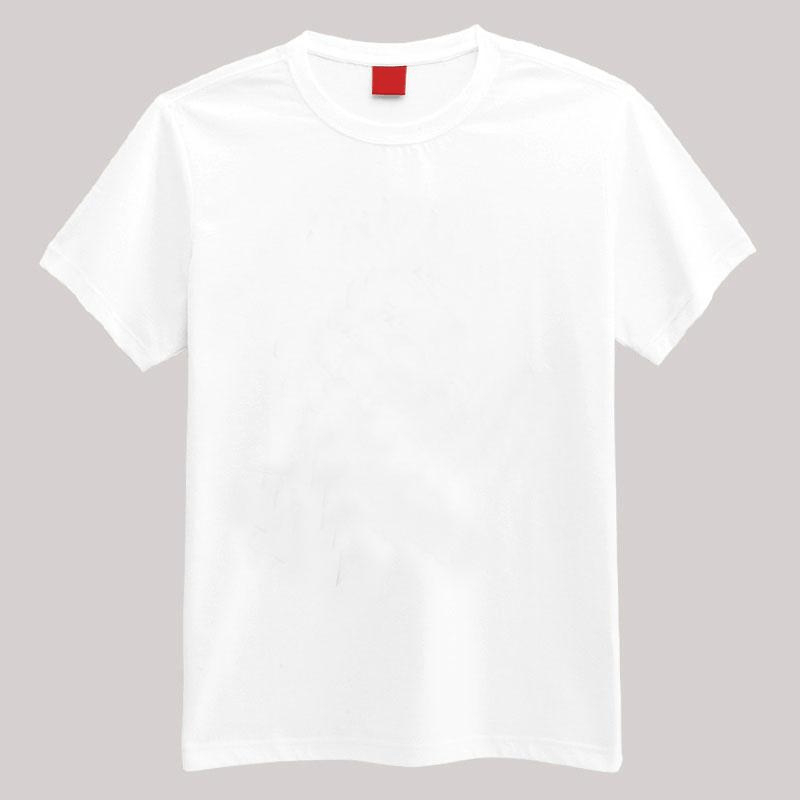
Plain T-shirt – no pattern, no writing or design.
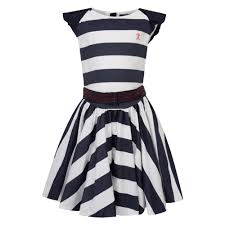
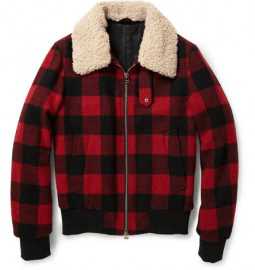
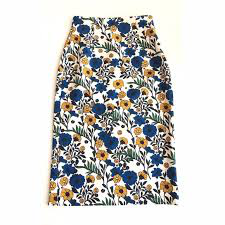
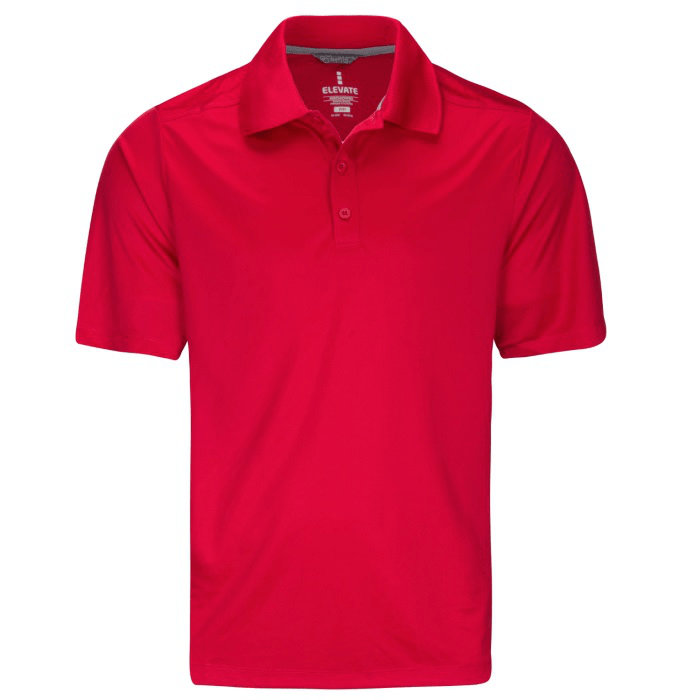
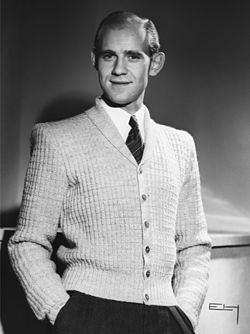
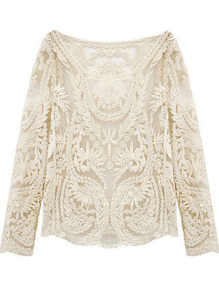
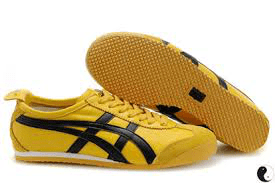
A striped dressA striped shirtA checked jacket or coatA flower or floral skirtA spotted tieA polo shirtA tracksuitBaggy jeans made from denimTight jeansCardigan lace blousedesigner trainers or sneakersBusiness suit, shirt and tie
hot, cold, sweet, bitter, Vietnamese, weak, strong, expensive, Indian
Now add a reason – ‘because’, ‘as’
I love good strong coffee because it wakes me up and I also adore sweet Indian tea in the evening as it helps me to unwind.
Make longer sentences:
I like Sai Gon but I don’t like Ha Noi
I like films and I like games
My friend likes street food but he doesn’t like restaurants
Vocabulary – adjectives
standard / higher / / opposite / higher
good / brilliant // bad / terrible
beautiful / gorgeous // ugly / hideous
interesting / fascinating // boring / tedious
expensive / over-priced // cheap / bargain
modern / hip / trendy // old-fashioned / out-dated
gentle / calm // angry / hot-headed
big / massive / huge // small / tiny
important / significant // unimportant / insignificant
tiring / exhausting // relaxing / peaceful
Helping verbs: have / want / need /go / like
Subject + helping verb + infinite …..
I have to find my mobile phone // She goes to work // He needs to relax
Write sentences for these pictures:
He wants ….
She likes ….
Negative: He doesn’t …
Grammar – comparatives and superlatives:
big / bigger / biggest (-er / -est for small words)
interesting / more interesting / the most interesting (more / the most for longer words)
Sai Gon is bigger than Ha Noi
Chinese is the most difficult language to learn
Make sentences:
London expensive Sai Gon
Thailand hot Canada
Moroccan food spicy French
Action films exciting rom-com (romantic-comedy)
I used to …
When I was young, I used to play football. Now I am too old !
I do NOT play football NOW. I played football when I was young
Write sentences. Example: When I was young, I used to read comics.
When I lived in Germany I used to …
Grammar: possession
This pen belongs to me, it is mine.
The laptop belongs to Jane, it is _______
It’s John’s book, it belongs to ______
We all work for HLS, it is ______ company.
Give this to Anna and Gary, it is _______
Grammar: modal verbs
Modal verbs are helping verbs that show
permission (sự cho phép)
possibility (khả năng)
can / could / have to / must / might / should
can’t / couldn’t / don’t have to / mustn’t / mightn’t / shouldn’t
1. Ted’s flight from Amsterdam took more than 11 hours. He must be exhausted after such a long flight. He might prefer to stay in tonight and get some rest.
2. Hiking in the mountains ______ be dangerous. You _____ research the route a little more before you start.
3. You _____ take your umbrella today. The weatherman said there’s a storm in Nha Trang and it ______ rain this afternoon.
4. When you have a small child, you ______ leave small objects lying around. Such objects _____ be swallowed.
5. I _____ believe she said that to the supervisor!
6. Jenny’s wedding ring is enormous! It ______ be very expensive.
7. Please water the plants. If they don’t get enough water, they _____ die.
Try to make sentences:
I need to…. She wants to… You have to… We like to … He hates to …
Much or many ? A little or a few ?
[a few = countable / little = uncountable]
Is there much work left ? I really want a little free time to run some errands.
There are ….. shops in the mall. I need to buy …… items
Is there ….. beer in the fridge, or do I need …… more ?
There are only a … millionaires inVietnam but they have so ….. money.
There are far too ….. karaoke singers. I need …….. peace.
PAST TENSE EXERCISE:
Complete the exercise with the verbs inside the box.
buy
catch
cost
drink / fall / hurt / sell
teach
throw
win
spend / write
choose one of these verbs and use the past tense form
1. Mozart ……. more than 600 pieces of music.
2. ‘How did you learn to drive?’ ‘My father …….. me.’
3. We couldn’t afford to keep our car, so we ……. it.
4. I was very thirsty. I ……… the water very quickly.
5. Paul and I played tennis yesterday. He’s much better than me, so he ……. easily.
6. Don ……. down the stairs this morning and his leg.
7. Jim …….. the ball to Sue, who …….. it.
8. Ann …….. a lot of money yesterday. She ……. a dress. It ……. £100
Grammar – Present Perfect
Present perfect:
Subject + have/ has + past participle
I have been to Ha Noi
She has visited London
They have seen that film so many times but (they) have never understood it.
I have read ‘My Sassy Girl 1’ although I have not read ‘My Sassy Girl 3’
(I haven’t read)
Have you read any good books recently ?
To talk about something in the past but not when it happened
He has looked at the report – YES
He has looked at the report last week – NO
(He looked at the report last week) just use simple past
Can use with ‘for’ and ‘since’
I have lived in HCM since 2010
I have lived in HCM for seven years
Exercises: Put these sentences into present perfect
I John (read) your email several times. John has read your email …. 2. She (wear) that skirt many times. 3. My family (visit) Brazil a few times. 4. I (eat) already. 5. Mia (finish) her homework. 6. You (break) the glass again. 7. They (pay) for everything. 8. It (never snow) like that. 9. I (meet) Anna once. 10. We (see) him before.
Grammar – Relative Pronouns:
who For people: This is the man who sold me the fake Rolex !
which For things: We tried fish and chips which is delicious.
where For places: Let’s go to the shop where we saw the great bargins.
Whose Possessive: That’s the singer whose record we heard last night.
The car, whose driver was young, won the race.
Exercises
We arrived at a nice beach ______ we could swim and lie in the sun.
A man ______ mobile phone was ringing did not know what to do.
The patient, ______ had a serious disease, was taken to hospital immediately.
Smithsfield is a small village ______ people live a quiet life.
A boy ____ sister is in my class was in the bank at that time.
I know a person ____ can speak seven languages.
We visited the church _____ is in the middle of the square.
It is a protected area of land _____ you can see a lot of interesting wildlife.
This dress is made of silk, _____ is a very expensive and delicate material.
Grammar: should / shouldn’t
Complete the sentences. Use the verb in brackets. Sometimes the verb will be nagative Use contractions where possible.
It’s cold. You … a cardigan. (wear)
She’s always tired. She … to bed late every night. (go)
… now? (we / leave)
You … some fruit or vegetables every day. (eat)
The students … their mobile phones in the exam. (use)
You … the teacher to help you if you don’t understand the lesson. (ask)
People … fast in the town centre. (drive)
… the dress or the skirt? (I / buy)
Grammar: ‘some’ or ‘any’
we use ‘some’ for a statement
we use ‘any’ for a negative or a question
There are some great websites for learning English. PLURAL / countable
There is some Czech beer on sale at VinMart. PLURAL / uncountable
There aren’t any beer clubs near here
We don’t have any French cheese
Are they any good films playing ?
Do you have any English tea?
1 Do you have ______ questions about the new project ?
2 Let me give you _______ advice.
3 You don’t need to bring ____ pens or paper. There will be ______ print-outs available.
4 There will be _____ visitors from Germany coming. Do you know ____ German ?
Speaking practice:
Jim I can’t wait for Tet. Do you have any plans ?
Alf Of course ! I’m going to watch some films and get some rest.
Jim Have you bought any special food ?
Alf I don’t have any time for shopping. I’ve still got some beer. How about you ?
Jim I need to buy some fruit, some biscuits, and do I need any special food for Tet ?
Alf Absolutely ! You must buy some cakes and some sweets.
Jim Anything else ? I need some advise.
Alf Just make sure you have some beer. A LOT of beer. Cheers !
Grammar: I need
subject need (helping verb) infinite verb (to + verb) completion
I need to visit a dentist
She needs to stop buying clothes !
subject need (helping verb) article / determiner noun
He needs a laptop / I need the report
We need some overtime / She needs a bottle of water
I need tôi cần // I want tôi muốn
1 I ____ to visit Thailand. 2 He ______ to find a job now !
3 Her mother ____ her to get married. 4 Do you ____ to see Twin Peaks ?
5 She can’t go out, she _____ to finish her homework.
6 They _____ new shirts but they ______ to buy computer games instead.
Some items are essential (very important) Some are useful
Some are luxury items (don’t really need them)
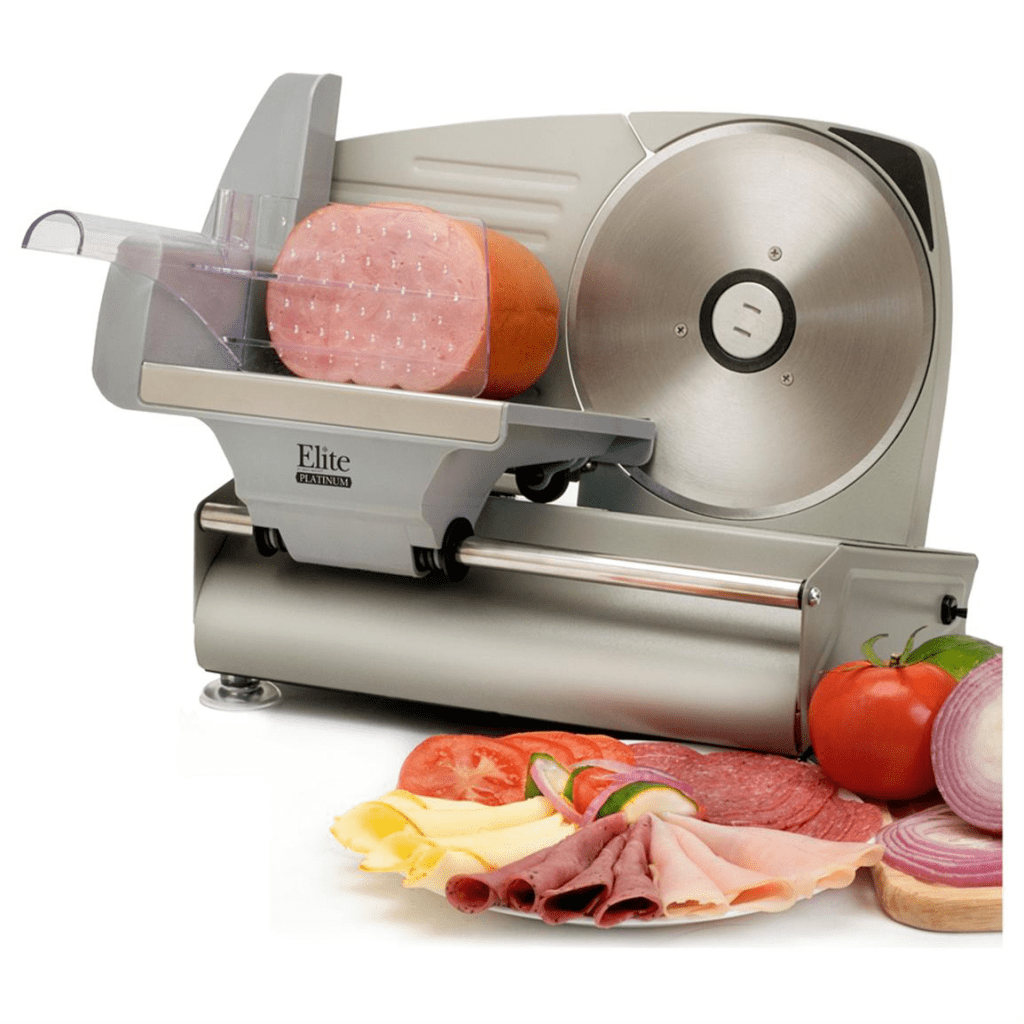
EXAMPLE: I think a fridge is essential. However, a meat slicer is a luxury item.
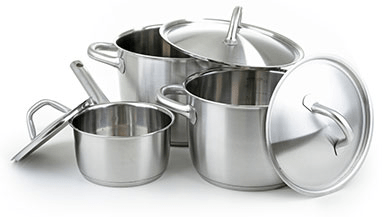
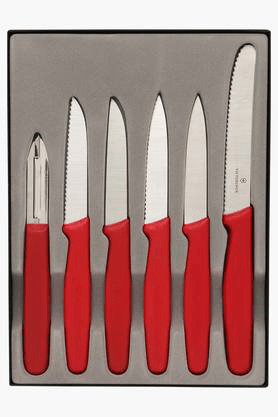
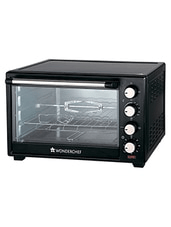
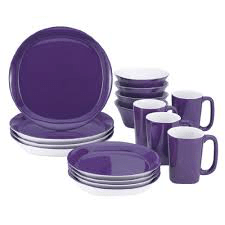
toaster cooking pots set of knives (one knife, two knives)food mixermicrowave ovenplates and cupsmeat slicerrefrigerator (fridge)kettlevegetable peelerkitchen timer
What are they made of and what are they used for ?
EXAMPLE: A toaster is made of metal and is used to toast bread.
What do you need …. ?
What do you need to make pho ?
What do you need to ride a motorbike ?
What do you need for a party ?
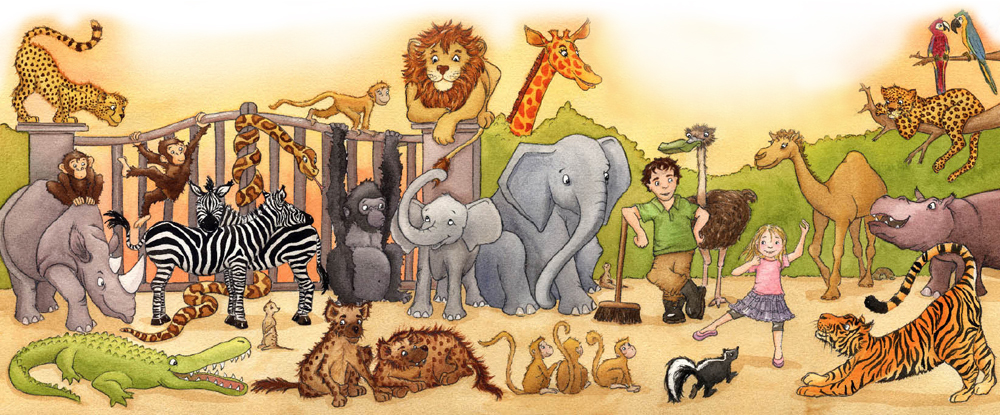
What animals do you need for a zoo ?
What do you need to do before you go out ?
Women wear perfume, men wear after shave
Sentence building
Sentence building – verb practice
REMEMBER: ‘to be’ is different:
I am busy / you are busy / she is busy
I was busy / you were busy / she was busy
I was quite busy / really busy / I was extremely, incredibly busy !
I have been busy / you have been busy / she has been busy
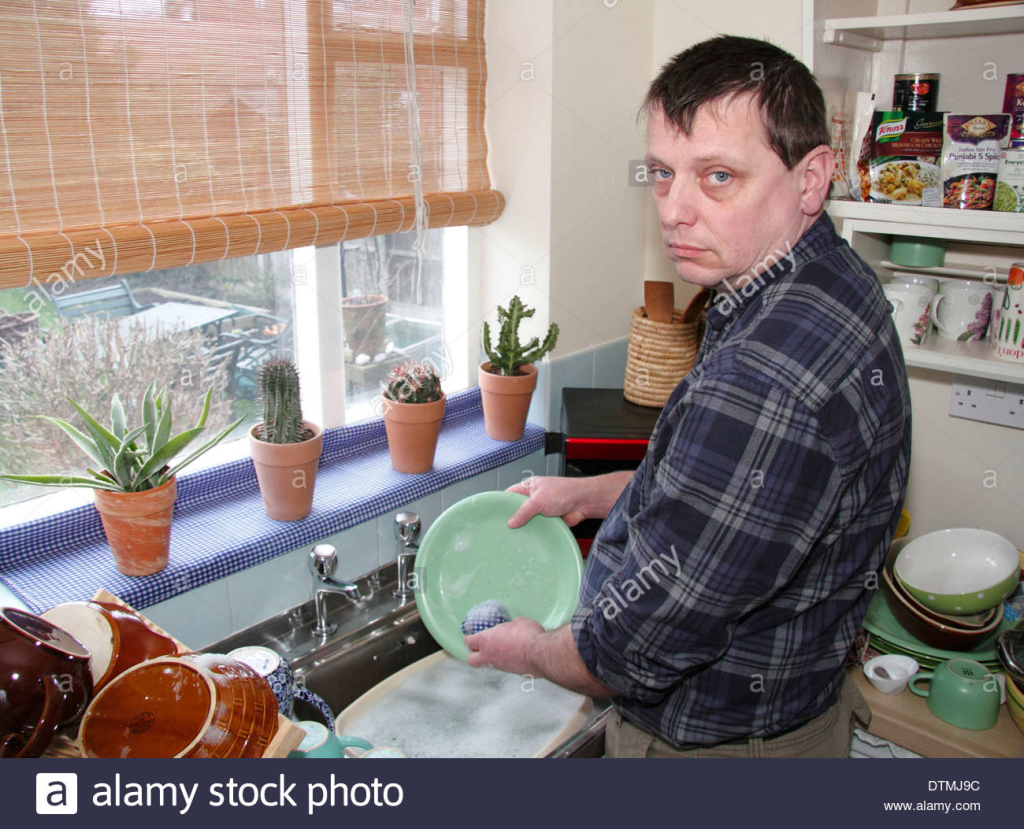
Look at this picture: describe what you see
First – what is the subject ? A man
What does he look like ? Adjectives
What is he wearing ? Colour, material, pattern
Where is he ? What is he doing ?
A young man with short dark hair, dressed in a dark suit, white shirt and black and white spotted tie is sitting in a restaurant or coffee shop. He is drinking from a small white cup. We know he is drinking damn fine coffee !
Write the subject first ( A young man ). THEN, you can use pronouns (he).
Write long sentences for one of these pictures.
Speaking Practice
Colin Good morning, I’m Colin.
Mike Pleased to meet you, Colin. I’m Michael but call me Mike.
Colin Thanks, Mike. Have you worked at ….. long ? (a long time ?)
Mike Yes, quite long; about five years. Oh, I like your phone.
Colin Thank you. It’s an LG which is much better, I think, than Apple.
Mike Where did you get it ? (buy it)
Colin Tokyo, where there are so many phone stores.
Mike I really want to go ! Have you met Ms Mi who works in HR ?
Colin Not yet … but she looks very pretty ! (gorgeous / adorable)
Exercise 2
Ben Excuse me … is this seat taken ?
Fred I’m sorry ?
Ben May I sit here ?
Fred Oh,by all means. I’m Fred.
Ben Pleased to meet you, Fred. I’m Ben. Are you German ?
Fred Yes, from Berlin, which is the capital. I’m here for three days.
Ben Then you should go to Ben Thanh market where you can buy a Rolex.
Fred Too expensive. My job is great but the salary is terrible !
Ben Ms Na, who works in HR , has a Rolex. Only 400 000 VND.
Fred Really … ? Fake ?
Ben That’s it ! Made in China ! You have a meeting here ?
Fred Yes, with Ms Na; she is gorgeous and so adorable… is she married ?
Ben Yeah … she’s my wife !
Exercise 3
Something is either working OR not working
The watch is working The watch is broken – it is not working
I am repairing it – it WAS broken, now it is working again. It has been repaired.
The motorbike is broken. It needs to be repaired / fixed / mended
The mechanic is repairing / fixing / mending the motorbike
It is repaired / fixed / mended
Peter Hi, Mark. How’s it going ? (how are you ?)
Mark Not bad. However, I have a problem. My laptop’s broken.
Peter Oh, dear. What kind is it ?
Mark It’s a PC (personal computer).
Peter Oh, I understand. They are good but sometimes are flawed.
Mark Where can I get it fixed? Do you know somewhere ?
Peter Sure, no problem. There are many shops near here.
Mark Can you take me ?
Peter Sorry, my bike has a problem. It’s not working.
Mark I’ll take a look. Maybe I can mendit. I enjoy fixing engines.
Peter Brilliant. It costs so much to repair a bike.
Mark And it costs so much to use Grabbike every day !
Exercise 4
Dialogue practice (ordinal numbers, phrasal verbs, future tense)
Harry and Martin are chatting at work.
Harry What are you going to do tonight ?
Martin I will knock off about 6, then I’m going to the cinema.
Harry What are you going to see ?
Martin Not sure. My girlfriend’ll choose. I’m picking her up later.
Harry Sounds fun ! I’m going to drop off my laundry, then I’ll go swimming.
Martin What days are your taking off for Tet ?
Harry The 14th, 15th and 16th. Then I’ll come back to work.
Martin Why ? Do you have to finish off some work ?
Harry No, I want to start working on the 4th German project.
Now practice – in small groups or pairs, what are YOU going to do tonight or on your free day ?
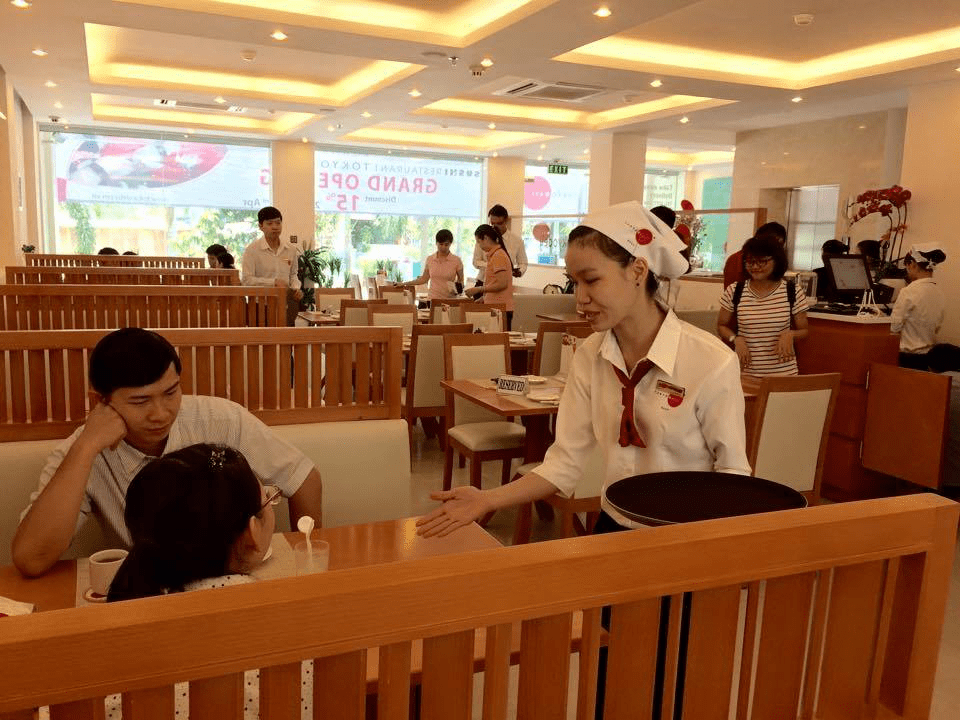
Tokyo Deli for sushi Keep fit, join a gymVinCom centre, Vietnamese shopping mall.Play computer games
Example:
After work, I will go to the cinema // This weekend I want to drink beer
Tonight, I’m going to meet some friends // I will hang out with my Thai girlfriend.
Use adjectives and extend the sentences:
After work, I will go to the big cinema at Diamond Plaza to see a new American movie.
On Saturday, I’ll (I will) meet my beautiful Thai girlfriend and we will eat delicious and healthy sushi.
Travel Language
What do we do when we go to the airport to catch a flight ?
Take a taxi/ buy a ticket / board the aeroplane / go through security
claim baggage / go thorough immigration / go though customs
check in / buy duty-free / pack your bags
Questions:
You are flying from Sai Gon to Hue. Where do you go in the airport ?
What will you do at check in ?
What documents do you need ?
How can you check in ? Two ways …
What happens at security ?
Warm upexercises
Things you love, things you hate ! Try to make long sentences using adverbs and discourse markers (linking words such as furthermore, additionally, however, although etc)
What do you see here ?
Start with the subject or subjects.
What are they doing ? Where do you think they are ?
A compilation of games and exercises to increase your word power
Match the words with the meanings
Give the students some new vocabulary, teach them pronunciation and see if they can match the word to the definition. After, give them a chance to use the new words.
describe planned, in order, not a mess
imagine having to do too many things
typical feeling you have too much work
pressure normal, usual
organised to tell what something looks or like
community to think about something
stressed the place or area where you live
Practice:
The student was under ______ to finish the project on time.
All the neighbours are friendly. It’s a nice ________ to live.
Can you __________ what the man looked like ?
After teaching 20 young children, I felt very _________.
The German workers all knew what to do, they were so _______
Close your eyes and _______ you are relaxing on a beach.
On a _________ day, I drink coffee, go to work, come home and watch TV.
I think he could be a … / She seems to be …/ I get the impression that she is … / From his build, I’d say he was a … / Because of her appearance, I feel she must be a …
Personality adjectives (negative – arrogant). These are strong adjectives:
arrogant // self-obsessed // pretentious // obnoxious // full of themselves
Relative Pronouns
Let’s kick off with some basic information about my friend Pete:
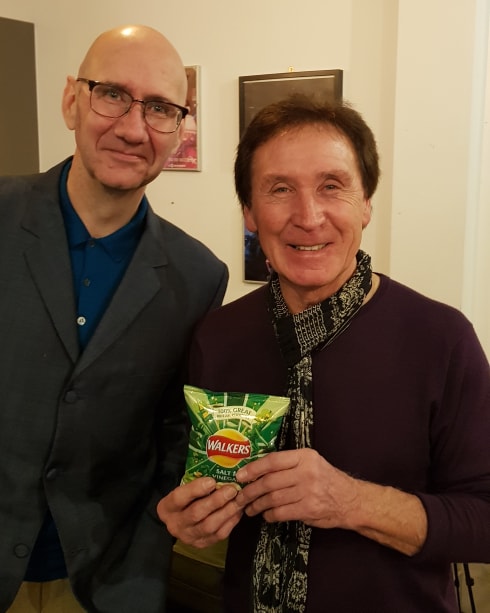
Pete (left) with drummer Kenny Jones of The Small Faces & The Who
Pete’s family are Irish. He was born in Kent, south England. He loves music especially Jazz and he can play saxophone, keyboards, guitar and bass. He is 40 years old. He is bald, and wears glasses. Currently he plays bass in a band called ‘The Deep Six’. They have a video on YouTube. In the photo, Pete is with the famous 60s drummer Kenny Jones. He was in The Small Faces. Later he joined The Who after their original drummer died.
Example:
Pete, who was born in Kent in the south of England, is of Irish heritage. Although he is just forty, Pete looks older, probably due to the fact that he is bald, as well as having to wear glasses. His great passion in life is music, especially Jazz, but his interest is not merely passive; he plays several instruments. In addition to saxophone and keyboards, Pete is proficient on guitar. Having said that, he actually plays bass now in a band named The Deep Six, who have a video on YouTube. Pete is seen here with the legendary drummer Kenny Jones whorose to fame in the 60s as drummer for chart-topping band The Small Faces before joining The Who following the death of their original drummer.
Now, a quick practice:
This is Wei Minzhi. She was born near Beijing. She was chosen to be in a Chinese film called ‘Not One Less’. She was 13. She played a substitute teacher but had no experience teaching (and no experience acting). The area is very poor. Some of the children have to leave school to work. The film was shown all over Europe, even at special film festivals. She was famous. She did no more acting. She studied in USA. She lives in Hawaii. Wei is married and has two children.
Small talk responses
A great way to increase conversation and use more natural language is to practise keeping conversations going for as long as possible. Think of it as verbal tennis – keep ‘hitting’ questions and responses at each other.
Example:
What do you do ?
I’m a student ?
Really ? Where do you study ?
Engineering.
That’s interesting. What branch (what area) of engineering ? Mechanical, electrical ?
And this be continued – where does the person study, does the student like the course, the university, the teachers, the fellow students etc.
Really ? // I see // Are you ? // Right // That’s interesting // That’s a good point // Where is that exactly ? // Oh, me too // Do you enjoy it ? // Do you like it there ?
Tourism
Now was a chance for some new vocabulary, words and phrases associated with holidays and travel.
Now is the perfect time to visit London, England’s glorious capital. The weather is perfect for walking, so you can enjoy the lush parks, world-famous museums and incredible, unbelievable shops. There is something for everyone … and more ! Like sports ? Go to one of the many Premier League football games. Love shopping ? Everything is here – shop till you drop ! Adore culture – soak up hundreds of years of history.
NOTE – the use of adjectives to really bring the presentation alive and make it exciting.
Flights from TSN airport daily. Seven-day all-inclusive package tour starting from only 50m VND ! All transfers and transport included. Air-conditioned mini bus with Vietnamese-speaking guide.
Travel
Students are put into small groups and take turns speaking. The topic shall be travel, and the students have to use the following:
amazing / attachment / incredibly / predict / first impressions / you’ve come to the right place
With all speaking exercises, it helps if the teacher or a top student models first, so that all the students understand what they have to do. I shall use the same words but my theme shall be food:
On Saturday, I was out shopping and I felt very hungry. I went into a restaurant and my first impression was not encouraging. It looked a bit dirty and I predicted that the food wouldn’t be very exciting. However, they had an interesting menu with vegetarian options, which was amazing ! I ordered some pho and salad and it was incredibly delicious. I thought to myself I’ve come to the right place. I took some photos so I’ll send them to you by attachment on my next email.
Travel – hotel recommendation
I’m planning a trip to Nha Trang (a beach town in South Vietnam, about an hour’s flight from Ho Chi Minh City). I have two hotels in mind, but I need advise from some Vietnamese. They also have to use as many of these words as possible:
visually stunning / mouth-watering / you get what you pay for / spectacular / a waste of money / significantly / somewhat / according to / how can I put it ?
Students must tell me about the hotels, the area, the food and which one they would choose for me:
Victory Hotel 2* Rooms not very clean, no view. No complimentary breakfast.
Sandy Bay Hotel 4* Much more expensive, although it has breakfast buffet, and room has a balcony with view of the sea.
Trip Advisor recommends Sandy Bay, but they said Victory was dirty and very over-priced.
Local food is great
WILF (What I’m looking for): can the students describe the scenery and food ? Can they compare price and quality difference ? Can they use expressions appropriately ?
With the adjectives, I’ll be listening out for intonation – ‘spectacular !’
To quote another source of information, ‘according to’ and for the prices, the 4* is ‘significantly more’ expensive than … Then, in conclusion, can they make a judgement – ‘a waste of money’ or accepting that high quality means high prices, ‘you get what you pay for.’
Travel: Life in Sai Gon
ubiquitous everywhere, very common
naïve innocent, inexperienced
stroll a gentle walk, for exercise (collocation: take a stroll)
a bazaar (noun) a permanent, covered market
bizarre (adjective) very strange, unusual
absent-minded extremely forgetful
sky-high, astronomical very expensive, maybe too expensive
messy untidy
laundry / laundromat dirty clothes / a place to wash clothes (collocation: do laundry)
predictable it is possible to guess the answer, people doing the same thing
hawkers
Street _______ are common in Vietnam, and they are _________ in District 1. It is nearly impossible for a westerner to take a ________ without being approached. Some claim to sell Ray Bans or designer sunglasses, but you would have to be extremely ________ to believe they are genuine ! They are all fake, probably made in China. Many people try to _____(collocation) money by selling to tourists especially around Ben Thanh Market, a kind of _______, though this is strictly for tourists as the prices are ____________ !
What Difference Does It Make ?
I give students a paper with two words or phrases that are related but different. They have to clarify the distinction, for example






























































































 Thay Paul's Notes