Proud Mary steamboat on the Mississippi – we have a student whose English name is Mary 🙂
A recap of unit covered thus far:
Part One: Give six students a flashcard from U3, L1 (e.g. buy balloons, order pizza). Model a question, then have a student act as teacher:
What will Tom do ? He’ll order pizzas
Six new students. They close their eyes and are given flashcards. Students open their eyes, at the same time, and have to say what they’ll do e.g.
I’ll bring fruit juice
Part Two: Mime the actions from U3, L2
Student teacher will ask, “Will she set up the music ?” Class will shout out, “Yes, she will,” or, “No, she won’t.” Give three students a flashcard. Ask, “Who will pour the juice ?” Class shout out the answer.
Part Three: Vocabulary check – on writing boards,
What is a better word for yummy,
For clever,
The coffee costs £2, I only have £1.50 so I don’t have _______
I want to ______ up to buy a new video game.
We can _____ money by working.
We can _____ the floor or ____ the car
Part Four: Last week’s writing highlighted some glaring errors. here’s a chance to fix some schoolboy errors.
Let’s use Green Lantern
Ireally like Green Lantern. He wears a mask and has a magic ring. He travels very fast but the Flash is faster.
NOTES: Capital letter for a name, when you write about your self (I) and the first letter of a new sentence.
Verbs: add -s for 3rd person = I wear, you wear, he/she/it/name wears
I really like NOT I very like
NOW … Your Turn
Correct the writing:
i very likes black widow. she am very intelgunt and she wear a bracelet. also she fight good. she can karate and judo
Answer:
I really like Black Widow. She is very intelligent and she wears a bracelet. Also she fights well. She can do karate and judo.
For work on the Amazon Rain Forest, click on this link:
once in a lifetime experience / never to be forgotten / unbeatable prices / book now to avoid disappointment / best decision you’ll ever make
holidays to suit all budgets , from 7* luxury to backpacking
Structure:
To begin with / furthermore … additionally / the fact is … / therefore
Demonstration with an advert for London:
Now is the perfect time to visit London, England’s glorious capital.
To begin with, the weather is perfect for walking, so you can enjoy the lush parks, world-famous museums and incredible, unbelievable shops such as Harrods, Selfridges and so many more.
Furthermore, there is something for everyone … and more ! Like sports ? Go to one of the many Premier League football games. Love shopping ?
The fact is, everything is here – shop till you drop !
Additionally, if you adore culture – soak up hundreds of years of history.
Flights from TSN airport daily. Seven-day all-inclusive package tour starting from only 50m VND ! All transfers and transport included. Air-conditioned mini bus with Vietnamese-speaking guide.
Therefore, don’t delay … book TODAY !
Sell a holiday
Advertising vocabulary and intonation
Prepare a presentation to market / sell a holiday.
Review: New vocabulary
sensational / once in a lifetime / luxury / all-inclusive / unforgettable experience / mysterious / majestic / breathtaking / visually-stunning
book now to avoid disappointment / exhilarating / world-famous
local food / new cultures / visit our website / worth every penny
fun for all the family/ the perfect getaway /
Plan a tour of your city for my friend
My friend Ethan is coming to visit your hometown
It is his first time in your hometown. He likes history, traditional food, and he wants to buy souvenirs.
Think about:
What time to start
What to do first
Logistics – how Ethan can get around the city (subway, bus, taxi, Grab or Uber)
Food – where to eat and what to choose. Remember, he only speaks English
Where to go (remember the heat OR the rain could be an issue / a problem).
I start by writing the word ‘travel’ on the board, and see how many avenues spread out from it. Start with the grammar; what type of word is it (noun) but it can be made into a verb (to travel, travelling) and the students should remember how to apply it to a person (traveller).
Then we have expressions such as ‘travel broadens the mind.’
We have this quote which introduces metaphor – the world as a book:
Then more pedestrian aspects of travel; how do we travel (transportation), preparation (booking tickets, hotels, visas etc), what do we bring with us (different clothes, sun cream, currency, sun glasses etc). How about culture shock ?
Next, what are the positive aspects of travelling (new cultures, fun, adventure, relaxation) and conversely, the negatives (delays, waiting in soulless airports, getting ripped off, tourist traps, bad hotels etc)
Pair work: students have to write a short passage using ‘although‘ and ‘despite‘ to encapsulate their travel experiences or wishes.
EXAMPLES: Although I absolutely love travelling, there are many drawbacks. Firstly, there is the cost; it can be incredibly expensive what with plane tickets and hotels not to mention having to eat out in restaurants. Despite these issues, travelling can be so relaxing or exciting, seeing new places and doing new things or simply as a break from our normal lives.
Vietnam has many beautiful towns and places of interest although I have only been to a few of them despite travel being relatively cheap in this country. We can fly everywhere within one or two hours, at very reasonable prices although some cheap airlines, such as Vietjet, are notorious for delays.
I have always wanted to visit Beijing in China which is not excessively far from Sai Gon. Despite that, I haven’t been because I am not sure about the visa and how expensive it would be to visit. Additionally, I hear some negative things such as terrible pollution and many tourist scams. Despite the drawbacks, I really want to see the Great Wall, the Forbidden Palace and all the temples. Although Vietnam and China have a complicated relationship, most Vietnamese would agree that Chinese food is delicious.
These exercises help to increase vocabulary and confidence. Furthermore, the repetition helps to make the target language part of the students’ lexical resources.
As a break from the book work, I’ll show the class a vlog from YouTube, two tourists who come to Sai Gon and what they think of the city: https://www.youtube.com/watch?v=2iw_K-1AmVk
How do the tourists feel about the city ? As residents, do you agree with the review ?
Students can discuss the video using the following language:
I agree totally // I agree to an extent // I disagree // I’m not entirely sure // No way ! They don’t know what they are talking about !
Group work: Prepare a guide to Sai Gon for tourists.
Allow students access to the class computer for Google images if required.
Include
What to see and do // where and what to eat // what to buy //
What they can do for entertainment
Travel tips
Safety and scams
Cultural differences – what should people do or NOT do in Vietnam ?
Use of interesting adjectives to describe the city centre.
Groups can then present to the class, with all students taking turns speaking. I shall be listening for relevance, pronunciation and use of expressions and discourse markers. Furthermore, I may learn some interesting tips.
My friend Andy is coming to Sai Gon
Using ‘should’ to give advice or information, make suggestions for Andy.
He loves history … what should he visit or see ?
He loves traditional food … what should he eat ?
He can’t ride a motorbike … how should he travel ?
He likes a beer a night (!) … where should he go ?
My Thai friend is coming to Vietnam:
Ms Namsum is young and energetic. She’s into (really enjoy) clubs, sightseeing and shopping.
I suggest she starts the day with a traditional bowl of pho then goes to Sai Gon centre. She can walk there from her hotel in District 1 or take a taxi (Vinasun or Malin ONLY). She will be out of the heat and has a lot of shopping choices and places to eat or grab a coffee. She could rest at her hotel in the afternoon, then go to Nguyen Hue walking street when it gets cooler in the evening. She has many restaurants in this area. Furthermore, there are many English-language menus. Finally, she can go to Bui Vien street where there are many clubs and bars, as well as many tourists speaking English.
What do they students think ? Is that a good plan ? Have I missed something important ?
Language to use:
I see your point
That’s a good idea but …
If I may make a suggestion …
I’m not sure that’s such a good idea.
For example – That’s a good idea but you haven’t thought about sightseeing.
Or
Bui Vien can be very noisy so I’m not sure that’s such a good idea for a young lady on her own.
Two of my friends, Tom and David who are both actors, are coming to Sai Gon. The students, in groups, have to arrange a fun day including sightseeing, shopping, eating and transportation. Then they have to compare their itineraries and exchange views and opinions. The students learn how to politely disagree with each and put forward their ideas and support their choices.
Tom and David
PLAN A DAY FOR TOM & DAVID
Where can they eat ?
What could they see or visit ?
How can they travel around ?
What can they buy as souvenirs ?
Where could they go at night ?
What safety advice would you give ?
What you need to know:
Both are 45-years old. They have good jobs and a good income. They like history and culture. They really enjoy good food and wine. Neither speaks any Vietnamese. They are too old for very loud clubs but they don’t mind having a few beers and maybe seeing some live music.
The students can make a presentation, and use the computer for images or maps to illustrate their plan. Then the other team can explain what they have organised, and the reasons why. I will decide which team has made the best choice.
Activity: Plan a day out for my friends.
Thay Paul with Tina and Michael.
I have two friends arriving in Sai Gon (or your city). They want a typical, authentic experience. Plan a day for them. It must include:
Breakfast
A museum
Somewhere for a snack
An interesting building or location
Lunch
Souvenir shopping
Something to do in the evening
Give tips and advice.
How do they travel around ?
What are their options and estimate the prices.
Try to use as much new vocabulary as possible, words and expressions.
Directions to Pham Ngo Lao Street District 1 // Directions to a city centre street.
Ask for help. Other must offer as much help – how to get there, the best way, the price, the dangers. Body language – distance, expression, intonation, eye contact etc
Is Sai Gon safe ?
Can you understand Vietnamese people speaking English ?
Do you agree with their points ?
Are there any words you didn’t understand ?
Do you have any bad experiences ? Tell the class your anecdote.
Word bomb– what do you think of when I say ‘hotel’ ?
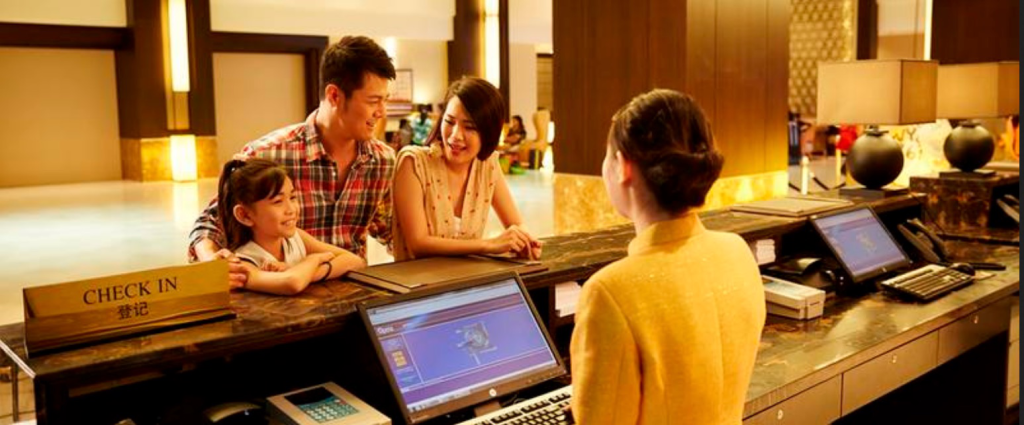
Checking in to a hotel
Vocabulary:
reception / lift or elevator / single or double room / king size bed or twins /
first floor / complimentary breakfast / key deposit / luggage storage / safe / mini bar
What would the conversation be ?
Reception: How may I help you / May I ask your name ? / Can I see your reservation code ? / That’s fine. You stay for three nights ? / May I have your passport, please ? / You’re in room 237. That’s on the second floor / Thank you. Sign here, please / Yes, the lift is just over there. / Naturally, as well as a hair dryer, coffee machine and mini bar. / Enjoy your stay.
Guest: Hello, we have a reservation / We booked a room online / My name’s ….. / Certainly, it’s on my phone. / Yes, that’s right. / Absolutely. / Correct. / Just a second; here you are./ Is there a lift ? / The second floor ? / Is there a safe in the room ? / Perfect. Thanks very much
Make a conversation. One student will be the reception, the other(s) a guest or guests.
Write your own conversation
You are in a hotel bar and you meet another guest. Start a polite conversation, but you have to use your English.
Greet each other
Why are you in this city ? (holiday or on business)
Offer to buy a drink (accept or decline – maybe you don’t drink alcohol)
How long are they staying ? What do they think of the hotel ? What can they do in the area around the hotel ?
Small group work
You are two married couples who meet on a tour and are staying at the same hotel OR you are on a business trip and meet some other business people.
Use the following sentences, as well as your own, to make a conversation. try to keep speaking for as long as possible by using small talk techniques (oh, really / that’s interesting / tell me more / what do you do exactly ? / where is that ? / Sounds interesting)
My wife and I are delighted to meet you
Shall we go to the bar or cafe ?
Can offer name first (I’m Simon, what’s your name ?)
Would you fancy a drink … ?
Is there anywhere special to do here ?
Sorry, I have to get my head down, it’s been a long flight (I need to sleep).
My colleague and I were going out to eat.
I fancy a beer or something alcoholic
Oh, I’m sorry, I didn’t ask where you are from.
Reasonable (cheaper)
Would you like to join us ?
Peckish (little hungry)
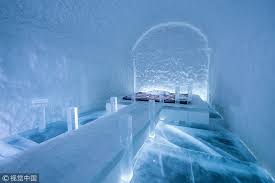
What do you think of these hotel rooms ?
What do you think of the design ?
Would you like to stay in any of these ? Why, or why not ?
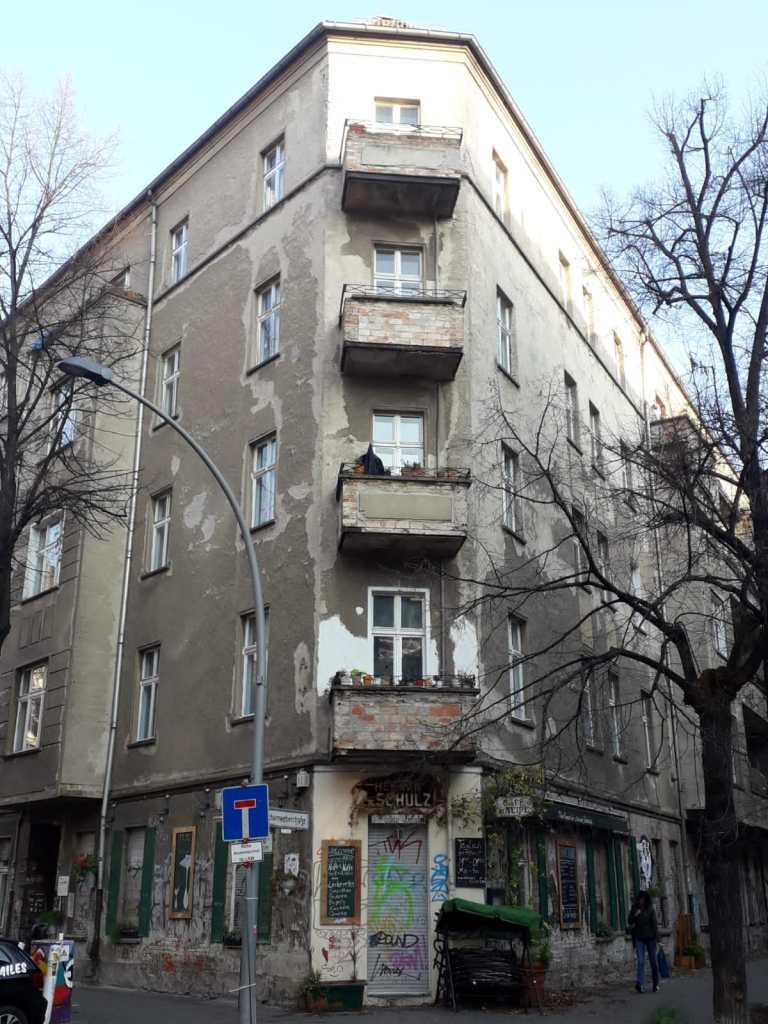
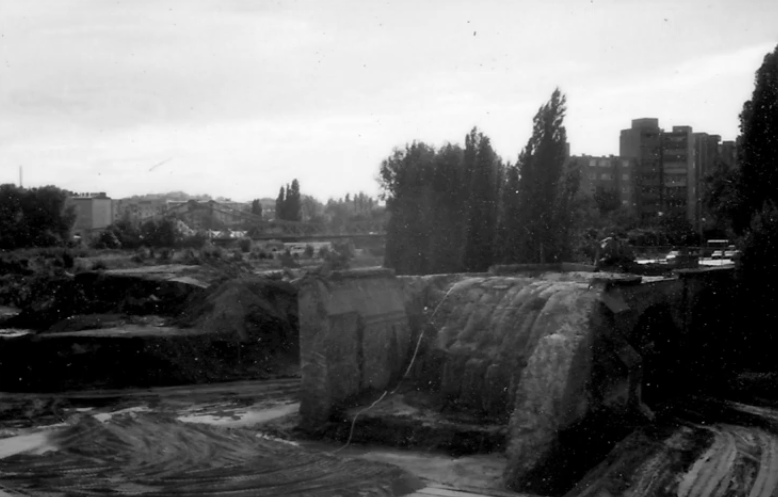
Berlin 2020 but looking much the same as the 1990s. Photo by Martin O’ Shea
Part Four. Berlin. Summer 1994
Gabi helped Monika carry the glasses across the road from the bar to the small park where Richard, on his first night back in Berlin, was being inducted into The Gang.
He sat on the brick wall that surrounded the park, as Silke pointed to the large rotunda that rose above the trees on the slope behind them.
“It used to be a water tower, then the Nazi’s used it to torture prisoners. Now it’s flats for Yuppies.”
Silke had short, spiky, blonde hair, which was striking enough, but tonight, in the hot Berlin evening, she wore a skimpy vest and shorts, showing legs which Richard couldn’t help but comment on; loudly,
“Man, she’s got Bond-girl legs.”
Chris felt obliged to look them up and down, apprising them with an expert eye, before concurring.
“And ? You like Silke’s legs, too ?” asked Monika.
“No, my Darling. Only yours.” They kissed, then Chris turned to Richard, and raised an eyebrow.
Gabi smiled at Richard, and they clinked glasses, and she tried a few, faltering words in English, before giving up in a fit of giggles that charmed Richard to the heart. Of all the women he had suddenly and miraculously been introduced to, it was probably Gabi he would choose, though Silke was all woman, no mistake, and Gabi’s friend, Lorelei, who now began speaking to him, in near perfect English, was equally beautiful.
Andreas walked back to the group, from the bar with the ‘best toilets’, running a hand through his curly, brown hair. He walked over to Silke, grabbed her and kissed her. Richard took this to mean that Silke was off the market. Chris smiled and began the saga.
“So you see, Andreas is with Silke. They’re a pretty incestuous bunch of motherfuckers, but I’ll try to hip you in to what’s what. Not so much a ‘Who’s Who’, more of a ‘Who’s done Who’. Andreas’ best friend is Tommy, the little guy over there, flirting with those two tourists. Silke used to be with Tommy. Andreas used to be with Gabi. Kind of. They had what is called here, a ‘kissing thing’. Gabi and Lorelei both live in the west, with their boyfriends.”
“Oh, shit!”
“Not so fast, Gunga Din; they both hate their boyfriends and want to leave them. Gabi is even thinking of renting a flat here and having a weekend lover. Or renting a weekend lover, who knows ?”
Richard re-enacted a scene from London, hoping that Chris would remember it. He raised his hand.
“I accept the job, sight unseen. Except I have seen … so fucking cute.”
“I’ll put Monika on the case. Oh, more, the plot thickens. Here’s Nice Guy Kai. Kai used to go out with Andreas’ sister, back in Köln.”
Nice Guy Kai was greeted by all, kisses and hugs. With his peroxide blonde hair and goatee, he was the rock star of the Group.
Richard was just beaming. There seemed to be cafés and bars everywhere, full of people drinking and laughing. Waiters, white shirted in some bars, casually attired in others, buzzed around taking orders, delivering drinks. Behind, the trees of the small park gave a relaxing, calming ambience, blocking out all the concrete blocks to the south.
It was an area unknown to him, somewhere tucked away in Prenzlauer Berg, attractive buildings with balconies and decorated doorways, flowers and colour.
People strolled past, two, threes or individuals. Girls cycled past wearing short skirts, lovers held hands and kissed. Strangers said ‘Hello’ to each other and smiled. People were alive and happy. It was so different to the London he had just left and when Richard looked at Chris, he knew that he didn’t need to say a word. Chris understood everything.
“This is your first evening in Berlin ?” Lorelei asked. Chris smiled and went to join Monika, leaving Richard to work his magic.
The Gang coalesced as the evening darkened, speaking in German, various hands pointing in various directions.
Andreas explained to the new comer,
“We have to stop drinking outside, now. It used to be possible to drink all night, but the neighbours all complained,” pointing to the rows of windows above all the bars. “So the bars will only serve people sitting inside.”
More talk and opinions. Kai left with a young girl he had just met, and soon after, a decision was reached. Tommy would borrow a bicycle from a new guy that had turned up, Gert, who was with Jo, his English girlfriend, and go to a store and buy as many bottles of beer as he could carry. Everyone began going through their pockets or purses to find coins.
Chris looked over and saw Richard still talking with Lorelei. He caught his eye, and gave a wink.
Tommy soon returned, cycling along the pavement like a madman, screaming out and making ‘ding-ding’ bell sounds with his mouth. Somehow, he had managed to buy and transport enough beers for everyone.
Monika came over to Richard. They had only met hours before, but they felt a certain affinity, although Richard sensed a slight hardness about her. She was very friendly, yet lacked the easy charm of Ute. Maybe she was exactly what Chris needed.
“Käthe was very pretty. But she is going to stay with her boyfriend ?”
Monika had met them earlier when they, Käthe and boyfriend, had dropped him off in Berlin and been invited inside Chris’ new flat for a beer. The fact that they both preferred non-alcoholic drinks turned Chris off them immediately.
“Yes, and anyway, she lives miles away, some place near … Cottbus ?”
“Ah, wie schade! (what a shame). “
“Chris seems to be getting real good in German, nichts wahr ? (isn’t that right ?)”
“Umm, Ja. So you need a German girl to help to speak German.”
Richard was very close to saying that there were other needs he had in mind, but checked himself.
After the beers there was more discussion. Some people began leaving, but the core of Richard, Chris, Monika, Gabi and Lorelei preferred to go to another bar.
Monika drove Chris and Richard, followed by the two girls. They were heading into Mitte. Monika said that there was a bar that was only open on Fridays and was a good place to hang out.
As Richard had expected of Berlin, it was no ordinary bar. Again, no sign from the street, except the inordinate amount of people coming and going, or just standing around, clutching beer bottles.
Monika led the way through the arched front house, which opened into a large court, or Hof. It was full of people dancing to a DJ playing mid-tempo Techno. Some coloured lights were strung up, in a rather half-assed way, but it didn’t matter to Richard. Chris put his arm around him and they shouted a few sentences in each other’s ears, fighting the volume of the beat.
The bar was another improvised wooden counter in an adjoining low building, half-derelict, half the windows broken.
The choices were limited to beers, cheap wines, vodka and rum. Monika took Richard into the bar, placed her order and leant against the bar, moving to the Techno. She turned to Richard. He felt compelled to confess.
“I’m in love with Lorelei.”
Monika laughed, but in a friendly way. She put her arm on his.
“She has a boyfriend, but it is over. They never go out together. Every weekend, Gabi and her drive over. It’s much more fun in the east.”
“Yes, it is!”
Gabi and Monika joined the dancers, Chris walked around, speaking to complete strangers, sometimes making them dance, against their wishes, sometimes just going up to them and staring them in the face, before grabbing their arm and then hooking it under his calf. Chris knew, of course, that Richard was watching.
Lorelei moved over to Richard.
“What’s he doing ?”
“It’s an old Harpo Marx routine. From ‘Duck Soup’, I believe. You know the Marx Brothers ?”
Richard described the act and then they began speaking effortlessly about anything else that came into their heads. They sat on a log that was just big enough for two, provided those two didn’t mind touching legs, and shared a beer.
Gabi came over. She was getting tired and was going home, if Lorelei wanted a lift. Monika was also thinking of leaving and began looking for Chris, who soon showed himself, trying to teach some ballroom moves to a group of young ravers.
Richard got a hug and a kiss from all three women, the kiss from Lorelei lasting just that little bit longer than a mere social gesture.
“And then there were two,” said Chris, leaning on Richard for support.
They stayed until the sun rose, then began the slow walk back home.
They were both, naturally, swaying all over the pavement. At one point, a car was driving too slowly for their liking, so Richard pulled out his wallet, opening it and flashed it to the driver.
“N.Y.P.D. C’mon, let’s move it, you in the blue car!”
“So, what do you think ? Should have moved here before, hey ?”
“Lorelei is beautiful.”
“I know.”
“I really wanna fuck her.”
“I know.”
Within half an hour, they had made it back home. There were two mattresses already prepared, on the floor, a fridge full of food, clean clothes ready and shampoos in the bathroom.
They threw off their outer clothes and crashed. They were asleep within seconds.
The last image Richard had was of Lorelei’s face. She was, indeed, beautiful.
At the moment they fell asleep, in a flat on the border of Friedrichshain and Prenzlauer Berg, an English woman woke up and went into the kitchen to get some bottled water. Gert, her boyfriend was snoring loudly. She looked out of the street window, seeing the unmistakable TV Tower silhouetted against a morning sky of pure blue.
She had to tell her brother about Berlin. He had finished University and, as far as she knew, didn’t have a job lined up. He would love it here. It was very cinematic, which he would appreciate, as all he ever spoke about was cinema. Gert gave an extra loud snort, which brought her back to reality. She wouldn’t be able to sleep with that noise going on. She went to the other room and got some paper and a pen and began writing;
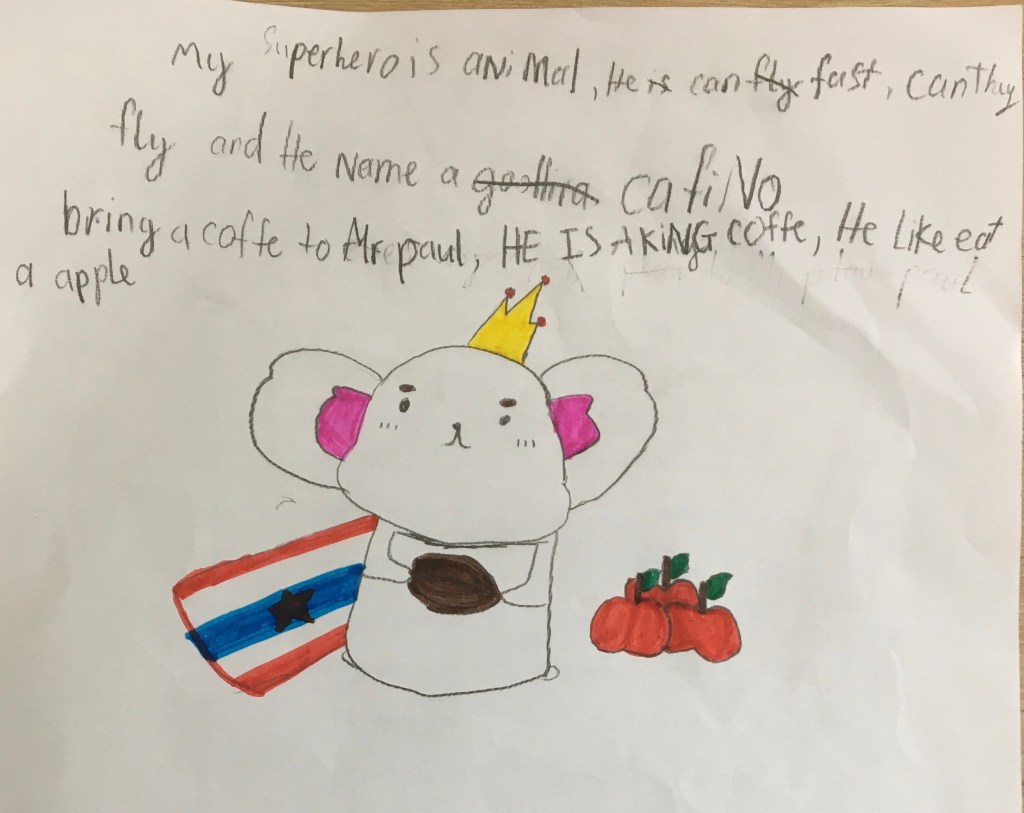
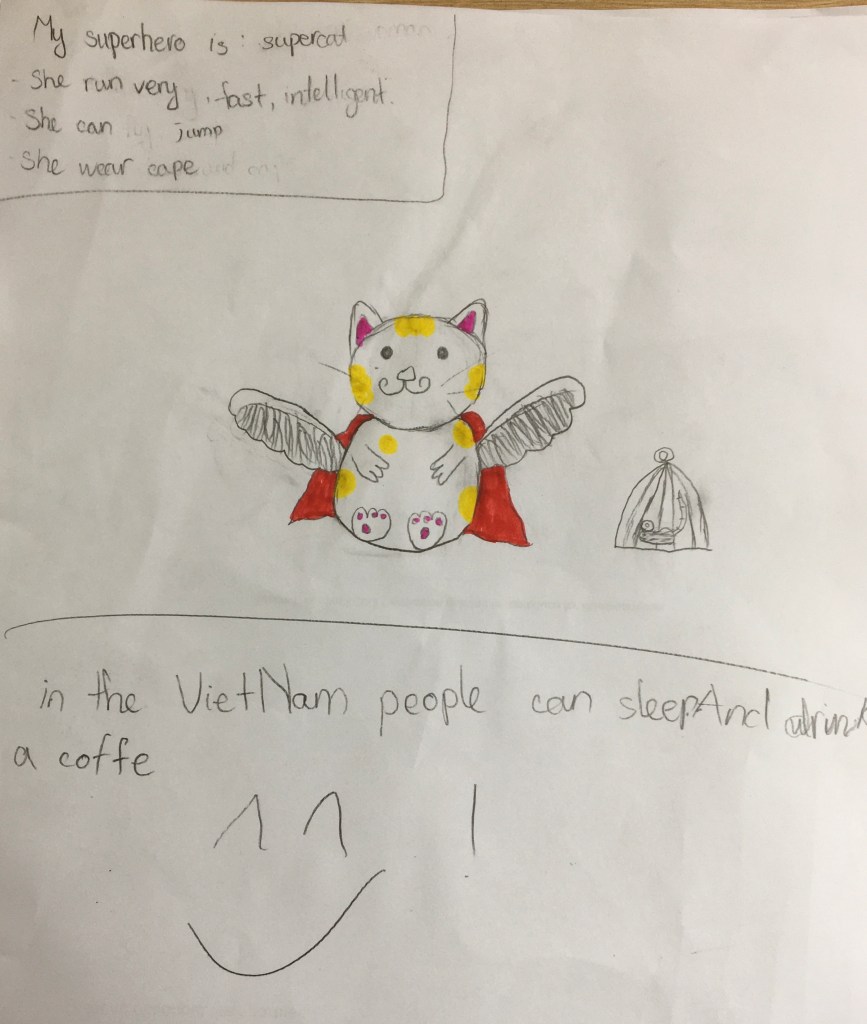
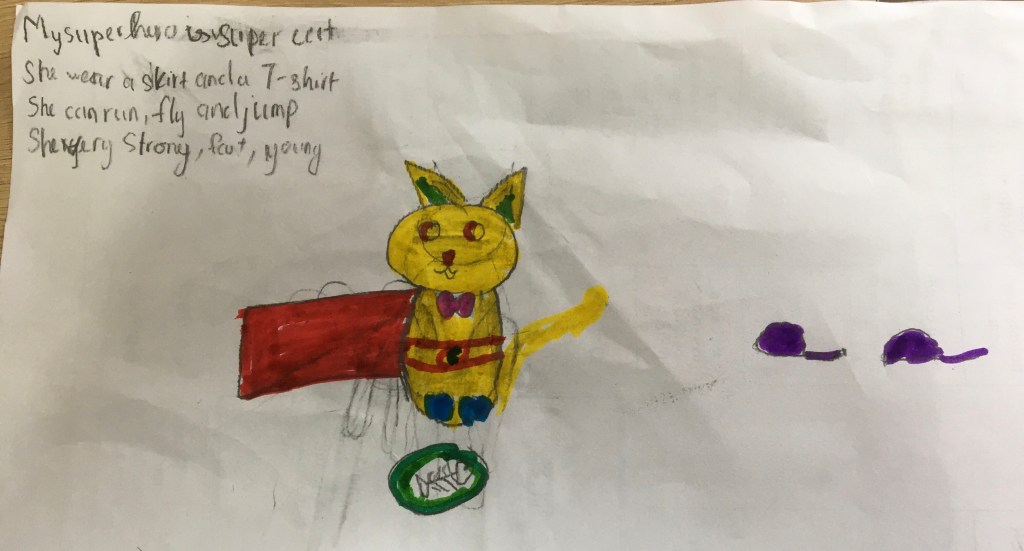
Following on from the use of Superheroes to review superlatives I gave my class (students aged nine or ten) a project: either write about their favourite hero or create their own.
Enough from me, here’s what some of the students came up with … firstly, from Cherry:
CafiNo to bring me damn good coffee … and hot !
A Superhero that brings me coffee – I love it ! Moving on, here’s a job opportunity for The Flash – express pizza-delivery, thank to Messi:
Heroes can be men, women, boys, girls … or animals. Three young ladies, Phuong Nhi, Jessica and Ms Linh chose to create a Supercat:
from Ms Linhfrom Ms Jessicafrom Ms Phuong Nhi
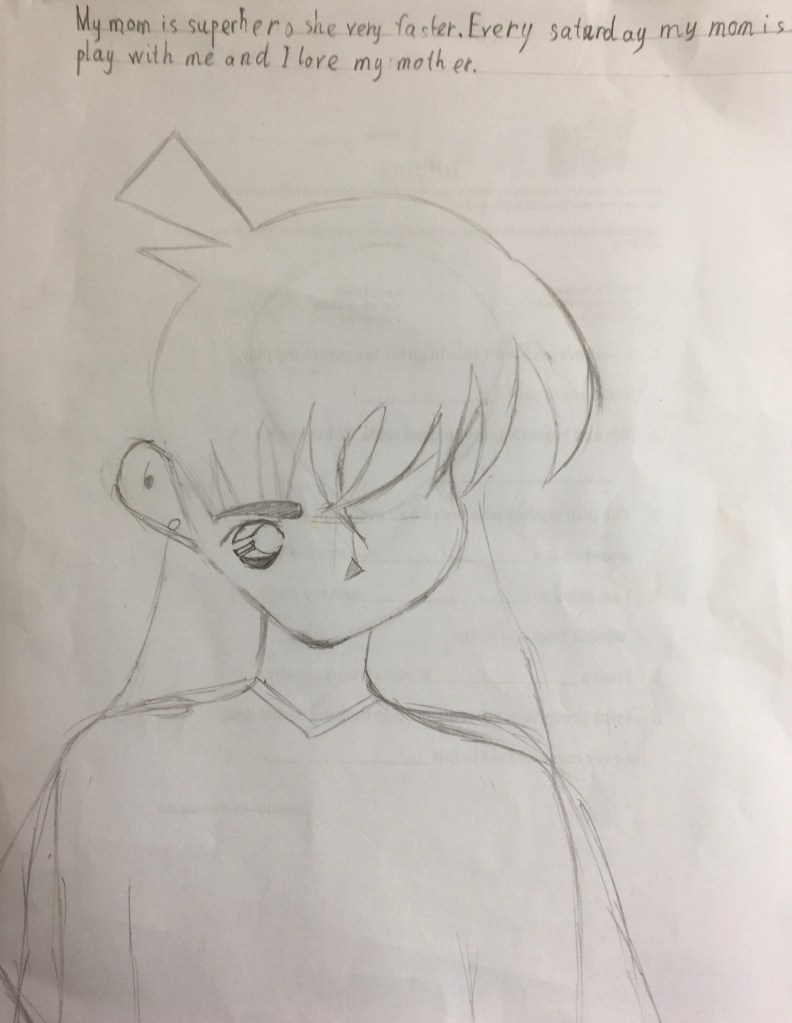
How about this Supermum from Mary:
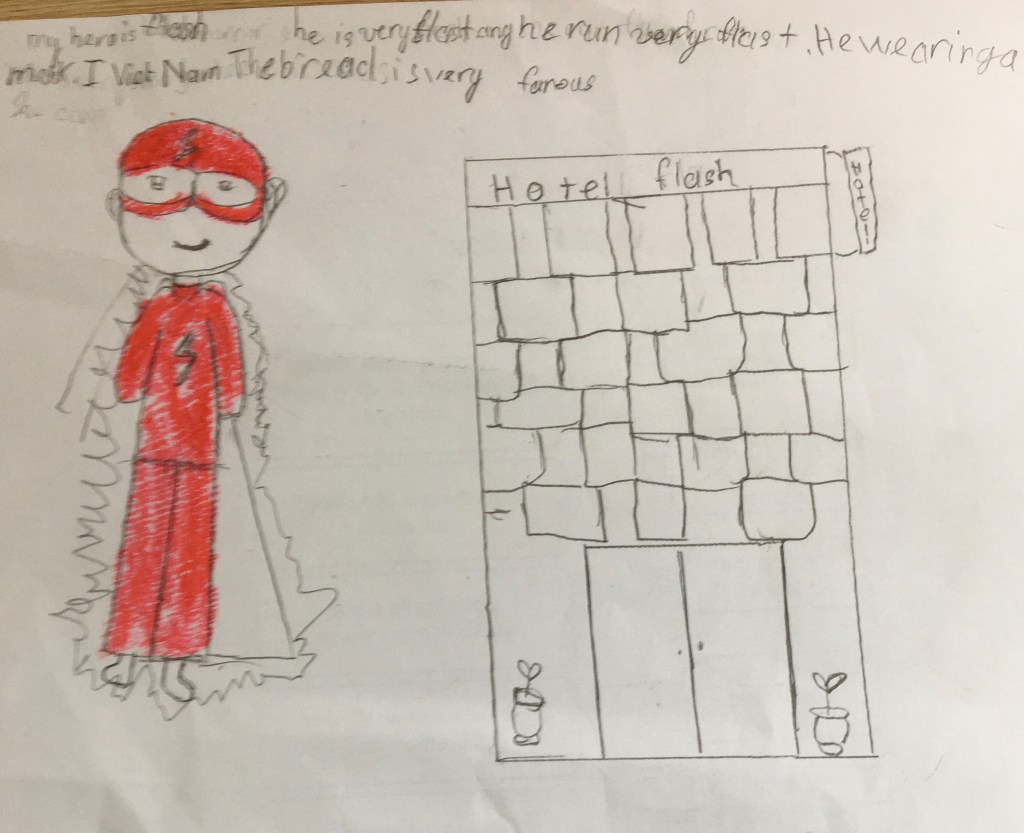
The Flash is also the favourite of Marinette:
from Ms Marinette
Now, a magnum opus from ‘King’ Lear:
from Ms ‘King’ Lear
Sarah who has dreams to be Foxgirl (but her identity must be a secret).
from Ms Sarah
Young Ken is a fan of Spiderman:
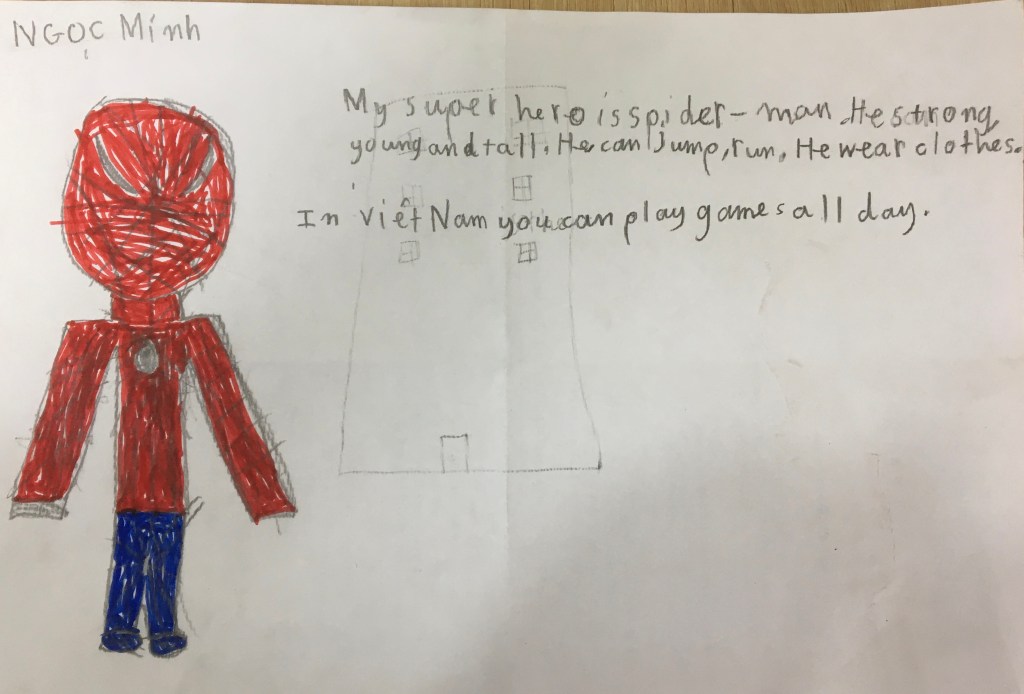
Ngoc Minh (whose English name is ‘Iron Spider’) is, unsurprisingly, also into Spiderman:
Monika let out an exclamation of happiness. There was a parking space outside of Chris’ street door. She gathered her bag, and a carefully selected handful of tapes from the car’s floor.
“And this one,” added Chris, “Husker Du,” then began singing ‘Could You Be The One ?’.
They got out, Monika checking the locks on her beloved, yellow Toyota and Chris entered the block, getting out his keys to unlock the Briefkaste. He mimicked her exclamation, pulling out a letter with its distinctive handwriting and British stamps.
Chris’ flat was on the second floor of the back block, or Hinterhof. Ute had organised it for Chris, as it had belonged to a friend of hers who was moving in with her boyfriend. Ute had left some bits of hers there, a source of constant irritation to Monika. It implied that she would be back and when she returned, Chris would go back to her.
Inside, the second ceiling was immediately above the door, an improvised storage space,overflowing with Ute’s belongings and general junk. Monika rarely failed to make at least one allusions to this, per visit.
The small hallway had a door, to the left, which was the bathroom. A toilet with old-style chain, but a normal sized sink and a bath with shower attachment. There was also a small gas heater. A quantum leap from the previous flat.
The main room was larger, as well, and the windows received more light from the small courtyard. There was the Ofen in one corner and the door to the kitchen in the corner diagonally opposite.
The kitchen was smaller, but big enough for a table and could easily sit two and cosily sit three.
Chris played the tape that had Husker Du on one side and Jane’s Addiction on the other. Monika had introduced him to both bands and now he couldn’t hear enough of them. There were the soundtrack to his new life.
Richard’s letter was also full of enthusiasm, and Chris let out a series of whoops and ut-oh’s periodically.
Monika busied herself, allowing him space. She knew he would tell her everything, anyway, in great detail, some of which she may even understand. As soon as Chris had finished the last word, he called Monika over.
“He’s in love, too.”
“Ah, that’s nice.”
“Nein, not nice.”
“It’s not nice your friend is in love ?”
“Yes, I mean, no, it’s not nice, not nice. Nice is a bad word, very weak, it doesn’t mean anything. If you go somewhere and watch someone, I don’t know, act, or play a song and you have to say something, you say,’ it was nice’.”
“So, it is … great ? Great he’s in love ? Super !”
“Yes. Except, no, it’s not.”
“And why ?” A very strong demand from Monika.
“It’s Richard. Nothing ever seems to work out for him in that department. OK, he’s in love with this girl called Käthe. Yes, a German girl.”
“Ah-ha! And where did he meet her ? In Berlin ?”
“No, at work, in London. She and her boyfriend work at the same place. Seems Richard got offered a permanent position, so it means more money. Still shit, but better. Let’s see … “
“But … boyfriend ?”
“That’s all you need to know about Richard. Always falls in love with girls who are in committed relationships. Never mind, we’ll find him a girl here. You got any single friends ?”
“What about Ully at Biberkopf ?”
“What about her ?”
“She’s single, no ?”
“Yeah, I’m sure of it. Are you surprised ? She’s got … the thing.”
“She’s got a lovely smile.”
“And the … thing. No, we can do better than that.”
Monika looked out of the window.
“Ah, it looks a nice day, no, a great day. I don’t want to go to work.”
“What would you like to do instead ?”
Later that afternoon, Chris re-read the letter. In it, Richard had mentioned his routine; seeing films on Mondays, when there are cheaper, maybe drinking with Melanie, then getting home and heating up a pizza slice and watching some American shows, something called ‘NYPD Blue’, another being ‘Northern Exposure’. Richard also exalted a book called ‘Generation X’ that everybody was reading and told him to look out for a film about slackers which had Winona Ryder dancing in a convenience store. They all sounded fantastic.
Chris had been in Berlin for over a year. He had two jobs, his own flat, a great new girlfriend and enough money to live comfortable on.
However, he realized from the letter how out of touch he was. He hadn’t read an English newspaper or a new book since being here. He could just about fumble through a German paper, but it was either too complex or too boring. The new bands he was listening to had all been around for a while, but had it not been for Monika, he wouldn’t have had any way of knowing about them.
Chris needed Richard to be here as much as Richard needed to be out of London. He felt that he had a lot of catching up to do.
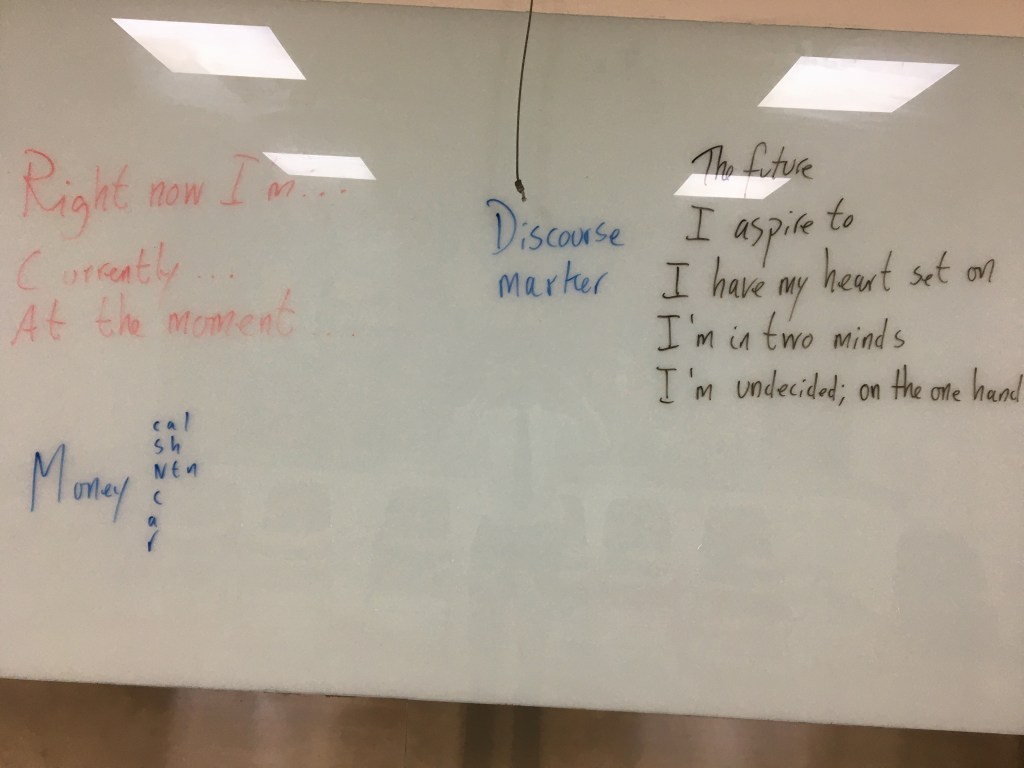
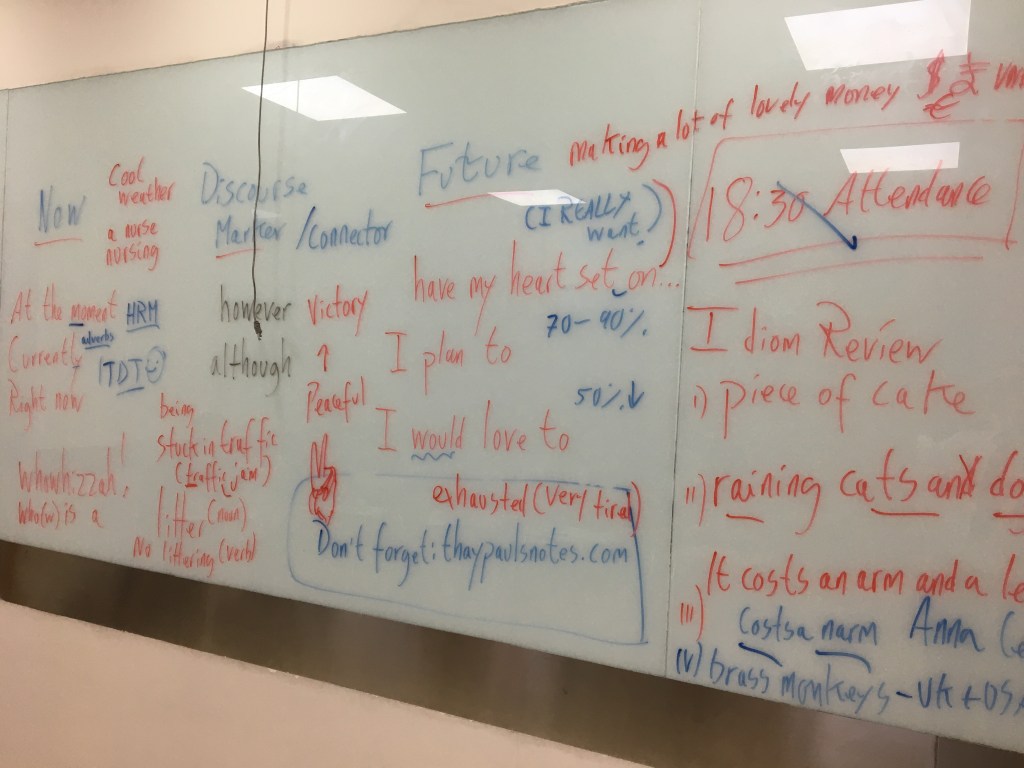
Compare these two photos; which class do you think was more dynamic ?
Photo 1Photo 2
The basic lesson was the same: what are you doing now, add a connector (or discourse marker) and say what you want in the future.
Students are taught how to use vernacular language, practise changes in intonation and alterations in stress, as well as chunking (natural linking together of words).
The photos, as the saying goes, tell their own story.
Photo 1 is from a high-level IELTS class where I wanted to increase vocabulary, and encourage the students to use more intonation … or basically ANY intonation in their voice.
The topic went down like the proverbial Led Zeppelin (and I wasn’t feelin’ a Whole Lotta Love for the class). I managed to elicit some half-arsed replies before they returned to their mobiles (or cell phones if you’re in the USA) or their natural comatosed state.
On the other hand, take a gander (have a look) at the second photo; same basic lesson target, but my goodness, what a difference, and this from an intermediate class.
Both classes were small in size (about six students) and predominantly teenagers, so how do we account for the chasm between them ?
To use academic language (for one of my new IELTS students):
This would seem to suggest that it was the students, as opposed to the lesson, that was the issue.
Words such as ‘inspire’ or ‘motivate’ are synonymous with teaching. However, as someone who attempts to teach, I must add that a successful lesson relies on synergy; one cannot motivate those who actively resist being motivated.
Teachers only have so much energy, and they can’t afford to waste it on customers who shuffle into class, scowling, ignoring the teacher, sitting at the back clutching their bag, defensively, in front of them before becoming engrossed in their phones and ignoring any questions put to them. I’m not talking about children here, but young adults or adults, on a course that they chose, and need for their future.
I wish I were.
So, to my great students, who come to class willing to learn, to be active, to practice and are polite and respectful:
Class will be arranged in four small groups and they will be assigned a city. The students have an hour to collect information, produce a short journal (with maps, photos, illustrations etc) and present to the class.
The destinations are:
London, Barcelona, Seoul & Rio de Janeiro
I shall provide some photo printouts for their covers.
The journal must include:
When to go // an itinerary // a famous museum or building // how the students got there
London: best time to go is in Spring // British Museum is free -Open daily 10.00 am – 5.00 pm // Take the Tube (subway) to Holborn // Hamleys Toy Shop – Open 11.00 – 5.00 // Take the 25 bus and walk down Regent Street.
Barcelona: Best time is May – June // Gaudi Church (Sagrada Familia) Open 9.00 – 7.00 pm // Take Metro Line 2 (subway) // Have a picnic in Gaudi park (Parc Güell) – Open 9.30 – 7.00 pm) -get there by taxi // At night walk along the famous street Las Ramblas and walk around the old town centre
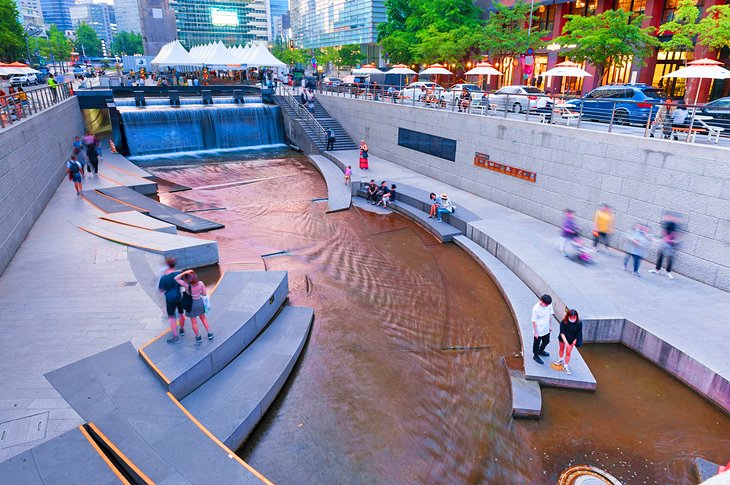
Seoul: Best time is summer // Seoul Tower – take bus number 2 – Open 10.00 – 11.00 pm // Traditional village – take a taxi. // Walk around, visit small museums and try traditional food // At night, walk along city creek and try Korean street food.
Cheonggyecheon Stream in central Seoul
Rio de Janeiro: best time is February, for the Festival // Walk there from your hotel // Visit the Christ statue – take a taxi but go early morning. // Go to the beach at Ipanema – take the Metro Rio (Subway) // Try amazing Brazilian food like crazy beef or foot bug ! //
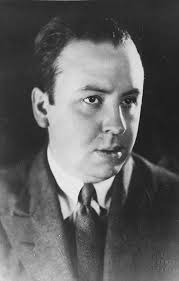
Young Alfred Hitchcock felt so proud. His father, a strict and nervous man, had entrusted his son with a duty that made the infant of four or five feel like a young man.
Hitch ran along Leytonstone High Road, in the East-End of London, to the police station, with no suspicion of the notorious family plot being hatched.
Alfred confidently approached the huge desk and, tiptoeing up, stretched to put the note into the giant hand of the formidable policeman.
The Officer took the note, unfolded it, read it, closed it again, and stared down at the beaming face of the boy. After a moment of silence, he said:
“Come with me.”
How honoured Alfred felt now, a respectable keeper of the peace was leading him by the hand and showing him the inside of the station.
They went up to a cell, which the Officer unlocked and beckoned the lad inside.
Alfred needed no second telling, he gladly entered.
Then the door closed with a heart-stopping crash, and he could hear the metal screeching of the heavy keys turning the locks.
There he stayed, in the terrifying cold of the dungeon, too small to look out of the bars, too scared to scream. He was petrified.
There he stayed for five or ten minutes, until he was finally released. The only explanation were the words that stayed with him for the rest of his life:
“This is what we do to naughty boys.”
Unsurprisingly, many of his films have the theme of an innocent man caught up in something he doesn’t understand or have control over.
Around fifty-five years later, the film ‘Psycho’ was released.
Thirty-four years after that, in 1994, a film student chose it as the subject of his thesis.
Alan Francis had moved up to London to read Film Studies, and shared a bedsit in Leytonstone with three other students. He frequently walked past the petrol station that has been built on the site where ‘The Master of Suspense’ was born.
It was Alan’s contention that ‘Psycho’ was as near perfect as a film could ever get. Rather than being threatened by television, which had devoured Hollywood’s audiences in the Fifties, Hitchcock, acting as his own Producer, had used a television crew, used to tight budgets and tighter schedules, to shoot the film.
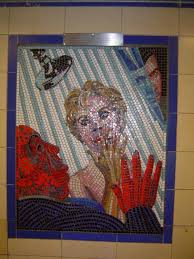
Mosaic of ‘Psycho’ at Leytonstone Underground Station
But he took time and care when needed. The famous shower scene took seven days to shoot, using seventy cameras for forty-five seconds of film.
Alan also mentioned that the film had cost eight hundred thousand dollars and before the decade had ended, had already grossed over fifteen million.
Over the Summer months, Alan waited with appropriate suspense, for his results. He had had enough with theory, he now wanted to make films. But the chances of breaking into the film business were not good. The best thing, he decided, was not to send off letters or work his way up in studios, but to actually make a film, to show people what he could do.
There were so many ideas stored up, so many theories of cinema to test out. All he needed was a camera. And actors. And film stock. For these, he needed money.
In July 1994, Alan looked for jobs and was accepted by a firm of business consultants. His theories on film would not be required for the post. So he saved his money. And waited.
Till the end of his life, Alfred Hitchcock never forgot the paralysing fear of being locked in that cell. And he was never able to remember what it was that he had done, that caused his father to punish him so.











































 Thay Paul's Notes