
22nd March 2024

Let us start with a quick welcome; students can be put in pairs and spend 3 or 4 minutes asking each other questions (names, age, likes and dislikes). Then they introduce their partners to the class.
I follow by asking the students where they think I am from, and in one class I heard, “Australia.” Couldn’t be further away. Sounds of laughter and of ice-breaking. One of the younger students recognised the British accent, then London was pinpointed as my hometown.
This leads to …
First activity: stop the bus (STB) about the UK.
What is the second biggest city ?
Name of the famous clock. Name of our King.
Name of 007 (also a way to drill the notoriously absent final-s of James),
Traditional food (“fish & chips,”; again -s drill).
This combines ice-breaking games with some pronunciation and grammar drills.
This lead to …
Partner work. I show four different examples of British food and four titles. Students had to match the title and image, with some pre-teaching. The activity:
English food
Toad in the hole Sunday roast
Full English breakfast Fish and chips
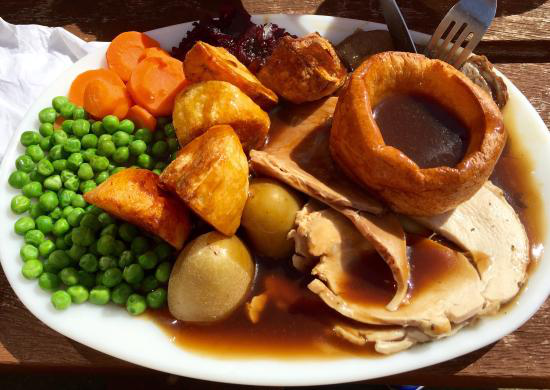
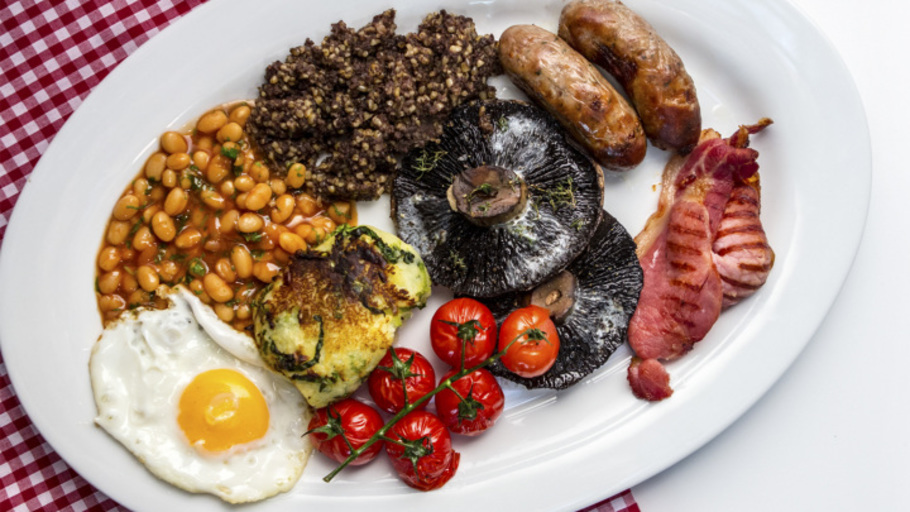


Describing the food: can they name the dishes ?
What do they think of them ? (elicit adjectives)
Are they healthy ? if not, why not ?
Encourage all students to contribute, feel relaxed and comfortable, and confident to demonstrate their knowledge.
Phrasal verbs pertaining to eating
eating out
dig in
check out or check it out
pick up the cheque / bill
Vocabulary
unusual for instance partly attracted ingredients typical
Then using these in sentences:
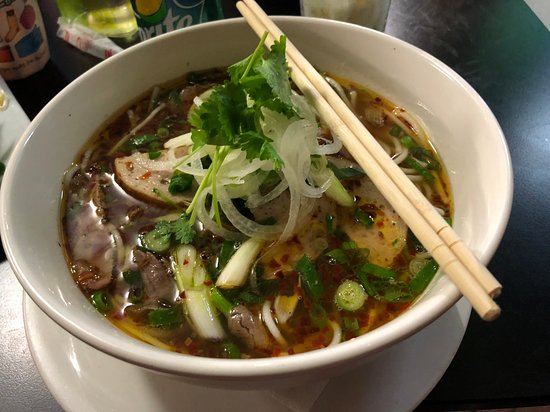
What do you need to make pho ? (noodles, meat, vegetables, stock, herbs)
Those are the ingredients.
What do you do every day ? (go to school or work, exercise, do homework, clean the house)
That is a typical day.
Viet Nam has great food, for instance pho, bun bo Hue, Mi Quang. What is the most unusual food you know ?
Today will be partly cloudy. The smell of the cooking attracted the young lady.

There has to be a lot of time for the students to speak with each other. Sometimes working in pairs, sometimes in small groups. Make sure the students have the vocabulary to do the activity, know what they have to do and feel motivated.
Grammar: present simple and present continuous
I live in HCM or I am living in HCM
What is the difference ? Why do we use one but not the other ? (This will be covered in other blogs)
Pronunciation: the stress on negative words
I like tea, she doesn’t like coffee.
Intonation: rising voice on questions
Does she like tea ? Do you like British food ?
And finally ... students can ask their partner about things that they like: food, music, films, places etc

Please Note: All photos are taken from Google Images or free photo sites, and are used for educational purposes only. No copyright infringement or offense is intended. If I have used your photo or image, and you wish me to remove it, just ask. This site is not monetized, I run it on my own dollar. Thank you.
 Thay Paul's Notes
Wow, I enjoyed your wonderful post. I subscribed. Have a nice day🍀☘️⭐️💝
LikeLike
Thank you so much. Have a great weekend.
LikeLiked by 1 person