Thus, a quick warm up featuring standard, run of the mill IELTS topics such as:
FAMILY
Who do you live with ?
An all too familiar answer would be, “I live with my mum, my dad and my brother.”
Remember, you have to impress the examiner with your impressive command of all aspects of English, so get those complex sentences working, flex those adjectives and act out your answers.
Allow me to introduce my family to you. Firstly, there is my mother, who has a heart of gold, always caring about others before herself. My father, who is an engineer, burns the candle at both ends, so I rarely see him. He works extremely hard for his family, I look up to him. Finally there is my brother. Well, what can I say about him ? Unfortunately, he’s a bit of a slackerby which I mean he’s very lazy. Hopefully he’ll turn over a new leaf and start contributing more to family life.
Notice the complex sentences – I explain just a little about each member, while adding two idioms and some fixed expressions into the mix.
Think how you would pronounce this – the mother is positive and sweet, the father is busy, the brother lazy.
NOW … Your turn … are you ready ?
Yes, Thay Paul, we’re ready !
FAMILY
Who do you live with ? Compose an IELTS-style answer
You live with your mother (makes you study very hard), your grandfather (loves swimming) and your sister (spends time making herself beautiful, buying clothes and taking selfies).
Onwards and upwards, try a Part II question. There will be a topic followed by four points for you to include in your answer (here you have a minute to make notes, so try to think of suitable idioms and L-FWs). You are expected to speak for up to two minutes, and the examiner can not assist you.
What do you enjoy doing in your free time ?
You should say what the activity is
Who you do it with ?
Where you do it
And why you enjoy it
Make it easy on yourself
Choose a topic you can speak about at length, one that has many avenues to explore, such as music:
Do you listen to music ? If so, what genres do you like and why ?
Who are your favourite artists ?
Can you play an instrument ? Have you tried ?
Would you like to in the future ?
Have you ever been to a live concert ?
Do you listen or play alone, or with friends ?
We can work on this in class. Remember, if you get under 6.5 in my class, I will KYA !
I took this photo on Nguyễn Huệ Street, which is in District 1, during Tet Holiday. As this is the biggest celebration in Viet Nam, the streets are bustling and vibrant, furthermore it is so uplifting seeing happy, smiling people. Many ladies simply adore dressing up in traditional Áo dài, dresses which are made from silk. In my opinion, these two friends look so beautiful although they tell me that their dresses, which cost an arm and a leg, can be terribly hot and uncomfortable. However they only wear them once in a blue moon. They were so happy when I took their photo as it will enable me to share some Vietnamese culture with the world.
A quick recap – we have encountered these words so far in our 1000 mile journey:
lingua franca / genre / obligatory / compulsory / uplifting
enable / bustling / vibrant / generated / derived from / enable / purchase (buy) / devour (eat or consume a lot)
utterly depressing / simply adore
Not forgetting our arsenal of idioms:
it’s raining cats and dogs
it costs an arm and a leg
piece of cake
I’m burning the candle at both ends
once in a blue moon
pass with flying colours
turn over a new leaf
put your nose to the grindstone
bear with me
kick the bucket
NOW … your turn
Write me a short IELTS-style piece (only three or four sentence) about Tet Holiday – what you do, what you eat, special traditions, personal stories … having said that … you have to include:
two idioms // at least two L-FWs // two adverbs // two great adjectives //
use of pronunciation features
Are you ready ? Yes, Sir !
My adorable friend Hanna. Photo by Thay Paul, Ha Noi
Piece of cake, right ?
Quick fire quiz – what idioms could you use for ?
money, cost, prices // working or studying //
changing behaviour or bad habits // no problem
weather // something that happens very rarely
World famous director Jean-Luc Godard
Speaking practice – work in pairs or small groups and ask each other about cinema – but – at IELTS standard. To wit, include:
Types of films you like (genre). Give examples.
Where you go or how you watch movies and why
Favourite actors or directors
REMEMBER – give as much information as you can – complex sentences, L-FWs, idioms; remember to speak fluently with discourse markers and, not forgetting, express your emotions in your voice.
Next Lesson, we shall assist Countess Dương in boosting her vocabulary, as well as focusing on listening to native speakers and endeavouring to imitate their speech patterns:
Happy St Patrick’s Day – St Patrick being the patron saint of Ireland, a country famous for enjoying a drink … and then some ! In Chicago, which is a bustling, vibrant city in USA’s mid-west, the river is coloured green. However, too much
Guiness will give me a bad headache the following morning. I will definitely have a hangover. That means it’s time to stop drinking so much, I need to change my bad habits … which brings us to an idiom for my new class; it’s time to turn over a new leaf.
In this case, a four leaf clover for good luck.
So, we have a new class and they need to start learning language that will help them ace the IELTS test.
Let’s hit the ground running and recap the basic idioms you’ll be using every week, as well as the new vocabulary from last night. Are you ready … ?
Let’s go !
First off the bat, some basic idioms:
it’s raining cats and dogs
it costs an arm and a leg
piece of cake
I’m burning the candle at both ends
once in a blue moon
pass with flying colours
turn over a new leaf
put your nose to the grindstone
These are the basic idioms I introduce, as they can be employed in many situations.
A good introductory blog, with IELTS tips and advise may be accessed here:
Let’s hit the ground running and put it to the test – what idioms would you use ?
Taxis in Sai Gon are very expensive, they _______
I want to get a high score, I want to ______
We can’t go out in the rainy season because it’s always ____________
You need to stop going out every night and missing school. You need to _____________
The test was so easy, it was a __________
She works all day, then studies all night; she’s _________________
I must be more serious about learning Vietnamese. I have to _______
Ms Liêu simply adores Champagne however, because it _____________ , she only drinks it __________________________________.
Last night’s class also generated some additional idioms, expressions and vocabulary, to wit:
bear with me – please wait a very short time
like a madhouse – a place or area that is crazy, too noisy, too busy etc
Kick the bucket – UK idiom, very informal, means to die
My hands are tied – I am obliged to do something, I have no choice
An expression – to kill two birds with one stone – to achieve two different results by doing one action:
“Hey, let’s meet at the coffee shop. We can meet up and work on the project at the same time.”
I also introduced you to borrowed words – vocabulary from other languages. Our first example derived from Italian – lingua franca (a common language)
EXAMPLE:
I am studying English, which is incredibly important, because it is a lingua franca meaning it will enable me to communicate with people from all over the world.
Furthermore, we covered some adjectives to describe various neighbourhoods:
gritty / industrial
quite / safe / residential
boring / peaceful / suburban
bustling / vibrant / city centre
Extra advise – any time you hear a new word or expression:
Finally for Ms Dương, who expressed concerns over the amount of vocabulary one needs to learn, here’s the quote from the Chinese philosopher Lao Tzu (C6thBC) :
The ability to use complex sentences, fluently and naturally, will greatly improve your IELTS score (in both speaking and writing). Therefore here’s a little exercise I used in last night’s class. Test your ability to speak in IELTS-style sentences.
Quite simply, take a basic subject and see how complex you can make it by adding information to every noun.
Good idea. Here is my friend Tony:
Tony is from Liverpool. He is 32. He is a reporter. He works on ‘The Daily Talk’. This is shown on ICB network.
Remember, relative pronouns who / which / where / whose
Tony, who is 32, is from Liverpool, which is famous for football as well as The Beatles. He occupation (or profession) is reporter, working for ‘The Daily News’ which is a show broadcast on the ICB network, which is located in London, where Tony now lives.
You wouldn’t usually include so many clauses, but it is an exercise, similar to a musician practising scales. Ideally, in the speaking test, you will be able to use complex sentences at the drop of a hat.
NOW … YOUR TURN
Make a complex sentence about your hometown.
Sai Gon / Tp HCM
Sai Gon: in southern Viet Nam / largest city in VN / population over nine million / many museums (such as History, War Remnants, Independence Palace) / traditional food (such as Phố) – what is Phố ? What is it served with ?
Traditional Phố for my friend Silk Cords
Next, tell me about someone in your family.
Who is that person ? What relation to you ? Where do they live, what is their profession ? Describe their physical appearance and personality and try to add an anecdote, to make your presentation more personal.
Finally, in last night’s listening practice, there was mention of the Hearst Castle in California:
William Randolph Hearst, who was a very famous newspaper tycoon, lived in this castle, which is in California. Hearst was immortalised in the film ‘Citizen Kane’, a classic movie from 1941 by Orson Welles, who directed and starred in the film which is often cited as being the best film ever made.
New vocabulary and expressions:
Last night’s class produced these:
The weather is Sai Gon is sweltering and terribly humid
monotonous (mono = one) = very tedious
I don’t give a monkey’s = I really don’t care
occupation (better word for job) / profession = need to be qualified such as doctor, nurse, lawyer, pilot, chef etc
most notably = Orson Welles made many films, most notably ‘Citizen Kane’.
I have conducted a number of speaking tests recently and noticed some areas where students can, with very little effort, boost their scores.
Remember, IELTS requires you to demonstrate that you will be able to live and study in an English-speaking country.
Firstly, there is fluency: are you able to speak without hesitation ?
Secondly, is your vocabulary broad enough ? You will be studying at university level (1) therefore you should be acquainted with low-frequency words (L-FWs), while living in an English-speaking country will necessitate you being familiar with phrasal verbs, idioms and expressions that comprise the bulk of everyday language.
Obviously, grammar is imperative, especially the ability to form complex sentences. You will need to combine several pieces of information in one sentences, using clauses and discourse markers.
Finally, pronunciation; this is not merely the clarity and accuracy of your speech, but features such as intonation, stress, pacing, body language, rhythm, chunking … features which are best learnt by listening to native-speakers and imitating what you hear (2).
To sum up, if you have been disappointed by your score, listen to the feedback your instructor gave you, and work on those areas.
(1) Even if you study in your home country, many textbooks are only printed in English. I’ve known friends from Greece, Sweden and Germany who had to use English language books
(2) There will be an incredible variety of accents, dialects and linguistic features within one large city, but for the purposes of teaching, I’m referring to features that may be particular to English, namely adding the letter ‘s’ to form plurals, how words ‘run into’ one another and how less important words are swallowed, while key words are stressed.
Please allow me to introduce Mick Jagger of the Rolling Stones
You never get a second chance to make a first impression
A killer, jaw-droppingly brilliant introduction will really impress your examiner as well as boosting your confidence during what, to be honest, is a nerve-racking experience, namely, the IELTS speaking test.
With that in mind, here’s some tips, advise, guidance, what you will, on how to set up your response.
Let’s take a real-life example. Last week I asked my class a simple question:
I am exhausted and need a holiday. Where should I go to in Vietnam ?
Most answers were pretty run of the mill albeit with the occasional L-FW and an idiom relating to cost (it does or doesn’t cost an arm and a leg). However, I had a former student sitting in, my Princess (you may read about her here, if you so wish: https://thaypaulsnotes.com/2020/09/04/6420/
My Princess began her recommendation thus:
Mr Paul is looking quite exhausted because he has been working extremely hard, burning the candle at both ends, so he really needs a holiday to relax. Vietnam has visually-stunning scenery and beautiful beaches. Allow me to tell you about some of these places …
The class responded thus:
Their jaws all dropped ! However, take heart, a great introduction is, with a little practice, a piece of cake. What follows is a compendium of opening lines, introductions, and templates for you to use and adapt as you see fit.
As with all skills, start slowly then you can build up to more elaborate introductions.
Introductions:
That’s a very interesting question
Allow me to tell you about …
Well, that’s a great question
Well, there is so much to say about that subject, where shall I start ?
It’s funny you put that question to me because earlier today I was just thinking about …
As a young Vietnamese (add your own nationality), I …
Well, that question is a bit of a sore point with me because …
More Advanced introductions, especially for Part 3:
Well, that’s a very complicated question …
Well, that’s a very complicated question but I will endeavor to answer
What a hard question, I may have to think about this …
I’m not sure I know how to answer that because I don’t have enough information, however …
I’m not sure I know how to answer that because I don’t have enough information, however I can think of one example …
in my experience
allow me to tell you what I do
I can’t speak about other people, but I …
Family
Allow me to introduce my family to you. Firstly there is …
Food
I like many drinks however coffee is my favourite because …
Sai Gon has so many coffee shops, some are cheap while others can be quite expensive although they have a wide range of delicious coffee. Personally, I like going to …
As you may know, I’m a vegetarian. However, all my friends love fast food especially burgers and fries.
Well living in a big city, I have a wide choice of food, including American and European cuisine. Fast food restaurants are ubiquitous so I have eaten, for example, burgers, KFC and pizza, which is my favourite.
Well, that’s a great question as I detest cooking. Having said that, I’m extremely lucky because in my neighbourhood, restaurants are ubiquitous, from expensive sea food to affordable street food.
Thank you for the question, because I can introduce you to some mouth-watering dishes from Vietnam. Allow me to mention just two which, in my opinion, are the most popular.
Free time / hobbies / shopping
Well, I’m a student at university, so I don’t really have much free time. However, when I’m not studying I like to …
After a hard day of (working, studying, shopping) there’s nothing I like better than watching a great movie and I tend to enjoy action, horror and Marvel films the most.
Watching films and going to the cinema is one of my passions, so choosing just one film is going to be terribly difficult, not to say impossible. However, if I have to select one film, it would be ‘Lost in Translation’, with Scarlett Johannsson.
I have to confess that one of my passions is shopping, be it at a mall, a street market or online. As a young person, I adore buying clothes, though I have to restrain myself as many items cost an arm and a leg.
Well, That’s an interesting question because I actually spend most of my time at school or studying. Most days I’m burning the candle at both ends. Having said that, when I do get free time, which is once in a blue moon, I love to just hang out with my friends, maybe go to coffee shops which are ubiquitous in my city. Although I enjoy movies, I rarely go nowadays.
Future plans
I’m not absolutely sure yet, but I plan to meet up with some friends and just hang out. We have all been so busy, we haven’t seen each other for ages. (for a long time).
Well, that’s a very pertinent question because recently, I have been thinking about where I would like to study, and the UK is certainly top of my list. I am sure there would be some culture shock, especially when it comes to the food.
Well, I’m currently in my last year of high school, so this is a very pertinent question for me. Naturally, I can’t foresee the future however, I could offer some predictions though, of course, this is just my opinion.
It’s funny you put that question to me because just today I was thinking about where I want to study. I have my heart set on studying in the USA as I have some family in Seattle, which is a large city in Washington state. However, to follow my dream, I need a high score in IELTS, so I need to put my nose to the grindstone.
Hometown
Thank you for letting me introduce to you my hometown which is Da Nang, one of the biggest cities in Vietnam, although it is much smaller than Ha Noi or Sai Gon.
Travel
Vietnam has many beautiful places but my choice would be Hoi An.
Ah, that’s an interesting question because I really need a holiday. However travelling now is not a good idea because of the COVID 19 which is an extremely serious pandemic. So, I have to think about after, when it is safe to go on holiday.
No preamble, let’s just dive in; how to boost your lexical resources.
Firstly, replace all your basic verbs with ‘better’ ones, L-FWs as IELTS refer to them. Thus, fifteen of the most common English verbs:
be
have
do
say
get
make
go
know
take
see
come
think
look
want
give
Activity 1: Assign three verbs to students (individually or in small groups). They must write a sentence (the more complex the better) utilising the substituted verb. Students can use a thesaurus for assistance.
Example: ‘give‘
I always donate my old clothes to charity.
Activity 2: Convert a simple sentence into a jaw-droppingly magnificent IELTS sentence, employing the whole spectrum of resources, by which I mean phrasal verbs, adverbs, LFWs, idioms etc.
Example:
I always donate my old clothes to charity.
I have to confess that one of my passions is shopping, be it at a mall, a street market or online. As a young person, I adore buying clothes, though I have to restrain myself as many items cost an arm and a leg. Naturally, I accrue a vast wardrobe. From time to time I have a good sort out, sometimes being quite brutal. If I haven’t worn something for, say, two years, then I get rid of it. However, instead of simply throwing them away, or giving to siblings or cousins, I choose to donate to various charities such as UNICEF, Save The Children or Cancer Research. That way, I can contribute to improving the world.
Study the above example. Can you pick out the elements that differentiate this from a basic English class response ?
Write down new vocabulary and make a point of using new words.
Observe how points are introduced, and answers expanded.
How many phrasal verbs are you familiar with ? How about fixed expressions (here I added ‘From time to time‘) which brings us nicely to our next section …
Fixed expressions
As far as I’m concerned // I can’t wait to … //
If there’s one thing that I (love, hate, detest) it’s … // I’m looking forward to … //
It may surprise you to learn that I … // It’s no surprise that … //
The first thing I’d going to do when I … // There’s nothing I like better than … //
Activity 3: Practice using these expressions
Example: After a hard day of teaching, there’s nothing I like better than watching a great movie. Only last night, I saw a fantastic film, ‘The Trial of the Chicago 7’ by Aaron Sorkin who is a highly respected American writer.
The previous blog demonstrated how to form complex sentences whereas this one will give you a chance to actually incorporate them into your everyday speech or, more importantly, your IELTS test which you will want to pass with flying colours.
Let’s dive in !
A typical IELTS question will be about your family. Time to show off your knowledge of adjectives and phrases.
Start with mother. Some positives:
My mother has a heart of gold // She is so kind and caring // She always puts others first.
On the other hand:
I’m afraid my mother is a ‘tiger mum’ // She expects too much of me // She is never satisfied with my work.
As for father:
My father is industrious and so hard-working // My father always has his nose to the grindstone, providing for his family // People say I take after my father // He is firm but fair.
On the other hand:
My father never lets me stay out // He drinks like a fish on holidays // He is a very strict disciplinarian.
Older brother:
He is my role model // I always look up to him // He looks out for me and takes me under his wing.
On the other hand:
My brother is a total slacker // My brother gets aggressive when he’s been drinking // My brother lacks ambition and drive.
Don’t forget sister:
My sister is a little angel // She has the sweetest soul // She has a kind word for everybody.
On the other hand:
My sister is such a prima donna // She only thinks of herself // She won’t lift a finger around the house // She spends all her money on herself.
Let’s extend the family: uncle, aunt, cousin etc. Remember, always be thinking of how you can use IELTS language such as idioms and expressions.
EXAMPLE:
Your uncle lives in a different city (how often do you see him ?) He has a great job, a lot of influence (an expression ?)
Tell me about the people you live with
Allow me to introduce my family to you. Firstly, there is my mother, who has a heart of gold, I can tell her anything. She’s always working, cooking or cleaning. I would say she is the biggest influence in my life. My father is very industrious by which I mean he gets up early, every day, works long hours at his office which is very far away. However, he likes to relax at holiday time. His brother, my uncle, who is a mover and a shaker, occasionally pays a visit at Tet (Christmas, Hanukkah etc) and the two of them drink like fish ! That’s because my uncle, who lives in (a far-away city), only comes to (your city) once in a blue moon.
Piece of cake, right ?
First, decide what idioms are appropriate.
Second, select some impressive L-FWs or phrases.
Finally … it doesn’t have to be true ! We are here to check your command of English, we are not going to check if your uncle really is a mover and a shaker !
Class work:
Ask each other the following questions. Check how many IELTS features the speaker uses, and give encouraging feedback.
Which member of your family are you closest to ?
Which member of your family do you take after ?
How often do you see your cousins, or grandparents ?
Is family important in your country ? Why ?
Do you want to live in a nuclear (small) or extended family ?
What qualities do you admire in your family ?
Now … think on your feet.
Tell me about your brother, who is an actor.
Tell me about your aunt, who teaches music.
Tell me about your cousin, who wants to study at Oxford.
Tell me about your mother, who demands that you get A++ for every exam.
Being able to use complex sentences, effortlessly, is vital in attaining a respectable IELTS score. With that in mind, this blog is to help students practise.
Quite simply, give more information about your subject.
To form a complex sentence, we simply need to combine two pieces of information in one sentence, linked by a relative pronoun.
As with all grammar exercises, it makes far more sense to show than tell:
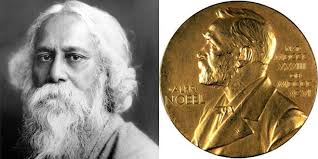
This is Rabindranath Tagore. He was a poet. He was born in Kolkata, India. He won the Noble Prize for literature in 1913.
So, we have several pieces of information. Let’s start by making a long but simple sentence:
Rabindranath Tagore won the Noble Prize for literature in 1913.
As you see, we start with the subject (Rabindranath Tagore) therefore we don’t need the pronoun ‘he’ in this new sentence.
To make this sentence complex, we just add a further piece of information about the subject, by using a relative pronoun:
who = for a person // which for a thing // where = for a place // whose = possession
The name is clearly not English, so let’s talk about his background:
Rabindranath Tagore, who was born in Kolkata, won the Noble Prize for literature in 1913.
Rabindranath Tagore won the Noble Prize for literature in 1913 is our main clause (clause being part of a sentence containing a subject and a verb).
who was born in Kolkata gives extra information but it makes no sense on its own. Therefore, it needs the main sentence to give it meaning. In grammar, this is known as a subordinate clause.
Now – we could develop this further:
Rabindranath Tagore, who was born in Kolkata which is in India, won the Noble Prize for literature in 1913.
The first subject was Rabindranath Tagore, so we used ‘who’ to give more information.
The second subject was the city, Kolkata ‘which’ is in India.
Yes, confusion ! Kolkata is a place so why use ‘which’ and not ‘where’ ?
Good question; it depends on the clause:
Kolkata which is inIndia
India is not a person, therefore we treat it as a thing and use ‘which’. Again, show don’t tell:
London, where I was born, is the capital of the UK. [object is ‘I’, a person, so we use ‘where‘.]
London, which is the capital of the UK, is where I was born. [object is ‘capital’, not a person, so we use ‘which‘]
Let’s get back to our Indian poet. The third subject is the Noble Prize … you could add more information here (awarded every year in Sweden).
Naturally, one could write endlessly, constantly adding more information about subjects but, for this exercise, just focus on a main clause and a subordinate clause.
NOW … Your turn
Subject (comma) + relative pronoun + (comma) main clause starting with a verb:
Rabindranath Tagore, who was born in Kolkata, won the Noble Prize for literature in 1913.
Make complex sentences:
Stockholm. Capital city of Sweden. Is very expensive. Is very cold in winter.
Louise Glück. Born in 1943. Born in New York, USA. Won Noble Prize for Literature in 2020. She is a poet.
Starbucks is a coffee chain. Company founded in 1971. Company started in Seattle in north-west USA. Starbucks is the world’s largest coffeehouse chain (information from Wikipedia).
Seattle is in USA. Seattle is famous for Grunge music. Many bands such as Nirvana, Pearl Jam and Soundgarden came from Seattle.
Mozart. A famous composer. Born in Austria. Died in 1791. Buried in a common grave.
Vincom Centre. In District 1 by Hotel Continental. Largest shopping mall in Sai Gon. Has many international brands such as Hugo Boss and Ralph Lauren.
Frida Kahlo was an artist. She was born in Mexico. She was born in 1907. She painted many portraits and self-portraits.
Sergei Eisenstein is a famous film director. He was born in Latvia (then part of Russia). In 1930 he began a film in Mexico. It is about the Day of the Dead festival. This festival is every year at the beginning of November.
Louise Glück – Noble Prize winner 2020NirvanaFrida KahloDay of the Dead, Mexico. Film by Sergei Eisenstein.
I met an old class on Tuesday for a speaking test, and one of the students asked me why I stopped taking that class. I thought the reasons were pretty obvious, however if you really need me to explain, how about these:
I was absolutely sick of one of the students sitting directly in front of me, ignoring everything I said because she (yes, you all know who she is) was too busy on her phone, even bringing in a power-bank to make sure she had enough battery for three hours.
‘Student’ Care have mentioned this to her, and once even sent a representative to the class to tell her to stop. It had NO EFFECT; she continued using the phone each and every lesson.
I stopped calling on her to answer in class, as I only ever saw the top of her head. No doubt someone had posted a picture of a coffee or a cat to which she absolutely had to react, immediately, or risk losing a ‘friend’ that she probably hasn’t even met.
During the test I asked her to explain the centre rules, which she totally agreed with … in theory. I followed this with asking why she broke the rules. She replied that she, “Was bored.” She claimed that she was unaware that such behaviour was disrespectful.
Furthermore, I realised that with one exception, nobody was learning anything more; the class seemed happy at their level, and were not making any effort to expand their knowledge. Every lesson I stressed the importance of pronunciation features. I didn’t detect even 1% improvement, nor even the desire to improve.
Well, how did that work out for you in the speaking test ? Not so great, hey ?
Finally, I set a ‘test’ in my last two classes with you. Remember ? I gave you speaking practice then, instead of walking up and down monitoring your activity, I treated you like responsible adults. Instead of working, out came the mobile phones and English was replaced by the less than euphonic sound of the Vietnamese language.
Previously, I had given students one-to-one help. Instead of being thanked for this individual guidance, I was greeted with, “Me, again ? I spoke to you last week.”
I hope that answers your question.
Moving onwards or downwards, my Wednesday class. Talk about laid-back, I need to check if they still have a pulse.
I’ve dispensed with social pleasantries such as, “How are you ?” as I was receiving answers such as, “I’m tired,” or “I’m exhausted.” Just what a teacher wants to hear before a three-hour class.
DRINK SOME GODDAMN COFFEE
I made it perfectly clear, in the first lesson, that I am NOT here to entertain you. YOU are here to pass IELTS, which is a hard subject and requires active participation on your part. This means SPEAKING.
If your teacher asks you a question, damn well answer
Answer loudly and clearly, not just mumble begrudgingly. I told you last night, I am here to help you, I am not the enemy. If you refuse to speak or practice you are only hurting your own prospects.
At least last night, one of the ‘students’ admitted that she lacked energy or enthusiasm but, the punchline … she wants to be an English teacher.
Now we come to tonight’s class, which contains three young men.
Your behaviour over the last weeks has been unacceptable. This is a Cambridge IELTS class, not a Beer Club, certainly not a Kid’s class.
So, here are the rules:
NO SHOUTING IN THE CLASSROOM
SPEAK ENGLISH
NO CALLING OUT STUPID ANSWERS
LEARN THE NEW VOCABULARY – YOU WILL NEED IT TO PASS
NO FIGHTING IN THE CLASS – YES, I ACTUALLY HAVE TO WRITE THIS
Not too much to ask or to expect.
If you do not comply, I will stop the lesson and refuse to teach your sorry asses
I will not let you schmucks ruin an otherwise lovely class
































 Thay Paul's Notes