once in a lifetime experience/ never to be forgotten / unbeatable prices
book now to avoid disappointment/ best decision you’ll ever make
holidays to suit all budgets, from 7* luxury to backpacking
Structure:
To begin with / furthermore … additionally / the fact is … / therefore
Demonstration with an advert for London:
Now is the perfect time to visit London, England’s glorious capital. The weather is perfect for walking, so you can enjoy the lush parks, world-famous museums and incredible, unbelievable shops. There is something for everyone … and more ! Like sports ? Go to one of the many Premier League football games. Love shopping ? Everything is here – shop till you drop ! Adore culture – soak up hundreds of years of history.
Flights from TSN airport daily. Seven-day all-inclusive package tour starting from only 50m VND ! All transfers and transport included. Air-conditioned mini bus with Vietnamese-speaking guide.
Holiday advertising vocabulary:
Try to use as many of these adjectives and expressions as possible:
Today, lots of new words to help you describe the area in which you live (the area you live in). For my classroom-students, I can listen to pronunciation and help them with natural rhythms but online students should use a dictionary with sound … then practice, practice, practice.
Vocabulary booster
Where do you live ? What’s the area like ?
Apartment block in District 2, Sai GonTwo-up, two-down houses in UKTraditional house in Jeonju, South KoreaThe Projects, South Side, ChicagoApartment in Istanbul, TurkeyLagos, Nigeria … a plan for the future ?
Remember to link words together – it’s called ‘chunking’ in IELTS language.
I live in a:
quiet, residential street. Peaceful at night.
lively and busy commercial area, many shops
dirty and dusty industrial part of town. Very noisy.
pop / rock / country and western / punk / classical / jazz / blues
Please Note: All photos are taken from Google Images or free photo sites, and are used for educational purposes only. No copyright infringement or offense is intended. If I have used your photo or image, and you wish me to remove it, just ask. This site is not monetized, I run it on my own dollar. Thank you.
eat western food cook traditional Vietnamese food ?
Today, I went to have a hair cut
(Men = barber / Women = stylist, Both = hairdresser)
Traditional UK barbers for men with red and white poleLadies hair salon
I went to a local (in the area / near / close) hairdresser. After, we went shopping and while there, we bought special beer from Czech Republic – it is my favourite, and also some junk food.
SONG:
To help you with the ‘fre’ pronunciation, here’s a song from one of my favourite bands, REM. It’s called ‘What’s the frequency, Kenneth ?’
Here’s a quick blog for a class I’m covering tomorrow. As a warm up and review, I’ll play this music as the students enter the class: https://www.youtube.com/watch?v=fHWhebFt_r0
The video has a lot of new words, so I will pause the clip and board new words. Following the video, I’ll ask these questions. Being a large class, the students can work in teams, maybe each team having the name of an animal (that should be fun for Team Monkey).
Which big cat has spots, which has stripes ? Why do they have patterns ?
What is the name of the line that goes around the middle of the Earth ?
Rain forests has two things … what ?
What fruit can you find ?
What animals live at the top of trees ?
Is Vietnam in the tropics ?
BONUS POINTS:
Why are rain forests important ?
They absorb carbon dioxide and release oxygen
They are home to lots of different wildlife
They produce water and rainfall for the planet
Moving on rapidly – Adverbs
Give me a sentence for these photos:
EXAMPLE:
The jaguar runs quickly // The jaguar with black spots, runs very quickly
KaraokeA slothReading in a library ssshhhhhhh …Buster Keaton doesn’t stand in a very safe place
How do I follow that !
The remainder of the lesson is given over to reading, the theme being a music recital, so I can lead in by asking who play an instrument (then explaining that my long nails on my left hand are for playing guitar, not for scaring students).
Test your idioms, expressions, phrasal verbs and creative writing
The hustle and bustle of everyday life, seen in this photo of Liverpool Street Station in London. People coming and going, jumping on trains, rushing to work, running around like headless chickens.
An everyday scene, with everyday expressions. This article is for you to test your knowledge of idioms, after reading the previous two blogs.
Without further ado …
Don’t just stand there ! Let’s get down to some work
Chop chop, jump to it
Write short sentences, or dialogues, using the following idioms and expressions.
what have you been getting up to ? // raining cats and dogs
chockablock // hold your horses // under the weather // chop chop // vicious circle
// can you follow me ? // a screw loose // not my cup of tea // kick the bucket //
cut and dry // turn over a new leaf // pull your socks up //
as much use as a chocolate teapot // let’s call it a day
You may not know some of the above, so just ask your teacher, or do an online search
Next up, using phrasal verbs
Write sentences using as many of these phrasal verbs as you can:
Phrasal verbs with ‘get’:
get back to studying / get on with work / get down to some work/ I get it ! (idiom) // get on with people /get on in life / get ahead in business /
Phrasal verbs with ‘make’:
make a decision / make your mind up / make a career move / a make-over / make an effort / make or break time / what do you make of it ?
Creative Writing
Scenario One: Two people meet on their first day at an English centre
Scenario Two: A manager has a meeting with a staff member who is always late
ONE
Introduce yourself // Where do they live // Why are they here ? //
What do they like ? // Compare music and films // What they plan to do //
Agree to be friends and study together
TWO
Quick hello // Reason why staff was late today //
Manager is unhappy – wants change // Manager suggests less wages //
Must renegotiate new contract // Staff has problems at work //
Staff apologies, promises to be better
You can decide what the characters are like – are they:
This blog is especially for my internet friend Silk Chatters, as she mentioned this idioms in a note. She has lots of interesting blogs, so have a gander at her page. Here’s a link to one of her blogs:
Following on from yesterday’s blog, I’ve included some more everyday idioms, this time related to work. See how many you’ve come across. To kick off, many of my students are accountants. For that occupation we have:
number-cruncher = a slang term for an accountant
cooking the books = writing false information in accountants – a serious crime
What kind of work is accounting ?
Exciting and adventurous … not really. My students complain that their work is uninteresting, boring and tedious. Idiomatically, we could say:
It’s like watching paint dry
same thing, day in, day out
same old, same old
How do you cope with pressure or cope with stress ?
I will getaway from everything = Do something completely different
I take a breather. I take five (a short break from work)
I like to let off steam by …
Ask each other: what do you do to let off steam ?
Play table tennis
Sing Karaoke
Go Shopping
Watch moviesRead a book … or many booksYoyoka, aged 8, playing drums
Idioms
Keep an eye on (watch something carefully)
under the table = to give money to someone unofficially
kick the bucket = to die (informal) Did you hear ? Old Tom kicked the bucket.
A spanner in the works = a serious problem
In the right ball park (US) = not correct but close
On the right track (UK) not correct but close
Now, practice:
That’s not right but you’re …
I had to pay … to get the paperwork stamped
Can you … on the food while I answer the phone ?
Oh, poor Mr Jones, he … last week
That’s a real problem. It puts a …
Throwing a spanner in the works. The young lady is holding a spanner
Idioms / expressions (money)
money doesn’t grow on trees
time is money
on the money = exactly right
costs an arm and a leg = very expensive.
Don’t stop working ! _________________________________
I can’t stay in a 5 star hotel, it ____________________
Be careful with your clothes, I can’t keep buying new ones _______________________ Yes, she’s always right, always _________________
New idioms / collocations
to get hold of someone = to speak to or meet someone
Hell breaks loose = will be a lot of trouble
to be into something = to like something very much
more or less = not 100% but almost.
I beg to differ = polite way to disagree
In the next blog, we’ll look at how these idioms can be used in everyday conversations
Remember: don’t get caught cooking the books – or you’ll get a massive fine.
I start my speaking classes by explaining that I do not teach English, but Englishes; how the same sentences can be pronounced in Standard English, or in my London accent, in my east London accent, in my (attempt at an) American accent etc …
For those working towards an IELTS qualification, these distinctions are point-earners. Similarly, a knowledge of idiomatic English is so beneficial, not just for boosting scores, but for making students feel they are learning real English; this is how people REALLY speak.
Have a gander at this
(This is London slang meaning take a look at this):
You telling me they’re chattin’ away in Standard English ? Pull the other one.
(Are you trying to make me believe that the people are talking in Standard Queen’s English ? I don’t believe you).
English, as you can see and hear, is a multifaceted language, and I see so many problems in listening exercises, due to speed of speech, accents and unknown words or phrases. So let’s tackle idioms – expressions you will hear everyday, from street markets to politicians being interviewed on the news.
Let’s kick off (start) with some common idioms and expressions:
bear with me = please wait a short time
seems to me = I think, I believe but I can not be certain
do you follow ? = do you understand ?
hold the line = please wait on the phone a very short time
I’ll get back to you = I’ll reply to you as soon as possible (ASAP)
the day after tomorrow = in two day’s time
hit the ground running = to start work at a fast pace immediately
24 / 7 = all day, every day
Now … practice: What idiom or expression ?
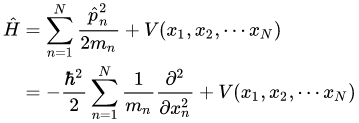
This equation is easy, right ?
“I’m exhausted, I’ve been working …”
“No, I’m busy tomorrow, how about … ?”
“Let’s all work with energy and be successful. I want us to … !”
I’ll see if the manager is in …
“Well, I’m not sure of the answer, let me … “
Work in pairs – try to make sentences using these new idioms.
PRACTICE TIME
Idioms – A random selection. Which do you know ? Which can you use in a sentence ?
same old, same old = same thing everyday, as always
stuck in a rut = no progress or change at all. Doing the same thing in life
raining cats and dogs = extremely heavy rain
chockablock = too busy to move – traffic
cooking the books = cheating with the accounts
cost an arm and a leg + very expensive
straight up = serious, not joking
pulling my leg = joking with me
learning the ropes = learning what the job involves
snowed under = very busy
let’s call it a day = we can finish work now
can you run that by me again ? = please repeat.
Team game
Teams ask each which idiom fits for:
Time to finish work // Bad weather // Stuck in traffic // Too much work
The accountant was writing false information // I am new at a job // iPhone 11 is not cheap // Sorry, can you explain again //
Everyday same thing // I must change jobs //
Are you joking with me ? // No, I am honest.
“You can believe me, mate !”
Please Note: All photos are taken from Google Images or free photo sites, and are used for educational purposes only. No copyright infringement or offense is intended. If I have used your photo or image, and you wish me to remove it, just ask. This site is not monetized, I run it on my own dollar. Thank you.
Yes, keep on Rockin’ in the Free World … but first, you’ve got to get there.
As spoken, we would say:
“First, ya gotta get there.”
So today’s lesson will be in the form of a game, a challenge or quest, if you will, where the students, assigned to one of two teams have to get from:
To …
What a prize ! The dirty filthy insalubrious streets of Ha Noi to the cozy comforts and warm welcome of east London, and my local, the Birkbeck Tavern.
Said task is achieved by earning points, said points are earned by answering questions, and using a wide range of linguistics features namely: adjectives, adverbs, discourse markers, relative pronouns, low-frequency words, expressions, idioms and, naturally, displaying a wide array of para-linguistic attributes, to wit: intonation, stress, eye-contact, body language, gestures, clear pronunciation, turn-taking and rhythm because, contrary to popular belief, when it comes to speaking English, NOT all God’s children got rhythm.
(Yes, the above sentence contained an example of non-standard English, but the vast majority of people do not speak pure standard English all the time).
Now, we have a massive task to undertake … without further ado … let’s go !
First up, a revision and practice. In the last lesson, the class learnt (a-hem!) four new words: ubiquitous, significant, consequently and, it was on my blog, extrapolate. The teams, and let’s name them after famous English explorers, Drake and Cook:
Sir Francis Drake
Captain James Cook
… the teams have to use all four words in sentences. One point for each correct sentence. However; incentive, three points for using two in a grammatically-correct sentence, five for using three words and TEN points for using all words words in one sentence. That should get them some air miles and off the runway.
Next up, the teams challenge each other. They offer points to the other side if they can use these words or expressions correctly:
however / with that in mind / quantum leap / in order to / cats and dogs / kick the bucket / therefore / dribs and drabs
It works like this. Team Drake will say, “We offer 5 points for Team Cook to use the word ‘however’ in a sentence.” If the task is accomplished, Cook gain the 5 points. If the team is unable to use the word, then Drake win the points. The skill is in guessing which words or expressions will be hard to use, and offering high points accordingly.
Moving on, creative writing. My class can use relative pronouns IN THEORY, but not so much in practice. One may even say, NOT AT ALL in practice. Thus, I will give information about our two friends from last week. The teams have to compose a short piece combining all the information, but in the form of complex sentences with relative pronouns and discourse markers.
Example:
Johnny Rotten, Real name John Lydon. Born 1956. Was in the Sex Pistols from 1975 – 1978. Formed band PIL. Changed name back to Lydon. Married Nora Forster in 1979. He was going to be on the Pan Am flight that crashed in Lockerbie, Scotland. He wrote a book, published in 2008.
John Lydon, who performed under the name Johnny Rotten while he was in the Sex Pistols from 1975 – 1978, is married to Nora Forster, and has been married since 1979. After leaving the Sex Pistols, he formed a new band, PIL, and wrote a book which was published in 2008. He escaped death by missing his flight on the Pan Am flight that exploded over Lockerbie in Scotland.
Our young lady is
Sakuri. 21. Born in Tokyo. Studies History at university. Works as waitress. Wants to be a film star. Has two sisters. One sister elder, one younger. Her father is a piano salesman. Mother designs clothes. Sakuri likes reading, films, anime, shopping, going out with friends. Uses Apple iPhone X. Always on Instagram, FB, and Yalo. Is learning English.
Haruto. 23. Born in Okasuka. Left school at 16. Plays keyboards in a band. Likes Beethoven, Jazz and Elton John. Works different jobs. Was TA in a school but was sacked after four hours. Has no siblings. Father left home when Haruto was 4. Mother works 6 days a week in a factory. Uses Samsung Galaxy. Hates social media sites. Listens to music all day.
Points awarded for creativity and relative pronouns and complex sentences.
And now for something completely different: London.
Quick-fire round: I want a list of three. Start a sentence and give THREE examples
In London, you can eat British food …
In London there is public transport …
London has many famous buildings …
There are many famous football clubs in London …
Plan a day for my friends Tina and Michael:
I have two friends arriving in Sai Gon. They want a typical, authentic experience. Plan a day for them. It must include:
Breakfast
A museum
Somewhere for a snack
An interesting building or location
Lunch
Souvenir shopping
Something to do in the evening
Give tips and advice.
How do they travel around ? What are the pros and cons ?
What are their options and estimate the prices.
Try to use as much new vocabulary as possible, words and expressions.
Finally, pronunciation. I will show Drake and Cook a clip from ‘Twin Peaks’. The teams, all members, have to imitate or copy the voice, gestures and intonation. Points out of 50 for this task.
The quote is, “Wait a minute, wait a minute. You know, this is, excuse me, a damn fine cup of coffee.”
And that, as they say, is a wrap. The remainder of the lesson can be devoted to book work, possibly, had-outs, unlikely, or general chit-chat, undoubtedly. Who says English can’t be fun … probably my students !
a quantum leap (which allowed me to introduce the idea of quantum mechanics into an English class). My centre is a business, so needs to generate revenue which is accomplished by getting as many students as possible. This is especially vital after the enforced lockdown.
Stock photo from Google, but it depicts social distancing
However, not all students who enter an IELTS class are IELTS material … but that is another matter. I’ve decided to treat this class, which I really enjoy, as an IELTS class. Therefore, I push them to use language and style employed at that level.
To come to the crux of the matter, I set a relative pronoun test in the aforementioned class. Everyone was able to do the lesson, the theory, linking two or three pieces of information into a longer, single complex sentence. For example:
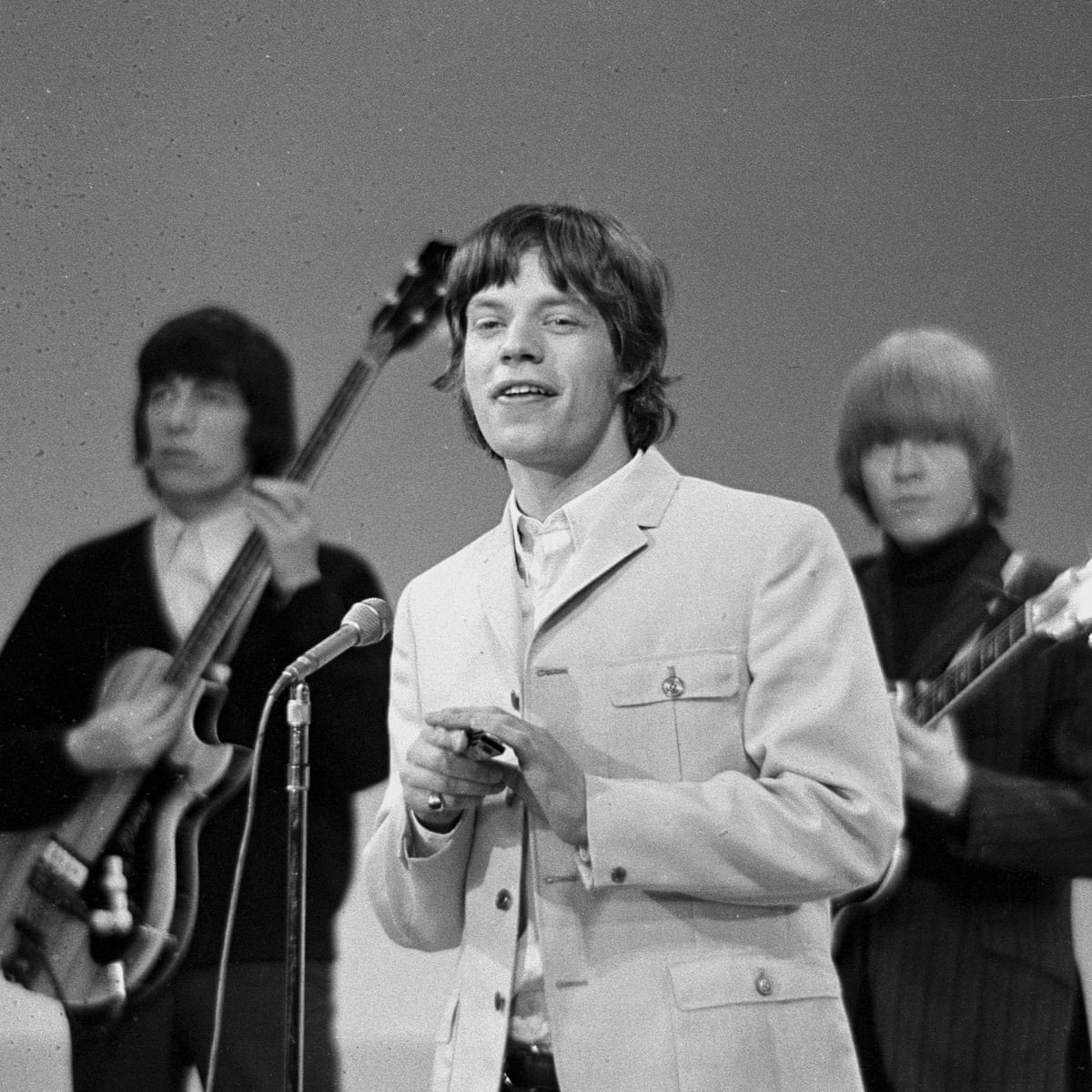
Mick Jagger is in the Rolling Stones. He was born in London.
Mick Jagger, who was born in London, is in the Rolling Stones.
However, during the free practice session, the students reverted back to simple sentences.
Allow me to elucidate … wherever possible, I avoid working directly from the book, or using handouts (although that would save me about 80% of my dwindling energy). Instead, I look at the book, see what subjects are to be covered, and incorporate them into my blog.
Naturally, this only works with ‘top cat’ students, those who are motivated and willing to work (and I’ve noticed, telling students we will not be using the books boosts moral and energy off the chart).
I’m not allowed to film inside my campus, so here are some top cats 🙂
To return to the case in point; the students can understand the grammar in theory but totally forget it, in practice, and Tuesday’s class afforded ample opportunity to practice. I showed a picture of a young beautiful Asian lady and a young Asian guy … here, see for yourself:
I wanted to the class to be creative, write a backstory for the two characters (the theme of the lesson was relationships), how they know each other, what are their jobs, how they get on together.
The class, which is only small, elected to work together and I was heartened to see Ms X, who normally spends the lesson playing with her phone, taking an active part and volunteering answers.
The upshot was that the beautiful Asian lady was a model, the guy a photographer and both were Japanese. As to be expected, this being a teenage class, someone (you know who you are) said they went to a hotel … but maybe so – in order to do a photo shoot.
From a teaching point of view, I was disappointed that in their speaking, they didn’t apply relative pronouns, enough adjectives or adverbs, all points that will be addressed in the next lesson … and covered in my next blog.
May a say a heartfelt THANK YOU to everyone who visits my site and scrolls through the posts.
What are your first impressions of the man above, Mr Bob Dylan. What do you think of first – his appearance or his personality ? Probably the way he looks.
First impressions count
Today we’re having an advanced class using new words and expressions to describe both the physical and personality attributes of famous musicians.
So, as a warm up, how would you describe Mr Bob Dylan ?
Start with his looks, which are more factual, though subjective (i.e. to some young people, he will look ancient, while to older people, he may look distinguished and wise).
Then, tell me what you think he is like. You probably don’t know Mr Dylan, personally, so you can’t say, “He is incredibly friendly,” or, “He is extremely stand-offish.”
Therefore, you must employ opinion phrases:
He seems to be …
In my opinion …
I don’t know him personally, but I would say he is …
However, would it surprise you to know that Mr Dylan won the Noble Prize for Literature in 2016, and that his music has been unbelievably influential all over the world ?
Mr Bob Dylan receiving an award from President Obama
Your Turn:
I will show you some photos of rock stars, and you will practice sentence building. tell me what they look like, and what you think they are like as people. Can you explain why ? Finally, to practice complex sentence, I will give you basic information, and you have to incorporate these facts into long sentences using discourse markers and relative pronouns.
normal-looking // weird- looking // looks more dead than alive // bags under eyes
How would you describe these rock stars ?
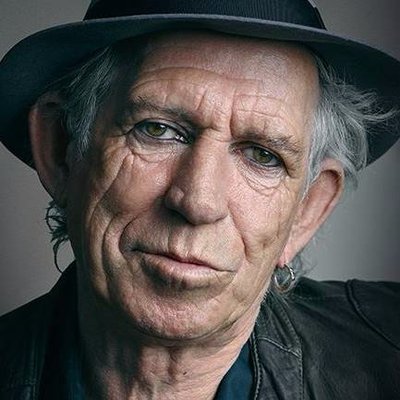
David Bowie 1947 – 2016Keith Richards of The Rolling Stones born 1943Jerry Garcia of The Grateful Dead 1942 – 1995Robert Johnson, legendary Blues man 1911 – 1938Dolly Parton born 1946Johnny Rotten (John Lydon) born 1956
Johnny Rotten, Real name John Lydon. Born 1956. Was in the Sex Pistols from 1975 – 1978. Formed band PIL. Changed name back to Lydon. Married Nora Forster in 1979. He was going to be on the Pan Am flight that crashed in Lockerbie, Scotland. He wrote a book, published in 2008.
John Lydon, who performed under the name Johnny Rotten while he was in the Sex Pistols from 1975 – 1978, is married to Nora Forster, and has been married since 1979. After leaving the Sex Pitols, he formed a new band, PIL, and had a book published in 2008. He escaped certain death by missing his flight on the doomed Pan Am flight that exploded over Lockerbie in Scotland.
Look at how much information I pack into the first, complex sentence:
Name – John Lydon
Stage name – Johnny Rotten
Band name – Sex Pistols
Time of band – 1975 – 1979
Marital status – married
Wife’s name – Nora Forster
How long married – since 1979
Now – how does he look ? Friendly ? Sweet and quiet ? What do you think ?
Make complex sentences:
David Bowie born 1947 and died 2016. Born in Brixton, south London. First big record was ‘Space Oddity’ in 1969. Record was in the Top 5. ‘Ziggy Stardust’ was released in 1972. It was incredibly influential. Many musicians say it is one of their favourite records. In 1976 he was in a film called ‘The Man Who Fell To Earth.’ In 1977 he moved to Berlin, Germany and made two important records, ‘Low’ and ‘Heroes.’ He was married to the super model Iman. She is Somali-American. Bowie made records up until his death in 2016. He died of Cancer.
Choose a musician; what do you think they are like ?
Which one would you like to meet, and why ?
Which one makes music you would like to hear ?
If these musicians are too old for you, tell the class about your favourite modern musician. Is it …



























































 Thay Paul's Notes