This listening is quite hard, but the website allows you to pause and replay, as well as seeing the text.
New vocabulary: attractions – famous sights, places to visit
guide – a person to show you around a building or area.
fantastic – adjective meaning very good
I’m sure that .. – to be certain or to be 100% . I’m sure that it will rain today.
not my cup of tea – idiom meaning I don’t like it / it’s not my interest
What would you like to see in London ?
What do you think of … ?
New vocabulary
exciting / interesting / stressful / expensive / scary / historic / crowded / exclusive / unmissable / world-famous / intimidating / not my cup of tea (not what I like) /
From the top = to start at the beginning.
As you can see
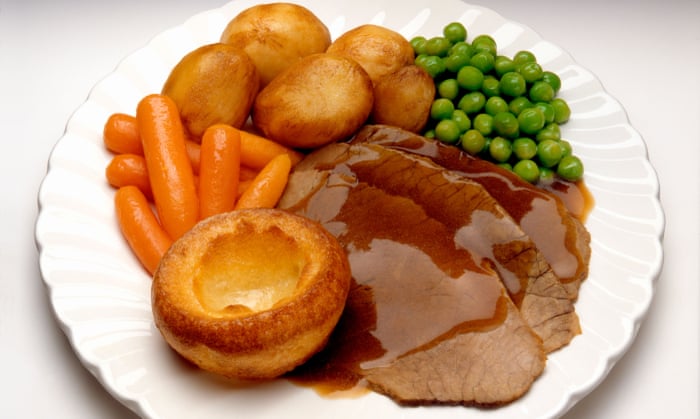
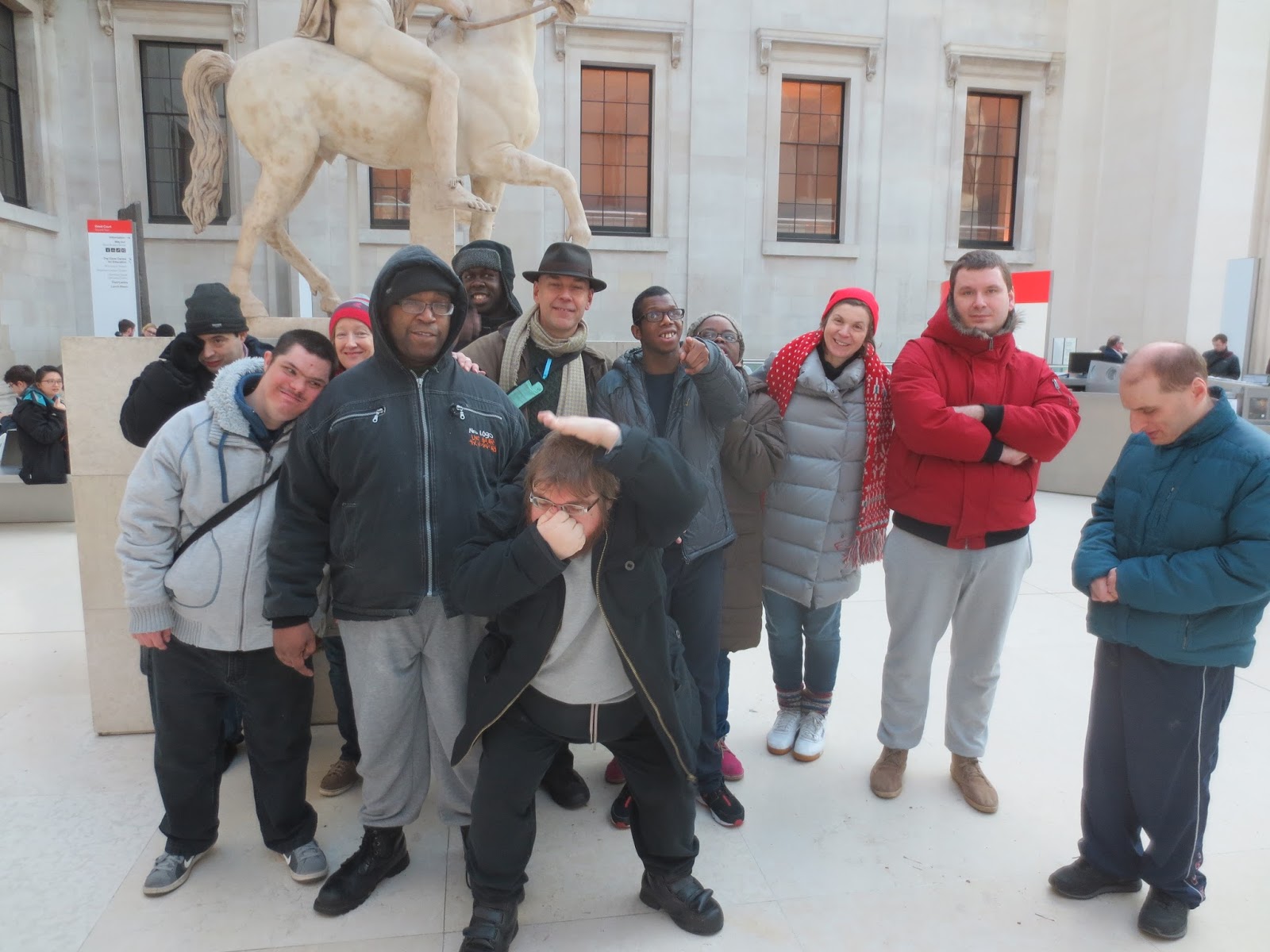
Tourists at The British MuseumOxford Street for shoppingDocklands, a new financial district with expensive housing Street food in LondonA walking tour, with a guide, around old London
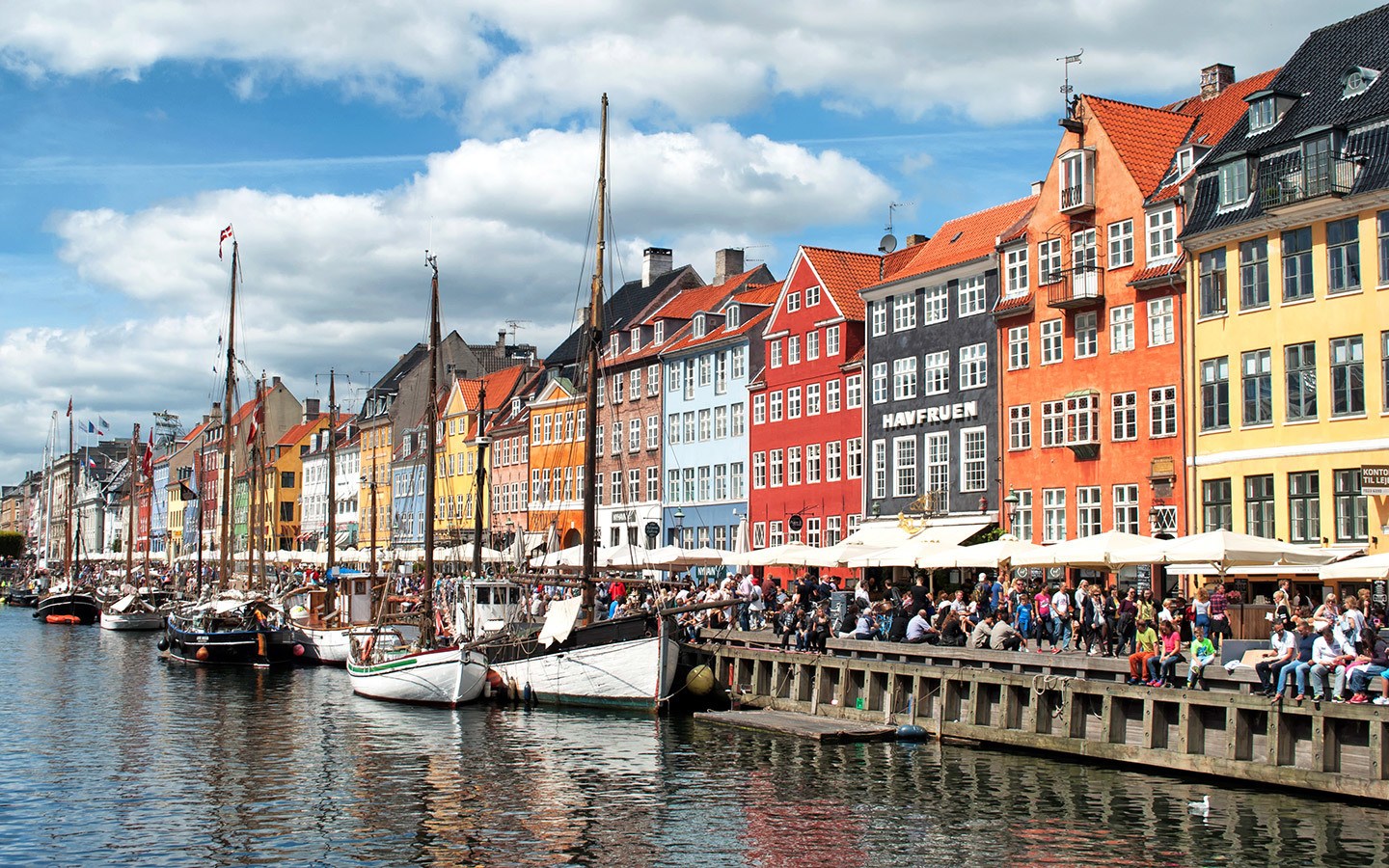
Look at the four photos. What do you know about the four places ?
What do you need to think about ?
They are all capital cities … will that make them cheap or expensive ?
Do they speak English there ? What is the temperature in winter and summer ? How would you find information ? What do you like to do on holiday ?
Extra activity – describe the photos in as much detail as you can. Use adjectives and make your voice sound excited (or unhappy).
Buenos Aires, capital of ArgentinaNairobi, capital of KenyaMoscow, capital of RussiaCopenhagen, capital of Denmark
Work in pairs – write or talk about these points:
Before I go – what do you need to do ?
While I’m in ________________, I’m going to _____________
Are there any places you don’t want to visit ? Why not ?
Pros and cons (good andbad points)
Buenos Aires:
Very colourful city with interesting buildings. Cheaper than some western cities.
In South America – could be a long flight (my class is in Vietnam). Language is Latin – American Spanish.
Nairobi:
National parks and museums. Some great food and can be cheap. English spoken.
Not very safe at night. Insects and bugs plus bad hygiene in some places.
Moscow:
Amazing culture and architecture. Generally safe for tourists. Lots to see and do.
Can be very expensive. Can be bitterly cold in winter. Most people have just basic or no English.
Copenhagen:
Friendly people, small city can be explored on foot. Great beer and healthy, fresh food. High quality standards. English widely spoken, like a second language. Safe.
Is notoriously expensive. Can be very cold and wet in winter. Very long flight (from Viet Nam).
Ask each other what they like best, where they would probably go, where they probably won’t go !
Advanced levels:
To practise complex sentences, make your own answers
The four cities are all interesting in their own way, but if I had to choose just one, I think I would probably select Nairobi in Kenya.
Firstly, I have never been to Africa and it look so different to Europe and Asia. Seeing those beautiful giraffes just walking past the window must be an amazing, unforgettable experience.
Secondly, I know that English is widely spoken in Kenya, so there should be no language barrier even though I expect a lot of culture shock.
However, I expect the heat will be a serious issue, so I must pack a lot of powerful sun cream, sunglasses and a hat. Additionally, i don’t really know much about the city, so I will have to read up.
In conclusion, I feel all cities offer something amazing but my choice would be Nairobi. I’m sure I will have an incredible time in Kenya.
The Beach Boys exemplified the American dream of fun, fun, fun !
You are going to the USA. How will you prepare ?
Before you go
What do you need to do ? Use the following words to build long sentences with linking words (also, as well as) and adverbs (extremely, absolutely, quite):
Meeting the locals is part of the travel experience
[A ‘gap – year’ is when young people travel before, or during, their university studies. It creates a gap – a space – between school and university or between the three or four years of study.]
Make a short presentation – what do you think of the items ?
Which do you consider to be:
essential / useful / unnecessary / a waste of space ! / totally useless
You are allowed to choose five items – which would you choose and why ?
GRAMMAR
‘Have to’ and ‘must’
When packing, which items do you HAVE TO bring ? Which items MUST you bring ?
Remember: have to = requirement // must = personal choice
EXAMPLE: to travel, I have to bring my passport and I must buy some shampoo.
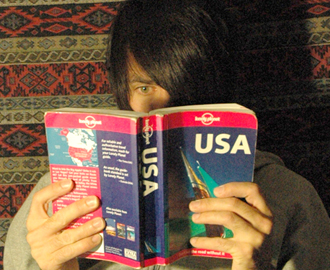
Travelling to USA
Make a list. Be sure to include paperwork, important personal items and non-essential personal items.
these are a great way to build up your English skills; not only will you learn new phrases, but you will also develop linking skills in speech and thereby acquire a more natural speech pattern.
Yes, I know it takes time and a lot of practice … but it’ll be worth it.
The previous post focused on the verb ‘make’. Today, we’ll turn our attention to the verb:
Take
Do you know these collocations ?
turns speaking // it up with the manager // up my trousers a little //
a good look at yourself // a hike ! // medicine // a deep breathe
Which would you use for:
1 You have a complaint at work.
2 You buy some clothes but they are too big.
3 You want to tell someone to go away !
4 try to be calm and relax.
Moving on, some everyday collocations
What do these collocations suggest ?
Widely available // routine check-up
disperse the crowd // boost employment
catch up with the news // catch up with friends
Which would you use for:
1 We hope the new factory will …
2 Police were called to … because there were too many people.
3. I’m going to my old university and …
4. Let me watch BBC and CNN, I need to …
fresh fruit and vegetables are widely available in Sai Gon and Vietnam
Find longer definitions for these collocations.
Adequate supplies to meet demand
Revised edition
Cause insurmountable difficulties
Major turning point
Set realistic aims
1) Enough things so that everyone that wants one can have one
2) Know what you want to do but it must not be too much for you to be able to do it.
3) Make problems which people will not be able to solve or cause problems that people are not able to work properly.
4) A very important moment when things changed completely
5) A new book, similar to the old one but with more up-to-date information, or mistakes have been corrected.
New iPhone on sale at the Apple Store … but will there will adequate supplies ?
As usual, I use bold font to highlight words, expressions and idioms that students can learn and then use in their everyday speech. Remember, some expressions are only used in some situations, but an IELTS instructor will always notice an attempt to use a wider variety of English.
Next week, one of my IELTS classes has their speaking test therefore this blog will help, I sincerely hope, to prepare them, and enable them to achieve a commendable result.
With that in mind, tonight’s class will just be practice, practice and … more practice.
I try to relax my students by telling them that passing IELTS is easy (that normally gets their attention). I have to elaborate; IELTS is easy because they
TELL YOU WHAT THEY WANT TO HEAR
Namely, vocabulary, grammar, pronunciation and para linguistics (body language, eye contact, stress, intonation, rhythm) and fluency (the ability to speak without overlong pauses) as well as answering the question relevantly.
Let’s break that down:
Vocabulary: low-frequency words // idioms // expressions //
Structure: complex sentences employing discourse markers and clauses
Let’s kick off with complex sentences. Here’s a link to a previous blog regarding just that subject; there are a number of exercises for students to practise:
The above blog gives an example of answering a question about laptops, then allows students to compose their own response on subjects of their choice.
Finally, here are some expressions that can be used to ‘spice up’ a student’s talk as they are all everyday phrases though some will be UK-specific as they are part of the common culture:
Not my cup of tea = a polite way of saying you don’t like something.
I can take it or leave it = have no strong feelings about something.
I’m really into it = like or love something very much.
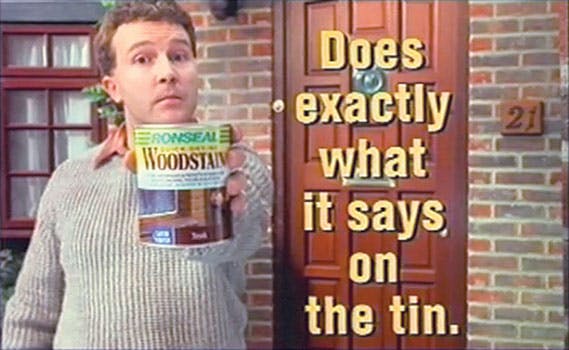
It doeswhat it says on the tin = something that does the job, no more, no less (this is from a UK TV commercial).
Vocabulary game:
To pracise using low-frequency words, put students in teams, giving each team a set of IELTS words (or phrases, idioms). They have a set time, maybe a minute, to use as many as they can, speaking about any subject they choose.
Some students may prefer to be given a set topic, so choose typical general subjects such as shopping, food, their city or country, free time etc.
Words and expressions are:
ubiquitous // somewhat // not my cup of tea // significant or significantly // I can take it or leave it // exhausting // challenging // miserable // having said that // I’m keen on // all in all // consequently // allow me to explain // eventually // thrilling // put up with
Rewrite the following texts using new vocabulary, phrasal verbs or idioms, where appropriate. Feel free to change verbs into continuous. Correct the mistakes and use better syntax (sentence structure).
Tips:
Use clauses to combine sentences about the same subject.
Use ‘however’, ‘having said that’ etc in place of ‘but’.
Incorporate any new language style you have learnt on the course e.g. negotiation language, polite language, and see if you can use alliteration (words beginning with the same letter).
Warm up: Here’s a short exercise. Try to rewrite using as few sentences as possible, which will entail employing complex sentences, linked by discourse markers. An example answer follows.
My friend will come to visit me. In HCM. I will show him city. In my city is many things to show him. Him like market. I show him market. And restaurants. And museums. Many museum in HCM. I hope he will likes.
My friend will soon pay me a visit here in Ho Chi Minh City and there is such an abundance of things to see and do, for example my friends enjoys markets therefore I shall take him to several, followed by some great local food in one of the countless restaurants. Additionally, he adores museums and we are spoilt for choice here with many fascinating exhibitions.
Now … your turn.
Firstly, this is one large chunk of text, no paragraph breaks, so organise the writing.
Avoid repeating the same word or words. Use a thesaurus to search for synonyms.
I’ve started you off with two example sentences however, the rest is up to you.
My name is Tony. I am 23 years old. I am a accountant. I very much don’t like my job. It is not exciting. Because I do the same thing every day. All day. I like travel. I like Thailand. I very want to go there. At there I can eat food spicy. I like football. I don’t like baseball. Sometimes I watch on TV football. I like very much listen music. I play piano. I play recorder. My friend asked me to be in his band but his music I don’t like. He is my friend. His music is horrible. He is very bad guitar man. I live in HCM. I don’t like sometime. Now it rain every day, very heavy. We have to live with bad rain. Every day. The traffic is bad. Much motorbikes. Air very not good. I like to shopping. I buy shirt. I have many shirt but I buy more shirt because I like shirt, I have red blue green yellow shirt and black. Today I gets email. Email is from friend. I have not see friend for long time. I was surprise.
My name is Tony and I am 23 years old. By profession, I’m a accountant. However,I don’t like my job very much . I do the same thing everyday so It is not that exciting.
I like travelling and I really want to visit Thailand where I can eat spicy food as well as seeing golden temples.
Who knows … maybe if you keep writing, you will become a Noble laureate like our writers
Job – // What do you do ? // What line are you in ? // where they work
where they live
how long they have lived there (present perfect)
are they married ? If so, do they have children ? How old are they ?
the weather- // Do you think it will rain later ?
NOT about money, religion, why NOT married, or don’t have children.
To answer:
Oh, really // You don’t say right ! // That sounds interesting // Tell me more
Wow, fascinating // Do you like your job ? // How long have you been married ?
How old are your children ? Do you have a photo ? // What are you studying ?
Practice:
In a new class, ask each other some general questions. This is best done in pairs, so students don’t feel embarrassed speaking in front of the class. See how long you can keep the conversation going.
Fell free to add new questions.
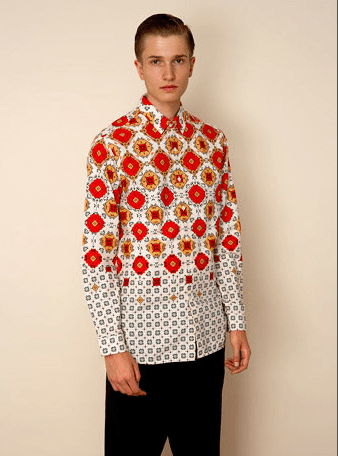
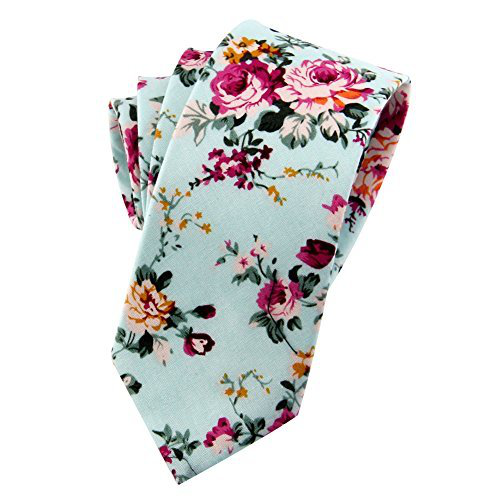
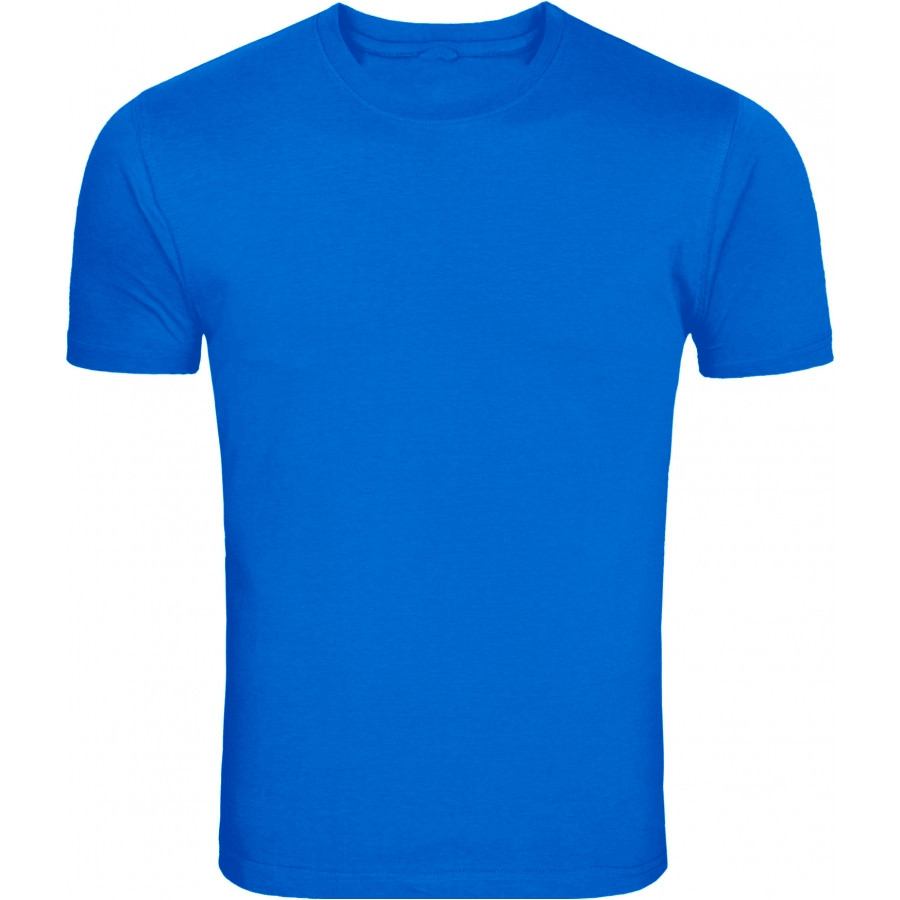
Clothes
Which clothes do you like ?
Express what you feel about these clothes, whether or not you would buy them, or do you know someone who would like them ?
Vocabulary:
I choose the because it’s …
stylish // cool // beautiful // colourful // great quality // chic // really suits me
fashionable // trendy // so modern // really with it // I feel a million dollars //
however, you may feel it is …
expensive // ugly // gaudy // bad taste // not my style // old-fashioned // hideous //
Today’s blog, or activity sheet, is about persuasion; the ability to change someone’s opinion or make them do what YOU want THEM to do. This is known as having ‘the gift of the gab.’
This skill is mostly associated with salesmen who, without cheating or lying, make their product sound so wonderful that you simply HAVE TO buy it … and then you get home and realise you have parted with your hard-earned money for something you don’t want, don’t need and will never use.
Before we kick off, let’s roll out some new expressions:
One born every minute = negative, means that the person is an idiot, who bought something useless.
He/She saw you coming = negative, means the seller thought you would buy the poor quality item or pay too much for it.
Paid over the odds = negative, means paying too much for something.
Could sell sand to an Arab = positive, means the seller is so persuasive, he could sell anything to anyone (here, people who live in the desert do NOT need to buy sand).
Unique = positive, only one or something totally different and special.
Examples:
You paid £50 for that shirt ? He must have seen you coming !
The hotel was $75, I think I paid over the odds.
She’s such a great seller, she could sell sand to an Arab.
I can’t believe he though it was a real Rolex watch … for €30. Oh well, there’s one born every minute !
Activity
Welcome to
Mr Paul’s Wonderfully useful store
Here, you can find all sorts of incredibly useful and wonderful items.
The students have to practise their selling and persuasive skills, in order to sell these … ‘wonderful’ … items. As always, an example:
One grey sock
A truly wonderful sock (one), almost nearly perfect
Ladies and gentlemen, step right up, I have an absolute unique items for you. As you see, I have, just today ONLY, one beautiful delightful almost never-used silver-coloured sock, perfect for men, women or even children, yes, they can grow into it !
This amazing item, one of a kind, can be used for so many things, for example … have crying children ? Simply put the sock on your hand and … a PUPPET ! Guaranteed to stop all tears. Been shopping and have so many dirty, heavy coins ? No problem, simply put the coins in the sock. Having a party ? What would look better than this magnificent sock hanging proudly above the door ? Can use it for Christmas, Thanksgiving, Tet Holiday, Easter, Passover, Ramadan, Birthdays, Weddings … you name it … You CANNOT live without it …
You can have this priceless item for just £100 … OK, to you, today only … £75
Now … your turn
Write a ‘sales pitch’ for one of these items, think of some uses for it, then set a price. Try to convince your classmates to buy your unique item.
Some ideas for uses are at the end of the blog
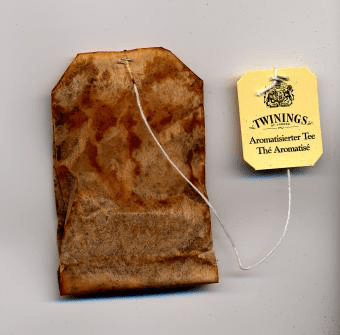
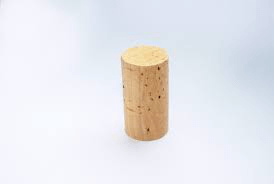
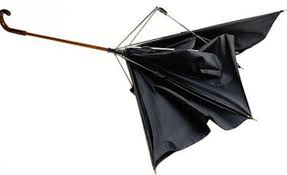
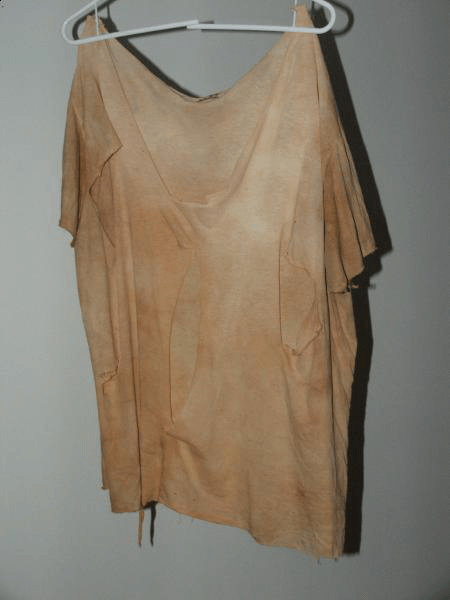
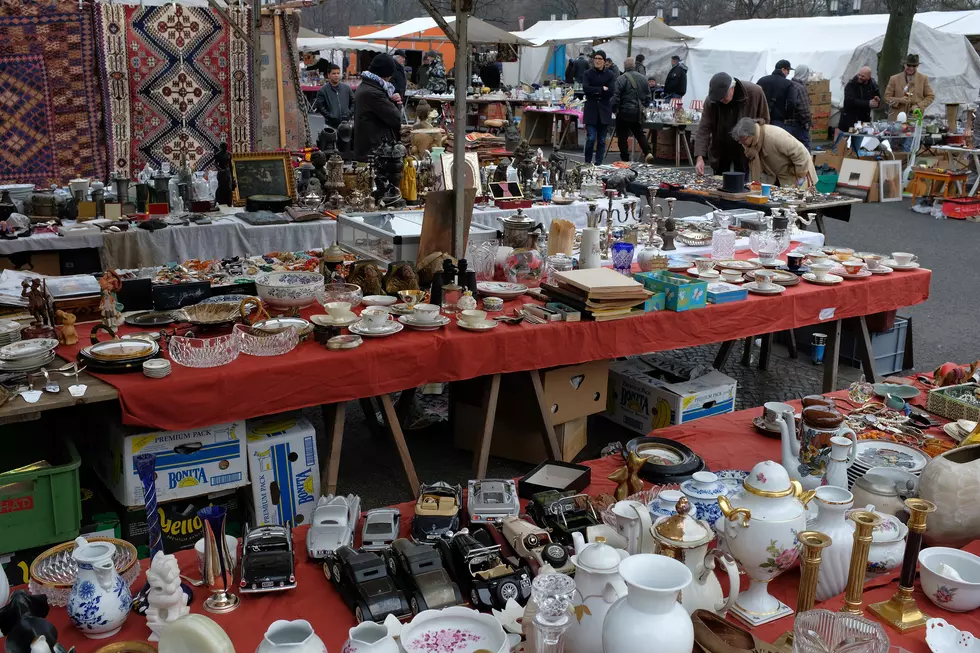
One old Tea-bagOld wine bottle corkOld banana skinBroken old umbrellaLovely old T-shirtA flea market where people can sell … anything. One person’s junk is another person’d treasure
Tips and ideas:
teabag – mint tea – gets rid of spiders & mice : put on eyes to reduce puffiness
A lesson designed to encourage speaking and student interaction, especially useful for upper-intermediates or IELTS students, who are expected to be able to speak for two minutes fluently, with a good range of vocabulary, a knowledge of phrases and expressions, not to mention said speech to be delivered with pacing, rhythm and intonation. Furthermore, as previously demonstrated, long, complex sentences with ideas linked together with discourse markers.
Without further ado … let’s take in a movie
(to take in a movie = to go and see a movie, as opposed to watching a DVD, streaming etc)
Vocabulary
I prefer / choice / my taste / not my taste / trailer / concession stand
all-star cast / director / film studio / controversial/ family film / book online
What’s on at the cinema ? What’s playing this week ? Not my cup of tea.
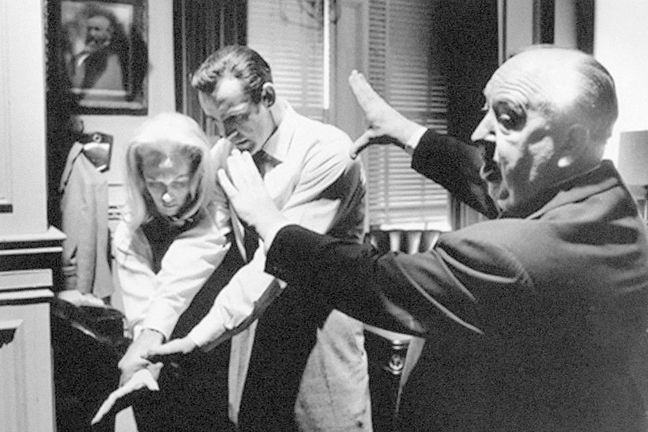
ACTIVITY 1: Use some of the words or expressions to talk about these photos:
Example
Alfred Hitchcock, a famous director from London, is demonstrating to the cameraman what shot he wants. Hitchcock was born near my house in east London and went on to work in Hollywood with all-star casts. However, I prefer his early films made in the UK although the famous or infamous film ‘Psycho’ is one of my favourites despite being extremely controversial.
Now … your turn
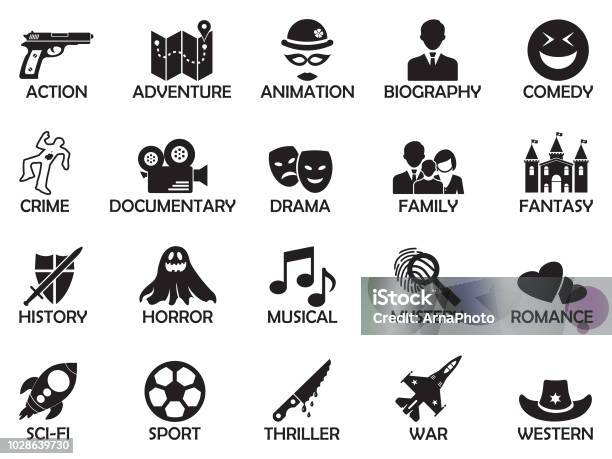
Activity 2:What types of film can you name ?
Horror // Action Stories // Sci-fi // Drama // Thriller // Romance // Biopic // Comedy // Western // Animation (Anime) // Musical // Documentary // War //
Stories about people’s lives and emotions // Space films, or films set in the future // Films about fighting and soldiers // Stories about real famous people // Loud, exciting films with explosions and fast cars // A cartoon, illustrated film // True stories with real people, not actors // Stories about police or spies or crime // Scary films about ghosts or monsters // A film about cowboys, set in USA // Love stories // Funny films // with singing and dancing
Which genres are these ?
Which do you prefer ?
Prefer– to like one thing more than something else
I prefer drinking coffee to tea
He prefers living in Sai Gon rather than Hanoi
The students prefer the small room
Activity 3:
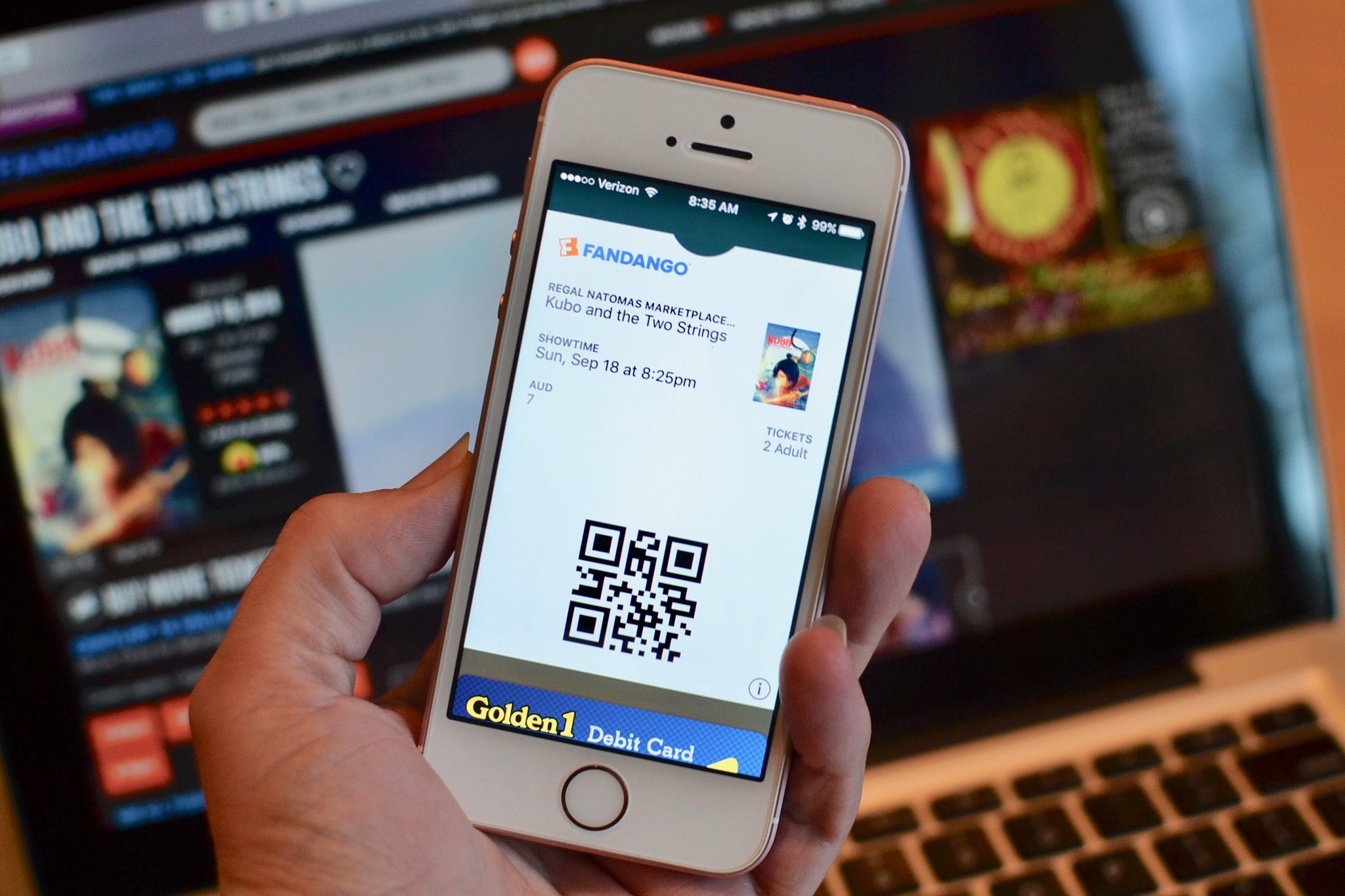
Look at an up-to-date cinema listing. Discuss what is on this week. Which films (if any) appeal to you ?
Which do you prefer ?
Going to the cinema, watching a DVD or streaming a film online ?
What are the advantages or disadvantages to each one ?
Must or have to ? Revision
The new Spider Man film may be sold out. We ______ buy tickets NOW !
I hate comedies ! Do I _____ to go ?
You _______ eat too much popcorn; it’s bad for you.
You ________to be over 18 to see this film
You don’t ____ to bring your passport to get intoa cinema in Viet Nam.

















/african-american-neighbors-greeting-each-other-over-fence-137924297-5a9863920e23d900370c683e.jpg)














![Why going to the movies is [occasionally] worth the money | DECU](https://www.decu.com/media/uploads/_1014x676_crop_center-center_50/faimily-at-movies_180302_124426.jpg)