A step up in the musical education of my younglings. After teaching them to say … to scream, “I feel good,” a la James Brown (because I cannot stand the pre-programmed, “I’m fine,”) we’re moving on to one of my favourite bands: The Smiths. This song has a reference to clothing albeit in rather high-level English. However, the motivated students, with repetition, can absorb so much and really boost their vocabulary. So, without further ado … The Smiths with ‘This Charming Man’ : https://www.youtube.com/watch?v=cJRP3LRcUFg
The lines in question start at 0:45 – 0:51
“I would go out tonight but I haven’t got a stitch to wear.”
This means that the singer doesn’t has any nice clothes to go out or has no money to buy new clothes
Play the song and the younglings have to shout out every time they hear the lyrics.
Which brings us to the theme of safety and the book work for the Saturday Class.
E up U 2, L 1
British culture
As a break, a little introduction to the UK and its history and traditions. The beginning of November sees Bonfire Night or Guy Fawkes Night
In 1605, a group of men wanted to kill the King of England, James I. They wanted to blow up the building where the King was going to be, so they hid 36 barrels of gunpowder under the building. However, the King’s soldiers found one of the men, Guy Fawkes, and arrested him. The King was safe ! To celebrate, people made giants fires called bonfires : https://www.youtube.com/watch?v=Wnq7aqHLCSM
Start and play up to 0:52 to explain the background, then from 3:25 and have the class copy the children in the video. This helps with pronunciation as well as learning new words, and learning about Britain.
We still do this today. Also, children help to make a Guy Fawkes from old clothes and old bags, and then adults put it on the fire. Finally, there are fireworks, sometimes at home, sometimes in parks so everyone can see.
Many different types of fireworks are used:
Some young children are holding sparklers – they have to wear gloves and be VERY CAREFUL.
Warm Up: A kinetic run ‘n’ write exercise. I will say a simple sentence in the present tense; students have to write the past tense. Class can be split into two or three, depending on size, each with a different colour marker.
You act in a play / I ride an elephant / She win a competition / He read a big book / We learn English /
In English, we often talk about what we were doing at some time in the past.
For example:
Last night I was in a café drinking coffee.
We show past tense by
1 a word or words that show the past e.g. Last night, yesterday, this morning
2 the past tense form of the verb e.g. I am = I was / he is = he was
Then we use a continuous verb to say what someone was doing i.e. verb+ing (playing, reading, working)
Last night he was in his room playing guitar.
Yesterday she was at school writing in her book.
Last week they were at a party singing songs.
How did the children feel ? They felt …
Now we can use past simple and past continuous:
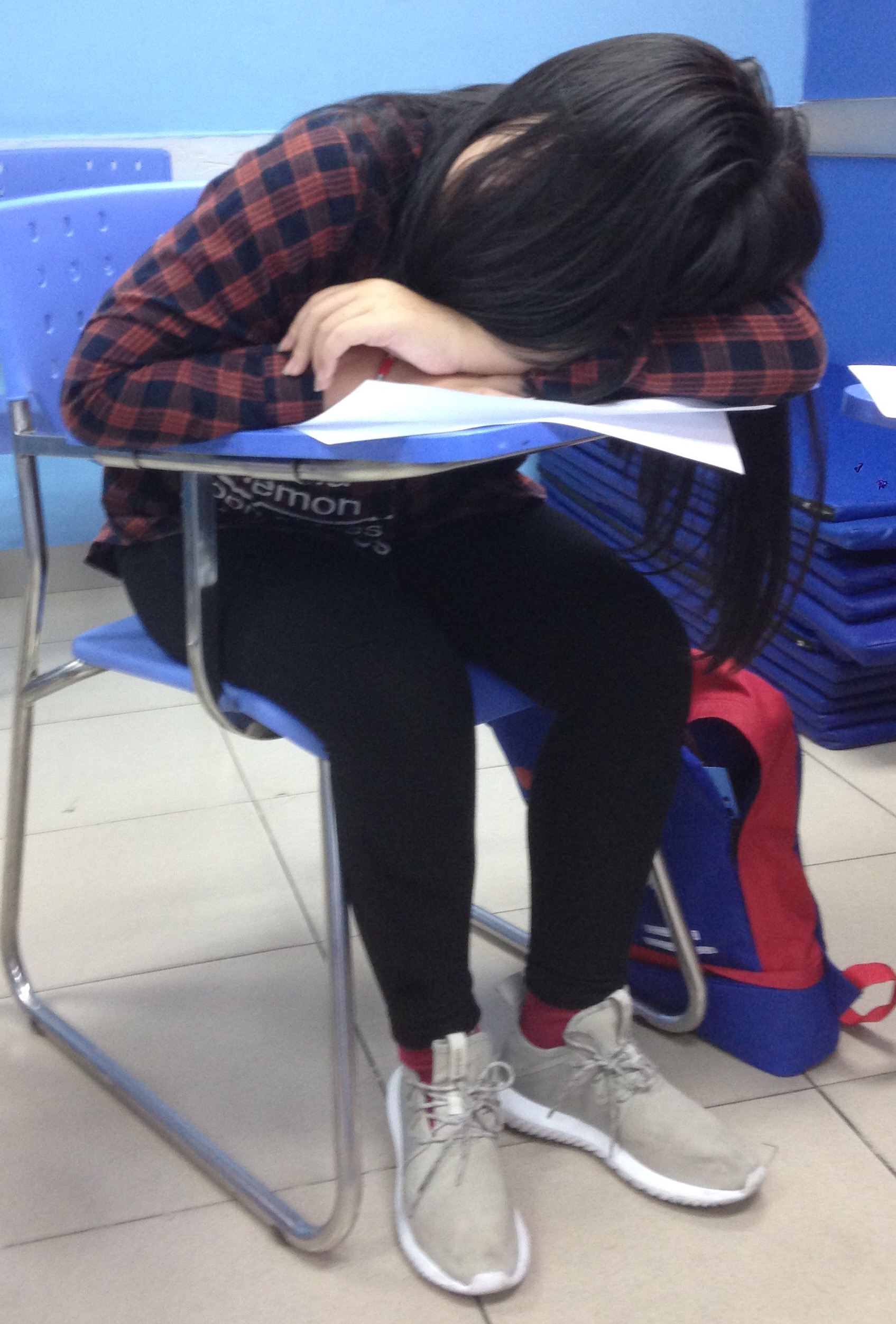
When I came to class, the student was sleeping.
When I called my sister, she was studying insects.
When I found my friends, they were looking at the stars.
Now … Your turn
When I found my friends, they were …
To make your English more interesting, we can change the word order:
When I found my friends, they were collecting leaves
They were collecting leaves when I found my friends
NOTICE: no comma in the second sentence
Change the word order:
When I found my friends, they were identifying trees
When I found my friends, they were picking strawberries
When I found my friends, they were finding animal tracks
Please Note: All photos are taken from Google Images and are used for educational purposes. No copyright infringement or offense is intended. If I have used your photo or image, and you wish me to remove it, just ask. This site is not monetized, I run it on my own dollar. Thank you.
A new class, new students, so let’s hit the ground running, get the students mixing, talking to each other and up from their seats. I prepared a questionnaire. They have to interview different classmates and learn a little about them
Gather information about your classmates
Question
Name
Response
Why are you studying IELTS ?
Where would you most like to visit and why ? Would you like to live abroad ?
What is the hardest thing about learning English ? How do you solve this ?
How often do you use English ?
Do you read, write or speak at school or at work ?
What do you most like about western culture or countries ?
What idioms do you know ?
This lead into the idiom it’s raining cats and dogs which most students had heard (it means raining heavily).
Today’s lesson is based on types of housing and areas; some extra terms:
gritty / industrial
quite / safe / residential
boring / peaceful / suburban
bustling / vibrant / city centre
Which would you apply to these:
All photos are from the UK
Ask each other about your hometown or your neighbourhood.
A compilation of videos about Viet Nam for use in class. Some clips are made by westerners, other by Vietnamese speaking English. The clips can be used for listening practice, learning vocabulary, pronunciation, or just to learn more about the country.
I agree totally // I agree to an extent // I’m not sure I totally agree // That has not been my experience // She is spot on ! // She is over-simplifying // There’s an element of truth in what she says // She’s talking nonsense !
A database of idioms that my physical classes covered previously as well as new idioms plus a reminder of some low-frequency words that are guaranteed to impress the examiner. Let’s kick off with some vocabulary building:
cf is Latin for ‘compare’ // e.g. is Latin meaning ‘for example’ // i.e. is Latin for ‘that is’.
Now …
Complete the sentences:
If you learn English you will increase your job ____________
Nowadays, most young people are _____________ _________________ . They are able to use programs such as Word, ___________ & ________
When selecting a university, you may have to be ______________ in case you don’t get into your first choice.
Getting a great, well-paying job is essential if you want a high ________________________ .
One student moved to Boston where the temperature can drop to below freezing. He’s really having ________ to the new culture.
My actor friend is busy 24/7, attending parties, setting up meeting, pitching ideas and Tweeting. That guy is constantly ______________ .
Class Game
Split class into two teams. One team selects a word or phrase and the other team has to use it, correctly of course, in a sentence. Bonus points for throwing in any appropriate idioms.
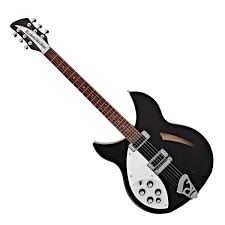
I would love this guitar which is a left-handed Rickenbacker, a famous American company with a very distinctive look and sound, yet, to my dismay, it costs ______________________
Idioms from Semester 2
Another string to (your) bow – a new skill or learning experience
bear with me – please wait a very short time (usually spoken as opposed to written)
bit of a sore point – something that makes you sad or angry
down in the dumps – depressed, unhappy, feeling gloomy
hit the ground running – to start something immediately and with all your energy
like a madhouse – a place or area that is crazy, too noisy, too busy etc
run of the mill – ordinary, typical, normal, usual, boring
up in arms – to be very angry about something, to protest strongly
you take your life in your hands – doing something that is extremely dangerous
Idioms from Semester 1
Which you should all know by heart and be able to reel off at the drop of a hat.
it’s raining cats and dogs
it costs an arm and a leg
piece of cake
I’m burning the candle at both ends
once in a blue moon
pass with flying colours
Extra expressions for Top Cats:
Ring any bells ? // do you remember //
More or less // not exactly but approximately
Get the gist // do you understand the main point ?
Right up your street // this is something you will really like
Rabbit, Rabbiting on // UK slang, especially in London … talking too much
Tongue in cheek // not being serious about something
Keep your hand in // to practise something so you don’t forget how it’s done
Bucket down / raining cats and dogs // raining very heavily
Have a go / give it a bash / give it a shot // to try something
Call it a day // to stop work and go home early
Go ahead // sure, do it
Under one roof // everything in one place
Through thick and thin // together in good times and bad times.
Remember these old chestnuts ?
without further ado // tricks up your sleeve // ace the test
pass with flying colours // do yourself proud //
you are in the driver seat(or you are in the driving seat) //
Regular verbs: just add -‘ed’. However, as you see, in this list only one common verb, ‘want’, is regular.
NOTE: ‘to be’ is different:
I am hungry / You are hungry / She is hungry / We are hungry
Now, practice: In groups of three or four, ask each other questions in order to feel more natural using the past tense. Let’s start simply:
What did you do today ?
Each student takes turns describing their day. Use these photos to help you.
Extra practice:
buy / drink / surf the internet / help parents / cook / do homework
Present tense ——– Past tense
act —— acted
go —- went
learn —— learned OR learnt
play — played
read —– read (pronounced ‘red)
ride —— rode
sleep —– slept
watch —- watched (pronounced ‘watch -t‘)
win —- won
What is the past tense ?
I act in a film. Last week I ______ in a film.
I go to London. Last year I _______________ to London.
I ride an elephant. Last month I ___________ an elephant.
I learn English.
Last Saturday, we ___________ English with Mr Paul.
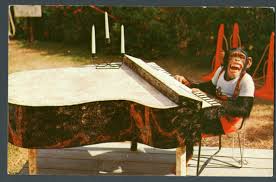
The monkey plays piano.
Last night, the monkey _________ piano.
She reads a book. Last Sunday she _____ a book.
He sleeps all day. Yesterday he _______ all day.
I watch the amazing Spiderman.
Last week I ______ the amazing Spiderman.
Put these verbs into the past tense, then complete the sentences:
want ———
take ———
decide ———
see ——–
buy ——–
think ——–
learn ——–
I —— to stay in bed this morning
She —– great photos with her new iPhoneX
We have —— to go to Thailand for Tet
Last night I —- a great film !
He —- food for Christmas from Harrods.
Tuesday ! I —— today was Wednesday
We —– about past simple in our lesson.
Pronunciation guide
In English, verb can be regular or irregular.
Regular verbs add -ed or -d in the past tense.
EXAMPLE:
I walk to work // I WALKED to work
I play guitar // I PLAYED guitar
She smiles on TV / She SMILED on TV
They dance in T-ara // They DANCED in T-ara
-ed past tense verbs pronunciation
Words have 3 end sounds:
‘t’
‘d
‘id’
If the word ends with:
ch / f / k / p / s / sh / thi – The sound is ‘t’ look = ‘lookt’
t /or / d/ – The sound is ‘id’ visit – ‘visitid’
Other sounds are ‘d’ bang = ‘bangd’
What is the correct pronunciation for these regular verbs ?
Look = Looked // laugh = laughed // end =
beg = / visit = / kiss =
brush = / breath = / love =
Read these sentences:
He cleared up the mess / He rolled up the newspaper / I have visited India
No Homework ! That sounded good / Teacher shouted, ‘No way !’
We all worked hard today / Tom talked so much /
The students played many games and laughed.
They have visited India
She has banged the drum !
Please Note: All photos are taken from Google Images or free photo sites, and are used for educational purposes only. No copyright infringement or offense is intended. If I have used your photo or image, and you wish me to remove it, just ask. This site is not monetized, I run it on my own dollar. Thank you.
This town (town) is coming like a ghost town All the clubs have been closed down This place (town) is coming like a ghost town Bands won’t play no more Too much fighting on the dance floor
Do you remember the good old days before the ghost town? We danced and sang, and the music played in a de boomtown
This town (town) is coming like a ghost town Why must the youth fight against themselves? Government leaving the youth on the shelf This place (town) is coming like a ghost town No job to be found in this country Can’t go on no more The people getting angry
This town is coming like a ghost town This town is coming like a ghost town This town is coming like a ghost town This town is coming like a ghost town
Songwriters: Jerry Dammers
Exercise 3: What do you know about The Specials. Here’s some facts. Arrange them in the form of an IELTS-standard paragraph.
The Specials were formed in Coventry, in the British Midlands.
Formed in 1977. They had two main singers, Terry Hall and Neville Staple.
Their music is a mix of punk and reggae.
They had a number 1 song in 1980.
‘Ghost Town’ was also a number 1. It was released in 1981. This song is about the recession in the UK. Many people had no work, no money and no hope.
The Specials broke up (disbanded) in 1984 but later reformed. They still perform together.
Next blog will focus on pronunciation. To my classroom students, be prepared for a lot more speaking and practising so, yes ! You DO have to say it again … and again …