A major problem for students is pronunciation and also, in some classes, it can be rather tricky to get the students talking. Obviously, many learners are scared of mispronouncing and ‘losing face’ by their mistake.
This activity helps with both issues.
Arrange the class in small groups and hand each member an card. The students have to read out the information, while the other write down what they hear. Many of my students feel that work is something to be done as quickly as possible, but that will not work in this situation.
Instead, the other team members will need to check what is being said. This encourages slow, clear and careful pronunciation. To assist, use expressions such as:
Can you speak slower, please.
Would you mind speaking slower, please.
How do you spell that ?
Could you repeat that, please.
Sorry, I didn’t catch the phone number.
Let me confirm …
Is that ‘b’ as in blue or ‘p’ as in pink ?
Teachers: adapt to suit the level of your class. Add email address, specific requests etc
NB: all images are taken from Google searches, (including ‘royalty-free images’) and the information is purely fictitious. As I have readers from around the world, I wish to reflect this diversity in the photos.
These blogs are for education use, and are not monetised. No copyright infringement or personal offense is intended at all.
If I have included your image, please accept my sincere apologies, and I shall remove the picture.
Part 3 of the speaking test can be tremendously daunting. However, with some tricks up your sleeve, you will be able to ace the test, pass with flying colours and do yourself proud.
An expression meaning to have a great idea or plan to help you be successful
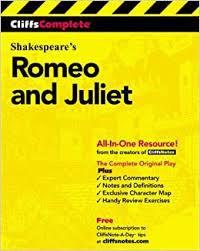
So this is a brief summary, the ‘Cliffs Notes’ version, if you will.
Cliffs Notes are guides for students studying Literature. There are many similar concepts online, for example Sparknotes.com
Right off the bat, relax … be cool. You merely have:
1) To demonstrate you understand the question
2) To demonstrate you have IELTS-standard language to respond
3) To reply based on either your opinion or experience. YOU DECIDE
As per usual, let’s kick off with a killer introduction. Prepare some expressions so you can adapt them for the specific question. To refresh your memory:
Well, that’s a very complicated question …
What a hard question, I may have to think about this …
I’m not sure I know how to answer that because I don’t have enough information, however …
Next stage is to explain how you’re going to answer:
in my experience
allow me to tell you what I do
I can’t speak about other people, but I …
Finally, exactly, spot on; you answer … only now, YOU are in control, you are in the driver’s seat. Respond in a way that will earn you points. We want to hear low-frequency words, idioms, phrasal verbs, vernacular (“big time !”). Furthermore, frame your answers in complex sentences, use body language and intonation and stress. If you can illustrate your response with an anecdote, all the better.
Examples
What do you think schools will be like in the future ?
This type of question invites you to give YOUR thoughts (“In my opinion,” etc)
Well, I’m currently in my last year of high school, so this is a very pertinent question for me. Naturally, I can’t foresee the future however, I could offer some predictions though, of course, this is just my opinion.
To start with, I can only speak about …… (say your country) as I don’t know enough about the educational systems in other countries.
For me, I feel that technology will play a greater part in schools, such as using the internet, working on tablets and joining online groups. Personally, I’m in a small Facebook group to help with learning English and I find it tremendously helpful and rewarding.
On the other hand, this can be extremely expensive. Providing tablets for a whole school will cost an arm and a leg, so maybe this will only occur in private schools. Furthermore, as the population increases, there will be many more students. This could lead, inevitably, to larger class sizes.
I really hope our system continues to improve although we have to be realistic; higher standards means higher costs … but I feel it will be worth the expense.
Now, that was quite a long reply but let’s break it down:
The first paragraph personalises the question, as well as adapting an introduction expression.
The second explains how you are going to answer.
The third states your main point. Moreover, it includes an anecdote (this doesn’t have to be true).
The fourth gives an opposing view – thus affording you the chance to use a discourse marker, to alter your body language and intonation, and to throw in an idiom for good measure. Also, some L-FWs, which are always impressive (if used correctly).
The final paragraph is to conclude and is, as you can clearly see, purely personal. Did you also notice the poetic repetition ? Allow me to point it out – “Higher standards means higher costs.”
A variety of speaking exercises and pair work to help you on your travels.
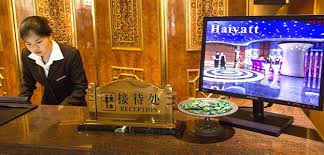
Booking a hotel room
Vocabulary:
adjoining rooms– rooms next to each other
amenities– services, shops, transport
bed and breakfast – small hotel or a room in someone’s house.
complimentary breakfast– free, included in the price.
Deposit – money paid in advance
High season / low season– popular times
housekeeping– cleaning staff
late charge– extra fee for not checking out on time.
Rate– the fee per room per night, per person.
vending machine – machine that sells snacks, drinks.
You are going to Bangkok and need to book a hotel. What questions would you have ?
How much is the rate for 4 people ? What time is check-in / out ?
Could I book adjoining rooms ? What is in the area ?
Where exactly is the hotel ?
How do we get to the hotel from the airport ?
Approximately how much is the taxi ?
Make a list.
Take turns being a tourist and working on front desk / booking.
Language to use:
Receptionist: Greet the guest / Ask for ID (passport, ID card). Check how many nights the guest(s) are staying / Ask to see booking confirmation /
What else could you ask ?
Guest: Explain you have a reservation / Present ID and booking confirmation. Ask about amenities in the hotel and what to see in the local area.
You could check if the hotel has a laundry service // can they book a taxi ? / do they organise tours ? Are there vegetarian restaurants in the area, or banks, money exchange, hairdressers ? What else could you need ?
Now … your experiences:
What was your favourite hotel room and why ?
Conversely, what was your worst room ?
What was bad about it ? In what way were you disappointed ?
How did the service excel ? Was it good value for money ?
Would you strongly recommend it ?
How did you find the staff ? Was it easy to get to ?
Last week, I asked a typical warm up question, “What did you do today ?”
Remember, when we ask questions we are just giving you a chance to show off and practice your English, so be creative. However, even if you can’t think on your feet, you can make even the most prosaic day more interesting. Allow me to demonstrate:
Today I met my friend and we went to see a movie. After that we had coffee and had some street food.
OK, we can easily make that more appropriate for IELTS.
Firstly, an introduction. Then … details, tell me about the film, about your friend, about the coffee shop and about the food … there is SO MUCH to talk about. Write a longer answer, I’ll give you three minutes.
EXAMPLE
I didn’t go to school (work) today so I had some free time
I met my friend Nancy who I have known for over five years
I had a date with my friend who is from USA
We were at the mall and decided to take in a movie
We were in the mood for a film
We had our heart set on seeing ‘Parasite’ which is Korean film that has won many awards
After, we needed some coffee so we headed for the nearest coffee shop, which was Highlands Coffee. The prices are sky-high however the coffee is delicious. Additionally, there is free Wi-fi.
Later on, we grabbed some coffee at one of the ubiquitous coffee shops. I had a large cappuccino which cost an arm and a leg, however it really woke me up.
It was late, so we felt quite hungry. There is a lot of affordable and delicious street food. I had some chicken and rice and my friend, who is vegetarian, had rice, eggs and salad.
After the movie, we were hungry but the food at the mall is not very exciting and the prices are sky-high, so we went for some street food which is ubiquitous in this city.
Now … you turn
What will you do on your next free day ?
Remember … this is future tense and you can express the uncertainty in your answer.
Target language:
I’d love to … / I’m planning to / I have my heart set on … /
I’m not absolutely sure yet, but I plan to … / I wish that I could …
I’ll probably … / I keep telling myself that I will finally …
Use at least one of the above expressions.
Use relative pronouns to give more information.
See if you can add an idiom (or two).
EXAMPLE
I really need a free day because I’ve been burning the candle at both ends this week.
I’m not absolutely sure yet, but I plan to meet up with some friends and just hang out. We have all been so busy, we haven’t seen each other for ages. (for a long time).
As you may know, I’m a vegetarian. However, all my friends love fast food especially burgers and fries. We often go to Lotteria which, I believe, started in Japan, and now they are ubiquitous in Sai Gon and easily seen with their bright red stores and big white ‘L’ logo. Despite not eating meat, I can order a fish burger but, in my opinion, the food is not exactly mouth-watering and the service can be rather slow.
Afterwards, I’ll probably go home as I have my heart set on playing a new computer game that my friend, Tony, lent me. Tony, who is actually from Ha Noi, is a real computer geek, he loves gaming, maybe too much. As for me, I get a little bored after an hour so then it’s time to put my nose to the grindstone and hit the books (study) again. “The roots of education are bitter, but the fruit is sweet.” That quote, from the Greek philosopher Aristotle, inspires me to work harder, even if sometimes the work is quite tedious.
Enjoy your free day
For my students with a speaking test soon … Best of British !
A compilation of exercises to practise using the present perfect form
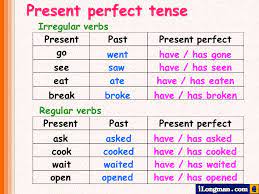
Present perfect
Subject + have/ has + past participle [verb 3]
She has been to New York / They have visited London
NEGATIVE:
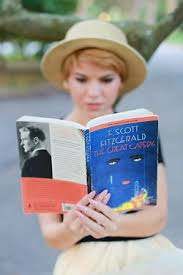
I haven’t read The Great Gatsby
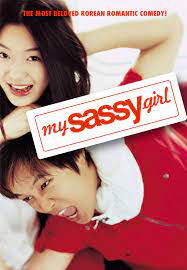
I have not seen My Sassy Girl
QUESTION:
Have you read Romeo and Juliet?
[Have / has + subject + verb 3 … ?]
Change the verb into the correct form:
I (read) your book several times. I have read your book several times 2. She has (wear) that skirt many times. [worn /wear / wore] 3. My family (visit) Brazil a few times. 4. I (eat) already. 5. Marta (finish) her homework. 6. You (break) the glass again. 7. They (pay) for everything. 8. It (never snow) like that. 9. I (meet) Anna once. 10. We (see) him before.
Change simple past into present perfect
Example – I started a band = I’ve started a band / I have started a band
1 I went to Ha Noi // 2 We explored a cave // 3 I ate cake // 4 We saw a famous building // 5 She buys many dresses and visited many friends
I was walking with a friend along Pham Ngu Lao, around 4 in the morning. The street was ………….quiet, just some tourists and a little traffic.
I was wearing a small bag, strung across my shoulder. A security guard was behind me, talking to a person in a car. …….., a motorbike came towards me on the pavement. He stopped, …………..my bag strap, then drove away.
Naturally, I shouted but it was too late; he was gone. My friend was worried but I told her it was OK, nobody was hurt. The ………of the bag were really worthless: pens, some medicine, a book, but also my designer glasses.
The security guard was comical in his incompetence. He shook his head, mouth open wide, and said, “It all ………. so quickly, there was nothing I could do.”
I should, …….. , have reported it to the police, that was the ……….. but people told me the thief would never be found. What I learnt from this unfortunate experience was to be very careful and never walk around with valuables.
Could you be a good witness ?
Tell me about the first criminal – height, weight, hair, features …
If (he/ she / they) had known it was so (expensive, noisy, boring …)
Emma, 19 Backpacker. Likes shopping, dancing, eating street food. She didn’t book ahead and was too tired and hot to walk around looking for a cheap hotel so she had to stay in a four-star hotel and spend nearly all of her money.
Japanese family. Like family activities, souvenirs and quiet nights. They stayed in the noisy backpacker area, with shouting and screaming and drunken karaoke all night.
Young men wanting a ‘Stag Night’ party, here to have a last hurrah ! They chose a quiet town in the Mekong Delta, but there was only one bar and it closed at 8.00 pm.
(a stag night is a wild party for a man before he gets married. There is normally a lot of drinking … and other activities)
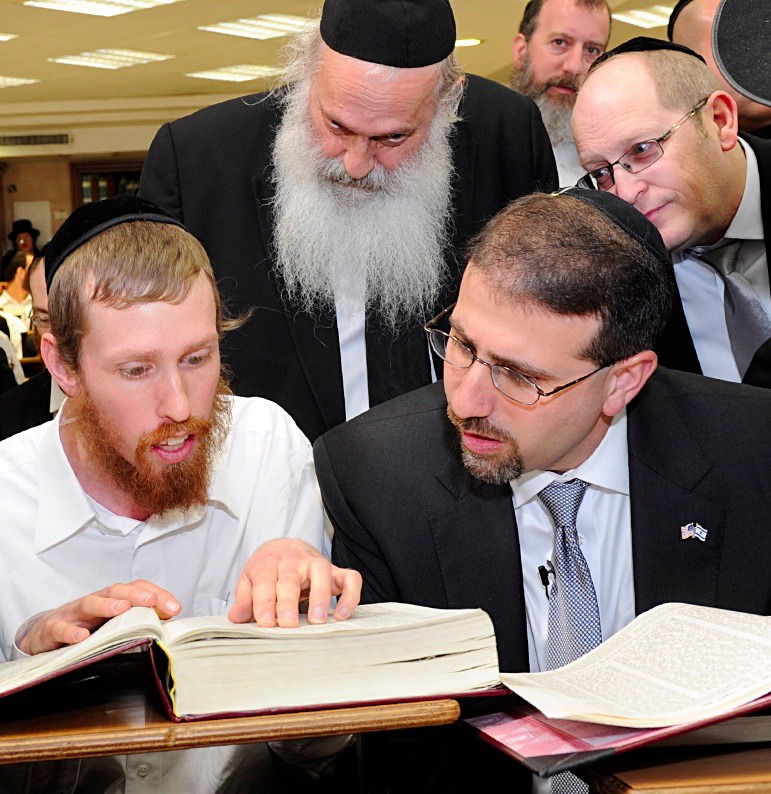
Jewish students. They do not eat pork, or shell-fish. Want to see history and temples. Their guide keeps taking them to eat sea-food and pork restaurants because the guide only speaks Vietnamese and Chinese, and the students only speak Hebrew and English.
If these visitors came to your city or town, could you recommend places for them to visit ?
What are your suggestions?
Remember, Emma wants somewhere fun but cheap, the family want someone quiet but close to family attractions, the young men want lots of bars and clubs, while the Jewish students have strict dietary rules.
Now … some more exercises:
I was very hungry but too lazy to cook, so I went out to grab a bite to eat.
I thought I’d try the new restaurant.
I, obviously, ordered pho, (traditional Vietnamese food).
However, after I had eaten
I saw the chef !
If I hadknown the chef was so filthy, I wouldn’t have eaten there !
This is the 3rd conditional.
Something that happened in the past BUT you can’t change it now.
If I had known the film was so bad, I never would have gone !
If he had bought his wife flowers, she wouldn’t have been angry at him
If they had studied English, they would have passed the test.
Finally …
… a true story that my history teacher told me back in London.
My teacher was a somewhat dishevelled gentleman in his mid-30s. Let’s call him Mr Bowditch:
Mr Bowditch, history teacher at an east London school
Mr Bowditch lived in a bedsit, which is basically renting one room in a large house and sharing the kitchen and bathroom with other tenants. His room was not particularly comfortable:
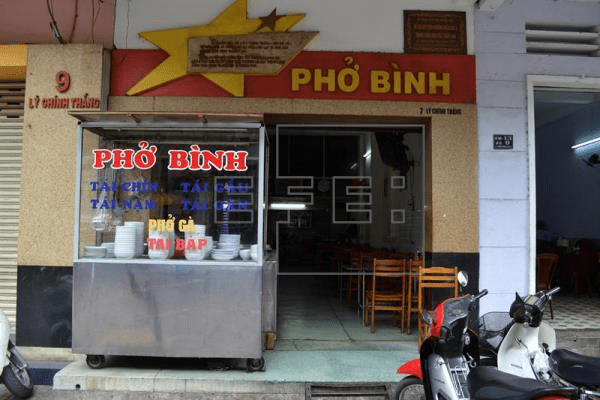
One night, Mr Bowditch was in his room and began to feel a little hungry. He wanted some chocolate so decided to go to the off-license and buy some sweets (an off-licence is a shop that sells basic food and sweets but also alcohol and cigarettes. It used to be open until 11.00pm when most shops would close around 6.00 pm). He decided to buy, among other items, some ‘Fry’s Turkish Delight’ a sort of jelly covered in chocolate:
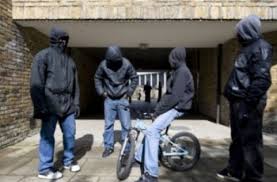
OK, so far so good. However, Mr Bowditch lived in a rather bad part of London, it wasn’t always safe to walk alone at night. Unfortunately, on the way home, Mr Bowditch meet the following young men:
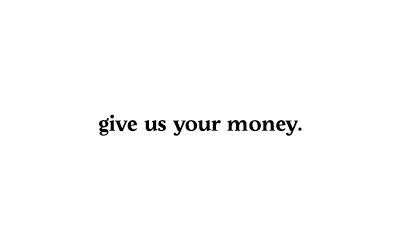
They called out to Mr Bowditch and stopped him walking. They demanded:
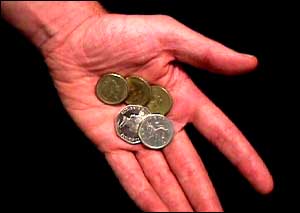
Mr Bowditch had none, as he had just spent his money on sweets (candy). They didn’t believe him and began to search him. He showed them:
That was all he had … a few pounds, about 100 000 VND. The men became very angry and aggressive. Suddenly, they heard a police car siren. The men tried to drag Mr Bowditch into the tunnel, away from the road but he is very tall and stopped them. As the police car got closer, the men ran away. Mr Bowditch has never eaten ‘Fry’s Turkish Delight’ again.
There are several instances of the third conditional in the above story.
If Mr Bowditch had bought sweets on his way home, he wouldn’t have gone out later and been mugged (mugged means being robbed, often with violence or the threat of violence).
If Mr Bowditch had gone to a different shop, he wouldn’t have meet the muggers.
If the police car hadn’t been passing, Mr Bowditch might have been seriously hurt.
If Mr Bowditch hadn’t been so tall, he would have been dragged into the tunnel and maybe beaten or worse.
The structure: the first clause starts with ‘If’ then using a comma before completing the sentence. The first verb can be positive or negative (in the examples, I use ‘had’ and ‘hadn’t’).
We use this to talk about things that DIDN’T happen.
Why the long face ? Someone looks miserable or unhappy.
She can talk the hind legs off a donkey ! Talking non-stop !
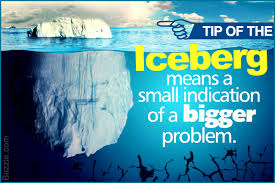
The tip of the iceberg.
Piece of cake No problem, easy, no trouble
Same thing, day in, day out everyday is exactly the same, very boring.
On the lookout looking for something
Cooking the books cheating with the company accounts. Writing false information.
A bright spark someone who is very clever
You’re pulling my leg ! joking but pretending to be serious.
The boot’s on the other foot the situation has changed.
You can’t miss it you will certainly recognise it when you see it, when you are there.
Big time ! (US modern popular culture) Absolutely, totally, very, very much
Brass monkeys it’s extremely, painfully cold
Once in a blue moon something that happens extremely rarely
Bob’s your uncle there you are ! No problem, all fixed ! (UK slang)
Now … your turn
Practice using these saying in everyday conversations … answers, as per usual, at the end of the blog.
1) I love the beach. but I rarely go, just ……………………………….
2) If you’re late for class again, the teacher will be furious …….
3) You look so sad ……………………… ?
4) I’m freezing ! It’s ……………………. in here
5) Seriously ? You can marry three wives in UK ? No, you’re ……..
6) Oh, my job is so tedious, …………………………
7) She wouldn’t shut up ! She ….
8) It’s no problem; I’ll clean your laptop, remove the virsus and Trojans and ………
9) I used to earn more than my wife but she got a big promotion, so now …………. She earns more than me !
10) I need a new pair of shoes. I’m ………………… for some high quality Italian leather.
11) The accountant was sacked. He was ……… but that was not all ! That’s just the …………………… He was also stealing computers and selling them.
12) This lesson was a ………………… for me because I’m such a ……………….
13) I didn’t use ‘you can’t miss it.’ Write your own sentence.
Answers
1) once in a blue moon
2) big time
3) why the long face ?
4) brass monkeys
5) pulling my leg
6) Same thing, day in, day out
7) can/could talk the hind legs off a donkey.
8) Bob’s your uncle
9) the boot’s on the other foot.
10) on the lookout
11) cooking the books / tip of the iceberg
12) piece of cake / bright spark
Well, if you’re such a bright spark, write you own sentences and test your partner.
Please Note: All photos are taken from Google Images or free photo sites, and are used for educational purposes only. No copyright infringement or offense is intended. If I have used your photo or image, and you wish me to remove it, just ask. This site is not monetized, I run it on my own dollar. Thank you.
Various exercises for you to practise grammar, both past simple and past continuous. Answer follow the photos.
Past Tense exercises
Past simple: most common way of talking about the past.
Regular verbs just add –ed e.g. walk = walked / look = looked / play = played
Past continuous: was / were + verbing e.g. I was playing / We were looking
Irregular verbs not used in past continuous e.g. we were seeing a film OR we saw a film NOT we were sawing a film.
Present perfect– talk about an action that happened in the past
subj + have/has + verb3 (past participle).
Past perfect – talking about two actions, both in the past, one before the other
e.g. I had listened to the CD before I saw the band play live.
Subj + had + verb3
The verb ‘to be’
I am / I was // you are / you were // he, she, it is / was // they, we are / were
Past tense / Shakespeare exercise
Change these lines into the past:
1 In Act One, Romeo ….. (is) in love with _________
2 Benvolio ……… (try – past continuous) to stop the fight.
3 The Prince ………. (demand – past perfect) to see Capulet before seeing Montague.
4 Romeo, Mercutio & Benvolio ……. (are) in the street talking.
5 The two families …… …. (be, present continuous) been fighting for years.
6 Romeo ….. (ask) the Nurse who Juliet is.
7 Mercutio & Benvolio …… (do, not) know Romeo was in love with Juliet.
8 The famous ‘balcony’ scene … (take) place in Act 2.
9 The Friar ……. ……. (go, past perfect) out collecting flowers.
10 At the end of Act 2, Romeo and Juliet …… (are) married.
ANSWERS
1) was (Rosaline) 2) was trying 3) had demanded 4) were 5) have been 6) asked 7) did not (didn’t) 8) took 9) had gone 10) were
Past tense exercise
Change the verb form – can be:
past simple (think about regular & irregular verbs)
past continuous (verb + ing)
present perfect (subject + have/has + verb3)
past perfect (subject + had + verb3)
It is …. a hot, Sai Gon night. The wind blow …….. up from the river, but the humidity drive ….. me crazy. Sweat pour ……… down my back.
I were walk …………. by the Old Town, lanterns were light ……. and sway ….. in the breeze. I … visit …….. an old friend before I decide ………. to take this long, steamy walk. I …. live ……….. here over two years, but everyday, I am almost
kill ……. by crazy motorbikes. I need …. .. a coffee and see …… a cafe over the road. As I were cross ……………….. the street, a motorbike race …….. towards me. If I ……. jump ……… aside, he would …present perfect…. hit …. me. But that were …… his idea.
He turn ….. around and pull …… out a gun, aim …… and fire ……… . I ……. ……….(be) present perfectshot at more times than I care to remember, I know …….. the score; duck and run. I run …… .I ………did, (negative) have time to think. I can … think later – if I am still alive. I make …. it into the coffee shop, and were look ……. out the window across the street.
The shooter were dress …… all in black and keep …… his helmet on. He were walk …………. this way. Quickly, I look ……. around. Were there another exit ? Can …. I escape by a back door ? Yes ! I ……. be (past perfect) ……here…before. I remember ………. a fire exit on the first floor. I leap …… for the stairs, just as the shooter were about to open the door.
Answers: was / blew / drove / poured // was walking / lit / swayed / visitid / decided / lived // killed / needed / saw / was crossing / raced / jumped / have hit / was // turned / pulled / aimed / fired / I have been shot at / knew / ran / didn’t / could / was / made / looked // was dressed / kept / was walking / looked / was / Could / had been / remembered / lept
Here are 7 verbs in the PRESENT. Choose the correct verb AND use it in the correct tense.
teach / live / go / see / drink / am / have
Harry (1) …….. drinking tea yesterday, when he (2) ……. an idea. I haven’t (3) …….. my neighbours how to drink tea. I am sure they will be happy. They have not (4) …… to the UK yet. I have (5) …. in many cities in England. Now I am in Viet Nam. I have (6) …. many wonderful sights, but I have never (7) …… a cup of good, English tea.
Answers: 1) was 2) had 3) taught 4) been 5) lived 6) seen 7) drunk
Put the present tense verbs into past continuous
EXAMPLE Linh drinks tea – Linh was drinking tea
1 Tina watches TV
2 Sam shouts, ‘Oh, no!’
3 My father plays football
4 Bella designs a beautiful dress
5 The cat sings karaoke all night long !
6 Paul listens to The Beatles
7 Anna buys an Apple.
Answers: 1) was watching 2) was shouting 3) was playing 4) was designing 5) was singing 6) was listening 7) was buying
75 % of verbs are REGULAR – just add -ed to form past tense































 Thay Paul's Notes