Last week, to my delight and amazement, I saw I had nearly seventy hits on one day, most of which came from South Korea.
To say thank you, here are some of my memories of your breathe-taking country, it’s films and literature.
Hope to come back again one day.
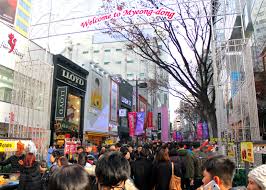
The Flying Bird Tea Room in Insadong, SeoulGyeongbokgung Palace, SeoulThe Gate of Deoksu Palace – The Palace of Virtuous Longevity, SeoulNamsan Tower through the National Museum, Seoul.Buddhist shrine, Jeonju
Some of my favourite Korean films:
Lovers ‘ Concerto 2002
… ing 2003
My Sassy Girl 2001
Virgin Stripped Bare by her Bachelors 2000
Some of my favourite Korean books:
This one’s cheating – my favourite Korean restaurant in London, near the British Museum.
Goodbye my Korean friends
All street scene photos by Thay Paul. Book and film images from Google
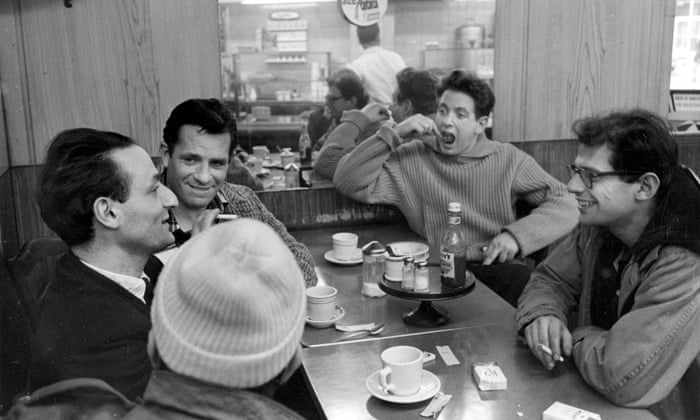
Members of the ‘Beat Generation’ hanging out & chewing the fat in New York, 1950s. Allen Ginsberg, whose poem ‘Howl’ ends this blog, is on the right, smoking a cigarette.
A major issue I encounter with ESL students is pronunciation and associated features such as intonation, stress, rhythm and pacing. Therefore, I decided to select some English-language poems for practice in class, while online students can find a multitude of YouTube videos of poems being recited by professional actors. I shall add some links at the end of the blog.
Now, without further ado, poetry.
Poetry can take many forms, not just writing; poetry in cinema, in dance, in speech … in life.
Let’s take a look at the first poem, ‘Dreams’ from 1922.
Recite the poem slowly and clearly. In the first line, stress ‘fast‘ and ‘dreams‘.
Secondly, listen for the rhyming pattern in lines 2 & 4: ‘die’ rhymes with ‘fly’, while verse 2 rhymes ‘go’ with ‘snow.’
Regarding ‘colour’, which tone of voice to use, decide if this is a positive or negative poem. Discuss in class what you think and give reasons.
Remember, art (painting, cinema, literature etc) is subjective; each person is allowed to have their own opinion. Develop speaking skills to enable you to support your views (give reasons).
Stop all the clocks, cut off the telephone, Prevent the dog from barking with a juicy bone, Silence the pianos and with muffled drum Bring out the coffin, let the mourners come.
Let aeroplanes circle moaning overhead Scribbling on the sky the message ‘He is Dead’. Put crepe bows round the white necks of the public doves, Let the traffic policemen wear black cotton gloves.
He was my North, my South, my East and West, My working week and my Sunday rest, My noon, my midnight, my talk, my song; I thought that love would last forever: I was wrong.
The stars are not wanted now; put out every one, Pack up the moon and dismantle the sun, Pour away the ocean and sweep up the wood; For nothing now can ever come to any good.
A highly emotional rendition, one person expressing their feelings over a loved-one’s death.
Let’s continue with a nonsense poem by Edward Lear from 1876:
Who, or why, or which, or what, Is the Akond of SWAT?
Is he tall or short, or dark or fair? Does he sit on a stool or a sofa or a chair, or SQUAT, The Akond of Swat?
Is he wise or foolish, young or old? Does he drink his soup and his coffee cold, or HOT, The Akond of Swat?
Does he sing or whistle, jabber or talk, And when riding abroad does he gallop or walk or TROT, The Akond of Swat?
Does he wear a turban, a fez, or a hat? Does he sleep on a mattress, a bed, or a mat, or COT, The Akond of Swat?
A great poem to demonstrate rhythm as well as ‘floating opposites’ e.g. young & old, hot & cold, not forgetting synonyms such as talk & jabber. Now, for really advanced beatniks, try the beginning of the famous, indeed infamous, poem ‘Howl’
I saw the best minds of my generation destroyed by madness, starving hysterical naked, dragging themselves through the negro streets at dawn looking for an angry fix, angelheaded hipsters burning for the ancient heavenly connection to the starry dynamo in the machinery of night, who poverty and tatters and hollow-eyed and high sat up smoking in the supernatural darkness of cold-water flats floating across the tops of cities contemplating jazz, …
The poem, along with a recitation by the poet, may be accessed here:
Objectives: encourage team work, and the completion of a small project by collecting information. Class arranged in four team, named after one of the above countries. They have to fill out a form such as this:
Language spoken:
Capital city:
Population:
Weather:
Famous for …
BONUS: can they count to ‘3’ in that language (for Canada we shall use French) ?
Korean uses two systems, Sino-Korean & Pure; the above version is the Pure system. What’s interesting for me, as a student of linguistics, is the similarity between some Sino-Korean numbers, and those of Thai, namely 3, 4, 9 & 10. take a look:
Teams will be given a variety of tasks (especially reviewing weaker areas, such as writing). Successful completion will result in one member of the team coming up the board and reading an information card. The student is not allowed to write down the fact, but has to memorise it, then report to another team-mate who will write it down.
And so, without further ado, the tasks:
Write down three positive adjectives, then use them in this sentence: Ms Jenny is _________ , __________ as well as _______.
Write down three negative adjectives, then use them in this sentence: Mr Mark is ________ , ________ as well as _________ .
What are the three biggest countries in the world ?
Brazil is famous for … (tell me two things).
Tell me two types of food people eat in Korea.
(Based on flash cards for units 1 – 3) To get to the shop, I must walk ——– the bridge and ——— the train tracks.
To get to the school, I must walk ——– the fountain and ——– the river.
To get to the dentist, I must walk ——– the street then go —— the stairs.
Put all six cards on the floor. Have two students stand at either end. They have to say, correctly, the directions on the card. Winner is allowed to gather some information.
Write down three buildings to visit in a city. What is best ? Must start answer: I reckon ________ is best because ________.
EXAMPLE: I reckon a school is best because you can meet Mr Paul 🙂
What is good about a department store ? Must start answer: In my opinion a department store is great for _______ as well as _______ , however __________ .
EXAMPLE: In my opinion a library is great for borrowing books as well as using computers, however we have to be very quiet.
What did Mr Paul & Mr Khoa do yesterday ? Show flashcards and add a location. Students have to write down the method of transport, with the correct PAST TENSE verb.
EXAMPLE: They drove a car to the zoo.
If you are late or slow, you have to c______ u__
If you think a film will be great but it is boring, you are d_____________ .
If you do charity work for no money, you v__________
She’s b___________ to a judo club _____ 2018.
He’s o______ a laptop _____ three years.
Olivia’s been c_______ p_____ _______ 1 year.
Can you dance or sing Flamenco ?
Write down three items you want.
Write down three items you need.
Mime: A team member has to mime using a product; team has to guess which one.
Quick Fire Round:
Name an instrument // something people collect // a sport that uses a ball // a sport that doesn’t use a ball //
Some sample questions to help get a class speaking to each other IN ENGLISH, and prepared to do some work. I use these with students aged about 9 – 12, at lower-intermediate level.
We start with a survey where the students have to walk around, speaking to each other and trying to …
Find 3 people who:
Name // 1 // 2 // 3 //
Hobby
Play an instrument
Draw or paint
Read books
Watch films
Learn English
Have a pet What pet ?
For advanced students, encourage them to probe for more information – what books are read, what instrument(s) are played, etc.
Speaking exercise
This can be done in pairs, small groups or as a class survey.
What was the last film you saw ? Did you like it ?
How many people live in your house ?
What is hard about learning English ?
How often do you chat online ?
Which social media sites do you use ?
What is your favourite food ?
Do you often eat western food ? Do you sometimes eat fast food ?
Have you tried Korean or Japanese food ? What did you think ?
Working in pairs or small groups, gather information about these countries, then make a presentation. Add something about yourself ;would you like to visit these countries ? Why ? What would you do there ? What would you eat and buy ?
Capital cities
Brasilia (Brasil) Seoul (South Korea)
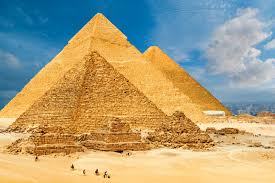
Ottawa (Canada) Egypt (Cairo)
Seoul, South Korea
Population
Brasil 183 888 841 // South Korea 51 047 000
Canada 37 000 000 // Egypt 97 055 000
Brasilia
Language
Brasil – Portuguese // South Korea – Korean
Canada – English & French // Egypt – Arabic (EgyptianArabic)
Today, lots of new words to help you describe the area in which you live (the area you live in). For my classroom-students, I can listen to pronunciation and help them with natural rhythms but online students should use a dictionary with sound … then practice, practice, practice.
Vocabulary booster
Where do you live ? What’s the area like ?
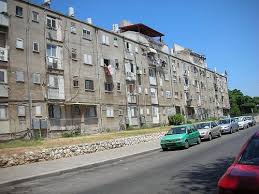
Apartment block in District 2, Sai GonTwo-up, two-down houses in UKTraditional house in Jeonju, South KoreaThe Projects, South Side, ChicagoApartment in Istanbul, TurkeyLagos, Nigeria … a plan for the future ?
Remember to link words together – it’s called ‘chunking’ in IELTS language.
I live in a:
quiet, residential street. Peaceful at night.
lively and busy commercial area, many shops
dirty and dusty industrial part of town. Very noisy.
pop / rock / country and western / punk / classical / jazz / blues
Please Note: All photos are taken from Google Images or free photo sites, and are used for educational purposes only. No copyright infringement or offense is intended. If I have used your photo or image, and you wish me to remove it, just ask. This site is not monetized, I run it on my own dollar. Thank you.
What are your first impressions of the man above, Mr Bob Dylan. What do you think of first – his appearance or his personality ? Probably the way he looks.
First impressions count
Today we’re having an advanced class using new words and expressions to describe both the physical and personality attributes of famous musicians.
So, as a warm up, how would you describe Mr Bob Dylan ?
Start with his looks, which are more factual, though subjective (i.e. to some young people, he will look ancient, while to older people, he may look distinguished and wise).
Then, tell me what you think he is like. You probably don’t know Mr Dylan, personally, so you can’t say, “He is incredibly friendly,” or, “He is extremely stand-offish.”
Therefore, you must employ opinion phrases:
He seems to be …
In my opinion …
I don’t know him personally, but I would say he is …
However, would it surprise you to know that Mr Dylan won the Noble Prize for Literature in 2016, and that his music has been unbelievably influential all over the world ?
Mr Bob Dylan receiving an award from President Obama
Your Turn:
I will show you some photos of rock stars, and you will practice sentence building. tell me what they look like, and what you think they are like as people. Can you explain why ? Finally, to practice complex sentence, I will give you basic information, and you have to incorporate these facts into long sentences using discourse markers and relative pronouns.
normal-looking // weird- looking // looks more dead than alive // bags under eyes
How would you describe these rock stars ?
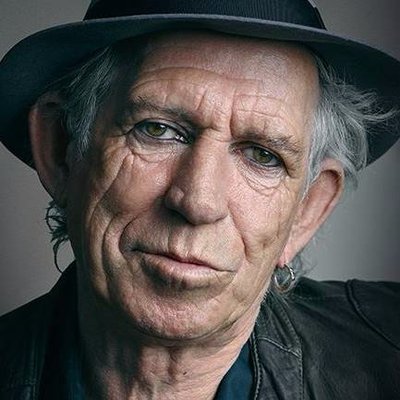
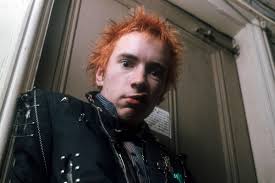
David Bowie 1947 – 2016Keith Richards of The Rolling Stones born 1943Jerry Garcia of The Grateful Dead 1942 – 1995Robert Johnson, legendary Blues man 1911 – 1938Dolly Parton born 1946Johnny Rotten (John Lydon) born 1956
Johnny Rotten, Real name John Lydon. Born 1956. Was in the Sex Pistols from 1975 – 1978. Formed band PIL. Changed name back to Lydon. Married Nora Forster in 1979. He was going to be on the Pan Am flight that crashed in Lockerbie, Scotland. He wrote a book, published in 2008.
John Lydon, who performed under the name Johnny Rotten while he was in the Sex Pistols from 1975 – 1978, is married to Nora Forster, and has been married since 1979. After leaving the Sex Pitols, he formed a new band, PIL, and had a book published in 2008. He escaped certain death by missing his flight on the doomed Pan Am flight that exploded over Lockerbie in Scotland.
Look at how much information I pack into the first, complex sentence:
Name – John Lydon
Stage name – Johnny Rotten
Band name – Sex Pistols
Time of band – 1975 – 1979
Marital status – married
Wife’s name – Nora Forster
How long married – since 1979
Now – how does he look ? Friendly ? Sweet and quiet ? What do you think ?
Make complex sentences:
David Bowie born 1947 and died 2016. Born in Brixton, south London. First big record was ‘Space Oddity’ in 1969. Record was in the Top 5. ‘Ziggy Stardust’ was released in 1972. It was incredibly influential. Many musicians say it is one of their favourite records. In 1976 he was in a film called ‘The Man Who Fell To Earth.’ In 1977 he moved to Berlin, Germany and made two important records, ‘Low’ and ‘Heroes.’ He was married to the super model Iman. She is Somali-American. Bowie made records up until his death in 2016. He died of Cancer.
Choose a musician; what do you think they are like ?
Which one would you like to meet, and why ?
Which one makes music you would like to hear ?
If these musicians are too old for you, tell the class about your favourite modern musician. Is it …
Tonight’s subject is relationships, and the book work seems well-balanced, with vocabulary, listening and speaking exercises. However, this is quite a strong group and appear motivated. With that in mind, I push them to learn more, in order to prepare them for their next class, which will be the quantum leap into IELTS.
However = discourse marker, better than just saying ‘but.’
With that in mind = expression meaning ‘because of that.’
in order to = to help for the future – I am learning Vietnamese in order to speak to my students.
quantum leap = massive (very, very large) jump forward or progression
Bearing in mind that Vietnamese operate on ‘elastic time’ (a polite way of saying the students turn up in dribs and drabs, ie, ten, twenty or thirty minutes late), so I can’t start any serious teaching until the whole class is present. Therefore, I use some warm up activities.
Egyptian students preparing for their lesson
Warm Up: Call My Bluff.
This is a vocabulary-building exercise. I introduce a new word, then give three possible definitions. Students have to deduce, or just guess, the correct meaning.
1. Ubiquitous
– adj means something that is very common, everywhere
– noun equipment used in scuba diving
-name used towards close friends or family
2. Significant
– noun a small built-in safe in a hotel
– adj something very special, different or important
– verb to paint Chinese or Japanese characters with great care
3. Consequently
– adverb discourse marker meaning because of that, this happened
– noun a person who cheats other people to get more money
– verb a type of pass in football that leads to a goal being scored.
4. Extrapolate
– noun a chair used by a dentist, that can be lowered or raised
– verb to get only important information from a lot of text
– adj something made from different materials or many different colours
Then students have to write four sentences using the new words, as well as trying to repeat them throughout the lesson.
I’m not going to give you the answers – look up the definitions yourself, it will help you to learn.
Warm Up: What is the name, to you, of …
What is the name of your mother’s husband ?
What is the name of your mother’s sister ?
What is the name, to you, of your mother’s brother’s son.
What is the name of your father’s mother ?
What is the name of your father’s mother’s father
Next stage is sentence building:
I am from London. It is an expensive city.
To combine these pieces of information, we use the relative pronoun ‘which‘:
I am from London which is an expensive city.
We replace the pronoun ‘it’ with a relative pronoun ‘which’ and create a longer sentence. This skill is important / vital / imperative to attain a good IELTS score.
Try these:
Kimmy is from Tokyo. It is very crowded.
Tony is from New York. It is a vibrant city.
Scott wants to visit the War Museum. It is in District 1.
Lisa teaches in Beijing. It is the capital of the PROC (People’s Republic of China).
Moving on … My friend
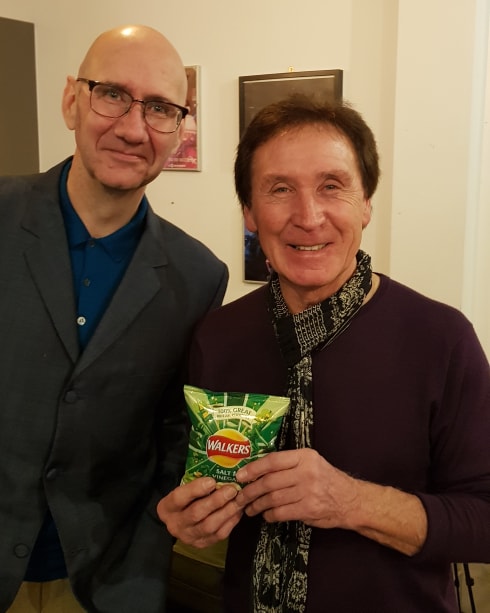
Peter on the left, with famous drummer Kenny Jones
When we link information about a person, the pronoun, ‘he’ or ‘she’ is replaced by the relative pronoun ‘who.’
On the left is my friend Peter. I met him in 2010. I met him in London.
On the left is my friend Peter, who I met in London ten years ago.
On the left is my friend Peter, who I met in 2010 in London.
Try linking these: Remember to replace ‘he’ and use ‘who’ but you have to change the sentence.
Peter is Irish. He was born in Dublin // Peter, who is Irish, was born in Dublin
Peter loves music. He can play saxophone, keyboards, guitar and bass.
Peter is 40 years old. He is bald, and wears glasses.
Peter plays bass. He has a video on YouTube.
Peter is with the drummer Kenny Jones.He played in The Small Faces in the 1960s.
Be careful with the last one. The pronoun ‘he’ is about Kenny Jones.
Be careful with the next two. We only need ONE relative pronoun:
The drummer Kenny Jones.He played in The Small Faces in the 1960s. He is withPeter.
The Manager Mr Smith. He is from Australia. He is going to travel to Mexico.
The manager, Mr Smith who is from Australia, is going to travel to Mexico.
Students, working in pairs or small groups, must come up with a storline for these couples.
Describe these two people. What are they wearing ? What are their personalities ? What do you think they do ?How do they meet ?
Be creative and feel free to use dialogue.
How do they know each other ?
What will happen when they meet ?
Will they get on ?
Will they have a terrible time ?
How about these
How do these two know each other ?
Try to invent an interesting, fascinating story line. Maybe they haven’t met since there were born ?
Now, let’s get creative:
Write a short story using dialogue and adjectives.
MOTIVATION: why do the characters do what they do ?
PLOT: what happens … and why ?
CHARACTERS: make sure each one is an individual and speaks differently.
Ideas:
Where do they meet ?
How do they meet ?
How do they know each other ?
What do they think of each other and how do they express it ?
EXAMPLE:
Boram, a young Korean lady, is at home getting ready to go out. She has put on her favourite white and pink dress and, with her lucky pink bow in her luscious chestnut hair, looks absolutely stunning.
Today she is going to meet her cousin who is coming to Seoul for the first time. Boram needs to practice violin, because she plays in the university orchestra and they have an important concert coming up, however, she is concerned about her cousin getting lost in the big bewildering city. That is typical of Boram, always putting other people first. She is a very sweet and thoughtful caring lady.
[In the first sentence I named the lady – Boram. Therefore, we can use a pronoun – she – because we know the subject]
Today we shall focus on reading adverts, posters and internet posts to find basic information.
Additionally, you will learn how to ask and answer questions in order to give or receive information.
Let’s start with a poster for the rock band REM, who were formed in the 1980s
REM live in concert
Seeing a band perform live is very exciting.
There is a great atmosphere.
Hundreds or thousands of people are singing and clapping.
It is a unique experience.
When a band goes on tour, they advertise. They can advertise online, in newspapers or by using posters.
This poster is for a REM tour from 1989. The band had a new CD called ‘Green’. They perform live to promote the CD, to encourage people to buy their CD.
Read the poster carefully and answer the questions:
Where is it ? (The name of the concert hall)
What time does it kick off (start) ?
When is it ? (The date)
How can we buy tickets ? (There are different ways to buy tickets – how ?)
They were touring in support of their new LP ‘Green’
What do you associate with the colour green?
How about:
blue
red
yellow
white
black ?
Here is some information. What questions would you need to ask ?
Visitor Information
Address:
137 Seobinggo-ro, Seobinggo-dong, Yongsan-gu
Nearest train station:
Ichon (National Museum of Korea) Station is a station in Yongsan-gu, Seoul on Seoul Subway Line 4 and Gyeongui–Jungang Line.








































 Thay Paul's Notes