Obviously, teachers don’t want to overwhelm the students with an unmanageable amount of new language. Far better to serve up bite-size pieces, then practice, practice and practice. When the language has become second nature to the students, move onwards and upwards.
The first step is to elevate your language; replace basic common or garden verbs with ‘better‘ ( that is, low-frequency) words.
For example, the verb ‘try’. Instead, we can have:
endeavour
To keep trying, not giving up, we can use:
persevere or persist
Let’s take these new words out for a spin:
This year, I shall endeavour to learn Vietnamese. I’ve tried before but gave up as it was simply too hard. However, this time I’m going to persevere.
Can you think of an idiom that could be used to show someone planning to work much harder ?
This is the only clue I’m giving you !
Onwards and upwards:
buy:
purchase
get a qualification or certificate by hard work and study:
attain // achieve
to get somethingwithout the need for work or study:
obtain (you can obtain the application form in room 7A)
say / said:
exclaim // express // remark (add -ed to form past tense)
use:
utilise (utilize USA) / apply
to eat, consume or do a lot of something:
devour (He devoured the whole pizza by himself // She loves reading, she absolutely devours books)
Transform this simple sentence into something more IELTS-like:
Sarah said that if she gets an ‘A’, her father will buy her a new iPhone.
Tony says he wants to get a visa which he can buy at the UK Embassy, so he can use his English skills in London.
Mary really wants to buy the ‘Fargo’ box set. She said it was the best TV show in years and she plans to watch all the episodes in one day !
Similarly, boost your lexical resources with regards to adjectives.
basic:
fundamental // elementary
hard:
difficult // challenging
tasty:
delicious // mouth-watering // scrumptious
experience:
broaden my horizons // real-life knowledge // culture shock
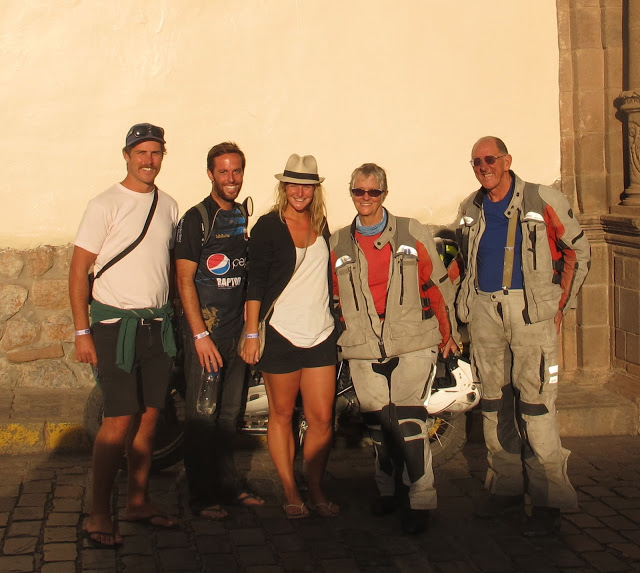
From South America to Europe
Signpost language: (To help the listener or reader follow you)
Firstly / To begin with / I’d like to start by …
Secondly / additionally / another factor is …
What’s more / furthermore / not forgetting
Obviously / clearly / it is evident that …
Moving on / I’d like to change the topic / Let’s turn to …
Finally / all in all / all things considered
Class Games:
Put students into small teams. One teams challenges the other(s) to form a sentence using as many new L-FWs as they can. Award bonus points for the appropriate use of idioms or fixed expressions.
Students challenge each other to find a L-FW for a basic, prosaic verb or adjective. Teams are allowed a fixed time, say one minute, and are allowed to use a thesaurus such as here:
Then the group has to use the new word in an IELTS-style sentence by which I mean, an introduction, a signpost word or phrase and, obviously, a suitable idiom (examples – ‘put’, ‘big’, ‘interesting’, ‘watch’, ‘boring’, ‘eat’)
Teams are given a mix of L-FWs, idioms & signpost language. After a short preparation time, they have to construct an inspiring, fascinating and jaw-droppingly brilliant sentence. Piece of cake, n’est ce-pas ?
One student from each group starts answering an IELTS question (travel, food, study, neighbourhood). At a given point, the teacher stops the student and another group has to continue, and so on. Monitor the correct utilisation of signpost language as well as fluency, not forgetting the all-important pronunciation features.
Quick Fire / Rapid Fire Round
What is the correct word:
To get a certificate after study ?
Delicious food is …
London is brass monkeys in January so _______ bring warm clothes.
A L-FW for ‘use’
Strange behaviour – he is acting _______
Istanbul is famous for its covered market, known as a __________
Nose, jaw, mouth … use these features in phrases
Moving from Europe to Asia will undoubtedly result in a degree of ________ _____.
The unspeakably greedy child ______ all the doughnuts !
Actor Mark Hamill basically disagreed with everything in the film script.
After three or four lessons, I expect my students to know several common idioms (their meaning and how to use them appropriately), a number of low-frequency words (L-FWs), how to introduce an answer, how to form a complex sentence and to demonstrate varieties of intonation and stress.
Without these features, you ain’t gonna get above a ‘5’, no way. Therefore, time for a quick review, see how you’re measuring up to the standard, whether you need to turn over a new leaf and put your nose to the grindstone.
Therefore, let’s recap
Idioms:
it’s raining cats and dogs
it costs an arm and a leg
piece of cake
I’m burning the candle at both ends
once in a blue moon
pass with flying colours
turn over a new leaf
put your nose to the grindstone
Students putting their noses to the grindstone
Part 1: What do the aforementioned idioms mean ?
Part 2: Give each student an idiom. They have to use it, correctly, in a sentence.
absent-minded // sky-high, astronomical // an entrepreneur //
hawkersor peddlers // a mover and a shaker // consider //
Part 3: Students have to describe their neighbourhood, using as many L-FWs, and idioms, as they are able.
Students burning the candle at both ends
Introductions:
That’s a very interesting question
Well, that’s a great question
Well, there is so much to say about that subject, where shall I start ?
It’s funny you put that question to me because earlier today I was just thinking about …
As a young Vietnamese (add your own nationality), I …
Part 4: Students have to demonstrate they know how to introduce their answer.
What do you want to do in the future ?
Give them one minute to prepare a very short reply.
It’s funny you asked me that question because recently, I have been considering moving to Australia …
Complex Sentences:
Part 5: Moving on, students have to form complex sentences out of the following information, using intonation to reflect excitement or a positive point and, conversely, a negative factor. Discourse markers to be employed in order to link ideas, naturally. Furthermore, I shall be listening for adverbs and adjectives.
First, choose the correct relative pronoun (who, which, whose or where)
London //
capital of UK // many shops and museums // expensive and cold
Teacher John //
from New Zealand // smiles and plays guitar // talks too fast
Ironman //
real name Tony Starke // very rich and intelligent // is fictional
Thailand //
90 minutes flight from HCMC // friendly people, great food // many western tourists and crowded
ABC English Centre //
located in city centre, District 1 // use laptops and tablets in classes // lessons are four hours long, with extra homework.
Team work
Part 6: Class split into two teams. They have to plan a day in their city (here, of course, it’s Sai Gon) for my friend Ethan.
once in a lifetime experience / never to be forgotten / unbeatable prices / book now to avoid disappointment / best decision you’ll ever make
holidays to suit all budgets , from 7* luxury to backpacking
Structure:
To begin with / furthermore … additionally / the fact is … / therefore
Demonstration with an advert for London:
Now is the perfect time to visit London, England’s glorious capital.
To begin with, the weather is perfect for walking, so you can enjoy the lush parks, world-famous museums and incredible, unbelievable shops such as Harrods, Selfridges and so many more.
Furthermore, there is something for everyone … and more ! Like sports ? Go to one of the many Premier League football games. Love shopping ?
The fact is, everything is here – shop till you drop !
Additionally, if you adore culture – soak up hundreds of years of history.
Flights from TSN airport daily. Seven-day all-inclusive package tour starting from only 50m VND ! All transfers and transport included. Air-conditioned mini bus with Vietnamese-speaking guide.
Therefore, don’t delay … book TODAY !
Sell a holiday
Advertising vocabulary and intonation
Prepare a presentation to market / sell a holiday.
Review: New vocabulary
sensational / once in a lifetime / luxury / all-inclusive / unforgettable experience / mysterious / majestic / breathtaking / visually-stunning
book now to avoid disappointment / exhilarating / world-famous
local food / new cultures / visit our website / worth every penny
fun for all the family/ the perfect getaway /
Plan a tour of your city for my friend
My friend Ethan is coming to visit your hometown
It is his first time in your hometown. He likes history, traditional food, and he wants to buy souvenirs.
Think about:
What time to start
What to do first
Logistics – how Ethan can get around the city (subway, bus, taxi, Grab or Uber)
Food – where to eat and what to choose. Remember, he only speaks English
Where to go (remember the heat OR the rain could be an issue / a problem).
I start by writing the word ‘travel’ on the board, and see how many avenues spread out from it. Start with the grammar; what type of word is it (noun) but it can be made into a verb (to travel, travelling) and the students should remember how to apply it to a person (traveller).
Then we have expressions such as ‘travel broadens the mind.’
We have this quote which introduces metaphor – the world as a book:
Then more pedestrian aspects of travel; how do we travel (transportation), preparation (booking tickets, hotels, visas etc), what do we bring with us (different clothes, sun cream, currency, sun glasses etc). How about culture shock ?
Next, what are the positive aspects of travelling (new cultures, fun, adventure, relaxation) and conversely, the negatives (delays, waiting in soulless airports, getting ripped off, tourist traps, bad hotels etc)
Pair work: students have to write a short passage using ‘although‘ and ‘despite‘ to encapsulate their travel experiences or wishes.
EXAMPLES: Although I absolutely love travelling, there are many drawbacks. Firstly, there is the cost; it can be incredibly expensive what with plane tickets and hotels not to mention having to eat out in restaurants. Despite these issues, travelling can be so relaxing or exciting, seeing new places and doing new things or simply as a break from our normal lives.
Vietnam has many beautiful towns and places of interest although I have only been to a few of them despite travel being relatively cheap in this country. We can fly everywhere within one or two hours, at very reasonable prices although some cheap airlines, such as Vietjet, are notorious for delays.
I have always wanted to visit Beijing in China which is not excessively far from Sai Gon. Despite that, I haven’t been because I am not sure about the visa and how expensive it would be to visit. Additionally, I hear some negative things such as terrible pollution and many tourist scams. Despite the drawbacks, I really want to see the Great Wall, the Forbidden Palace and all the temples. Although Vietnam and China have a complicated relationship, most Vietnamese would agree that Chinese food is delicious.
These exercises help to increase vocabulary and confidence. Furthermore, the repetition helps to make the target language part of the students’ lexical resources.
As a break from the book work, I’ll show the class a vlog from YouTube, two tourists who come to Sai Gon and what they think of the city: https://www.youtube.com/watch?v=2iw_K-1AmVk
How do the tourists feel about the city ? As residents, do you agree with the review ?
Students can discuss the video using the following language:
I agree totally // I agree to an extent // I disagree // I’m not entirely sure // No way ! They don’t know what they are talking about !
Group work: Prepare a guide to Sai Gon for tourists.
Allow students access to the class computer for Google images if required.
Include
What to see and do // where and what to eat // what to buy //
What they can do for entertainment
Travel tips
Safety and scams
Cultural differences – what should people do or NOT do in Vietnam ?
Use of interesting adjectives to describe the city centre.
Groups can then present to the class, with all students taking turns speaking. I shall be listening for relevance, pronunciation and use of expressions and discourse markers. Furthermore, I may learn some interesting tips.
My friend Andy is coming to Sai Gon
Using ‘should’ to give advice or information, make suggestions for Andy.
He loves history … what should he visit or see ?
He loves traditional food … what should he eat ?
He can’t ride a motorbike … how should he travel ?
He likes a beer a night (!) … where should he go ?
My Thai friend is coming to Vietnam:
Ms Namsum is young and energetic. She’s into (really enjoy) clubs, sightseeing and shopping.
I suggest she starts the day with a traditional bowl of pho then goes to Sai Gon centre. She can walk there from her hotel in District 1 or take a taxi (Vinasun or Malin ONLY). She will be out of the heat and has a lot of shopping choices and places to eat or grab a coffee. She could rest at her hotel in the afternoon, then go to Nguyen Hue walking street when it gets cooler in the evening. She has many restaurants in this area. Furthermore, there are many English-language menus. Finally, she can go to Bui Vien street where there are many clubs and bars, as well as many tourists speaking English.
What do they students think ? Is that a good plan ? Have I missed something important ?
Language to use:
I see your point
That’s a good idea but …
If I may make a suggestion …
I’m not sure that’s such a good idea.
For example – That’s a good idea but you haven’t thought about sightseeing.
Or
Bui Vien can be very noisy so I’m not sure that’s such a good idea for a young lady on her own.
Two of my friends, Tom and David who are both actors, are coming to Sai Gon. The students, in groups, have to arrange a fun day including sightseeing, shopping, eating and transportation. Then they have to compare their itineraries and exchange views and opinions. The students learn how to politely disagree with each and put forward their ideas and support their choices.
Tom and David
PLAN A DAY FOR TOM & DAVID
Where can they eat ?
What could they see or visit ?
How can they travel around ?
What can they buy as souvenirs ?
Where could they go at night ?
What safety advice would you give ?
What you need to know:
Both are 45-years old. They have good jobs and a good income. They like history and culture. They really enjoy good food and wine. Neither speaks any Vietnamese. They are too old for very loud clubs but they don’t mind having a few beers and maybe seeing some live music.
The students can make a presentation, and use the computer for images or maps to illustrate their plan. Then the other team can explain what they have organised, and the reasons why. I will decide which team has made the best choice.
Activity: Plan a day out for my friends.
Thay Paul with Tina and Michael.
I have two friends arriving in Sai Gon (or your city). They want a typical, authentic experience. Plan a day for them. It must include:
Breakfast
A museum
Somewhere for a snack
An interesting building or location
Lunch
Souvenir shopping
Something to do in the evening
Give tips and advice.
How do they travel around ?
What are their options and estimate the prices.
Try to use as much new vocabulary as possible, words and expressions.
Directions to Pham Ngo Lao Street District 1 // Directions to a city centre street.
Ask for help. Other must offer as much help – how to get there, the best way, the price, the dangers. Body language – distance, expression, intonation, eye contact etc
Is Sai Gon safe ?
Can you understand Vietnamese people speaking English ?
Do you agree with their points ?
Are there any words you didn’t understand ?
Do you have any bad experiences ? Tell the class your anecdote.
Word bomb– what do you think of when I say ‘hotel’ ?
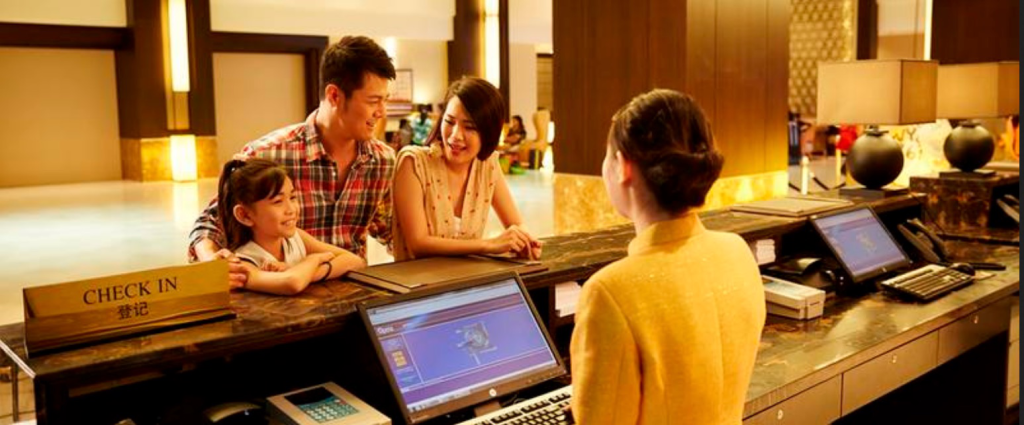
Checking in to a hotel
Vocabulary:
reception / lift or elevator / single or double room / king size bed or twins /
first floor / complimentary breakfast / key deposit / luggage storage / safe / mini bar
What would the conversation be ?
Reception: How may I help you / May I ask your name ? / Can I see your reservation code ? / That’s fine. You stay for three nights ? / May I have your passport, please ? / You’re in room 237. That’s on the second floor / Thank you. Sign here, please / Yes, the lift is just over there. / Naturally, as well as a hair dryer, coffee machine and mini bar. / Enjoy your stay.
Guest: Hello, we have a reservation / We booked a room online / My name’s ….. / Certainly, it’s on my phone. / Yes, that’s right. / Absolutely. / Correct. / Just a second; here you are./ Is there a lift ? / The second floor ? / Is there a safe in the room ? / Perfect. Thanks very much
Make a conversation. One student will be the reception, the other(s) a guest or guests.
Write your own conversation
You are in a hotel bar and you meet another guest. Start a polite conversation, but you have to use your English.
Greet each other
Why are you in this city ? (holiday or on business)
Offer to buy a drink (accept or decline – maybe you don’t drink alcohol)
How long are they staying ? What do they think of the hotel ? What can they do in the area around the hotel ?
Small group work
You are two married couples who meet on a tour and are staying at the same hotel OR you are on a business trip and meet some other business people.
Use the following sentences, as well as your own, to make a conversation. try to keep speaking for as long as possible by using small talk techniques (oh, really / that’s interesting / tell me more / what do you do exactly ? / where is that ? / Sounds interesting)
My wife and I are delighted to meet you
Shall we go to the bar or cafe ?
Can offer name first (I’m Simon, what’s your name ?)
Would you fancy a drink … ?
Is there anywhere special to do here ?
Sorry, I have to get my head down, it’s been a long flight (I need to sleep).
My colleague and I were going out to eat.
I fancy a beer or something alcoholic
Oh, I’m sorry, I didn’t ask where you are from.
Reasonable (cheaper)
Would you like to join us ?
Peckish (little hungry)
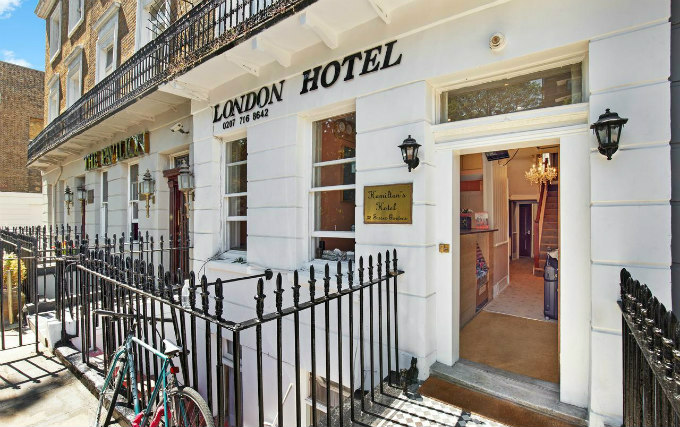
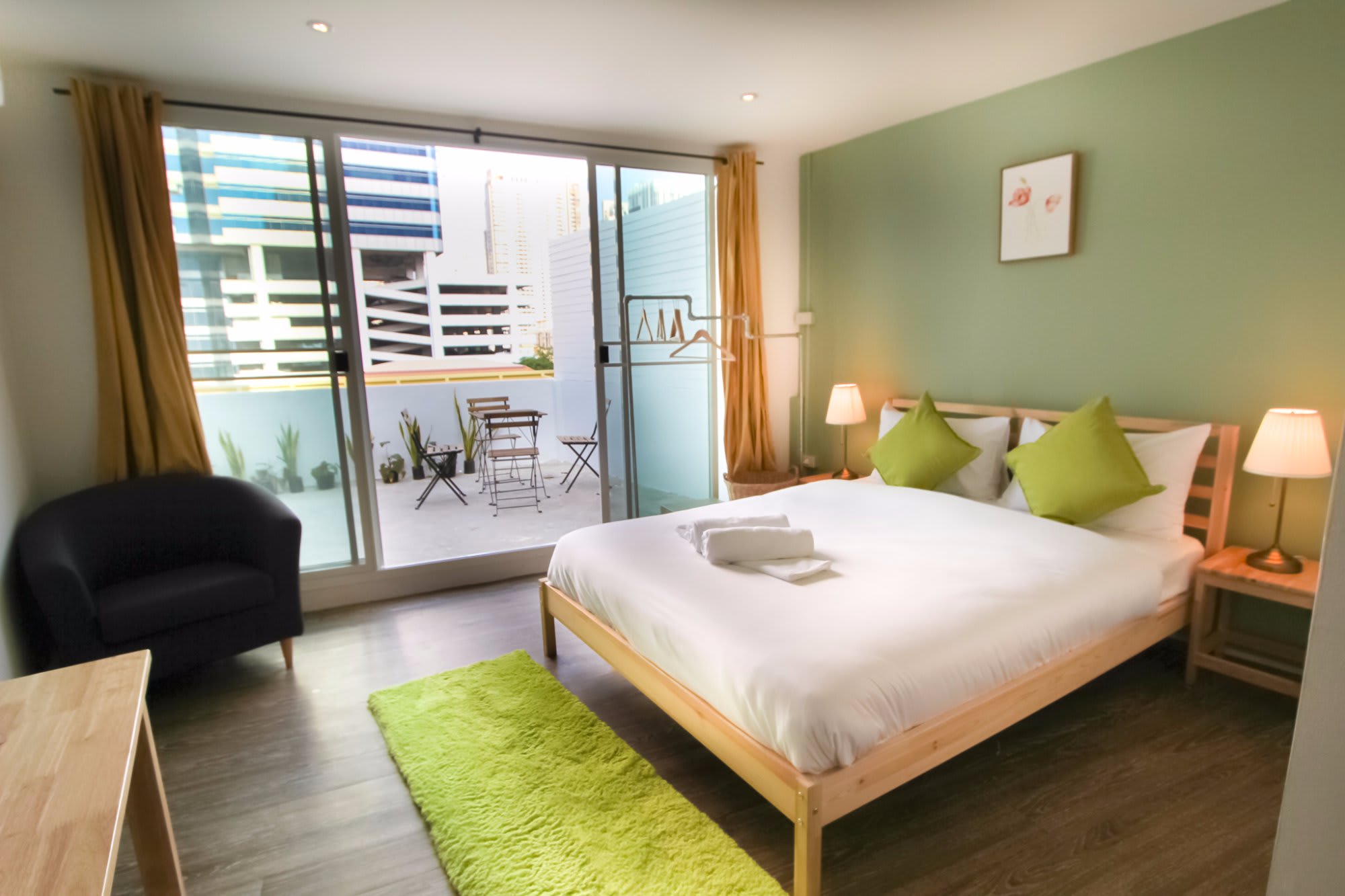
What do you think of these hotel rooms ?
What do you think of the design ?
Would you like to stay in any of these ? Why, or why not ?
Let’s kick off with an old friend: Peter from England.
Peter
Age 24 // MA in Business Studies Born in Surrey, close to London Unemployed // Single //
Enjoys pubs, tennis and movies Wants to run his own company
From that information, build a complex sentence – basically combine two, three or more facts and connect them with relative pronouns and discourse markers:
Peter, who has a MA in Business studies, wants to run his own company.
Peter, who is from Surrey, enjoys pubs, tennis and movies.
From this point, the sky is the limit.
Despite being unemployed, Peter, who has a Master’s Degree in Business Studies, has entrepreneurial dreams of owning his own company.
Although he has an MA and is actively seeking employment Peter, who is from Surrey which is close to London, still finds time to indulge his passion for tennis, even becoming a member of an exclusive sporting clubs, whose membership fees are sky-high.
NOW …YOUR TURN
Write and then present a complex sentence about your partner. Gather some basic information, such as:
Age (if they are willing to say) // where they are from
Job or Study // Where they work or study //
What they like doing// What they dislike // Plans for the future
For Speaking Class level 2, I expect at least one relative pronoun (who, where, which, whose).
For IELTS, try for two relative pronouns, two L-FWs and at least one expression or idiom.
Vocabulary Review
You should be familiar and able to use these words at the drop of a hat:
One of the biggest stumbling blocks for my Asian students is copying the speech patterns of English, how our voices rise and fall, how we pause for effect then stress key words, augmented by body language and facial expressions.
Best way to improve is to copy so, without further ado, some classic film lines.
Let’s dive in !
First up, ‘The Italian Job’, a British film from 1969 starring Michael Caine, who is still working today, an actor from south London: https://www.youtube.com/watch?v=8g_GeQR8fJo
“You’re only supposed to blow the bloody doors off !”
Now, let’s cross the pond (the Atlantic Ocean) and go Stateside, with Tom Cruise being yelled at (shouted at) by Jack Nicholson who you may remember from a previous video. The clip is from ‘A Few Good Men,’ a 1992 drama: https://www.youtube.com/watch?v=5j2F4VcBmeo
This can be for two students or teams: Start at 0:13 – 0:19
“Oh my gosh, I think I’ve just come up with the best theory … teenage life sucks !”
Now for a personal favourite, the inimitable Peter O’Toole an actor I had the pleasure of seeing, and briefly meeting, back in my London days. Here, Peter is on a talk show, explaining about a long, arduous flight from Japan to the USA: https://www.youtube.com/watch?v=JuhHThAaymQ
I heartily recommend watching the whole clip, however our section starts at 2:21
“Coming from Japan, one indeed stops at lots of places … Hawaii and all over … and it coincided, our stopping, with the cocktail hour … everywhere we went, it was cocktail hour … and one doesn’t want to be discourteous …”
Finally, my favourite TV chef (after Keith Floyd, obviously) is the beautiful Ching-He Huang
The whole clip is under two minutes. Here are some selections, in order of appearance.
“From street food to fine dining, Hong Kong is the place that has some of the best food on the planet. Every time I come my absolute favourite thing to do is eat.”
“So this is the pineapple bun, this is the moment I’ve been waiting for, it’s flakey and it’s sweet … it’s really good.”
“It’s small and punchy … just like you !”
“The sweetness of the prawns … eeerrrrrrrr !”
“This is some serious woking !”
The last phrase shows how we can play with English; a wok is a traditional Chinese frying pan. Here, Ching uses the noun (wok) to form a verb (woking), which is non-standard, in fact, it isn’t in any of the online dictionaries I searched. Having said that, most native-English speakers watching the show will know what she means.
If you are unsure, Ching is saying that the restaurant is extremely busy, there is a lot of high-energy cooking going on (woks are associated with high-temperature, very quick dishes).
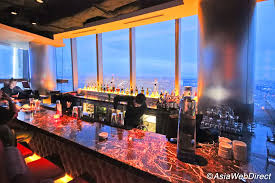
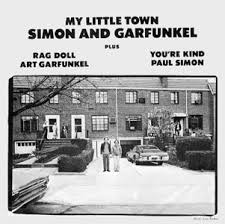
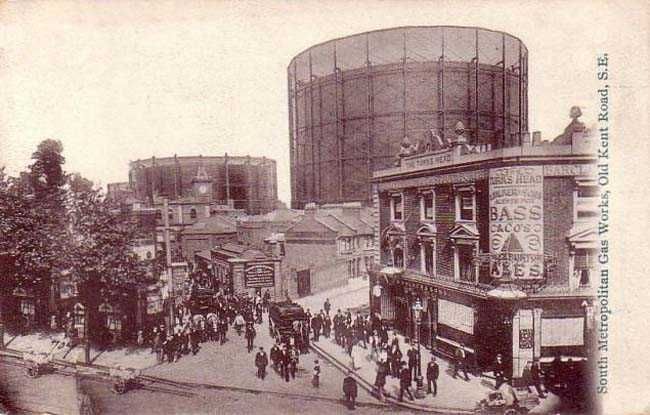
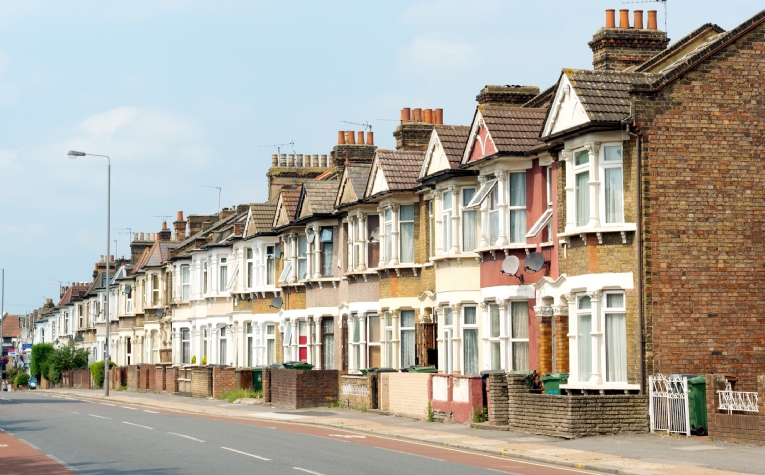
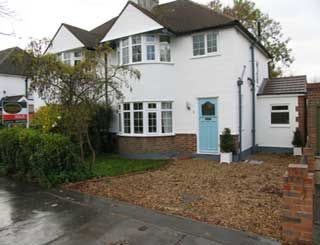
Which adjectives could describe the four types of area ?
NEXT UP:
Speaking exercise – imagine you live in the first picture. Describe the neighbourhood and your life. However, when you get a high-paying job, you want to take out a mortgage and move to the second picture. Describe that neighbourhood.
NEXT UP:
Introducing and expanding your answer
Do you like coffee ?
I like many drinks however coffee is my favourite because it tastes great and makes me wake up although too much will stop me from sleeping at night but, in my opinion, the benefits far out weigh the disadvantages.
NB (Latin – nota bene = note well, please read, important information)
I didn’t answer immediately but introduced the question.
Use of discourse markers to extend the answer
Saying something positive and negative about the subject
This was all one sentence – a complex sentence which you will need to start using in order to pass IELTS with flying colours
Try these:
Living in HCM
Free time
Working and studying.
New vocabulary
ubiquitous everywhere, very common
naïve innocent, inexperienced
stroll a gentle walk, for exercise (collocation: take a stroll)
a bazaar (noun) a permanent, covered market
bizarre (adjective) very strange, unusual
absent-minded extremely forgetful
sky-high, astronomical very expensive, maybe too expensive
predictable it is possible to guess the answer, people doing the same thing
hawkers
Street _______ are common in Vietnam, and they are _________ in District 1. It is nearly impossible for a westerner to take a ________ without being approached. Some claim to sell Ray Bans or designer sunglasses, but you would have to be extremely ________ to believe they are genuine ! They are all fake, probably made in China. Many people try to _____(collocation) money by selling to tourists especially around Ben Thanh Market, a kind of _______, though this is strictly for tourists as the prices are ____________ !
Pronunciation Practice
First time in Viet Nam – First impressions of Viet Nam
A vlog by Divert Living, posted just over two years ago and which has already received more than a million hits:
[American English accent]
Try 04:44 – 04:53
” … and I asked them, ‘How much is aqua (water) ?’ Aqua’s fifteen thousand, beer’s twenty thousand … of course I’m gonna get the beer, now … it’s just as expensive as the water.”
09:00 – 0913
“Fun fact, Vietnamese cuisine is considered one of the healthiest cuisines in the world … and, to go with the food, the size of the dining tables and chairs are super small.”
The best way to improve your pronunciation is, obviously, to listen and then to copy.
Practice, practice, practice
IELTS students in particular need to demonstrate a variety of speaking skills: intonation, stress, chunking, elongating words for emphasis, not to mention body language, eye-contact and gestures.
Therefore, without further ado, here’s a number of clips for you to practice, and don’t forget … have fun !
I want you to focus on the speech from 05:44 – 06:15
“I just want you to know it, it’s a good idea to have an answer to this question … it’s a good idea if you’re running for re-election to say, ‘Here’s what I want to accomplish.’ What did Trump say ? He got mad and walked out of the interview. He thought the questions were too tough. Too tough ! Miami, listen, if he can’t answer a tough question like, ‘What would you like to do in your second term ?’ then it’s our job to make sure he doesn’t get a second term.”
From a linguistic point of view, notice the differences between British and US English, words such as ‘interview’. Notice how President Obama paces himself … leaving space between sentences, how he stresses certain phrases (“Too tough !“). Finally, listen to the ‘music’ of the last sentence. His voice is building up to a climatic, “Doesn’t get …” which is an incredibly powerful way of speaking.
“…and ensure more products are stamped with that beautiful phrase: ‘Made in the USA.’ And next year will be the greatest economic year in the history of our country … under my leadership our economy grew at the fastest rate ever recorded, 33.1%, just announced. We created a record 11.4 million jobs in the last five months …”
Naturally, not everybody agrees with President Trump, nor his style of debating. Here’s how Vice-President Joe Biden reacted to being constantly interrupted:
Time to bring it closer to (my) home, and British politics. You saw how polished and professional President Obama was … but that is not always the case. Here is former Labour (left wing) politician, Diane Abbot who was famous, or infamous, for making mistakes in the media.
In this clip, the politician is forced to listen to a recording of a radio interview where she couldn’t answer the question. This can make you cringe.
The question was how much would 10 000 extra police officers cost ?
“Well, if we recruit the 10 000 police men and women over a four-year period, we believe it will be about £300 000 …”
Interviewer speaks …
“Haha, no, I mean, sorry, they will cost … they will, it will cost … um about … about £80 million … yeah !”
Now, the British Parliament may be regarded as an icon of modern democracy and free speech but it can get out of hand. Politicians, like children, can be noisy and in need of discipline. A strong presence is required to maintain order. Here’s Mr John Bercow, former Speaker of the House reprimanding a politician:
A new class, new students, so let’s hit the ground running, get the students mixing, talking to each other and up from their seats. I prepared a questionnaire. They have to interview different classmates and learn a little about them
Gather information about your classmates
Question
Name
Response
Why are you studying IELTS ?
Where would you most like to visit and why ? Would you like to live abroad ?
What is the hardest thing about learning English ? How do you solve this ?
How often do you use English ?
Do you read, write or speak at school or at work ?
What do you most like about western culture or countries ?
What idioms do you know ?
This lead into the idiom it’s raining cats and dogs which most students had heard (it means raining heavily).
Today’s lesson is based on types of housing and areas; some extra terms:
gritty / industrial
quite / safe / residential
boring / peaceful / suburban
bustling / vibrant / city centre
Which would you apply to these:
All photos are from the UK
Ask each other about your hometown or your neighbourhood.
A collection of clips predominantly featuring western people and their views on Vietnam. I have also added some suggested sequences for pronunciation practice … and so, without further ado …
First time in Viet Nam – First impressions of Viet Nam
A vlog by Divert Living, posted just over two years ago and which has already received more than a million hits:
” … and I asked them, ‘How much is aqua (water) ?’ Aqua’s fifteen thousand, beer’s twenty thousand … of course I’m gonna get the beer, now … it’s just as expensive as the water.”
09:00 – 0913
“Fun fact, Vietnamese cuisine is considered one of the healthiest cuisines in the world … and, to go with the food, the size of the dining tables and chairs are super small.”
This vlog was shot in Ha Noi, so let’s get their take (their opinion, view, experience) on Sai Gon:
What to expect – Saigon or HCMC
Now they travel to my neck of the woods (the area I live in or was brought up in), and they encounter, among many other delights, coconut coffee:
“Wow … that’s so strong, but it’s got a ball of coconut ice-cream in the middle … whoah !”
And the young lady who I believe is Korean adds:
“I wanna try … This is the coffee king … ahhhhhhhh !”
Talking Point:
The young travellers give their views on the environment and cleanliness of District 1 which is the city centre [UK] or downtown area [USA].
To what extent do you agree with them ?
What do Vietnamese students think of the Vlogger’s appraisal of Sai Gon ?
Let’s move on and talk about traffic which is quite a serious issue in Vietnam. Firstly, attending driving school … what can go wrong ? A clip from the world-famous motoring show from the BBC, ‘Top Gear.’
Right from the get go (from the very start) we have some great lines:
“Cheer up … this is gonna be a doodle … [Vietnamese] … it wasn’t !”
01.23 – 01:45
“How the hell … what did you just do ?”
“It was eighteen. Eighteen years old.”
“How did you know ?”
“Did you not bother learning Vietnamese before we came here ?”
“Well, no.”
“You’re screwed, then.”
Time for some food and the ubiqitous Phở My favourite TV chef, Mr Keith Floyd, who sadly passed away in 2009. He came to Asia, and visited Vietnam and now he’s going to tell you about Phở:






















![Four best hairstyles for Kenyan women [Photos]](https://thaypaulsnotes.com/wp-content/uploads/2020/11/image-42.jpeg?w=225)










 Thay Paul's Notes