Adult Class, level 3: A diva … moi ?

26th November 2019. AEF 3 Listening Part 2 & Units 5 & 6 review (p.63)

Tonight, the lesson is heavy on listening and review. I try to get as much student-talking time as possible, so I’m got some ideas up my sleeve to, hopefully, lighten and brighten the class.

The topic is celebrity interviews, especially interviewing famous people who may be:

arrogant // self-obsessed // pretentious // obnoxious // full of themselves

Which of those words would, in your opinion, apply to these people:

Use opinion phrases (In my opinion, For me, He seems to be, I get the impression she is …)

Image result for arrogant lawyer
a lawyer
Image result for ronaldo celebration
Ronaldo celebrates a goal … but is this too much ?
Image result for obnoxious bieber

A celebrity is anyone famous, but most often it’s an actor, musician, TV personality or just a regular person who has made the news (had a story about them in the newspaper, online media etc). Sometimes they can be arrogant or full of themselves in interviews. However, occasionally the interviewer may upset the star. What do you think is happening here [start at 04:23] in this Robert Downey Jr interview:

https://www.youtube.com/watch?v=dUX-CCmQeOk

Now we have the same interviewer with film director Quentin Tarantino:

https://www.youtube.com/watch?v=DTE8FPgHeE4

Image result for im shutting your butt down
Quentin Tarantino

So now the class are prepared for the book work.

I have an assortment of activities for the speaking.

First up – small talk

I’ll hand out some papers with a short dialogue of small talk. This is basically learning how to keep a conversation going by using appropriate responses.

Students can use the following:

Really ? // I see // Are you ? // Right // That’s interesting // That’s a good point // Where is that exactly ? // Oh, me too // Do you enjoy it ? // Do you like it there ?

Then the students can pair up and ask each other questions such as:

Why are you studying English ?

Where do you live ?

Where would you like to visit ?

What do you do in your free time ?

What do you want to do in the future.

Students can change partners for each question.

Next up – Call My Bluff

Class put into two or three teams. Each team has a sheet with four words or phrases, followed by three definitions. A different member of the teams reads out a definition, embellishing the wording to make it more convincing. The opposing team have to guess the correct definition.

Finally, for a fun ending, the students can interview each other, but one pretends to be a difficult celebrity. They can use language from tonight’s lesson, or preferably, invent their own.

Please Note: All photos are taken from Google Images or free photo sites, and are used for educational purposes only. No copyright infringement or offense is intended. If I have used your photo or image, and you wish me to remove it, just ask. This site is not monetized, I run it on my own dollar. Thank you.


Adult Class, Level 3: Can’t buy me love.

14th November 2019 AEF 2A pp. 14 – 15.

Tonight, attitudes to money: What does the first singer think about money ? What is important in his life ?

Image result for beatles can't buy me love

https://www.youtube.com/watch?v=uKfALmKL0VU

Now, compare with this attitude:

Image result for flying lizards money

https://www.youtube.com/watch?v=E-P2qL3qkzk

The first song is romantic; the man doesn’t care about money, he wants love. However, the lady sings, “I want your money !” This is called being materialistic, wanting expensive things and money.

Vocabulary – p. 154. Verbs pertaining to money.

Activity. You inherit a small fortune and want to splurge out (spend a lot of money). Working in small groups, tell what how you would spend your luxury day.

Plan a luxury day

To develop narrative writing and speaking skills, use words or phrases such as:

Firstly // Initially // I would start // It would kick off with …

secondly, thirdly etc

after that // afterwards // following that // and then …

for a change // as a contrast// for a break // to take a break from all the …

lastly // I’d end up // I’d round the day off with

You could:

luxury breakfast // luxury spa treatment // horse-carriage ride

shopping // luxury yacht

See Barcelona play // Attend a play at a London theatre

OR add your own ideas

Where would you go ? What would you do ? What would you buy ?

Activity: Devil’s advocate.

This is to develop argument skills, how to politely disagree with someone.

Example: one student wants to buy a beautiful, luxurious Rolex watch. It really is an outstanding timepiece:

Image result for Rolex

Without doubt, this is a luxury item. The pros …

It is gorgeous and so elegant. I will feel so special wearing it. People will admire and look up to me. They will think I am wealthy and have a great career. I will attract many cute women (or handsome men, whatever !). I may feel superior to other people who only have cheap watches or nasty fake knock-offs – like Thay Paul 🙂

Now play Devil’s advocate. Say what are the cons of owning such an item. Firstly, agree with the first student – it is without question a luxury item. Having said that

It will attract attention … but maybe from thieves or pickpockets. It is a lot of money, maybe an obscene amount of money when so many people are poor. Can you justify living in a Socialist country and owning such a materialistic item ? Will it make you arrogant ? Will you think you are better than other people BECAUSE of a thing ? Finally … what does it DO ? Fundamentally, it tells the time. My fake Rolex will tell the same time … but it cost $20 NOT $ 5 000 !

Now students’ turn. Similar concept but this time, the latest iPhone:

Image result for iphone 11

The iphone 11 (woooooowwwwwwww !)

One student wants to buy it, the other must give reasons why it is not such a good idea.

Useful phrases: a waste of money / not necessary // a fashion accessory // you can’t afford it //

Image result for neither a borrower nor a lender be

Role play game:

Three students will act out working in a department store, a shop with a sale on, and a street market. Other students have a set budget (say £100) and have to buy three items.

They can practice with the following language:

How much is this, please ? // Could you bring the price down for cash ? // Do you take plastic (credit cards) ? // If I smile, can you take off 10% ?

Wow, that’s a bargain ! // Sorry, that’s too much // Is that your best price ?

I’ll take it ! // Wrap it up ! // Let me think about it and come back // Sorry, that’s too much.

Image result for van heusen shirts store
A department store selling expensive designer shirts
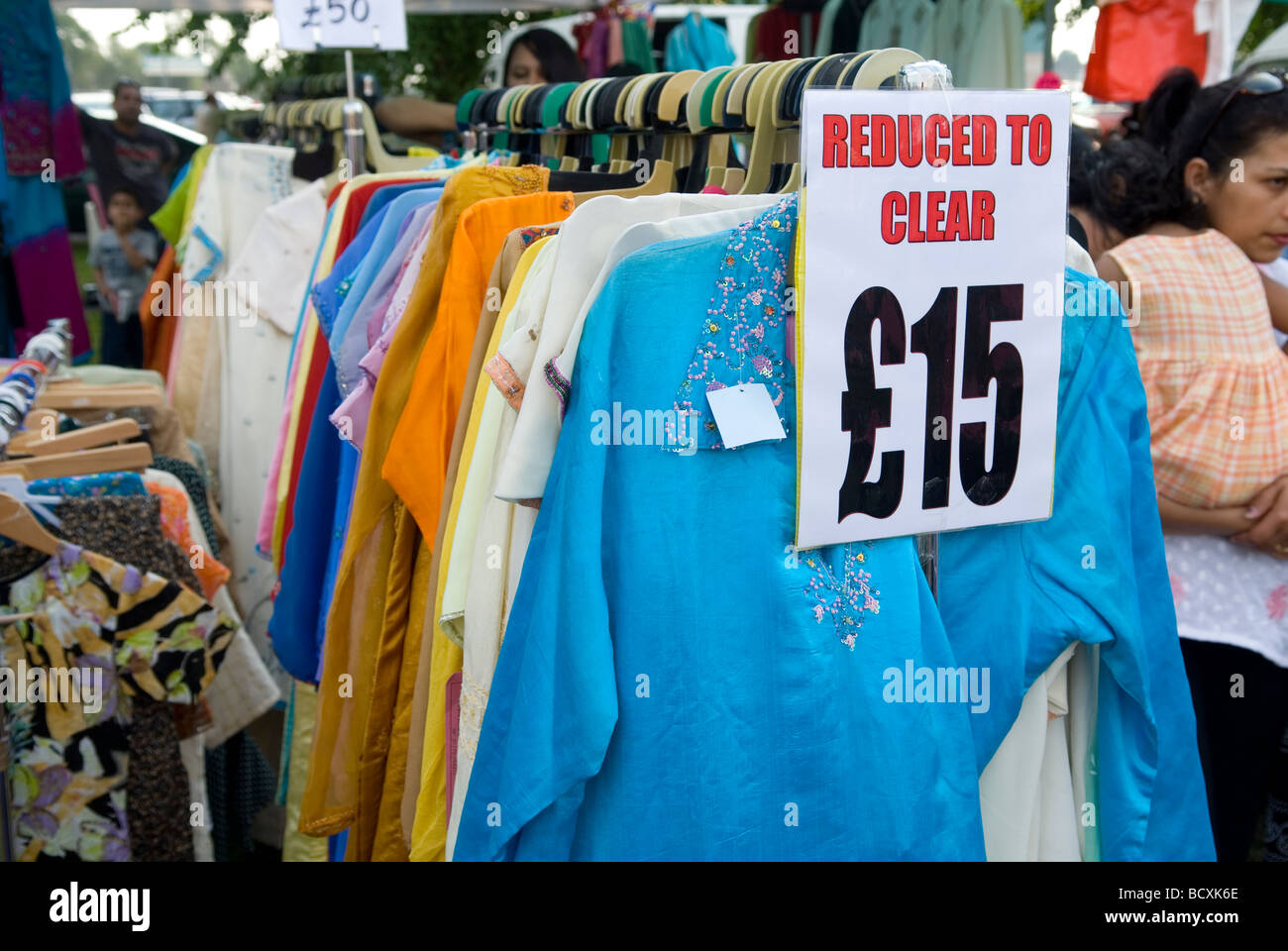
Image result for clothes on sale
Clothes on sale – ‘to clear’
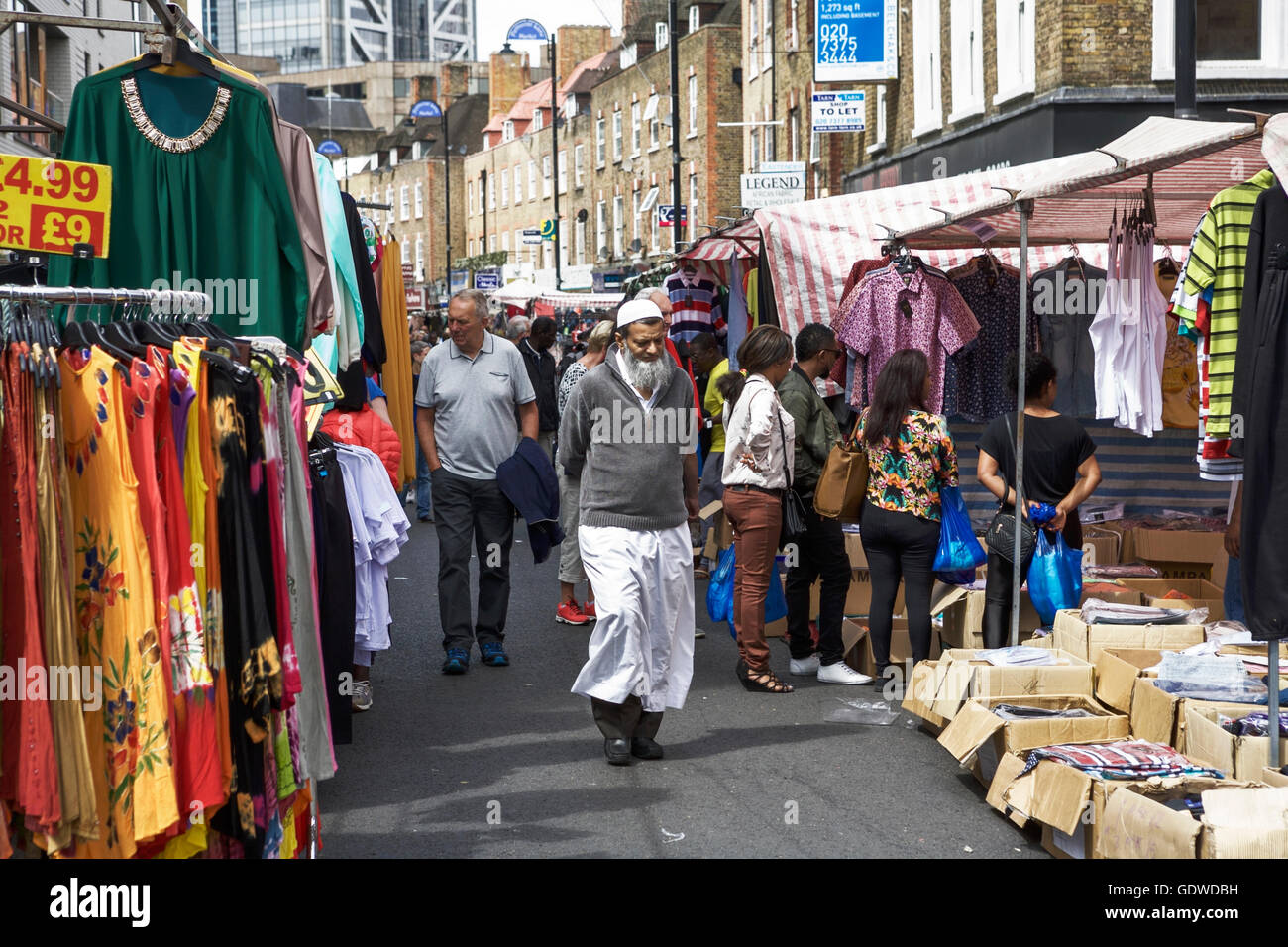
Image result for london street market
London street market.

NOW – to make it more animated – the people working in the shops will no doubt be using different varieties of English. Let’s see if the students can alter their voices to portray an upper-class, well-spoken salesperson; a basic shop worker and a working-class street trader. I (old ham actor that I am) shall demonstrate. Yes, it’s not a conventional lesson but maybe the students will appreciate something different (even if the management don’t).

To end, I really want the students to gain confidence in speaking, so a lot of talking in small groups. I have various talking points they can discuss, and once they feel relaxed, we can play:

Just a Minute: students are given an open subject and must speak for one minute without deviation, hesitation or repetition. Other students time them and judge their performance.

Language review: students must give the correct word to a definition pertaining to tonight’s theme.

And then … take care, see you next week, later, dude !

Image result for lighting cigar with money

Adult Class, Level 3: It was the butler, wasn’t it ?

12th November 2019 AEF 10B pp. 98 – 99

Image result for hitchcock quotes

In the UK, we do have a morbid fascination with murder. This man is Alfred Hitchcock who made films from the 1920s to the 1970s, mostly suspense, thriller or murder dramas. ‘Hitch’, who was born where I live in east London, made many famous films but in my opinion ‘Psycho’, which was filmed in black and white in 1960, is his best.

Image result for hitchcock psycho

Do you know these British characters ?

Image result for sherlock basil
Image result for agatha christie books
What do the book titles mean to you ?

Sentence building:

Do you like to read murder mystery books or to watch murder films ?

Plan – don’t just answer ‘yes’ or ‘no’ ! Make a short introduction, just one or two sentences:

I enjoy all types of films, however I especially like a good mystery ….OR

I don’t really read much because I am so busy studying. However …

Say what film or book you like, tell me about the author and other books.

Tell me about the story and then why you think it’s good

Conclusion – “Maybe this book is not for everybody, but if you enjoy a great mystery story, then I would recommend it.”

Vocabulary building: Some useful words –

thrilling // suspense // gripping // well-written // superbly acted // atmospheric // creepy // scary // a page-turner // I was on the edge of my seat.

However, we must move from the world of fiction to the world of fact. Before we move onto a true story from the USA, let’s keep it closer to home.

What can the students tell me about Lê Hoàng Hùng ?

Image result for le hoang hung

Students can work in small groups. They have five minutes to make a short presentation. Information can be found on these sites:

https://freedomforvietnam.wordpress.com/2011/02/20/goodbye-to-another-journalist-in-vietnam/#comments

https://en.wikipedia.org/wiki/Murder_of_Lê_Hoàng_Hùng

Then it’s time to get to tonight’s topic – murder, unsolved crimes and mystery. The lesson focuses on the mysterious death of the actress Natalie Wood. To introduce her, I’ll show a short clip of her acting, then the actual news report on TV on her death: 

Image result for natalie wood 1955

That clip, which has English captions, is from the film ‘Rebel Without A Cause’, from 1955. Now for the news footage:

Grammar: tag questions

Are you from Korea ? (a normal question, where we don’t know the answer)

You’re (you are) from Korea, aren’t you ? (using the tag ‘aren’t you’ to confirm what we think or know)

Take the pronoun (here it is ‘you’) and then the verb (‘are’). Invert the verb, that is, make it negative then add the pronoun. Hence ‘are’ becomes ‘are not’ = aren’taren’t you ?

Try these: First, decide on the appropriate pronoun (he, she, it, we etc).

Bangkok is the capital of Thailand, ……….. ?

Natalie Wood was American, …………….. ?

We still don’t know who killed her, ………….. ? (here the verb is negative, so make it positive)

He’s a brilliant actor, ………….. ?

For the remainder of the lesson, I want the students to talk, talk and talk (and, yes, I mean in ENGLISH !)

Firstly, they can review tonight’s book work and air their views, thus enabling them to review negotiation language (I see your point but …. // I can’t go along with that // you raise an interesting point // I’m not sure I entirely agree … etc).

Questions:

What did they think of the subject ? (interesting, relevant, morbid, inappropriate)

Do they enjoy reading as part of class time ? Do they feel that is a good way to learn ?

How was the listening ? How much could they follow (understand ?)

What is their opinion on the amount of new vocabulary encountered ?

Naturally, I expect other students to play Devil’s advocate – to argue a point even if they personally don’t fully agree with it.

EXAMPLE: “Playing Devil’s advocate, I would say the best way to learn vocabulary is to read new words and see how they are used in a sentence.”

Activities – Just a minute

Here, students work in pairs – there are given a very open subject (work, food, family, their hometown etc) and have to talk for one minute without hesitation, deviation or repetition.

Students can be given new questions and then made to change partners regularly.

Also, encourage peer help – allow the students to correct each other, as well as giving advice and encouragement.

And finally … Mysteries – what do you think ? True or false or … ?

Image result for loch ness monster

The Loch Ness Monster from Scotland

Image result for area 51

Area 51 in Nevada, USA. Did an alien spaceship crash here and aliens come to earth ?

The mysterious man from Taured

https://www.freepressjournal.in/bizarre-news/taured-mystery-when-a-mysterious-man-arrived-at-japanese-airport-from-unknown-country

Please Note: All photos are taken from Google Images or free photo sites, and are used for educational purposes only. No copyright infringement or offense is intended. If I have used your photo or image, and you wish me to remove it, just ask. This site is not monetized, I run it on my own dollar. Thank you.

Young Learners, Level 4:Tell me what you want !

7th November for 9th November 2019 E Up 4, U7 L2 pp. 66 – 67

It’s early Saturday morning … need some high-energy music to wake up !

Image result for spice girls

And the song:

https://www.youtube.com/watch?v=gJLIiF15wjQ

For natural speech patterns, we can copy –

‘Tell me what you want, what you really, really want,’ in standard English or –

‘Tell me whatya want, whatya really, really want,’ in non-standard, with the linking sounds as well as the swallowed ‘t’ in ‘want’.

To counter the argument that this is not appropriate for an English lesson, I would say that students need to be exposed to a variety of Englishes … the linking and swallowing of words and letters is how many native speakers speak … as students will discover listening to films, TV and, as is the case here, music. What I listen for in my students, of all ages, is NOT a robotic, flat repetition of an abstract sentence, but intonation, linking and natural rhythm.

Next, I will board the remaining five jobs, but scrambled. The students, placed into two teams, must unscramble the chosen word (one student per team). One point for the first to complete, bang the board and shout out the word. Then, to add a variance, I will hold three flash cards, one of which will be the job. If they guess correctly, they earn an additional five points.

The words: ocart // tasiri // eamg reedgins // airtolujsn // iinstctes

Continuing the theme, a Runaround game:

Where does an actor work ?

1 – a hospital // 2 – a bank // 3 – a theatre

A journalist can use …

1 – a microphone // 2 – a piano // 3 – a paintbrush

Who uses clay, paint or metal in their work ?

1 – a scientist // 2 – a musician // 3 – an artist

Brad Pitt, Kirsten Stewart, Emma Watson and Robert Downey Jr are all famous …

1 – musicians // 2 – game designers // 3 – actors

Angry Birds and Candy Crush and Donkey Kong were made by …

1 – game designers // 2 – actors // 3 – Thay Paul

One student from each team will run to the board and slap a number … they can change their mind for five seconds but then they have to stay where they are.

British culture.

As a break, a little introduction to the UK and its history and traditions. The beginning of November sees Bonfire Night or Guy Fawkes Night

Image result for guy fawkes mask

In 1605, a group of men wanted to kill the King of England, James I. They wanted to blow up the building where the King was going to be, so they hid 36 barrels of gunpowder under the building. However, the King’s soldiers found one of the men, Guy Fawkes, and arrested him. The King was safe ! To celebrate, people made giants fires called bonfires.

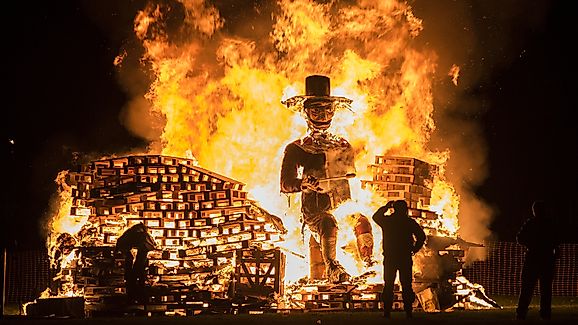
Image result for guy fawkes dummy

We still do this today. Also, children help to make a Guy Fawkes from old clothes and old bags, and then adults put it on the fire. Finally, there are fireworks, sometimes at home, sometimes in parks so everyone can see.

Image result for guy fawkes dummy

Many different types of fireworks are used:

https://www.youtube.com/watch?v=d4FGmYNCGW4

Some young children are holding sparklers – they have to wear gloves and be VERY CAREFUL.

What do you want to be or do ?

I will give the students boards and they have to write the three future plans. The last one (making movies, make a movie) is from a previous lesson, while the photo was taken in Berlin, Germany … long before my students were even born !

And now farewell … but next week, we leave the planet and go into space …

Image result for waving from space

Adult Class, Level 3: business icons.

4th November for 5th November 2019 AEF 10A, pp. 94 – 95

Tonight we’ll discuss modern icons, titans of the business world, in both USA and Vietnam. It’ll be no surprise that Steve Jobs and Mark Zuckerberg, who are both from the USA, are included although Vietnam also has a number of wealthy, super-rich who may not be as well known on the global stage. However tonight, which is a special day in the UK, we’ll warm up with the story of Guy Fawkes whose image is now iconic. He is part of the history of London where I was born. If you don’t know the name, maybe you’ll recognise these:

Image result for guy fawkes mask
Image result for anonymous guy fawkes mask
Image result for v for vendetta film poster

In 1605, a group of people wanted to blow up (like a bomb) Parliament (where the government meet) during a visit from the King. The group were caught; Guy Fawkes was discovered in the cellar of Parliament with 36 barrels of gunpowder. All the conspirators were executed for treason.

A good history, with notes for English-language learners, can be found here:

https://www.youtube.com/watch?v=soe8Z_Ej4Ck

This event is celebrated with bonfires and fireworks:

Image result for guy fawkes night

Here’s an example of what happens:

https://www.youtube.com/watch?v=2OttNo41ab0

Now, without further ado, tonight’s lesson: modern icons and, for grammar, relative clauses, hence the bold font earlier on the words who, where, which and whose.

I’ll be honest with you – this can be a little complicated, although it should be easy:

Relative pronouns

Who // for a person. Mark, who is from Chicago, is working in Ha Noi

Where // for a place. Ha Noi, where Mark works, is in north Vietnam.

Which // for a thing. The guitar, which is Japanese, was a bargain at £35.

Whose // possessive. The man whose guitar was stolen was very upset.

So far so good BUT … check this out:

London, where I was born, is the capital of the UK

London, which is in the south of England, is my hometown.

In a practice, we have an example similar to this:

London where I was born is the place which I love the most.

I’ve tried to think of a way to explain this in clear simple English … here goes !

In the first clause (London where I was born) we can ask “Where were you born ?” The answer is London. However, in the second clause (the place which I love the most) try the same pattern … “Where do you love the most ?” Here, the answer is “The place.” That is not a suitable answer – it is not a real location, so it becomes a thing – therefore we use which.

Oi troi oi ! English grammar !

Image result for confused student

Now, let’s put it into practise.

Mark Zuckerberg: born 1984 in NY, USA. Studied at Harvard. Co-founded Facebook. Net worth estimated at 70.3 billion USD (wow !).

Mark Zuckerberg, who was born in 1984, grew up in NY state which is in the USA. Harvard, where he studied, is the oldest university in the States (USA). Zuckerberg, whose net worth is estimated at over 70 billion dollars co-founded Facebook which is used all over the world.

Speaking of Facebook, one of my favourite films is ‘The Social Network’ about how the company was founded. The film, which was made in 2010, is scripted by Aaron Sorkin who is, in my opinion, a fantastic and highly talented writer.

Image result for social network caribbean night

Now try with Steve Jobs: born San Francisco // was a college drop out // first worked at Atari, a video games company // Apple computers were the first to utilise a mouse // co-founded Pixar in 1986 (what is Pixar ?) // died 2011, aged 56.

Now … team work. Class in two teams and they have to make a presentation about two Vietnamese business icons: Pham Nhat Vuong & Nguyen Thi Phuong Thao.

Students may use the internet and their own knowledge to tell me about these icons.

https://www.citypassguide.com/blog/vietnams-richest-business-people

Give me the facts (where and when were they born, how did they get rich, what is their area of business ?) and use relative clauses to produce longer, complex sentences.

richest business people

Students may, indeed I would encourage them to, use the internet and projector to bring their presentation alive. All members of the team must speak.

Team discussion:

Last week we covered negotiation language, phrases such as, “I see your point, but …” “I’m not sure I entirely agree with you,” “That’s interesting, however have you considered.

Today, the topics will be:

  1. Do people spend too much time on Facebook ? Is it a good or bad thing ?
  2. I need a new laptop; what should I buy, an Apple or Windows ?

I want to hear different points of view and people playing Devil’s advocate (arguing or making a point, even if you don’t personally believe it … just to encourage the opponent to develop their idea).

Image result for apple macbook pro
15-inch Macbook Pro at $2 399
Image result for windows 10 laptop
HP Intel Pentium 15.6 inch screen. $299 Windows 10

To encourage students, and to give them lexical resources, elicit some answers and ideas first, and board them, as well as introducing new concepts. What are the pros and cons ? The decisive factors ? What points should I consider.

With Facebook – is the answer binary (yes OR no ?) … it’s more interesting to discuss the middle ground, and illustrate it with personal examples.

I recently went on a short break to a nearby beach resort where I took many photos. I need to upload them to Facebook … or do I ? Does anybody REALLY care ? Can I really afford to spend the time doing it ? Or is it relaxing and pleasurable ? Does it enable my European friends to see a little more of my life here in Vietnam … what do YOU think … ?

Adult speaking class, Level 1: Review – adjectives, contractions and sentence building.

25th October 2019

I want my students to know present and past tense of common verbs, a range of adjectives (both positive and negative) and a good selection of nouns. Additionally, I’d like them to be able to put them together in long sentences, and start to use English contractions.

And so, to kick off (to start), a past tense exercise.

Ask your neighbour, “What did you do today ?”

I will give present tense verbs – students must use the past tense.

Example:

This morning, I go out and drink coffee: This morning I went out and drank coffee.

Hipster man drinking coffee from disposable paper cup sitting at - stock  photo | Crushpixel

Later, I meet an old friend and we have lunch together and talk and laugh.

japanese female friends tourists happy smile sitting eating Asian delicious  food in street local cafe vendor. two hungry young ladies travel in taiwan  having lunch tasty vermicelli noodles by spoon. Stock Photo |

In the afternoon, I sit in the park, play guitar and sing songs.

Young Man Playing Guitar Leaning On A Tree In The Park Stock Photo, Picture  And Royalty Free Image. Image 14734800.

Adverbs – these make your English more interesting and give more information.

Sai Gon is hot. Sai Gon is so // very // extremely // incredibly hot.

Sai Gon has delicious food – Sai Gon has extremely delicious food and it’s so cheap.

NOW – sentence building:

I love Sai Gon because it’s so hot. Additionally, the food is incredibly delicious and very cheap. However, it can be extremely noisy, dirty and polluted.

Tell me about Nha Trang: Speak about hotels / food / how to get there / things to do

Image result for nha trang

Tell me about these clothes and the people:

Language to use:

beautiful / stunning / eye-catching

cotton / silk / leather / straw / denim (jeans)

short hair / medium-length hair / shoulder-length hair / long hair

straight hair / curly hair / wavy hair

interesting / boring / delicious / bland / healthy / polluted / huge

teenager / young / in his 20s / middle-aged / elderly / old

HD wallpaper: Asian Girl, Checkered Shirt and Cap, Girls, City, Style,  People | Wallpaper Flare
Related image

Contractions: when we speak quickly, we contract (shorten words) to make a new sound.

Example:

I am = I’m / you are = you’re / he is = he’s / she is = she’s

I am happy =

You are sad

He is angry

She is very eye-catching

I will = I’ll (sounds like ‘eye – all’)

Tomorrow, I will go to work = Tomorrow, I’ll go to work

I’ll send you an email tonight

Call me after 5pm, I’ll be free then.

Conversation Practice:

I want to speak to my sweet lovely student Ms Tram. However, she is at work.

Caller: Hello, may I speak with Ms Tram, please ?

Receiver: Certainly. Who’s calling, please ?

Caller: My name is ……….

Receiver: I’m sorry, could you repeat that ?

Caller: No problem. My name’s ……..

Receiver: Could you spell that, please ?

Caller: Surely (of course) . . . . . . . .

Receiver: Thank you. Hold the line, please. I’ll connect you.

Caller: Absolutely. I’ll hold.

Receiver: I’m afraid Ms Tram has just gone to lunch.

Caller: Again ? She’s always eating hahaha.

Receiver: I’ll transfer you to her office, then you can leave a message.

Caller: Great idea. Thanks a bunch !

Receiver: You’re welcome

Finally, where did Ms Tram go for lunch ?

What did she order ? Did she like the food ?

Image result for British cafe food

Adjectives for food:

delicious / bland / spicy / filling / appetising / healthy / unhealthy / vegetarian / traditional

protein / carbohydrates / fat / fibre / vitamins /

fried / deep-fried / baked / boiled

Please Note: All photos are taken from Google Images or free photo sites, and are used for educational purposes only. No copyright infringement or offense is intended. If I have used your photo or image, and you wish me to remove it, just ask. This site is not monetized, I run it on my own dollar. Thank you.

Young Learners, Level 4: Daaaaaaaallliiiiiiiiiiiiiiiiiii ……

26th October 2019. E Up U 6, L 4 pp. 58 – 59

Warm up: Student description

In a previous lesson, the class learnt about basic adjectives to describe appearance. I will therefore choose a student and describe the physical characteristics, e.g. this student has long straight hair, is not very tall, and wears black glasses. The students must guess the student I am describing.

To make it more fun and engaging, it’s a good idea to put the class into teams for a bit of competitive spirit.

This is my friend, Ms Quynh. She has long straight black hair.

We can extend their vocabulary by including clothes: Ms Quynh is wearing a white top and a colourful skirt.

I will choose some students and give them a student to describe, while promoting the value ‘be polite‘. They can describe their hair, whether or not they wear glasses, and if that isn’t enough, they can identify them by their clothes.

To continue the theme of Art and creativity, I think it’s time they met Dali !

Dali normally gets a reaction (especially when we have fun elongating his name as long as possible). It’s also a chance to learn a few new words:

creative / genius / unusual / surreal

The last word maybe a little advanced, but it’s a good way to introduce new words; inside the word is ‘real’ so surreal has something to do with reality … but what ? Here’s a clue:

This is a mixture of reality and fantasy. The students can say which is which … and why does Dali give the elephants tuba faces … is there a reason or is it just crazy ?

I will then expect the student to form basic sentences using these new words, and not forgetting new vocabulary from previous lessons, for example,

“Dali’s paintings are very unusual.”

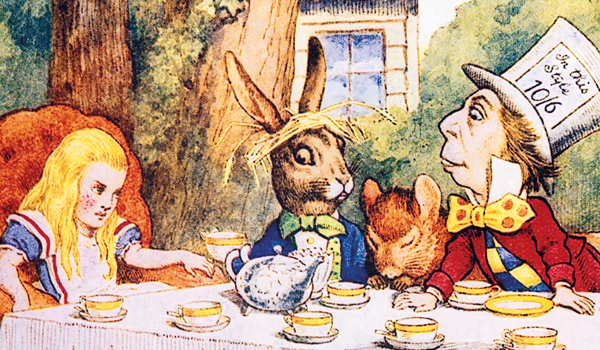
Next up, is a scene from the popular Children’s classic, ‘Alice in Wonderland’.

What is happening ?

Again, a mix of reality and fantasy. How would the students describe this ? It could be turned into a game … students put into small groups and given boards and markers. Points for the best vocabulary.

Key words: tea-party / young girl / bow tie / sleeping / garden

Now, to continue the theme and introduce some listening and reading skills, a video. This is the singer-songwriter Don McLean with ‘Vincent’, about the artist Vincent Van Gogh:  This can be played in the background as the students do a writing project today.

This version also has the lyrics, as well as various paintings by the artist.

A useful lesson will be the subjectivity of art – it is a chance for the student to think and to give their views, and to try to develop the English skills to express their thoughts. Clearly, this is a perfect opportunity to introduce some fixed expressions to express opinions:

In my opinion …

I feel that …

For me …

And even an idiom – it’s not my cup of tea !

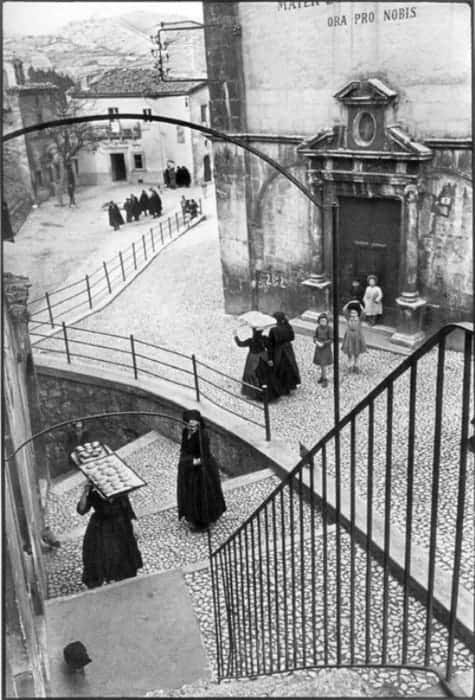
What kind of art are these and what do they think of them ?

Image result for giacometti artist
Alberto Giacometti
Image result for roman mosaic minotaur
Image result for great photographic art
Henri Cartier Bresson – 1908 – 2004
Image result for famous vietnamese paintings
Vietnamese silk painting

Then, with time against us, and a lot to get through, we’ll turn to the book work. They will watch a video which also shows sculpture, mosaic and photographs. The book also mentions Van Gogh, and a sculpture based on the Mad Hatter’s Tea Party from ‘Alice’.

Finally, to wrap up after the project, a little bit of fun. Who better than Dali (or at least a great actor playing Dali) ? 

Adult Class, Level 3: If he had known it was International Woman’s Day …

21st October for 22nd October 2019. AEF 9A pp 84 – 85

Warm up: Hit the ground running (or at least talking).

As always a model is a good idea; hence my Thai friend is coming to Vietnam:

Image result for two thai ladies

Ms Namsum is young and energetic. She’s into (really enjoy) clubs, sightseeing and shopping.

I suggest she starts the day with a traditional bowl of pho then goes to Sai Gon centre. She can walk there from her hotel in District 1 or take a taxi (Vinasun or Malin ONLY). She will be out of the heat and has a lot of shopping choices and places to eat or grab a coffee. She could rest at her hotel in the afternoon, then go to Nguyen Hue walking street when it gets cooler in the evening. She has many restaurants in this area. Furthermore, there are many English-language menus. Finally, she can go to Bui Vien street where there are many clubs and bars, as well as many tourists speaking English.

What do they students think ? Is that a good plan ? Have I missed something important ?

Language to use:

I see your point

That’s a good idea but …

If I may make a suggestion …

I’m not sure that’s such a good idea.

For example – That’s a good idea but you haven’t thought about sightseeing.

Or

Bui Vien can be very noisy so I’m not sure that’s such a good idea for a young lady on her own.

Two of my friends are coming to Sai Gon; the students, in two groups, have to arrange a fun day including sightseeing, shopping, eating and transportation. Then they have to compare their itineraries and exchange views and opinions. The students learn how to politely disagree with each and put forward their ideas and support their choices.

Image result for two english men
Tom and David

PLAN A DAY FOR TOM & DAVID

Where can they eat ?

What could they see or visit ?

How can they travel around ?

What can they buy as souvenirs ?

Where could they go at night ?

What safety advice would you give ?

What you need to know:

Both are 45-years old. They have good jobs and a good income. They like history and culture. They really enjoy good food and wine. Neither speaks any Vietnamese. They are too old for very loud clubs but they don’t mind having a few beers and maybe seeing some live music.

The students can make a presentation, and use the computer for images or maps to illustrate their plan. Then the other team can explain what they have organised, and the reasons why. I will decide which team has made the best choice.

Tonight’s main focus is the third conditional

This means speaking from hindsight.

We talk about something that happened to us in the past and how we would have changed it IF we had known some information.

A basic example: A visit a friend and it is her birthday, but I didn’t know. If I had known it was her birthday, I would have bought her a present.

Yesterday was Woman’s Day but …

Related image
Image result for angry asain lady

Alan didn’t know it was Woman’s Day subsequently his girlfriend, Ms Nhi, was extremely upset !

If he had known it was Woman’s Day, he would have bought her a present, some flowers and taken her out to eat.

However, it is too late NOW ! He’s in the doghouse (in trouble).

Notice all the past tense verbs. Furthermore, would is commonly used in conditional sentences.

Now, this example is based on a true story that my history teacher told me back in London.

My teacher was a somewhat dishevelled gentleman in his mid-30s. Let’s call him Mr Bowditch:

Mr Bowditch, history teacher at an east London school

Mr Bowditch lived in a bedsit, which is basically renting one room in a large house and sharing the kitchen and bathroom with other tenants. His room was not particularly comfortable:

One night, Mr Bowditch was in his room and began to feel a little hungry. He wanted some chocolate so decided to go to the off-license and buy some sweets (an off-licence is a shop that sells basic food and sweets but also alcohol and cigarettes. It used to be open until 11.00pm when most shops would close around 6.00 pm). He decided to buy, among other items, some ‘Fry’s Turkish Delight’ a sort of jelly covered in chocolate:

OK, so far so good. However, Mr Bowditch lived in a rather bad part of London, it wasn’t always safe to walk alone at night. Unfortunately, on the way home, Mr Bowditch meet the following young men:

They called out to Mr Bowditch and stopped him walking. They demanded:

Mr Bowditch had none, as he had just spent his money on sweets (candy). They didn’t believe him and began to search him. He showed them:

That was all he had … a few pounds, about 100 000 VND. The men became very angry and aggressive. Suddenly, they heard a police car siren. The men tried to drag Mr Bowditch into the tunnel, away from the road but he is very tall and stopped them. As the police car got closer, the men ran away. Mr Bowditch has never eaten ‘Fry’s Turkish Delight’ again.

There are several instances of the third conditional in the above story.

If Mr Bowditch had bought sweets on his way home, he wouldn’t have gone out later and been mugged (mugged means being robbed, often with violence or the threat of violence).

If Mr Bowditch had gone to a different shop, he wouldn’t have meet the muggers.

If the police car hadn’t been passing, Mr Bowditch might have been seriously hurt.

If Mr Bowditch hadn’t been so tall, he would have been dragged into the tunnel and maybe beaten or worse.

The structure is the first clause starts with ‘If’ then using a comma before completing the sentence. The first verb can be positive or negative (in the examples, I use ‘had’ and ‘hadn’t’).

We use this to talk about things that DIDN’T happen. 

And so to book work and communication activities.

Adding adjectives, increasing interest.

14th October 2019

How would you describe this lady ? Where is she ? What is the day like ?
How adjectives add information and colour to speech and writing.

Making lemonade out of lemons – this is an expression which means making something good happen out of something bad. Allow me to elaborate – I was taking a Level 1 adult-talking class. The work is all prepared for me, with powerpoint slides and recordings, as well as print-outs. However, the theme was quite advanced for this level. The subject was economics, vocabulary included such gems as ‘manufacturing’ and ‘exports’. All very interesting, but far above the resources of a beginners’ class. And then the students arrived … after a few introductory questions, it became clear that I would have to abandon the lesson and somehow improvise a class at beginner level.

As the class consisted of young ladies, I chose hair and clothes … and how to use adjectives to build up setences.

It is understandable that students focus more on learning nouns and verbs, with just a smattering of common adjectives. However, I think it’s a good idea that students learn and be encouraged to use two or three adjectives from an early stage, so it becomes a natural part of their English (as well as boosting their scores in oral tests).

So, back to my class; three young ladies with very limited English but, fortuitously, also with three different hairstyles.

Image result for asain girl, long brown hair

Let’s start very simply; Ms Kim (this is a Google image, not my real student) has long hair. OK, but we can add more … what colour is it … is it straight or wavy ? Finally, let’s be polite and complimentary … Ms Kim has beautiful long wavy brown hair.

The students may have to learn hairstyles or shapes (wavy, pony-tail, bangs, pleated), and students should learn a small number of new words every lesson. It helps if they can see them in the class and then use them in controlled speaking.

So, without much effort, their sentence length had doubled. Next to Ms Kim was Ms My

Related image

Once the students had a word bank and some practice, they were able to describe Ms My as having a beautiful long black ponytail, or beautiful long black straight hair, tied into a ponytail. Fortunately Ms Anh has a different style.

Image result for asain girl, medium hair

But now, it was clear my students were comfortable with ‘beautiful’ so time for some synonyms – stunning, gorgeous, eye-catching. Ms Anh has medium-length hair or, as I insist on a full sentence:

Ms Anh has gorgeous medium-length brown hair. But we can go further – let’s compare Ms Anh’s hair with Ms Kim – both have brown hair, yet different shades. Thus we introduce dark and light:

Ms Anh has eye-catching medium-length dark-brown hair.

It’s also very rewarding to hear students start building sentences after struggling to say three or four words just five minutes earlier. And so, we continue … let’s turn to jewellery using the students themselves as examples; someone will have earrings (studs or long), another will have a neckless, a bracelet, rings etc. I ask Ms Anh to show her ring … it is gold, while Ms My has a silver one. Or, at least silver-coloured !

Then we turn to clothes, and first elicit different types of material and patterns:

silk // cotton // denim // leather //

plain // floral // striped // checked

Image result for asian girl in check shirt

So now, when they see a picture like this, the students will be able to describe the lady’s hair, jewellery and clothes and by extension, the room in which she is situated.

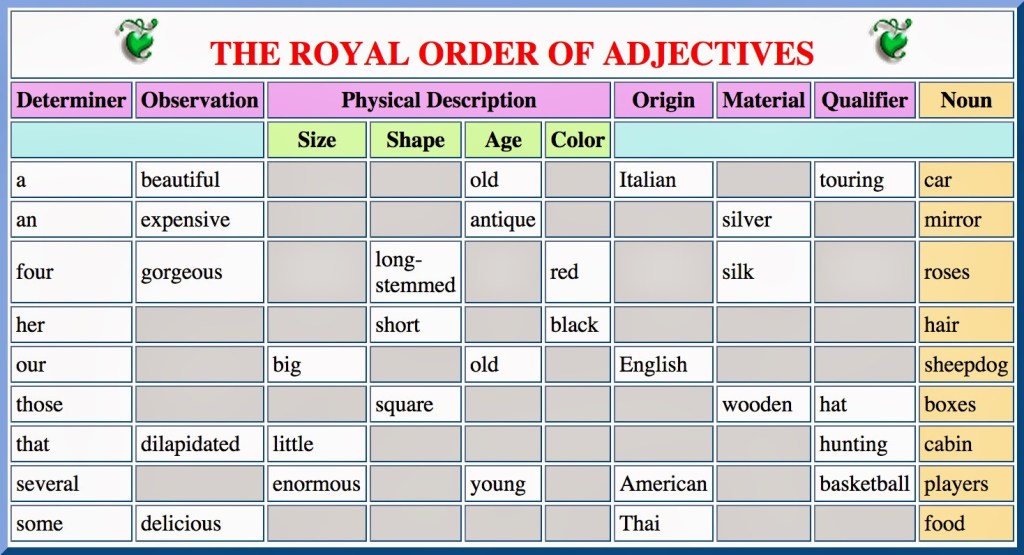
In terms of grammar, there is an order of adjectives, though I would not introduce this too early on. Instead, I would stress the opinion word is first, while size is before colour (eye-catching short light-blue skirt).

The website for the above chart is:

https://www.hip-books.com/teachers/writing-about-reading/adjectives/

Now, let’s return to the first picture, a young friend of mine whom we shall call Ms Ngoc. Students can work together and give me as much information as they can. This includes her hair, clothes but also what she looks like, where she is and what time of day. Furthermore, how does the weather look ? How does she look ?

Finally, a good activity is to board some common adjectives and have the students give the opposites or antonyms:

expensive // genuine // cheerful // delicious // interesting // honest // generous

This is continued in subsequent lessons, so students become used to incorporating two or maybe three adjectives in sentences. And them or course … we have adverbs … but that is another story !

Adult Class, Level 3 (class 2): She said, she said.

7th October for 8th October 2019. AEF 8A (1, 5 & 6), pp. 74-75, 77

Sentence building – becoming fluent and coherent

Use

  • adverbs
  • adjectives
  • opinion phrases
  • linking words and discourse markers
  • new vocabulary

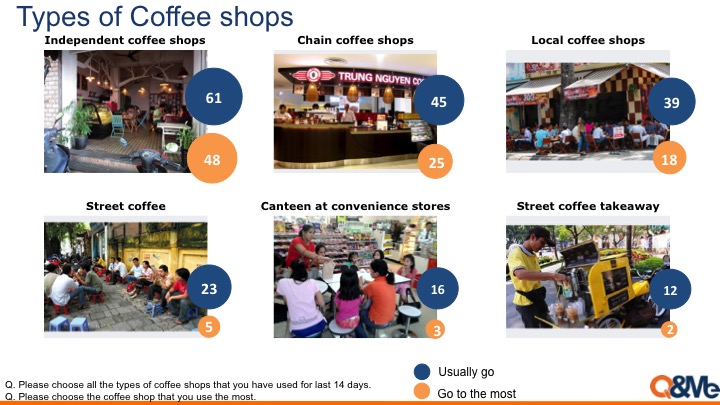
Vietnam is famous for coffee; coffee shops are ubiquitous. In fact, there are so many, it’s hard to see (difficult to understand) how they stay in business let alone turn a profit.

Be that as it may, let’s use this as a learning opportunity. To practice making longer sentences, and as a warm up exercise, the students can ask each other, “Where do you go for coffee ?”

Tips:

Don’t answer the question directly and immediately; Begin with a short introduction:

Sai Gon has so many coffee shops, some are cheap while others can be quite expensive although they have a wide range of delicious coffee. Personally, I like going to …

Then

Ask

  1. How MUCH do you like it (adverbs) ?
  2. What kind of coffee (adjectives) ?
  3. What do you think about this ? (opinions)
  4. WHY do you like it (give reasons)
  5. Interesting words, phrases, idioms

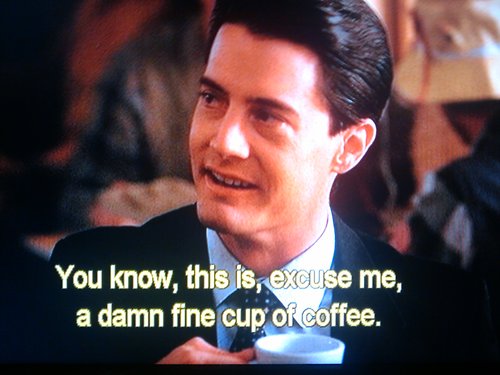
Personally, I like Tap Coffee which is an independent shop where I live. I enjoy going there so much because the owner is very friendly and tries to speak English with me. There isn’t a lot of choice, so I order cappuccino with hot, fresh milk. In my opinion, it is good value and tastes delicious. What I like about the shop is the free wifi, the comfortable chairs and the atmosphere. Furthermore, it is usually very quiet and it therefore a good place to read. I love to put my feet up, kick back and sip my damn fine coffee.

Image result for damn fine coffee

Before the exercise, elicit and board as many relevant words and phrases as required. The students have a discourse marker list, so I could insist that they use certain words (moreover, therefore, consequently etc). Additionally, I’ll need to explain vernacular phrases such as ‘kick back’ and ‘put my feet up’.

IF a student doesn’t like coffee, then they can say where they go and what they drink. IF they don’t go anywhere or like anything (yes, I have had that in a class), then they can explain WHY NOT!

Key vocabulary: ambience // aroma //atmosphere

Now, their turn; after this model, they must tell me about their favourite app on their phone. Give them five minutes to write a short piece.

Image result for iphone apps

After, the students can read to each other, and we can incorporate their answers into tonight’s grammar: reported speech.

For example, Ms Jane is speaking with Mr Tony:

Jane, “I really love the iTunes app.”

Tony, “Oh, for me, I prefer YouTube because I can watch music videos. I will send you a link to The Beatles.”

This is called direct speech. If I want to repeat what they said, I use indirect or reported speech. Look what happens to the subject and the verb:

Jane said that she really loved the iTunes app. (or She said she really loved …)

The subject changes from 1st person (I) to third person (she), while the verb alters from simple present to simple past.

What happens with Tony ? Look for the verb(s) then put them into simple past. Change pronouns to the 3rd person.

Now – changing reported speech back to direct speech.

He said the egg was perfect

(Change the past simple verb to simple present)

Now, here’s the actual quote (around the 2:28 mark):

https://www.youtube.com/watch?v=crPVJ3CXs1g

This is one of my favourite clips about Sai Gon: Mark Weins eating a fairly typical Viet breakfast … but enjoying it SO MUCH !

Image result for mark wiens face

Student Survey

Student must ask three people, what they usually eat for breakfast, and drink, as well as where they eat; do they go out, or cook at home ? Following that, they have to report to the class on their findings, using reported speech e.g.

She said (that) she usually cooked at home, but occasionally ate out when she felt too tired.

Then we have the book work and grammar practice. To end, we can have an eyewitness game. Students work in pairs, one having their backs to the board. On the screen, I show a man or lady. The first student has to describe, in as much detail, what is happening and how the person looks. Give them a minute or two. Then, the second student must report to me what they have learnt. Finally, they are allowed to see the picture, to compare the reported speech with the actuality. Photos could include:

Image result for Hari won singing
Related image
Image result for boy eating chocolate cake
Image result for egyptian lady
Image result for laughing rabbi
Image result for sir alex screaming