I expect all students to be able to use the past tense by the end of the seminar.
infinite / present (verb 1) / past (verb 2)
1 to be am / was [I am / I was]
are / were [they are / they were]
2 to have have / had
3 to do do / did
4 to say say / said
5 to go go / went
6 to get get / got
7 to make make / made
8 to know know /knew
9 to think think / thought
10 to take take / took
11 to see see / saw
12 to come come / came
13 to want want / wanted
14 to use use / used
15 to find find / found
Past Tense Exercise
1. You (have) a test yesterday.
You had a test yesterday.
2. They (do) their homework last night.
They ——- their homework last night.
3. You (are) lazy last week.
You ——- lazy last week.
4. I (am) hungry yesterday.
I ——- hungry yesterday.
5. Sam (go) to Hong Kong last year.
Sam ——- to Hong Kong last year.
6. The man (make) tables and chairs yesterday.
The man —— tables and chairs yesterday.
7. Two weeks ago the boy (has) a new bicycle.
Two weeks ago the boy ——- a new bicycle.
8. In London I (know) many people.
In London I _______ many people.
9. I (get) 10 points in my English test.
I ______ 10 points in my English test.
10. I (want) to see a great film.
I _______ to see a great film.
Extra work for Top Cats
Corrections: Write in the past tense
I (am) born in Vietnam and (arrive) in Sai Gon in 2020. I (go) to school in District 1 because I (want) to work near my home. Last week, my friend (have) a party. She (dance) all night and I (hear) her singing. In the morning, she (have) a headache.
Please Note: All photos are taken from Google Images or free photo sites, and are used for educational purposes only. No copyright infringement or offense is intended. If I have used your photo or image, and you wish me to remove it, just ask. This site is not monetized, I run it on my own dollar. Thank you.
Last week, we learnt some adjectives and used them in a short piece of writing.
Can you remember the adjectives ?
Let me think …
The adjectives:
old / young / beautiful / handsome / ugly / happy / angry / sad / healthy / unhealthy / amazing / clever / cute / dangerous / exciting / great / intelligent / interesting / lazy / talented
This week, we are going to write another short story, but this time using Past Tense (Verb 2).
To start, here is a list of verbs in the Present Tense (Verb 1). What is the Past Tense ?
buy // drink // eat // go // listen // make // play // read // say // see // take // watch
Some of those are hard !
bought / drank / ate / went / listened / made / played / read / said / saw / took / watched
What did you do last week ?
Use Past Tense (Verb 2) and the new adjectives. I want three sentences with at least three verbs and three adjectives.
EXAMPLE:
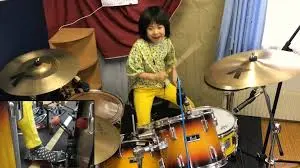
On Saturday I watched an interesting video on YouTube. A young girl played drums very well. She was so talented. On Sunday, I read an exciting book and listened to some old music.
Now … your turn.
What did you do, what did you see, what did you eat and drink ? Did you … ?
Goodbye from Nick, Ben, Chris & Nathan
Please Note: All photos are taken from Google Images or free photo sites, and are used for educational purposes only. No copyright infringement or offense is intended. If I have used your photo or image, and you wish me to remove it, just ask. This site is not monetized, I run it on my own dollar. Thank you.
The suffix –ist is used to create an agent noun — a noun that denotes someone or something that does something. Two suffixes more commonly used to create agent nouns are –er and –or, as in worker, bookseller, beginner, visitor, creator, and accelerator.
amelioration
The development of a more favorable meaning for a word. Take, for example, quell. In current usage, banks move to “quell inflation.” Governments issue proclamations to “quell fears”.
In Old English poetry, on the other hand, when a warrior “quelled” his opponent, he killed him.
Semantic amelioration is not as common as semantic deterioration, in which a formerly inoffensive word acquires a negative meaning.
anarthrous
As a grammatical term, it means, “used without the article.”
From ‘Daily Writing Tips’
When commenting on the opening sentence of Dan Brown’s The DaVinci Code, Geoffrey Pullum called it an “anarthrous occupational nominal premodifier.”
Renowned curator Jacques Saunière staggered through the vaulted archway of the museum’s Grand Gallery.
Pullum said that the construction is “reasonable” in a newspaper, but has the “wrong feel and style for a novel.” Had Brown written, “The renowned curator Jacques Sauniére,” the sentence would have escaped criticism.
apposition
Commas with appositives
An appositive is a noun or noun element that follows another noun and serves to identify it further. The nouns are said to be “in apposition.”
An appositive phrase usually follows the word it explains or identifies, but it may also precede it.
The term derives from a Latin compound meaning, “to set beside or near.” Nouns in apposition are set beside one another. When one of the nouns simply restates the other one, commas are needed to set it off.
Andrew Johnson, the seventeenth US president, ranks among the three worst presidents of the United States.
The phrase “the seventeenth US president” is just another way of saying “Andrew Johnson.” It provides additional information, but leaving it out would not change the meaning of the sentence. The additional information is non-essential, so it is set off with commas.
Take another example:
My English teacher says that Fitzgerald’s novel The Great Gatsby is overrated.
Here, The Great Gatsby is in apposition to novel. Because Fitzgerald wrote more than one novel, the specific title is essential information. It cannot be omitted without obscuring the meaning of the sentence. The teacher does not necessarily think that the author’s other novels are overrated. No commas are needed when the additional information is essential.
In the following sentence the nouns in apposition restate the nouns that precede them. Because the information they provide is non-essential, commas are needed to set them off:
As a team, we send our thoughts and deepest sympathies to Peter’s wife, Jill, and his children, Mark and Hilary.
False Titles
A common type of apposition found principally in journalistic writing is the “false title.” This is a descriptive phrase placed before a noun, but used as if it were a title.
Novelist John le Carré has set himself up as the psycho-analyst of the cold war.—Time
Cellist Joshua Gordon, in the slow movement, showed off his rich, lyrical tone. Buffalo News
This construction is known as “a Time-style adjective” because it’s thought that Time magazine either began the practice or popularized it.
diaeresis
From Wikipedia, the free encyclopedia
The diaeresis diacritic indicates that two adjoining letters that would normally form a digraph and be pronounced as one sound, are instead to be read as separate vowels in two syllables. For example, in the spelling ‘coöperate’, the diaeresis reminds the reader that the word has four syllables co-op-er-ate, not three, ‘*coop-er-ate’. In British English this usage has been considered obsolete for many years, and in US English, although it persisted for longer, it is now considered archaic as well. However, we still see it in words such as naïve.
endonym and exonym
From Wikipedia, the free encyclopedia
An endonym (from Greek: éndon, ‘inner’ + ónoma, ‘name’; also known as autonym) is a common, internalname for a geographical place, group of people, individual person, language or dialect, meaning that it is used inside that particular place, group, or linguistic community in question; it is their self-designated name for themselves, their homeland, or their language.
An exonym (from Greek: éxō, ‘outer’ + ónoma, ‘name’; also known as xenonym) is a common, externalname for a geographical place, group of people, individual person, language or dialect, meaning that it is used only outside that particular place, group, or linguistic community.[1] Exonyms exist not only for historico-geographical reasons, but also in consideration of difficulties when pronouncing foreign words.[1]
The Premier League, also known exonymously as the English Premier League or the EPL is the top level of the English football league system.
Please Note: All photos are taken from Google Images or free photo sites, and are used for educational purposes only. No copyright infringement or offense is intended. If I have used your photo or image, and you wish me to remove it, just ask. This site is not monetized, I run it on my own dollar. Thank you.
The photo shows Tricot who are a Japanese rock band. The band, who sing in Japanese, are very talented. I would love to see them. Furthermore, I really wish to visit Japan although hotels in Tokyo cost an arm and a leg.
Let’s review the idioms and vocabulary covered in our first lessons. Let’s kick off with:
Basic idioms:
it’s raining cats and dogs
it costs an arm and a leg
piece of cake
I’m burning the candle at both ends
once in a blue moon
pass with flying colours
turn over a new leaf
put your nose to the grindstone
Let’s put it to the test – what idioms would you use ?
It’s no problem at all, it’s a __________
She needs to get a high score, I want her to ______
I must be more serious about learning piano. I have to _______
The iPhone X is very expensive, it _______
You need to stop going out every night and missing school. You need to _____________
She dances all day, then sings all night; she’s _________________
Bring an umbrella if you go to the UK, it’s always ____________
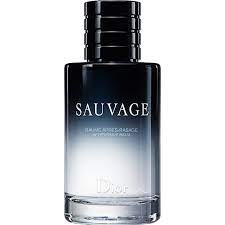
Ms Anna simply adores Chanel perfume however, because it _____________ , she only wears it __________________________________.
Relative Pronouns
This lady, who wants to work in London, is studying hard for her IELTS.
who for people:
This is the man who helped me to learn German.
which for things:
We tried fish and chips which is delicious.
where for places:
Let’s go to the shop where we saw the great bargains.
Whose possessive:
That’s Tricot, the band whose record we heard last night.
Endgame
Can you remember, what word means ‘everywhere’ ?
Can you give me an example ?
Instead of saying, “I think,” you could say … ?
Again, please give me an example.
Answers
Ubiquitous:
In Sai Gon, which is the largest city in Viet Nam, coffee shops are ubiquitous.
Motorbikes are ubiquitous in Viet Nam.
Fast food shops are ubiquitous in the USA.
In my opinion
In my opinion, learning English is incredibly important.
Sai Gon, in my opinion, is the best city in Viet Nam.
In my opinion Tricot are absolutely amazing.
Goodbye, see you next class
Please Note: All photos are taken from Google Images or free photo sites, and are used for educational purposes only. No copyright infringement or offense is intended. If I have used your photo or image, and you wish me to remove it, just ask. This site is not monetized, I run it on my own dollar. Thank you.
Basic grammar is a continual problem with my online classes, that and the stubborn reluctance [contumacy for those who like to learn new words] to write down new words, or to learn from their mistakes.
Basic grammar is basically lacking.
Many older student will, I am sure, have traumatic memories of conjugating verbs endlessly, without ever applying them in real-life situations. Hence, I propose a synthesis; drilling of verb ending, and then applying them in simple sentences.
Enough preamble, let’s go to work !
The verb ‘to be’
Only teach constructions in upper level classes
I am // I’m
you are // you’re
he is // he’s
she is // she’s
it is // it’s
Mr John is // Mr John’s
we are // we’re
they are // they’re
Have students repeat until their grammar is perfect. Make games, see who can conjugate the verbs clearest and quickest.
Now … practice:
First let’s use an adjective:
happy / sad / lucky / hard-working / lazy
Let’s start with the adjective ‘happy’
I am happy // I’m happy
you are happy // you’re _______
he _____ \
she ______ \
it _______\
Mr John ______ \
we ____ \
they ______
Secondly, let’s use a continuous verb (verb + ing)
reading / playing / swimming / watching TV / eating


I am reading
you ___ _______
he __ _________
she __ _______
It __ _______
Mr John __ _____
we __ ______
they __ ________
The verb ‘to have’
I have
you have
he has
she has
it has
Ms Jane has
we have
they have
Now … practice:
Let’s use some common nouns
sister (or twin sister) / piano / dog / iPad / new book
I have a ____
you ____ ______
he ___ _________
she ___ _______
Ms Jane ____ _______
we ____ ______
they ____ _______
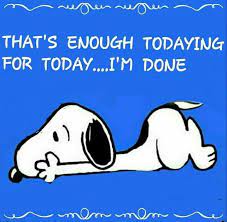
OK, Snoopy, enough is enough … but we have just started. More blogs to follow.
Happy 2022, the Year of the Grammar
Please Note: All photos are taken from Google Images or free photo sites, and are used for educational purposes only. No copyright infringement or offense is intended. If I have used your photo or image, and you wish me to remove it, just ask. This site is not monetized, I run it on my own dollar. Thank you.
Can girls play drums ? Yes, they can or no, they can’t.
The amazing, incredible Senri Kawaguchi from Japan
Can boys dance ? Yes, they can or no, they can’t?
Madu Mmesoma Anthony from Nigeria
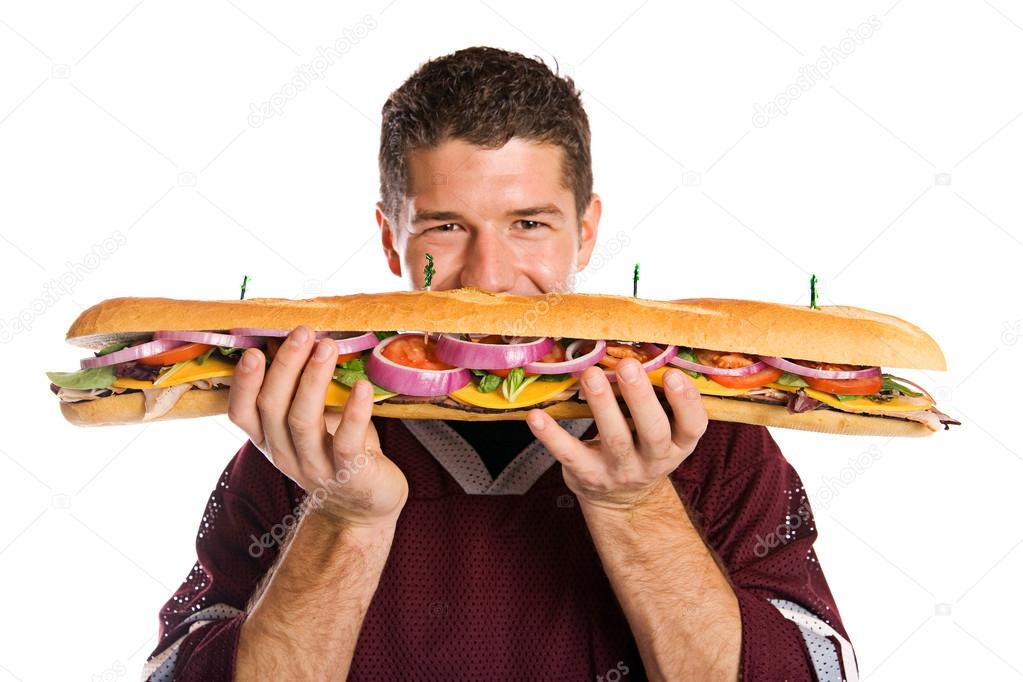
Can you eat a huge sandwich ?
Can you wiggle your ears ?
Finally, can anybody walk on water ?
Yes they can or no, they can’t ?
The brilliant magician Dynamo from the U.K.
Bye bye from the big brown friendly bear
Please Note: All photos are taken from Google Images or free photo sites, and are used for educational purposes only. No copyright infringement or offense is intended. If I have used your photo or image, and you wish me to remove it, just ask. This site is not monetized, I run it on my own dollar. Thank you.
The English language, despite having a multitude of idioms, slang, vernacular, dialects, neologisms etc, can be easier to learn than other languages when it comes to the definite article. I am referring to the word ‘the’.
English nouns have no gender; the language doesn’t have the complex German structure of declension when the word ‘the’ changes depending if the noun is the subject, object or indirect object.
However, it’s not all plain sailing. English speakers employ declension when it comes to pronouns. Please allow me to illustrate:
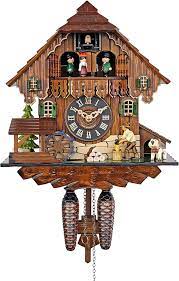
A cuckoo clock, invented in Germany (not Switzerland, as is often believed).
I bought this clock from a friend so it now belongs to me. It is my clock, it is mine.
However, with the wrong declension:
Me bought this clock from a friend so it now belongs to mine. It is I clock, it is my.
Last night, a level 6 class (aged around 10) were having a lesson on conservation. The examples were all in the second person (your), and the students were having problems changing the pronoun. Hence, this blog:
Let’s go to work
Let’s keep it simple. There are three cases:
the subject, the object and the possessive
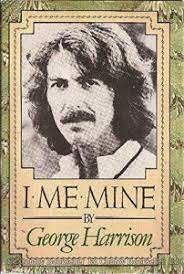
I, Me, Mine
In our example I bought this clock from my friend, the first noun is ‘I’ (subject)
so it now belongs to me. (object)
It is my clock, it is mine. (possessive)
Now … let’s practice
I // me // my or mine
you // you // your or yours
he // him // his
she // her // her or hers
we // us // our or ours
they // them // their or theirs
EXAMPLE: What can you do to stay healthy ?
I can exercise. Being healthy is important to me. These are my weights. They are mine.
How about changing the pronoun ? Tell me about this man:
He is very funny. Many people like him. It is his dog. The dog is his.
Tell me about this lady
— is very happy. I can not beat — in a game. — racket (bat) is very expensive. It is —-.
Let’s use ‘you’
— can wash your hair. I will buy some cologne for — . It is —- cologne, it is —– .
Tell me about these people
—- are American. If you go to the USA, maybe you will meet —-. This is —– flag, it is ——.
Please Note: All photos are taken from Google Images or free photo sites, and are used for educational purposes only. No copyright infringement or offense is intended. If I have used your photo or image, and you wish me to remove it, just ask. This site is not monetized, I run it on my own dollar. Thank you.
Recent online classes have revealed a distressing lack of ability using basic verbs in the past tense or Verb 2 as they are called in my neck of the woods.
In Vietnamese, the past tense is formed differently.
The verb remains the same but other words are added to indicate the tense. Alternately, time indicators are employed. Very briefly, a literal translation from the Vietnamese could be:
Yesterday I eat rice
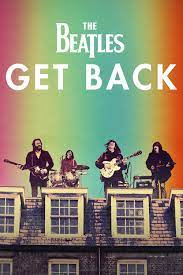
Therefore a language teacher needs to be aware of the linguistic differences. Be that as it may let’s Get Back to basics.
Activity 1
What is the past tense (Verb 2) of these verbs:
eat / drink / do / play / see / go
Activity 2
help / visit / work / ride / talk
Activity 3
‘to be’:
I am / I was
you are / you were
he is / he was
she is / she was
Let’s use past tense (verb 2) with an adjective
Tell me what is the sentence if we use verb 2
EXAMPLE: I am happy. = I was happy.
NOW … YOUR TURN
You are sad = You ______ sad.
He is tired = He _______ tired.
She is funny = She _______ funny.
I am shy = I ______ shy.
He is small = He ______ small.
She is big = She _____ big.
You are young = You ______ young.
Activity 4
What did you do today ?
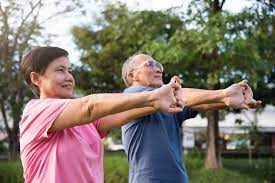
Each student takes a turn. Use these photos to help you.
Extra practice:
buy / drink / surf the internet / help parents / cook / do homework / wake up
Present tense ——– Past tense
act —— acted
go —- went
learn —— learned OR learnt
play — played
read —– read (pronounced ‘red)
ride —— rode
sleep —– slept
watch —- watched (pronounced ‘watch -t‘)
win —- won
What is the past tense (Verb 2) ?
I act in a film. Last week I ______ in a film.
I go to London. Last year I _______________ to London.
I ride an elephant. Last month I ___________ an elephant.
I learn English. Last Saturday, we ___________ English with Mr Paul.
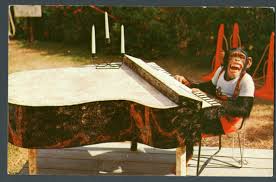
The monkey plays piano.
Last night, the monkey _________ piano.
She reads a book. Last Sunday she _____ a book.
He sleeps all day. Yesterday he _______ all day.
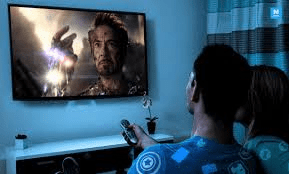
I watch the amazing Spiderman.
Last week I ______ the amazing Spiderman.
Put these verbs into the past tense, then complete the sentences:
Please Note: All photos are taken from Google Images or free photo sites, and are used for educational purposes only. No copyright infringement or offense is intended. If I have used your photo or image, and you wish me to remove it, just ask. This site is not monetized, I run it on my own dollar. Thank you.
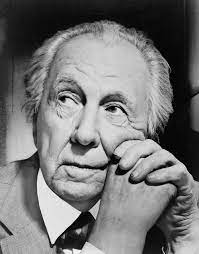
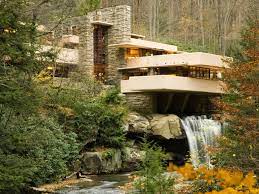
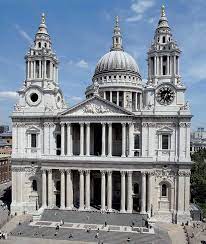
Arrange class into small groups, named after famous architects from English speaking countries, e.g. Christopher Wren, Frank Lloyd Wright & Amanda Levete
Sir Christopher Wren
St Paul’s Cathedral, London
Frank Lloyd Wright
Fallingwater Building, Pennsylvania, USA
Amanda Levete
MAAT Museum, Lisbon
Therefore we have Team Wren, Team Levete & Team Wright
Game 1 Synonyms: give me a better word for …
yummy // good // big // very small // smart // very friendly // someone from Korea // scared // not easy // not clean // has a lot of money //
(1 point for each correct answer)
Game 2:Correct these sentences …
The Science book is very boring or bored.
I feel so excited or exciting about learning English.
She was disappointed or disappointing about the Japanese film.
(2 point for each correct answer)
Game 3: Make sentences using adj + noun
EXAMPLE:
Qri from K-pop band T-ara
The beautiful lady is a popular singer in a Korean group.
The Korean woman is smiling. She is cute and happy. She has long, brown hair.
Qri is a popular singer. She is Korean and is a fantastic dancer.
Team Wren:
The scientist Albert Einstein. He was born in Germany.
Team Wright:
This lady was born in Russia
Team Levete:
This lady was born in Zambia
(2 point for each adjective + noun structure)
Game 4: Adjective salad bar.
Look at the photos. Choose one you like and make a sentence or sentences. However, you will earn more points by using higher-level adjectives.
Earn 1 point for using these adjectives:
big, fat, friendly, happy, new, old, sad, small, young, yummy
We have ‘visited’ many amazing and unusual places in our lessons, and met many friendly, outgoing people.
So, where do YOU want to go ?
Tell me where, tell me why and tell me something about the country.
EXAMPLE:
I want to visit Korea because it is a very beautifulcountry and has many friendly and outgoingpeople. The food is spicy but delicious and very healthy. The history is amazing and the museums are very interesting.
(2 point for each adjective + noun structure, 1 point for every other adjective.)
Please Note: All photos are taken from Google Images or free photo sites, and are used for educational purposes only. No copyright infringement or offense is intended. If I have used your photo or image, and you wish me to remove it, just ask. This site is not monetized, I run it on my own dollar. Thank you.