Followed by a game. I shall show photos of five of my friends, along with some personality adjectives and occupations. The class simply have to guess my friends’ job and what kind of people they are … and justify their decisions.
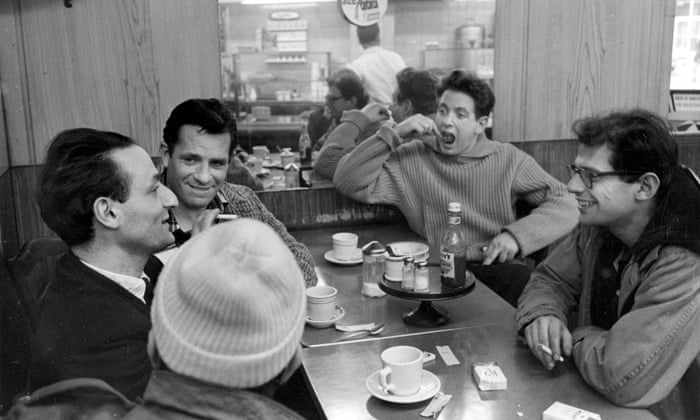
Members of the ‘Beat Generation’ hanging out & chewing the fat in New York, 1950s. Allen Ginsberg, whose poem ‘Howl’ ends this blog, is on the right, smoking a cigarette.
A major issue I encounter with ESL students is pronunciation and associated features such as intonation, stress, rhythm and pacing. Therefore, I decided to select some English-language poems for practice in class, while online students can find a multitude of YouTube videos of poems being recited by professional actors. I shall add some links at the end of the blog.
Now, without further ado, poetry.
Poetry can take many forms, not just writing; poetry in cinema, in dance, in speech … in life.
Let’s take a look at the first poem, ‘Dreams’ from 1922.
Recite the poem slowly and clearly. In the first line, stress ‘fast‘ and ‘dreams‘.
Secondly, listen for the rhyming pattern in lines 2 & 4: ‘die’ rhymes with ‘fly’, while verse 2 rhymes ‘go’ with ‘snow.’
Regarding ‘colour’, which tone of voice to use, decide if this is a positive or negative poem. Discuss in class what you think and give reasons.
Remember, art (painting, cinema, literature etc) is subjective; each person is allowed to have their own opinion. Develop speaking skills to enable you to support your views (give reasons).
Stop all the clocks, cut off the telephone, Prevent the dog from barking with a juicy bone, Silence the pianos and with muffled drum Bring out the coffin, let the mourners come.
Let aeroplanes circle moaning overhead Scribbling on the sky the message ‘He is Dead’. Put crepe bows round the white necks of the public doves, Let the traffic policemen wear black cotton gloves.
He was my North, my South, my East and West, My working week and my Sunday rest, My noon, my midnight, my talk, my song; I thought that love would last forever: I was wrong.
The stars are not wanted now; put out every one, Pack up the moon and dismantle the sun, Pour away the ocean and sweep up the wood; For nothing now can ever come to any good.
A highly emotional rendition, one person expressing their feelings over a loved-one’s death.
Let’s continue with a nonsense poem by Edward Lear from 1876:
Who, or why, or which, or what, Is the Akond of SWAT?
Is he tall or short, or dark or fair? Does he sit on a stool or a sofa or a chair, or SQUAT, The Akond of Swat?
Is he wise or foolish, young or old? Does he drink his soup and his coffee cold, or HOT, The Akond of Swat?
Does he sing or whistle, jabber or talk, And when riding abroad does he gallop or walk or TROT, The Akond of Swat?
Does he wear a turban, a fez, or a hat? Does he sleep on a mattress, a bed, or a mat, or COT, The Akond of Swat?
A great poem to demonstrate rhythm as well as ‘floating opposites’ e.g. young & old, hot & cold, not forgetting synonyms such as talk & jabber. Now, for really advanced beatniks, try the beginning of the famous, indeed infamous, poem ‘Howl’
I saw the best minds of my generation destroyed by madness, starving hysterical naked, dragging themselves through the negro streets at dawn looking for an angry fix, angelheaded hipsters burning for the ancient heavenly connection to the starry dynamo in the machinery of night, who poverty and tatters and hollow-eyed and high sat up smoking in the supernatural darkness of cold-water flats floating across the tops of cities contemplating jazz, …
The poem, along with a recitation by the poet, may be accessed here:
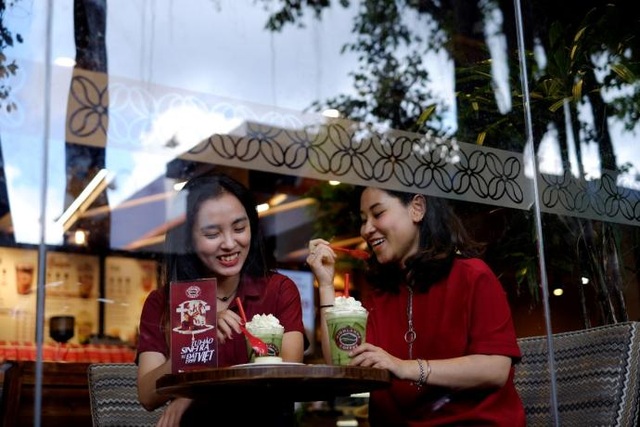
Vietnamese coffee kept warm in a three lions bowls, the lions being a symbol of England. If you love coffee, you’ve come to the right place; coffee shops are _________________ in Sai Gon, and throughout Viet Nam.
Lady Thu stated that she would (try) ___________ to learn more vocabulary.
I expected the students to pass with flying colours, but instead I was very _______________________ by their low scores.
Mr Sang knew every answer, he was really _________________________ last night.
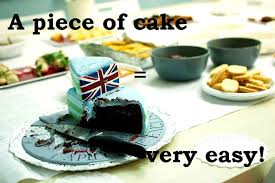
Passing a driving test in Vietnam is easy. _______________________________ .
Those Armani T-shirts are absolutely fake ! At that price, no way are they ____________ .
Street food stalls are ubiquitous in my neighborhood; the food is (tasty) ______________________ and the prices are quite ___________________ .
Mr Lee (adverb) _____________ promised me he would be on time for the meeting.
We also covered some basic introduction phrases which you categorically have to memorise:
Some standard opening lines:
That’s a very interesting question
Well, that’s a great question
Well, there is so much to say about that subject, where shall I start ?
It’s funny you put that question to me because earlier today I was just thinking about …
As a young Vietnamese (add your own nationality), I …
And now, a typical IELTS question: What do you do in your free time ?
Remember the first rule of introductions: never answer the question immediately. Remember the second rule of introductions: never answer the question immediately.
So, how to pass with flying colours ? Ah, c’mon, Man, you should know by now ! OK, breaks down like this. Give me:
A great introduction
An organised speech, point by point (use ‘signpost’ language).
At least one idiom
Several L-FWs
Ideas linked by discourse markers
Appropriate intonation, stress & body language
Thay Paul, can you give us an example, please ?
Sure thing
Well, that’s quite an interesting question because, as a young Vietnamese student, I don’t really have much free time. I have to study all day, then do homework in the evening; I’m really burning the candle at both ends. However, when I have time to myself, I like to hang out with my friends and forget about school.
Firstly we meet in coffee shops, which are ubiquitous in Sai Gon, and talk and laugh. Highlands in my favourite because it has free WiFi as well as being very comfortable although some of the coffee prices are sky-high.
Additionally, I love swimming which, in my opinion, is incredibly healthy, and it doesn’t require much equipment. Subsequently, it doesn’t cost an arm and a leg.
However, my absolute favorite past time is to sing karaoke, which I believe comes from Japan, in a private, sound-proof room. For me, it’s a perfect way to relax and forget all my stress about work, life and my parents !
Piece of cake, right ? 23 / 9 Park, District 1, Sai Gon
Ôi Trời Ơi – OyVey! – Are you kidding me ! Last night’s class was chockablock with new, high-level vocabulary:
Ok, take it easy, let’s break it down. Firstly, you were not expected to learn or remember everything; I told you to … well, you tell me. Try to complete the sentences with the new words. If you need help, the vocabulary box follows the questions, while I’ll put the answers at the end of the blog.
1) I didn’t understand everything, but I got the ________
2) Light and sound travel in ___________
3) X-Rays and microwaves are a form of (type of) __________________
4) For me, trying to pronounce Vietnamese words is a real ____________
5) Can you buy twelve eggs ? Yeah, buy me ______________
6) I don’t understand the Zoom instruction video, there’s so much computer __________
7) One of y tá (nurse) Cam’s duties is to take a patient’s ________ , to measure their heartbeat.
8) They love each other dearly, but they don’t always see __________________
A scene from ‘Who’s Afraid of Virginia Woolfe ?’ with Richard Burton and Elizabeth Taylor who actually were married … twice, in fact.
Tonight’s class will focus on the town of Green Bank, Virginia (which is a southern state in the USA). Green Bank is a very small town. The population in 2019, according to Wikipedia, was 182 yet it has become famous as the town without Wi-Fi. Wireless internet is banned and mobile phones (cell phones USA) are unable to make or receive calls, nor can they send texts. The reason …
the world’s largest fully steerable radio telescope
Telescopes can be used for light or for sound. The above picture shows the radio telescope, which is 485ft tall, at Green Bank. It listens out for sounds from space. You may hear electromagnetic radiation in the class video.
Light and sound travel in waves. A star will emit light waves but electromagnetic radiation can also travel by radio waves. Giant telescopes are situated in areas with low light pollution while radio telescopes need to be in areas without Wi-Fi or mobile telephone, which can cause interference. You may have experienced this on an airplane when you are told to switch off phones during take-off and landing.
And so to work … as a warm up, get a partner or a small group and ask each other the following questions. Remember to encourage each other to speak in longer sentences and give reasons.
Could you live in a town with no Wi-Fi ?
What would you miss most if you had no phone or Wi-Fi ?
How important is your mobile phone to you … why ?
How often do you use Facebook ? Is it essential or fun ?
Do you think you spend too much time on social media ?
If you are with friends and your phone rings, or you get an alert, do you ignore it or stop talking to your friends ?
How to build sentences: explain your answers … ‘because‘ // such as … //
Tell me your experience: ‘For me, mobiles phones are …’ // ‘I couldn’t live without Wi-Fi because …’ // ‘I rely on …’
New vocabulary: essential // imperative // convenient //
It would be like losing an arm // a vital part of my life // I control my Wi-Fi use, it doesn’t control me // prohibitively expensive // I would lose my mind !
As a guest in Vietnam, I am not sure of Vietnamese culture and customs. Work in teams and make a presentation to the class, explaining Tet holiday in terms of food, how it’s prepared, and who is invited to eat. Are there any strange or unusual traditions associated with Tet ?
Standard English:
Watch this video // Have a look at this short clip
UK London slang:
Have a butcher’s at this clip (butcher’s hook = look)
Objectives: encourage team work, and the completion of a small project by collecting information. Class arranged in four team, named after one of the above countries. They have to fill out a form such as this:
Language spoken:
Capital city:
Population:
Weather:
Famous for …
BONUS: can they count to ‘3’ in that language (for Canada we shall use French) ?
Korean uses two systems, Sino-Korean & Pure; the above version is the Pure system. What’s interesting for me, as a student of linguistics, is the similarity between some Sino-Korean numbers, and those of Thai, namely 3, 4, 9 & 10. take a look:
Teams will be given a variety of tasks (especially reviewing weaker areas, such as writing). Successful completion will result in one member of the team coming up the board and reading an information card. The student is not allowed to write down the fact, but has to memorise it, then report to another team-mate who will write it down.
And so, without further ado, the tasks:
Write down three positive adjectives, then use them in this sentence: Ms Jenny is _________ , __________ as well as _______.
Write down three negative adjectives, then use them in this sentence: Mr Mark is ________ , ________ as well as _________ .
What are the three biggest countries in the world ?
Brazil is famous for … (tell me two things).
Tell me two types of food people eat in Korea.
(Based on flash cards for units 1 – 3) To get to the shop, I must walk ——– the bridge and ——— the train tracks.
To get to the school, I must walk ——– the fountain and ——– the river.
To get to the dentist, I must walk ——– the street then go —— the stairs.
Put all six cards on the floor. Have two students stand at either end. They have to say, correctly, the directions on the card. Winner is allowed to gather some information.
Write down three buildings to visit in a city. What is best ? Must start answer: I reckon ________ is best because ________.
EXAMPLE: I reckon a school is best because you can meet Mr Paul 🙂
What is good about a department store ? Must start answer: In my opinion a department store is great for _______ as well as _______ , however __________ .
EXAMPLE: In my opinion a library is great for borrowing books as well as using computers, however we have to be very quiet.
What did Mr Paul & Mr Khoa do yesterday ? Show flashcards and add a location. Students have to write down the method of transport, with the correct PAST TENSE verb.
EXAMPLE: They drove a car to the zoo.
If you are late or slow, you have to c______ u__
If you think a film will be great but it is boring, you are d_____________ .
If you do charity work for no money, you v__________
She’s b___________ to a judo club _____ 2018.
He’s o______ a laptop _____ three years.
Olivia’s been c_______ p_____ _______ 1 year.
Can you dance or sing Flamenco ?
Write down three items you want.
Write down three items you need.
Mime: A team member has to mime using a product; team has to guess which one.
Quick Fire Round:
Name an instrument // something people collect // a sport that uses a ball // a sport that doesn’t use a ball //
Obviously, teachers don’t want to overwhelm the students with an unmanageable amount of new language. Far better to serve up bite-size pieces, then practice, practice and practice. When the language has become second nature to the students, move onwards and upwards.
The first step is to elevate your language; replace basic common or garden verbs with ‘better‘ ( that is, low-frequency) words.
For example, the verb ‘try’. Instead, we can have:
endeavour
To keep trying, not giving up, we can use:
persevere or persist
Let’s take these new words out for a spin:
This year, I shall endeavour to learn Vietnamese. I’ve tried before but gave up as it was simply too hard. However, this time I’m going to persevere.
Can you think of an idiom that could be used to show someone planning to work much harder ?
This is the only clue I’m giving you !
Onwards and upwards:
buy:
purchase
get a qualification or certificate by hard work and study:
attain // achieve
to get somethingwithout the need for work or study:
obtain (you can obtain the application form in room 7A)
say / said:
exclaim // express // remark (add -ed to form past tense)
use:
utilise (utilize USA) / apply
to eat, consume or do a lot of something:
devour (He devoured the whole pizza by himself // She loves reading, she absolutely devours books)
Transform this simple sentence into something more IELTS-like:
Sarah said that if she gets an ‘A’, her father will buy her a new iPhone.
Tony says he wants to get a visa which he can buy at the UK Embassy, so he can use his English skills in London.
Mary really wants to buy the ‘Fargo’ box set. She said it was the best TV show in years and she plans to watch all the episodes in one day !
Similarly, boost your lexical resources with regards to adjectives.
basic:
fundamental // elementary
hard:
difficult // challenging
tasty:
delicious // mouth-watering // scrumptious
experience:
broaden my horizons // real-life knowledge // culture shock
From South America to Europe
Signpost language: (To help the listener or reader follow you)
Firstly / To begin with / I’d like to start by …
Secondly / additionally / another factor is …
What’s more / furthermore / not forgetting
Obviously / clearly / it is evident that …
Moving on / I’d like to change the topic / Let’s turn to …
Finally / all in all / all things considered
Class Games:
Put students into small teams. One teams challenges the other(s) to form a sentence using as many new L-FWs as they can. Award bonus points for the appropriate use of idioms or fixed expressions.
Students challenge each other to find a L-FW for a basic, prosaic verb or adjective. Teams are allowed a fixed time, say one minute, and are allowed to use a thesaurus such as here:
Then the group has to use the new word in an IELTS-style sentence by which I mean, an introduction, a signpost word or phrase and, obviously, a suitable idiom (examples – ‘put’, ‘big’, ‘interesting’, ‘watch’, ‘boring’, ‘eat’)
Teams are given a mix of L-FWs, idioms & signpost language. After a short preparation time, they have to construct an inspiring, fascinating and jaw-droppingly brilliant sentence. Piece of cake, n’est ce-pas ?
One student from each group starts answering an IELTS question (travel, food, study, neighbourhood). At a given point, the teacher stops the student and another group has to continue, and so on. Monitor the correct utilisation of signpost language as well as fluency, not forgetting the all-important pronunciation features.
Quick Fire / Rapid Fire Round
What is the correct word:
To get a certificate after study ?
Delicious food is …
London is brass monkeys in January so _______ bring warm clothes.
A L-FW for ‘use’
Strange behaviour – he is acting _______
Istanbul is famous for its covered market, known as a __________
Nose, jaw, mouth … use these features in phrases
Moving from Europe to Asia will undoubtedly result in a degree of ________ _____.
The unspeakably greedy child ______ all the doughnuts !
Actor Mark Hamill basically disagreed with everything in the film script.
What’s the best thing about being in a relationship?
What’s the best thing about being single?
What headings would you put these under ?
Life is more fun than being alone. Problems are easier to solve.
We have total, 100% freedom ! Do what we want, when we want.
We have less responsibility.
No lonliness
If you meet someone you like, you can ask them out on a date.
There’s a time to play and a time to settle down and raise a family.
No in-laws !
How do couples meet ?
How did you meet your: wife / husband / boyfriend / girlfriend / partner ? Or was it a blind date ?
Activity: Arrange a blind date for these three men. Which lady is the best choice … and why ?
How do you think the dates will be ? Will they keep meeting, maybe get married … or never see each other again ?
Peter
JamesDavid
PETER. Age 46. Lawyer. Likes cooking, travelling, wine, driving, tennis. Divorced, 2 children. Looking for a quiet lady with no children, to look after the house and him.
JAMES. Age 26. IT worker. Likes music, dancing, going to clubs, beach holidays. Single. Looks for young lady who is loud and fun, likes to party.
DAVID. Age 22. Model. Likes fashion, clothes, cocktail bars, smoking cigars. Looking for a women who is a model so we can look great together. Must be very beautiful and wear expensive clothes.
And now … the ladies:
Jane
LisaEmily
JANE. Age 22. Likes fashion, clubbing, kittens, holidays in the sun. Looks for a man with a steady job and ‘down-to-earth’. Non-smoker only.
LISA. 28. Banker. Likes quiet restaurants, badminton, travelling. Looks for a mature man with good income for long term relationship. No boys, please !
EMILY. 20. Likes dancing, fashion, going out with my friends. Movies. Wants a young, cute boy-friend so we can go to parties together. No boring old men, please !
And … if all goes well, there could be wedding bells
FREE SPEAKING: What is a traditional wedding in your country ?
In the UK and many western countries, the bridegroom waits in the church next to the Best Man, who has the rings. The church music starts and the Bride walks down the aisle next to her father, who will ‘give her away.’ Behind the Bride are her Bridesmaids. The Vicar will start the service. At the end, the Bride and Groom kiss.
Vocabularybooster
Match words with meaning
Honeymoon // a secret relationship
Romantic // promise to do something/ be loyal to someone.
Divorce // when people decide they will get married
My story: I flew, by private jet, to Hong Kong, and had the time of my life, so many parties, so many interesting people, non-stop fun !
The reality, the truth: I went to work in the morning, then was so exhausted, I just sat and watched YouTube videos.
Warm – up: Students ask each other about each other’s weekend. Students must tell two stories, one true, one false. Students have to guess which is true.
Naturally, saying I have a private jet is not very believable so the story has to be feasible.
Examples:
On Saturday, after working in the morning, I met my friend Ms My. I had promised her that I would take her to try western food. Therefore, I invited her to eat pizza. It was her first time and she really liked it but wasn’t sure how to eat it – knife and fork or use hands !
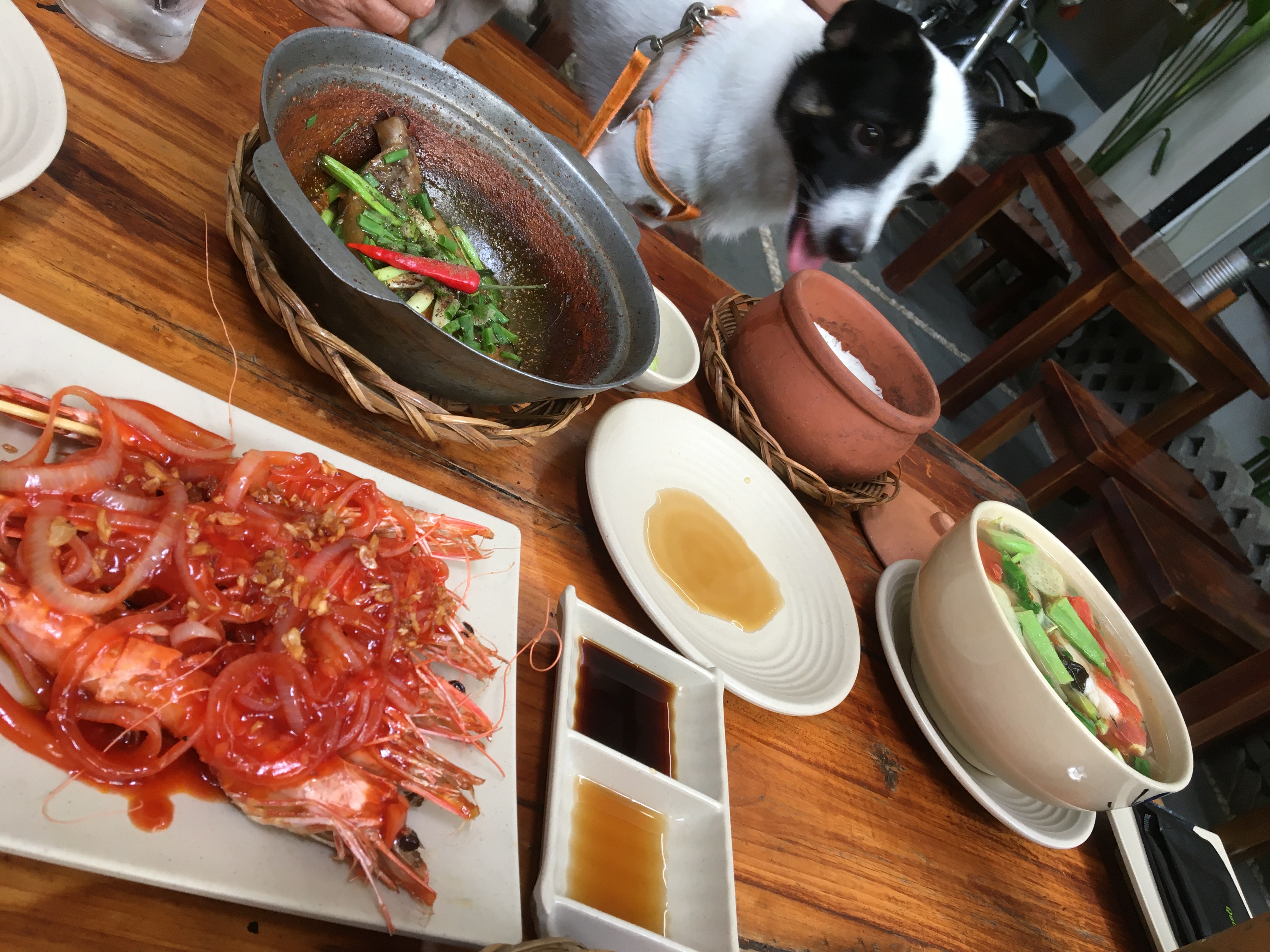
On Sunday, I was too lazy to cook and, because my dog needed a walk, I went to a local restaurant and tried some Vietnamese sea food. The prawns were delicious, but the soup was just OK, nothing special. My dog liked everything and was over the Moon (very happy).
Which one is true ? Did I eat pizza with a beautiful young lady OR did I take my dog to eat seafood ?
Vocabulary
How was your weekend ?
Did you do anything special last weekend ?
What did you get up to over the weekend ?
Thanks for asking, I …
Well, I had a great time. First I …
Oh, nothing special, I just …
Today’s lesson is about people exaggerating about their weekends, in order to seem more interesting. So, a talking activity:
What would you do ?
Your young niece plays piano. It is terrible !
Do you …
a) Say that was really good, well done
b) Say hmmm, that is very hard to play, you just need to practice.
c) Say troi oi (omg, oi vey !) that was awful – stop, stop, STOP !
Why did you say that ?
Your partner makes dinner for you. It is terrible ! (partner can mean husband, wife, boyfriend or girlfriend).
a) Say, “That was delicious, darling,” and eat it all.
b) Say, “It looks wonderful, but I’ve already eaten. I’ll have it later,” then throw it out.
c) Say, “This tastes like dog food ! Never, ever cook again. Order me pizza !”
Your friend or girlfriend comes to your house to visit and meet your parents. Your parents are traditional and old-fashioned.
a) Say that your house is being decorated, so you have to meet in town.
b) Say that you want to meet her parents and will visit her instead.
c) Say, “No way ! My parents will scream ! Put some normal clothes on and wear a hat.”








































 Thay Paul's Notes