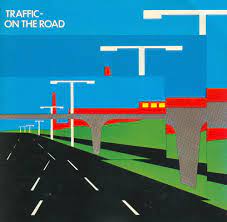
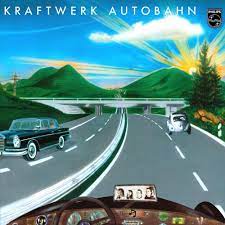
A lesson chockablock with phrases, slang and expressions on the subject of traffic.
THEME: Traffic
rush hour / ring road / congested / blind spot / flyover / motorway Metro or Subway/ U-Bahn (Germany) / the Tube (London) / roundabout
road rage / one-way street / traffic jam / chockablock / cutting in / cut me off / hit every red light !
Discuss any words you don’t know with your teacher or look online
What are the issues facing you when you travel around your town or city? [what problems do you have ?]
This is an opinion question, so start your answer with:
In my opinion // In my experience // For me // I believe // I think / It seems to me
First, think of the positives:
Is it easy to travel around ?
Is petrol or gas cheap ? Are there many petrol stations ?
Can anyone attain a driver’s licence ?
What about public transport ? Cheap, reliable, clean, safe ?
Conversely, think of the negatives such as the time spent travelling.
Accidents and costs: insurance, petrol, maintenance
Dangers: pollution, other drivers, road etiquette
Condition of roads
Is traffic getting worse in your home city ? Why do you think so ?
What can be done to ease this situation ?
Finally, what is your conclusion ?
What is happening here ?
What do you think will happen to the driver of the bus ?
Taking a Viet driving test
The second clip is from ‘Top Gear’ (UK). The boys came to Vietnam, in 2008. They had a challenge: to buy a car then drive from HCM City to Hanoi.
What could possibly go wrong ?
Note down any new expressions, then practice … and practice … and practice
Please Note: All photos are taken from Google Images or free photo sites, and are used for educational purposes only. No copyright infringement or offense is intended. If I have used your photo or image, and you wish me to remove it, just ask. This site is not monetized, I run it on my own dollar. Thank you.
How many times does 4 go into 100 ? What goes into 100 4 times ?
Practice – how would you say these:
25 + 30 =
12 x 10 =
95 – 35 =
39 ÷ 13 =
Please Note: All photos are taken from Google Images or free photo sites, and are used for educational purposes only. No copyright infringement or offense is intended. If I have used your photo or image, and you wish me to remove it, just ask. This site is not monetized, I run it on my own dollar. Thank you.
The English language, despite having a multitude of idioms, slang, vernacular, dialects, neologisms etc, can be easier to learn than other languages when it comes to the definite article. I am referring to the word ‘the’.
English nouns have no gender; the language doesn’t have the complex German structure of declension when the word ‘the’ changes depending if the noun is the subject, object or indirect object.
However, it’s not all plain sailing. English speakers employ declension when it comes to pronouns. Please allow me to illustrate:
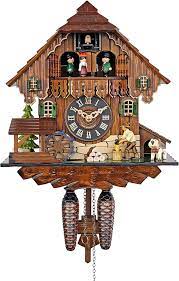
A cuckoo clock, invented in Germany (not Switzerland, as is often believed).
I bought this clock from a friend so it now belongs to me. It is my clock, it is mine.
However, with the wrong declension:
Me bought this clock from a friend so it now belongs to mine. It is I clock, it is my.
Last night, a level 6 class (aged around 10) were having a lesson on conservation. The examples were all in the second person (your), and the students were having problems changing the pronoun. Hence, this blog:
Let’s go to work
Let’s keep it simple. There are three cases:
the subject, the object and the possessive
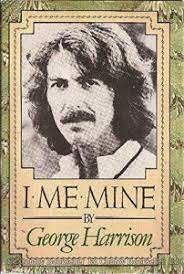
I, Me, Mine
In our example I bought this clock from my friend, the first noun is ‘I’ (subject)
so it now belongs to me. (object)
It is my clock, it is mine. (possessive)
Now … let’s practice
I // me // my or mine
you // you // your or yours
he // him // his
she // her // her or hers
we // us // our or ours
they // them // their or theirs
EXAMPLE: What can you do to stay healthy ?
I can exercise. Being healthy is important to me. These are my weights. They are mine.
How about changing the pronoun ? Tell me about this man:
He is very funny. Many people like him. It is his dog. The dog is his.
Tell me about this lady
— is very happy. I can not beat — in a game. — racket (bat) is very expensive. It is —-.
Let’s use ‘you’
— can wash your hair. I will buy some cologne for — . It is —- cologne, it is —– .
Tell me about these people
—- are American. If you go to the USA, maybe you will meet —-. This is —– flag, it is ——.
Please Note: All photos are taken from Google Images or free photo sites, and are used for educational purposes only. No copyright infringement or offense is intended. If I have used your photo or image, and you wish me to remove it, just ask. This site is not monetized, I run it on my own dollar. Thank you.
Yes it, isn’t. i is hoping these answered you questions ,
When someone is learning a new language basic communication, making oneself understood, is the main factor.
However as one develops, the rules of grammar become increasingly important especially if students sit tests and are graded according to their command of the language.
Here, then, are some incorrect sentences that the students can correct. For online classes, students can type in their Chat Box, and that way, everyone is kept busy and productive.
Let’s start with a Level 1 Class
The students have just been introduced to basic sentences, so the aim is to get them using multiple words, not just shouting out single word answers.
Game 1
EXAMPLE: What is it ?
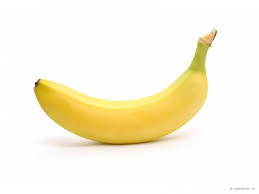
It is a yellow banana.
It’s a yellow banana.
First letter is BIG (a capital letter).
Use an adjective before the noun.
End with a full stop (.)
NOW … Your turn
Write the answers in your Chat Box
Number 1
Number 2
Number 3
Number 4
Game 2
EXAMPLE: Who’s this ?
this me grondfather … NO
This is my grandmother.
NOW … Your turn
Write the answers in your Chat Box
Number 1
this is my Brotherr
Number 2
this is m grandFATHr ?
Number 3
th is is me mother
Game 3
EXAMPLE: I like … I don’t like
I like chicken I no like fish … NO
I like chicken. I don’t like fish.
NOW … Your turn
i liek pizzza i do no like chicen
I like iceream i like cake no
I like breadd I like don’t ricee
Game 4
EXAMPLE: What can you see ?
I can see a dog. I can see a happy black dog.
I can see 2 dogs
NOW … Your turn
Bye bye, see you soon.
Please Note: All photos are taken from Google Images or free photo sites, and are used for educational purposes only. No copyright infringement or offense is intended. If I have used your photo or image, and you wish me to remove it, just ask. This site is not monetized, I run it on my own dollar. Thank you.
Recent online classes have revealed a distressing lack of ability using basic verbs in the past tense or Verb 2 as they are called in my neck of the woods.
In Vietnamese, the past tense is formed differently.
The verb remains the same but other words are added to indicate the tense. Alternately, time indicators are employed. Very briefly, a literal translation from the Vietnamese could be:
Yesterday I eat rice
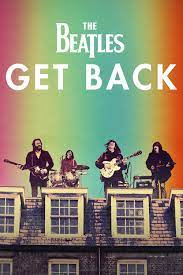
Therefore a language teacher needs to be aware of the linguistic differences. Be that as it may let’s Get Back to basics.
Activity 1
What is the past tense (Verb 2) of these verbs:
eat / drink / do / play / see / go
Activity 2
help / visit / work / ride / talk
Activity 3
‘to be’:
I am / I was
you are / you were
he is / he was
she is / she was
Let’s use past tense (verb 2) with an adjective
Tell me what is the sentence if we use verb 2
EXAMPLE: I am happy. = I was happy.
NOW … YOUR TURN
You are sad = You ______ sad.
He is tired = He _______ tired.
She is funny = She _______ funny.
I am shy = I ______ shy.
He is small = He ______ small.
She is big = She _____ big.
You are young = You ______ young.
Activity 4
What did you do today ?
Each student takes a turn. Use these photos to help you.
Extra practice:
buy / drink / surf the internet / help parents / cook / do homework / wake up
Present tense ——– Past tense
act —— acted
go —- went
learn —— learned OR learnt
play — played
read —– read (pronounced ‘red)
ride —— rode
sleep —– slept
watch —- watched (pronounced ‘watch -t‘)
win —- won
What is the past tense (Verb 2) ?
I act in a film. Last week I ______ in a film.
I go to London. Last year I _______________ to London.
I ride an elephant. Last month I ___________ an elephant.
I learn English. Last Saturday, we ___________ English with Mr Paul.
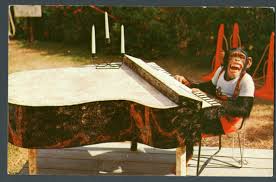
The monkey plays piano.
Last night, the monkey _________ piano.
She reads a book. Last Sunday she _____ a book.
He sleeps all day. Yesterday he _______ all day.
I watch the amazing Spiderman.
Last week I ______ the amazing Spiderman.
Put these verbs into the past tense, then complete the sentences:
Please Note: All photos are taken from Google Images or free photo sites, and are used for educational purposes only. No copyright infringement or offense is intended. If I have used your photo or image, and you wish me to remove it, just ask. This site is not monetized, I run it on my own dollar. Thank you.
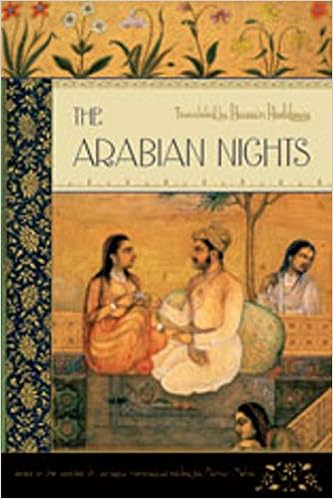
While school lockdown continues, an opportunity for higher level students to practise their writing skills as well as learning about some classic literature. I am referring to ‘The Arabian Nights’ otherwise known as ‘One Thousand and One Nights’ which was compiled in the Middles Ages.
The collection features stories from the Middle East and Indian, though the exact time of writing, and by whom, is still uncertain. As with Classical mythology, many characters are still referenced in modern life, characters such as Sinbad, Ali Baba, Aladdin and Scheherazade.
Writing exercise
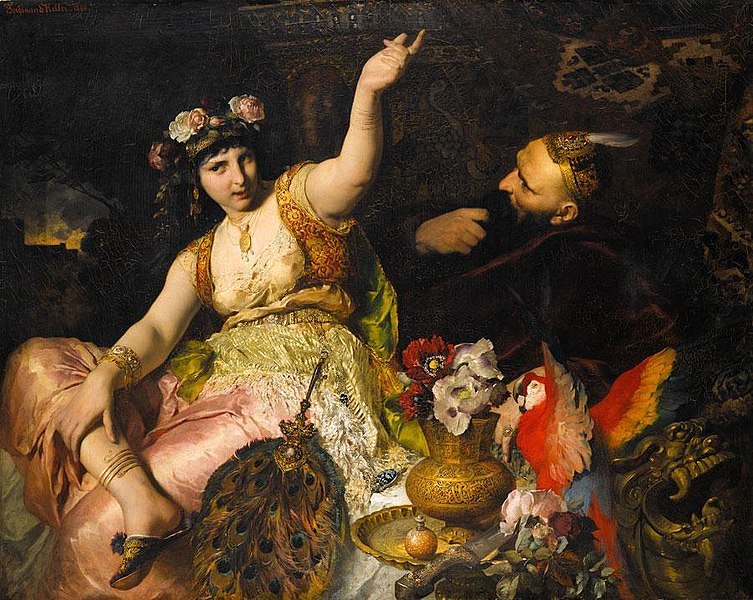
Painting by Ferdinand keller ‘Scheherazade und Sultan Schariar’ (1880).
1001 Nights
The main frame story concerns Shahryār ruling in “India and China”. He is shocked to learn that his brother’s wife is unfaithful; discovering that his own wife’s infidelity has been even more flagrant, he has her killed.
In his bitterness and grief, he decides that all women are the same. Shahryār begins to marry a succession of virgins only to execute each one the next morning, before she has a chance to dishonour him.
Eventually the vizier, whose duty it is to provide them, cannot find any more virgins. Scheherazade the vizier’s daughter, offers herself as the next bride and her father reluctantly agrees.
On the night of their marriage, Scheherazade begins to tell the king a tale, but does not end it. The king, curious about how the story ends, is thus forced to postpone her execution in order to hear the conclusion. The next night, as soon as she finishes the tale, she begins (and only begins) a new one, and the king, eager to hear the conclusion of this tale, postpones her execution once again. This goes on for 1,001 nights.
This is quite a long introduction; how could you reduce it to three sentences ?
Please Note: All photos are taken from Google Images or free photo sites, and are used for educational purposes only. No copyright infringement or offense is intended. If I have used your photo or image, and you wish me to remove it, just ask. This site is not monetized, I run it on my own dollar. Thank you.
I love all types of music, but one of my favourites is Jazz. It can be exciting, or thought-provoking, upbeat or mellow, but it’s always different.
Unlike other types of music, Jazz is spontaneous. This means that you never hear the same song the same way; each performance is different.
Jazz started in New Orleans but moved up to Chicago, New York and even west to California. The first records were made in 1917 and the first true Jazz genius was Louis Armstrong. If you want to hear jazz, you should listen to his records from the 1920s.
You may know some famous Jazz artists such as Miles Davis, John Coltrane or Charlie Parker. I can recommend these musicians to you as first-rate examples of Jazz.
I hope this has made you curious about Jazz, and that you go online to listen for yourself. Who knows, maybe you too will learn to love Jazz.
Please Note: All photos are taken from Google Images or free photo sites, and are used for educational purposes only. No copyright infringement or offense is intended. If I have used your photo or image, and you wish me to remove it, just ask. This site is not monetized, I run it on my own dollar. Thank you.
Arrange class into small groups, named after famous architects from English speaking countries, e.g. Christopher Wren, Frank Lloyd Wright & Amanda Levete
Sir Christopher Wren
St Paul’s Cathedral, London
Frank Lloyd Wright
Fallingwater Building, Pennsylvania, USA
Amanda Levete
MAAT Museum, Lisbon
Therefore we have Team Wren, Team Levete & Team Wright
Game 1 Synonyms: give me a better word for …
yummy // good // big // very small // smart // very friendly // someone from Korea // scared // not easy // not clean // has a lot of money //
(1 point for each correct answer)
Game 2:Correct these sentences …
The Science book is very boring or bored.
I feel so excited or exciting about learning English.
She was disappointed or disappointing about the Japanese film.
(2 point for each correct answer)
Game 3: Make sentences using adj + noun
EXAMPLE:
Qri from K-pop band T-ara
The beautiful lady is a popular singer in a Korean group.
The Korean woman is smiling. She is cute and happy. She has long, brown hair.
Qri is a popular singer. She is Korean and is a fantastic dancer.
Team Wren:
The scientist Albert Einstein. He was born in Germany.
Team Wright:
This lady was born in Russia
Team Levete:
This lady was born in Zambia
(2 point for each adjective + noun structure)
Game 4: Adjective salad bar.
Look at the photos. Choose one you like and make a sentence or sentences. However, you will earn more points by using higher-level adjectives.
Earn 1 point for using these adjectives:
big, fat, friendly, happy, new, old, sad, small, young, yummy
We have ‘visited’ many amazing and unusual places in our lessons, and met many friendly, outgoing people.
So, where do YOU want to go ?
Tell me where, tell me why and tell me something about the country.
EXAMPLE:
I want to visit Korea because it is a very beautifulcountry and has many friendly and outgoingpeople. The food is spicy but delicious and very healthy. The history is amazing and the museums are very interesting.
(2 point for each adjective + noun structure, 1 point for every other adjective.)
Please Note: All photos are taken from Google Images or free photo sites, and are used for educational purposes only. No copyright infringement or offense is intended. If I have used your photo or image, and you wish me to remove it, just ask. This site is not monetized, I run it on my own dollar. Thank you.

Idioms are used frequently in conversational English, not to mention formal and informal writing, and in song lyrics. Additionally I have heard British politicians, speaking in Received Pronunciation, employ an idiom in two in their remarks.
Generally students like having a few idioms under their belt, as it makes them feel that they are closer to everyday English, and can hold their own in a conversation.
Therefore, here is a one-stop shop for various idioms I’ve introduced over the years. Now, put your nose to the grindstone and get cracking.
Idioms
it’s raining cats and dogs
it costs an arm and a leg
piece of cake
I’m burning the candle at both ends
once in a blue moon
pass with flying colours
turn over a new leaf
Another string to (your) bow – a new skill or learning experience
bear with me – please wait a very short time (usually spoken as opposed to written)
bit of a sore point – something that makes you sad or angry
down in the dumps – depressed, unhappy, feeling gloomy
hit the ground running – to start something immediately and with all your energy
like a madhouse – a place or area that is crazy, too noisy, too busy etc
run of the mill – ordinary, typical, normal, usual, boring
up in arms – to be very angry about something, to protest strongly
you take your life in your hands – doing something that is extremely dangerous
tickled pink = very happy – I’m tickled pink
fit as a fiddle = very healthy
Keep an eye on = watch something carefully
under the table = to give money to someone unofficially
kick the bucket = to die (informal) Did you hear ? Old Tom kicked the bucket.
A spanner in the works = a serious problem
In the right ball park (US) = not correct but close
On the right track (UK) not correct but close
veckteezy.com
Learning the ropes = learning what the job involves
Snowed under = very busy
number-cruncher = a slang term for an accountant
cooking the books = writing false information in accountants – a serious crime
Let’s call it a day = We can finish work now
Can you run that by me again ? = Please repeat.
tea / cherries / nutshell / cucumber / carrot
Growing up is hard, life isn’t always a bowl of _________ .
He walked in, as cool as a _________ , and told the boss he wanted a pay rise.
We’re going to try using a _________ and stick approach
I’m not a fan of karaoke, it’s not my cup of _________ at all.
To put it in a _________ , philosophy is very difficult.
Please Note: All photos are taken from Google Images or free photo sites, and are used for educational purposes only. No copyright infringement or offense is intended. If I have used your photo or image, and you wish me to remove it, just ask. This site is not monetized, I run it on my own dollar. Thank you.