I am // you are // he is // she is // it is // Ms Jane is // we are // they are
Now … let’s speak !
We use the verb ‘to be’ + the adjective ‘happy‘
I am happy // you are happy //
he is happy // she is happy //
it is happy // Ms Jane is happy //
we are happy // they are happy
I am happy // you are happy //
he is happy // she is happy //
it is happy // Ms Jane is happy
we are happy // they are happy
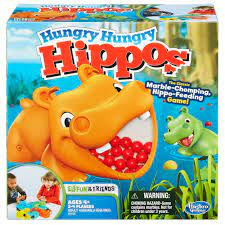
Now … the adjective: hungry
I am hungry / you _____ hungry
he ____ hungry // she ____ hungry
it ____ hungry // Ms Jane ___ hungry
we ____ hungry // they ____ hungry
Now … let’s practise with a song.
Are you ready ?
“We are the robots.”
Please Note: All photos are taken from Google Images or free photo sites, and are used for educational purposes only. No copyright infringement or offense is intended. If I have used your photo or image, and you wish me to remove it, just ask. This site is not monetized, I run it on my own dollar. Thank you.
Can you see how the verb ‘have’ changes ?Sometimes we use ‘have’, sometimes we use ‘has’.
I have you have he has she has Mr John has we have // they have
Tôi có / bạn có /  anh ấy có /
Cô bé có  / Ông John có
chúng ta có  / họ có
Now … your turn. We will use beach items, food and clothes.
First, at the beach …
I have a beach ball and I have an ice cream.
You ___ a beach ball and you ____ an ice cream.
He ___ a beach ball and he ____ an ice cream.
She ___ a beach ball and she ____ an ice cream.
Mr John ___ a beach ball and Mr John (he) ____ an ice cream.
We ___ a beach ball and we ____ an ice cream.
They ___ a beach ball and they ____ an ice cream.
NOW .. a new verb … ‘eat’
I eat delicious pizza
He eats a delicious doughnut (donut in USA)
Now … your turn
I eat delicious pizza.
You _____ delicious pizza.
He ____ delicious pizza.
She ____ delicious pizza.
Mr John _____ delicious pizza.
We _____ delicious pizza.
They _____ delicious pizza.
NOW .. a new verb … ‘wear’
I wear a blue shirt and I wear a colourful tie.
She wears a blue police uniform and she wears a black hat.
Now … your turn
I wear a school uniform.
You ____ a school uniform.
He ____ a school uniform.
She ____ a school uniform.
Mr John ____ a school uniform.
We _____ a school uniform.
They _____ a school uniform.
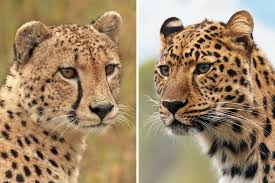
Now … for Top Cats – tell me about these pictures:
Please Note: All photos are taken from Google Images or free photo sites, and are used for educational purposes only. No copyright infringement or offense is intended. If I have used your photo or image, and you wish me to remove it, just ask. This site is not monetized, I run it on my own dollar. Thank you.
The last two lessons focused on adjectives and their opposites, including:
big~ small // high ~ low // sharp ~ blunt //
easy ~ difficult // rough ~ smooth //
quiet ~ noisy // fat ~ thin // safe ~ scary
Complete the sentences with the correct adjective.
I can’t cut my hair, my scissors are __________
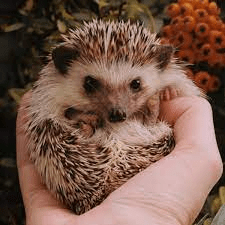
My puppy is so _______ however, my hedgehog is very _____________ .
The maths test was so _______ however the science test was so ________________ .
Be careful, Ms Thuy ! The man is very ______ .
Laurel and Hardy are so funny. One is very _____ however, one is very ______ .
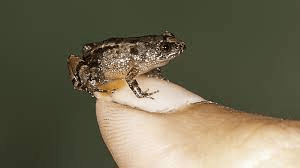
Yoyoko is only _________________ however she is very ______________ !
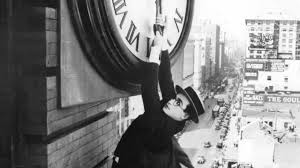
Harold is climbing very _____
Oh, no ! Crocodiles have very ______ teeth.
Now … your turn
Get out your list of adjectives. Write THREE sentences with new adjectives.
To help, look at these photos:
Please Note: All photos are taken from Google Images or free photo sites, and are used for educational purposes only. No copyright infringement or offense is intended. If I have used your photo or image, and you wish me to remove it, just ask. This site is not monetized, I run it on my own dollar. Thank you.
Being able to use complex sentences, effortlessly, is vital in attaining a respectable IELTS score. With that in mind, this blog is to help students practise.
Quite simply, give more information about your subject.
To form a complex sentence, we simply need to combine two pieces of information in one sentence, linked by a relative pronoun.
As with all grammar exercises, it makes far more sense to show than tell:
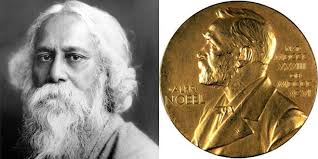
This is Rabindranath Tagore. He was a poet. He was born in Kolkata, India. He won the Noble Prize for literature in 1913.
So, we have several pieces of information. Let’s start by making a long but simple sentence:
Rabindranath Tagore won the Noble Prize for literature in 1913.
As you see, we start with the subject (Rabindranath Tagore) therefore we don’t need the pronoun ‘he’ in this new sentence.
To make this sentence complex, we just add a further piece of information about the subject, by using a relative pronoun:
who = for a person // which for a thing // where = for a place // whose = possession
The name is clearly not English, so let’s talk about his background:
Rabindranath Tagore, who was born in Kolkata, won the Noble Prize for literature in 1913.
Rabindranath Tagore won the Noble Prize for literature in 1913 is our main clause (clause being part of a sentence containing a subject and a verb).
who was born in Kolkata gives extra information but it makes no sense on its own. Therefore, it needs the main sentence to give it meaning. In grammar, this is known as a subordinate clause.
Now – we could develop this further:
Rabindranath Tagore, who was born in Kolkata which is in India, won the Noble Prize for literature in 1913.
The first subject was Rabindranath Tagore, so we used ‘who’ to give more information.
The second subject was the city, Kolkata ‘which’ is in India.
Yes, confusion ! Kolkata is a place so why use ‘which’ and not ‘where’ ?
Good question; it depends on the clause:
Kolkata which is inIndia
India is not a person, therefore we treat it as a thing and use ‘which’. Again, show don’t tell:
London, where I was born, is the capital of the UK. [object is ‘I’, a person, so we use ‘where‘.]
London, which is the capital of the UK, is where I was born. [object is ‘capital’, not a person, so we use ‘which‘]
Let’s get back to our Indian poet. The third subject is the Noble Prize … you could add more information here (awarded every year in Sweden).
Naturally, one could write endlessly, constantly adding more information about subjects but, for this exercise, just focus on a main clause and a subordinate clause.
NOW … Your turn
Subject (comma) + relative pronoun + (comma) main clause starting with a verb:
Rabindranath Tagore, who was born in Kolkata, won the Noble Prize for literature in 1913.
Make complex sentences:
Stockholm. Capital city of Sweden. Is very expensive. Is very cold in winter.
Louise Glück. Born in 1943. Born in New York, USA. Won Noble Prize for Literature in 2020. She is a poet.
Starbucks is a coffee chain. Company founded in 1971. Company started in Seattle in north-west USA. Starbucks is the world’s largest coffeehouse chain (information from Wikipedia).
Seattle is in USA. Seattle is famous for Grunge music. Many bands such as Nirvana, Pearl Jam and Soundgarden came from Seattle.
Mozart. A famous composer. Born in Austria. Died in 1791. Buried in a common grave.
Vincom Centre. In District 1 by Hotel Continental. Largest shopping mall in Sai Gon. Has many international brands such as Hugo Boss and Ralph Lauren.
Frida Kahlo was an artist. She was born in Mexico. She was born in 1907. She painted many portraits and self-portraits.
Sergei Eisenstein is a famous film director. He was born in Latvia (then part of Russia). In 1930 he began a film in Mexico. It is about the Day of the Dead festival. This festival is every year at the beginning of November.
Louise Glück – Noble Prize winner 2020NirvanaFrida KahloDay of the Dead, Mexico. Film by Sergei Eisenstein.
Grammar: Yes, I am / No, I’m not ||he is / she isn’t ||Is she / is she / Are they ? ||Where is ? ||What do you want ? || He does / she doesn’t ||What’s he wearing ? / She’s wearing a …
Song: “I would go out tonight, but I haven’t got a stitch to wear.”
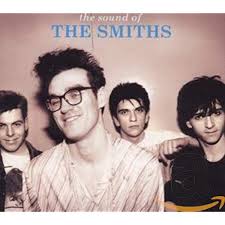
The Smiths with ‘This Charming Man.’
As usual, divide the class into teams, give points to make the games more exciting.
First up: feelings
Choose some top cat students, one by one. Outside of the class, show them a flashcard (happy, sad, thirsty etc). The student has to mime or act the emotion.
Next up:
Have a small group of students hold the flashcards. Model a question e.g. “Is Tina thirsty ?” Students reply, “Yes, she is,” or “No, she isn’t,” depending on whether she is holding that card. Appoint a new teacher (thay in Viet) to ask the next question.
Moving on up: Pronunciation, intonation and stress
Thay Paul loves coffee so does his friend Agent Cooper: Students can act out the scene. Not only does it require stress and emotion, but also pacing.
No time to lose: Run ‘n’ write
What are the five senses ? One student from each team writes a sense on the board. Then say a noun – one student from each team will tick which sense applies e.g. ‘Pizza.’ Students can tick ‘see,’ ‘taste,’ ‘smell’ & ‘touch.’ ‘Guitar‘ (‘see,’ ‘hear,’ ‘touch.’)
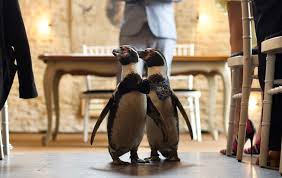
Answer with Yes, they are OR No, they aren’t. They’re ________
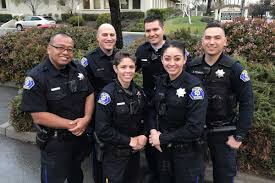
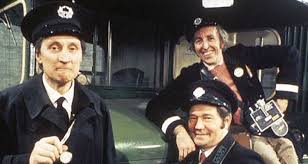
Are they police officers ?
Are they students ?
Are they football players ?
Are they The Smiths ?
Snack time: What do you want to eat ? Choose six students and give them a food flash card. They must say what they want (the card they hold) and then name something they don’t want e.g.
I want soup however I don’t want salad
Change students, then model a question, “Does Max want eggs ?” Students answers could include,
“No, he doesn’t want eggs, he wants spaghetti.”
Quick fire round: Have the students ask each other, “What do you want ?” and they have to answer,
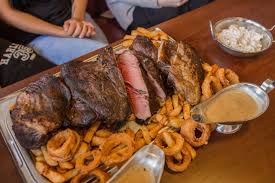
“I want [french fries] however I don’t want [steak].”
Dress to impress:
Finally, have the students describe other student’s clothes, using at least two adjectives e.g. Thay Paul is wearing a plain white shirt.
A quick recap of recent language. Tell me what you like.
Example
Google Images (photostockeditor.com)
I like playing guitar as well as playing with elephants.
freepik.com
I love playing loud music as well as playing with big grey intelligent elephants.
Elephants are very strong as well as very hungry.
Sometimes Mr Elephant is so clever, he can play piano
What does he like ?
NOW, who works in a:
hospital // a school // a restaurant // a bus ?
Does she work in an airport ?
Does he work in a school ?
Do they work in a school ?
Do they work in a school ?
What do you want ?
I want some delicious spaghetti
Why ? Because I’m very hungry.
I want some delicious spaghetti because I’m very hungry.
What does he want ?
He wants _______________ because he’s ______
What does she want ?
She __________________ because she’s _______
Does he want salad ?
Does she want steak ?
What do you want to eat ?
Please Note: All photos are taken from Google Images or free photo sites, and are used for educational purposes only. No copyright infringement or offense is intended. If I have used your photo or image, and you wish me to remove it, just ask. This site is not monetized, I run it on my own dollar. Thank you.
































































 Thay Paul's Notes